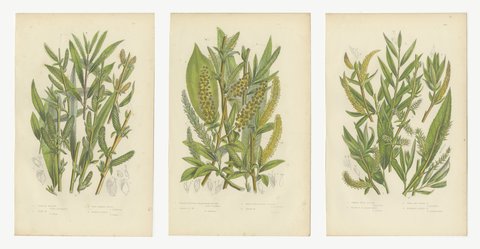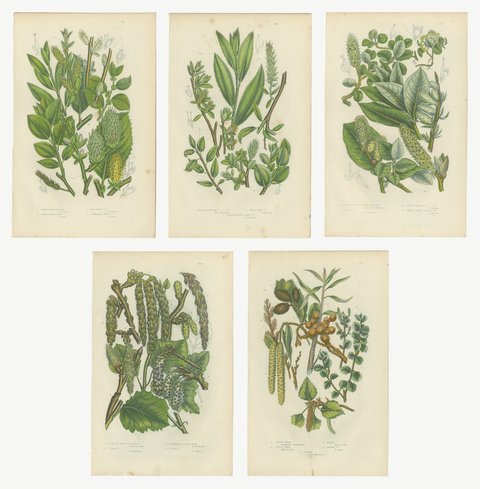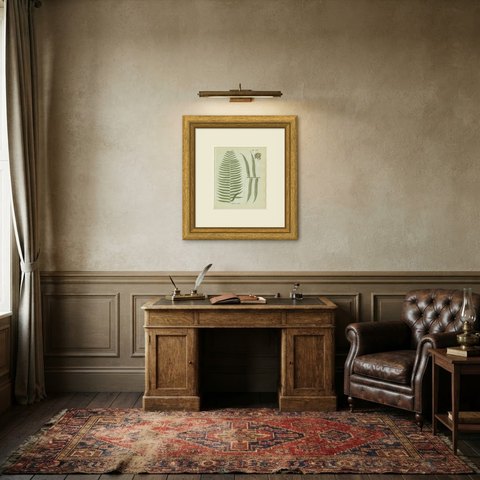
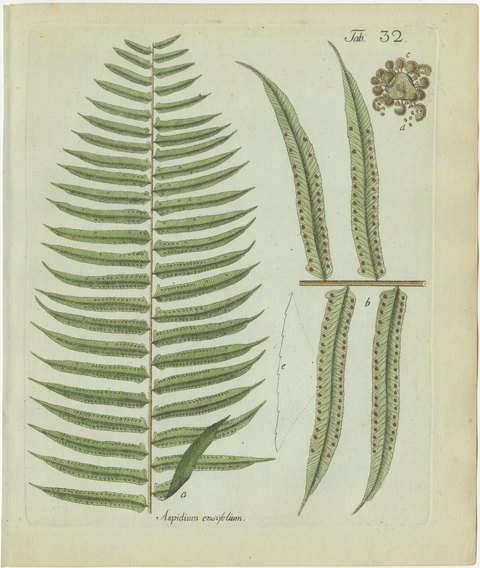
 The sheet, as you receive it
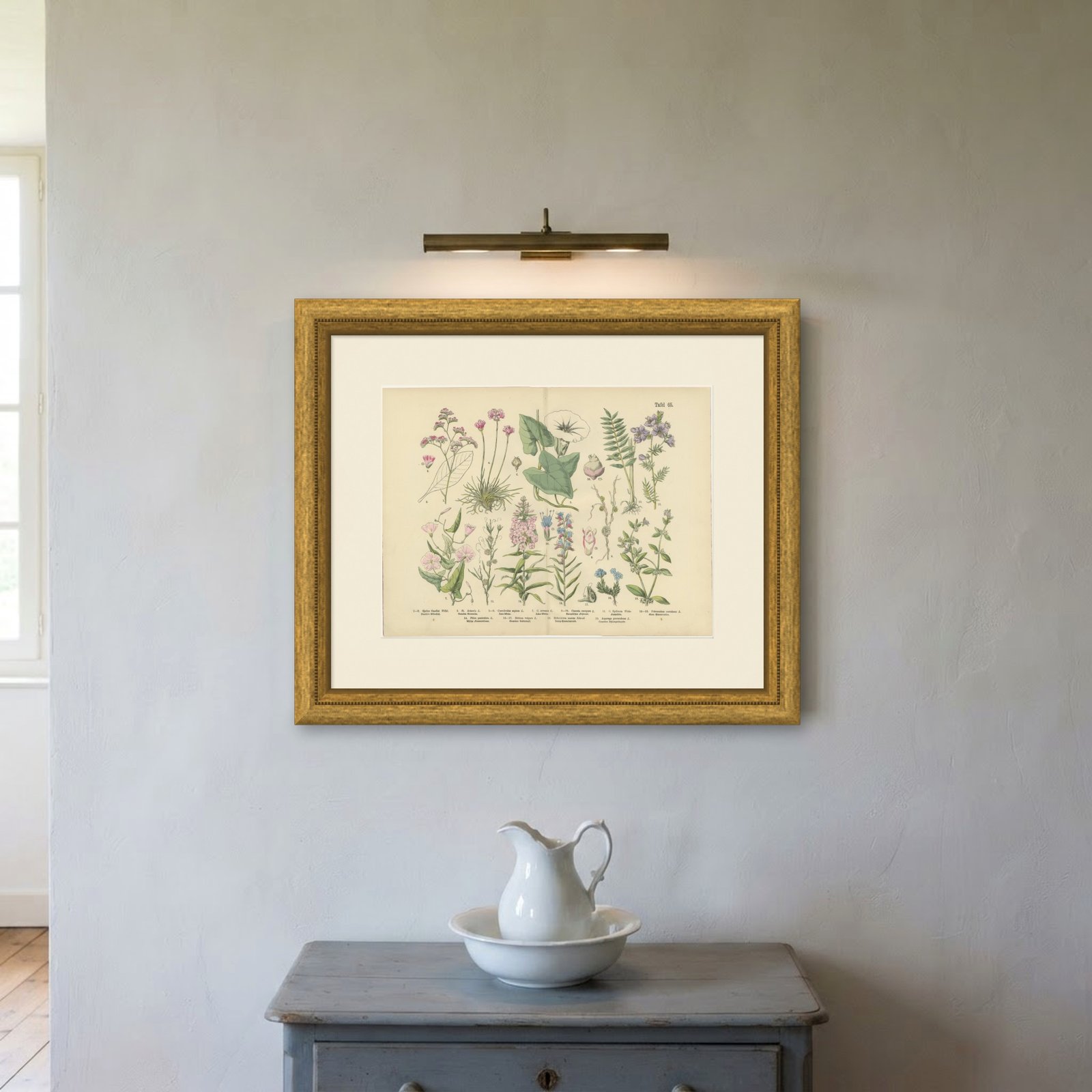
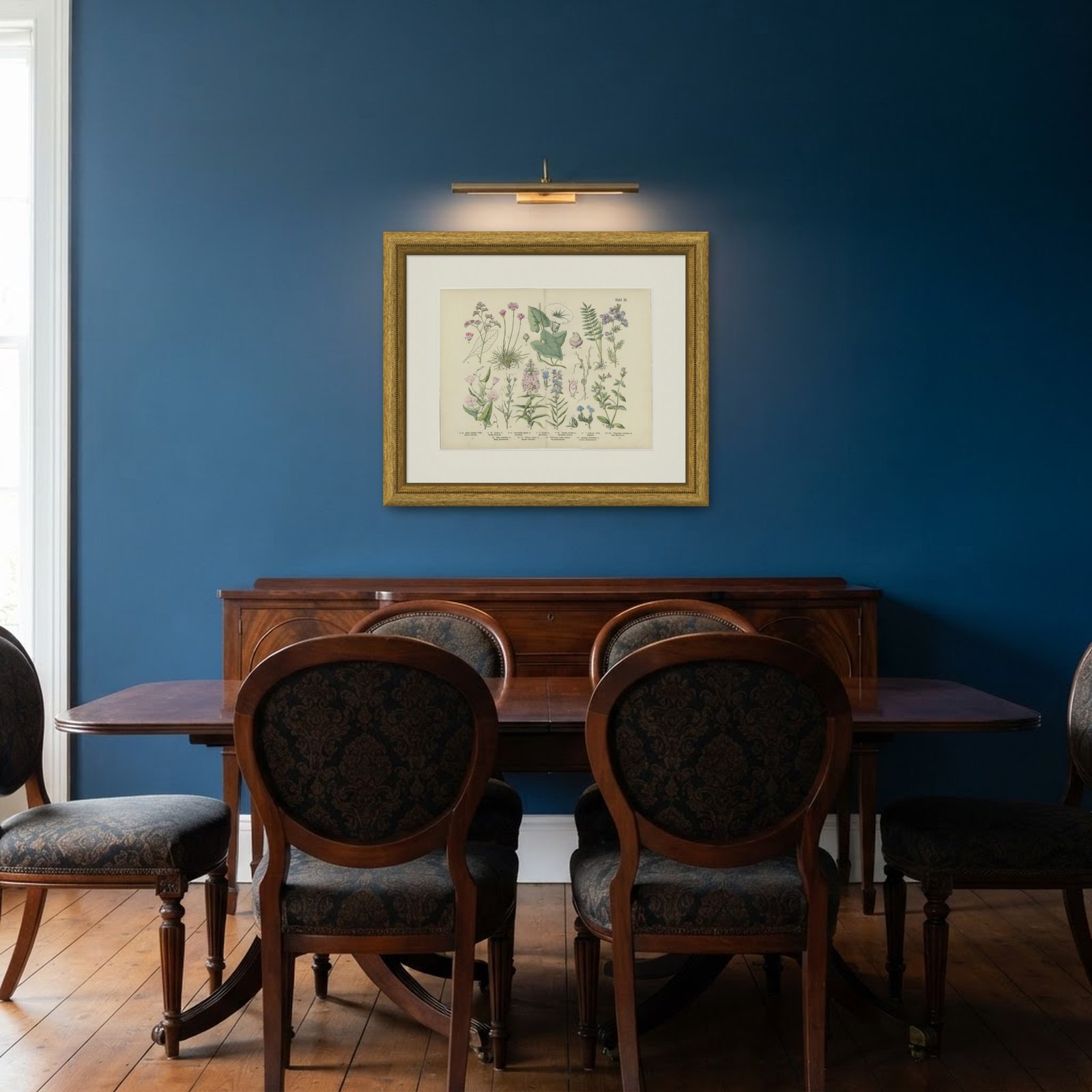 In the room
Interior designers: BarTrade members buy at their trade price. How it works
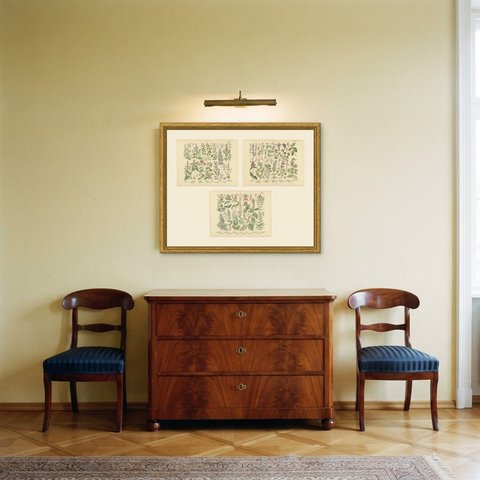
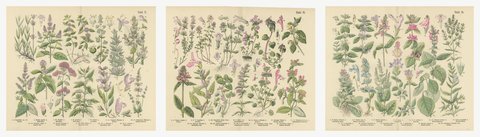
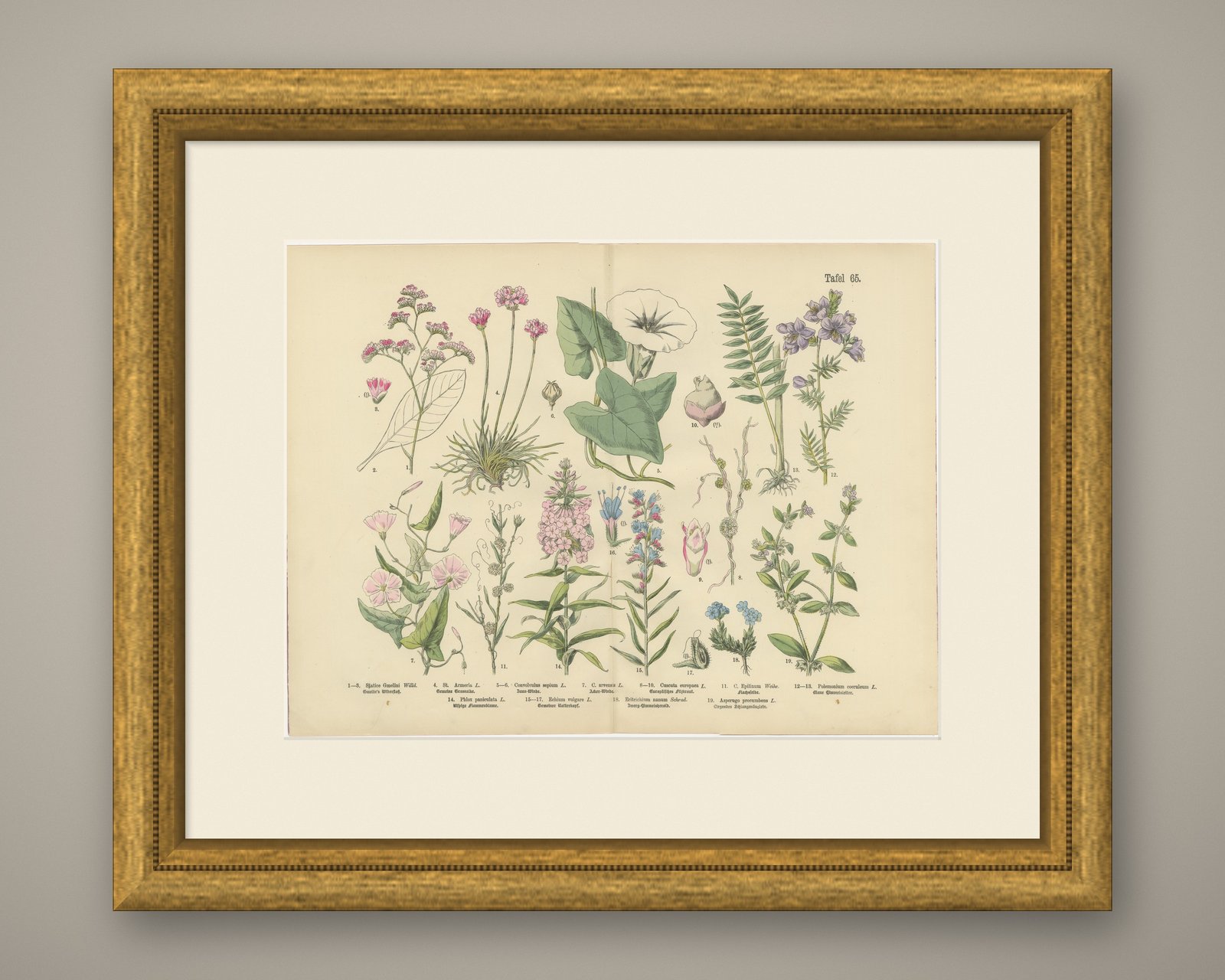
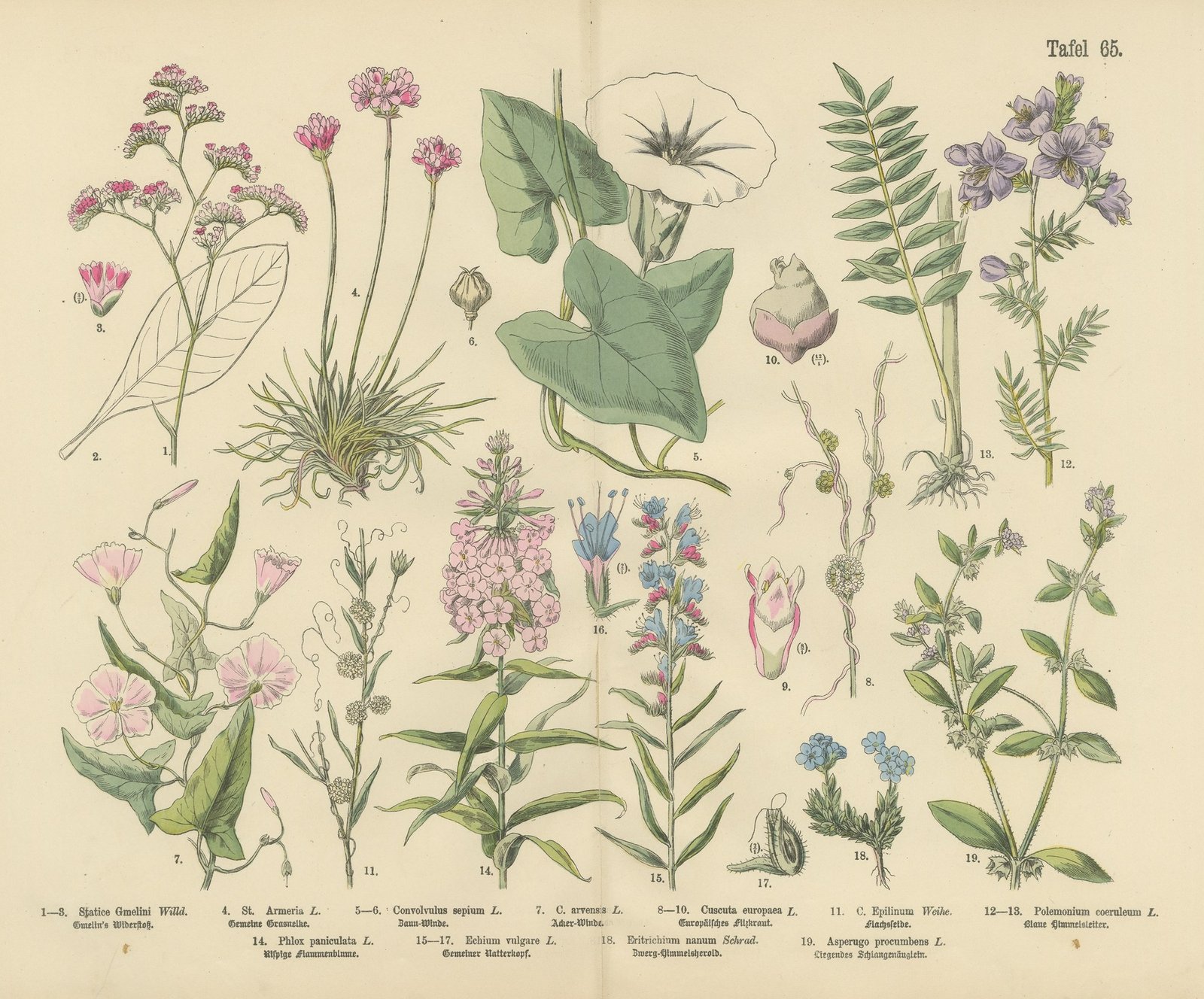
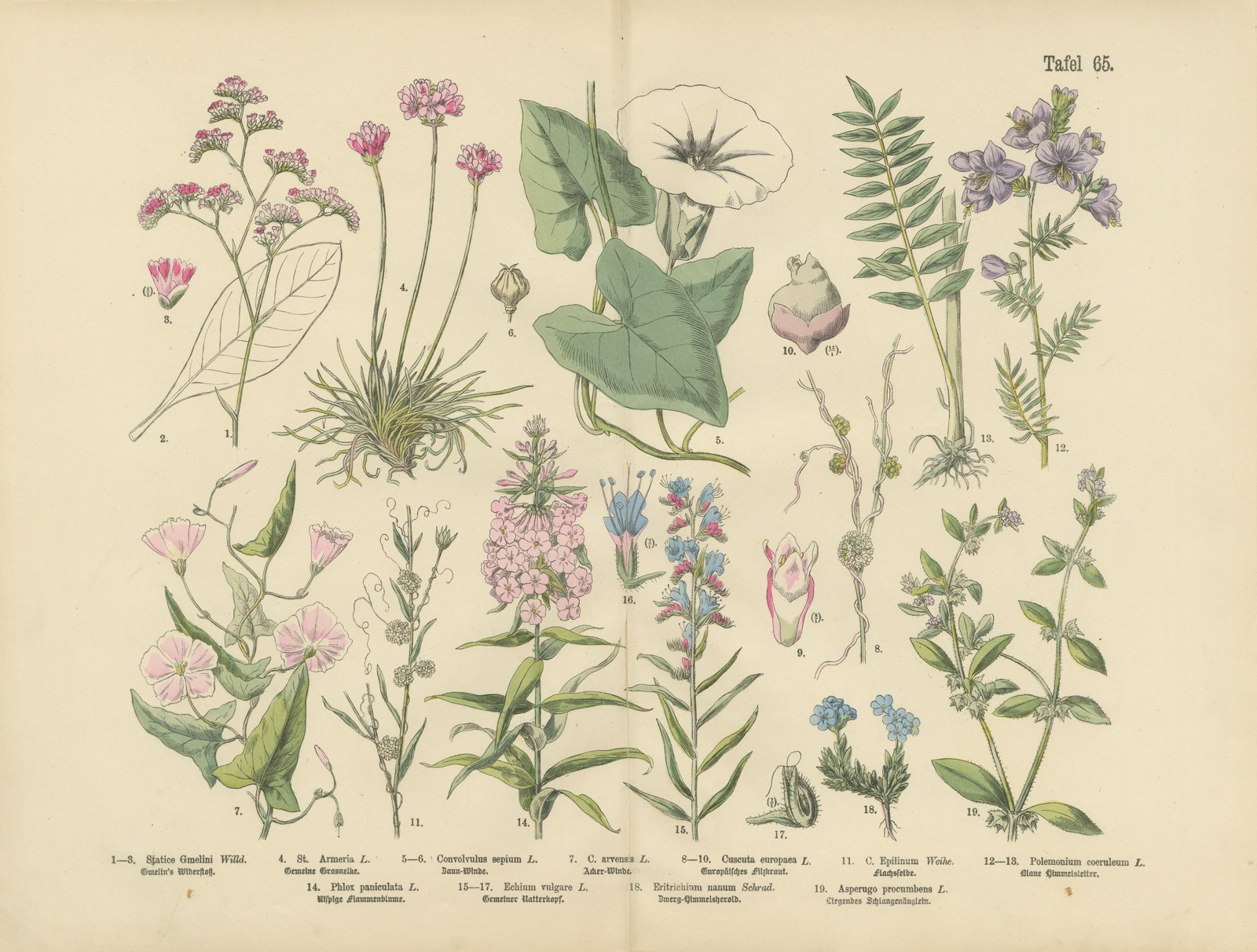
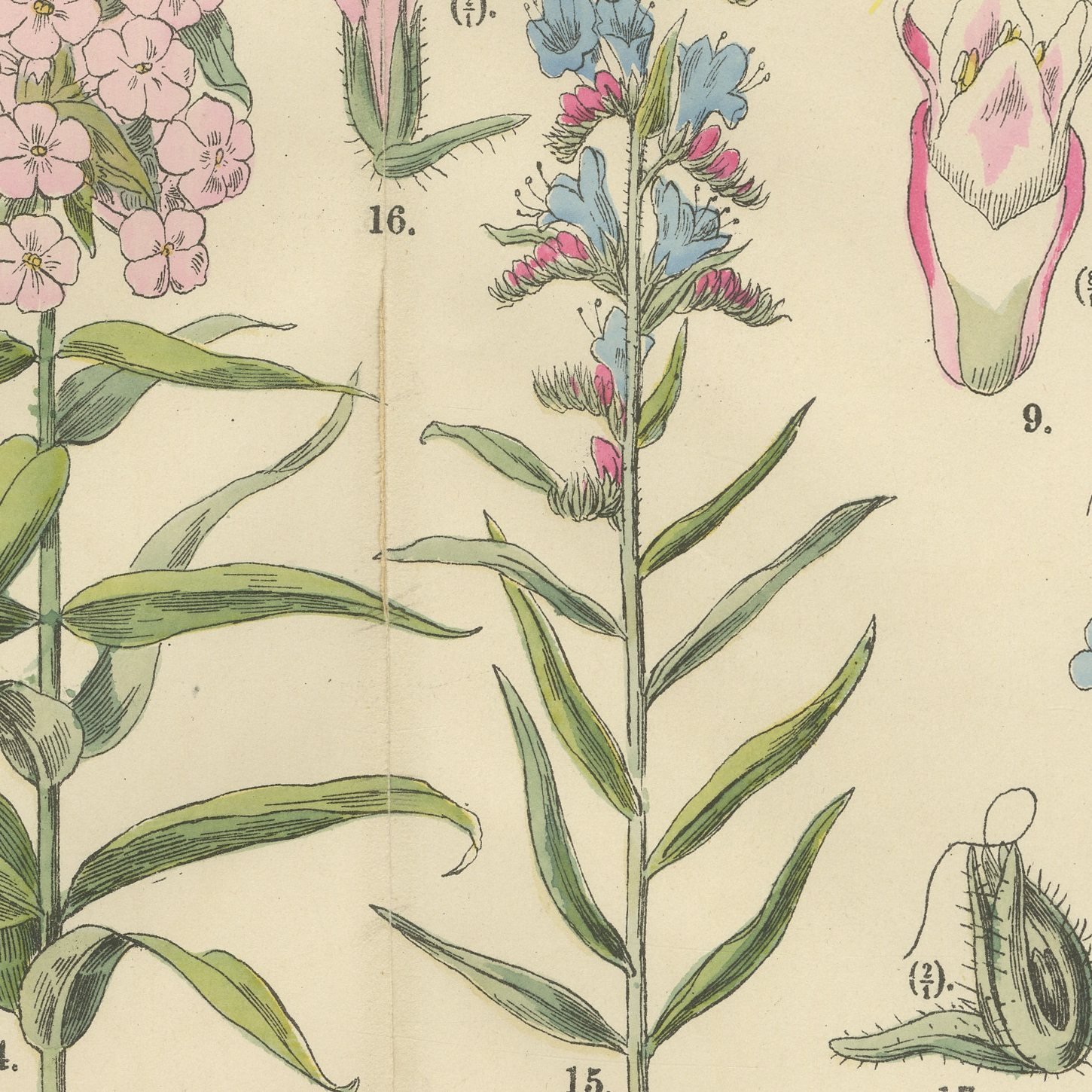
An original antique German botanical chromolithograph, plate 65 of a Stuttgart folio of about 1890, printed in color and covering the sea lavender, bindweed, phlox and borage families. The sheet is numbered Tafel 65 at the upper right and carries a caption band below the image in which every figure is numbered and named, first in Latin and then in German. It names Gmelin's sea lavender, thrift, hedge bindweed, field bindweed, greater dodder, flax dodder, Jacob's ladder, panicled phlox, viper's bugloss, king of the Alps and German madwort.
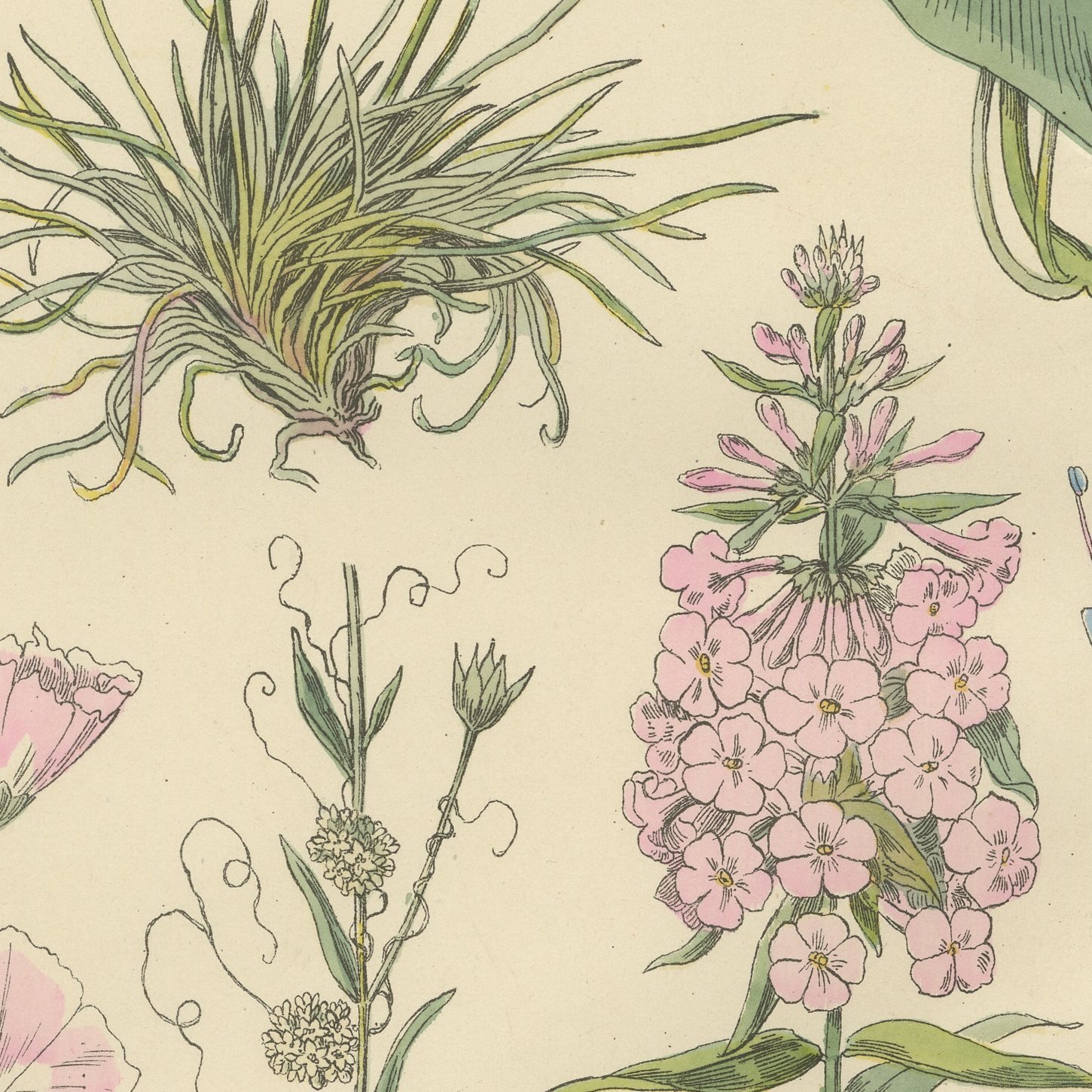
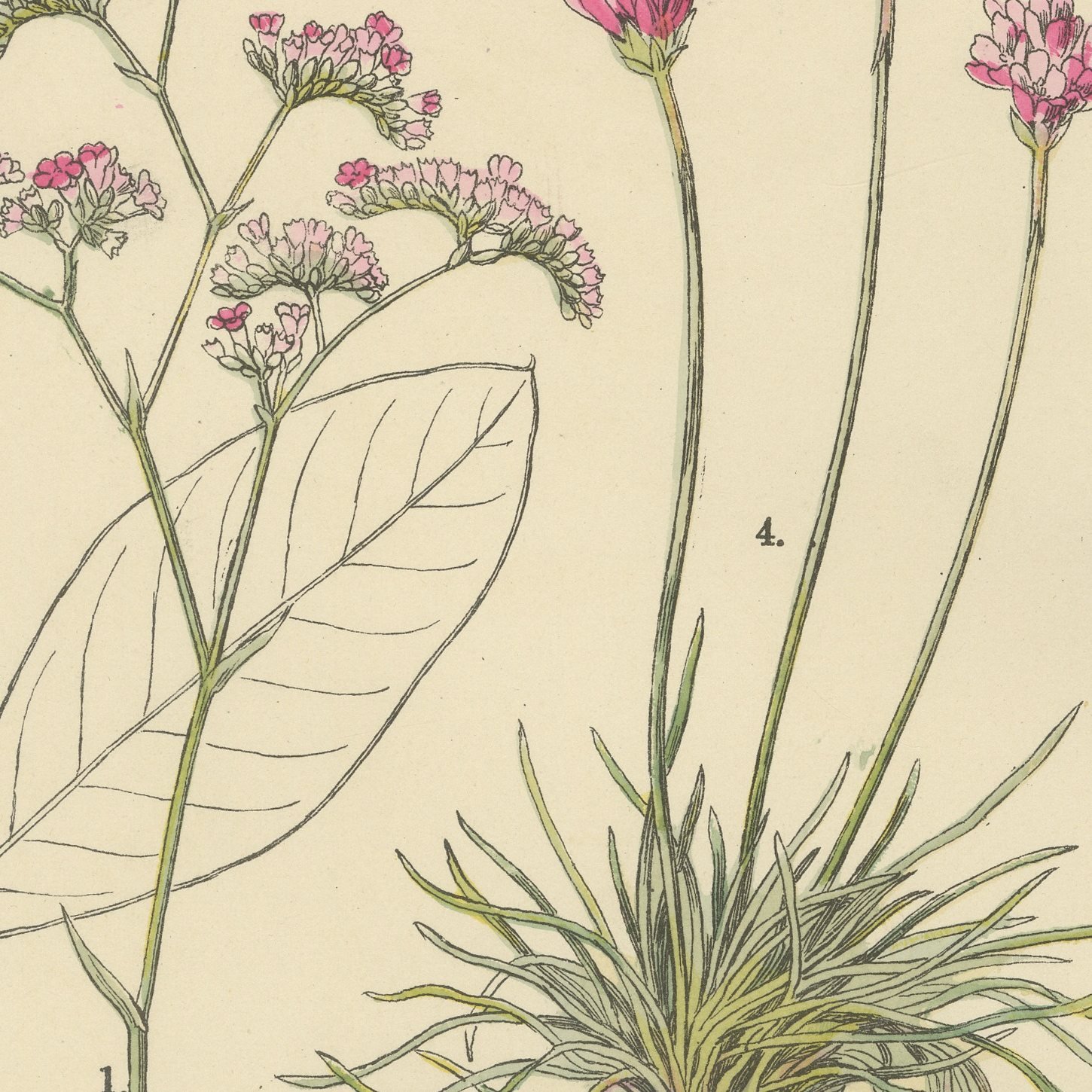
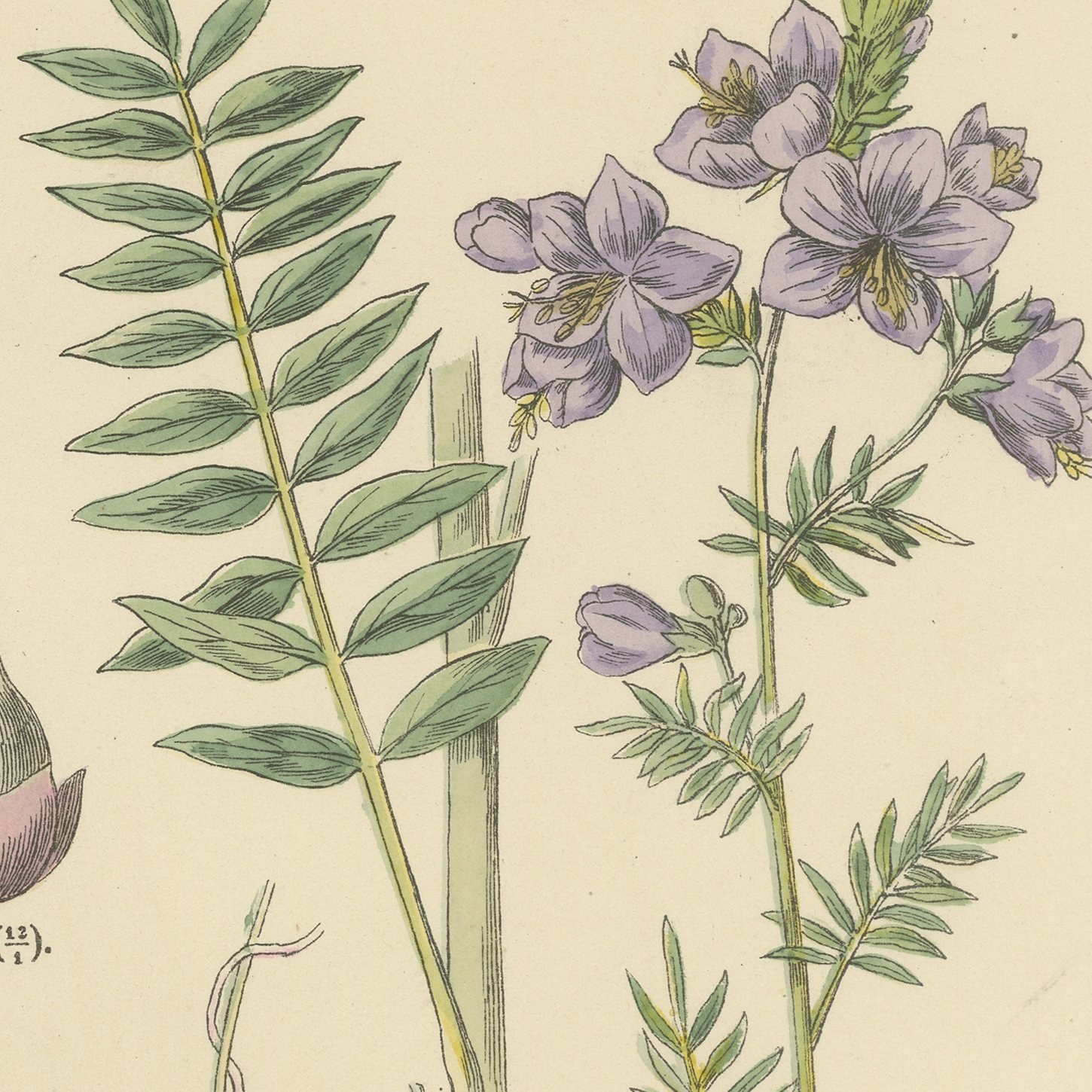
The plate belongs to a German botanical atlas published in Stuttgart about 1890, a folio work in which each numbered plate gathers a whole plant family and prints the Latin name of every figure with its German name beneath. No artist, engraver, printer or publisher line is printed anywhere on these sheets, which is normal for a plate cut from a bound atlas of this kind, so the volume is described here by what the plates themselves say. The printing is lithographic throughout: a fine black key line drawn with crayon and hatching, then flat color laid from separate stones. The tints are even and free of any halftone screen, and here and there a color runs very slightly past its outline, which is the register of the color stone rather than a brush.
What carries this sheet is the king of the Alps at the foot of the sheet, a cushion of intense blue, beside the white trumpets of the hedge bindweed. A plate that sets out a whole family at once is more useful to look at than a single portrait of one species, because the eye picks up the family resemblance straight away, and it is also the reason these atlas plates have been framed for drawing rooms and kitchens for a century. German botanical plates of this period have been framed in this way for more than a century, and the generous landscape format suits a wide wall above a sideboard, a run up a staircase or a group hung over a dining table. Two or three from the same volume hung together make a stronger wall than any one of them alone.
Even age toning. Handling soiling along all four edges. All four corners complete.
This is an original antique plate, not a modern reproduction. This item is sold unframed.