 The sheet, as you receive it
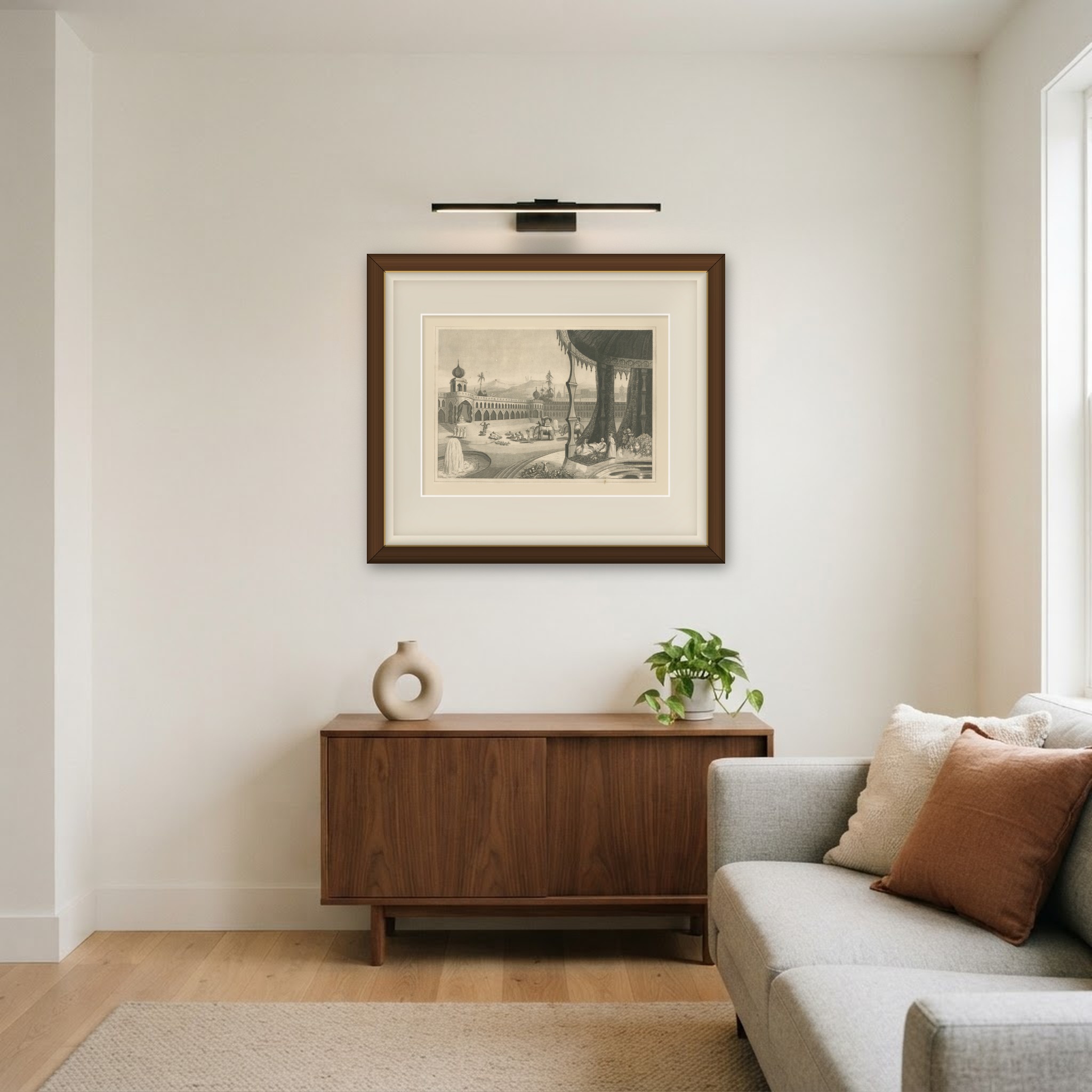 In the room
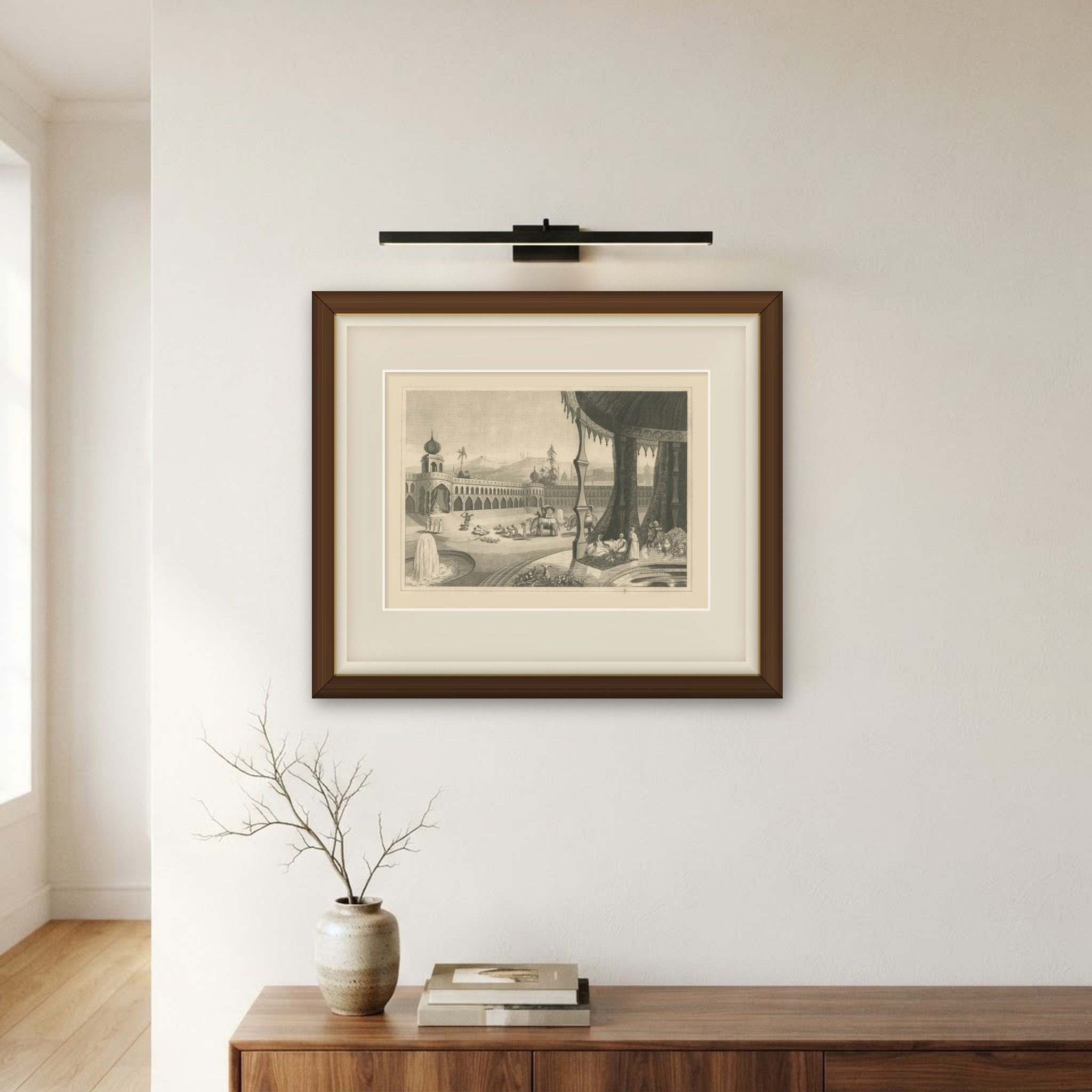
Interior designers: BarTrade members buy at their trade price. How it works
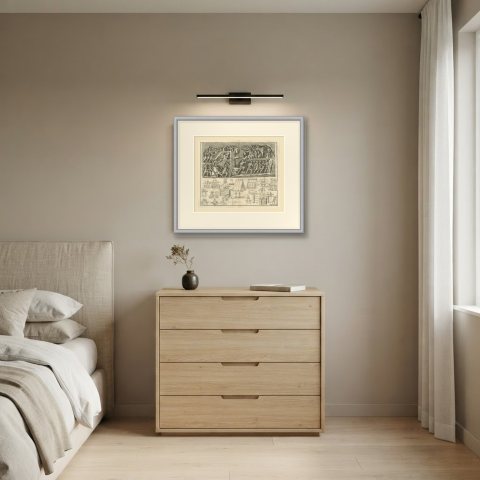
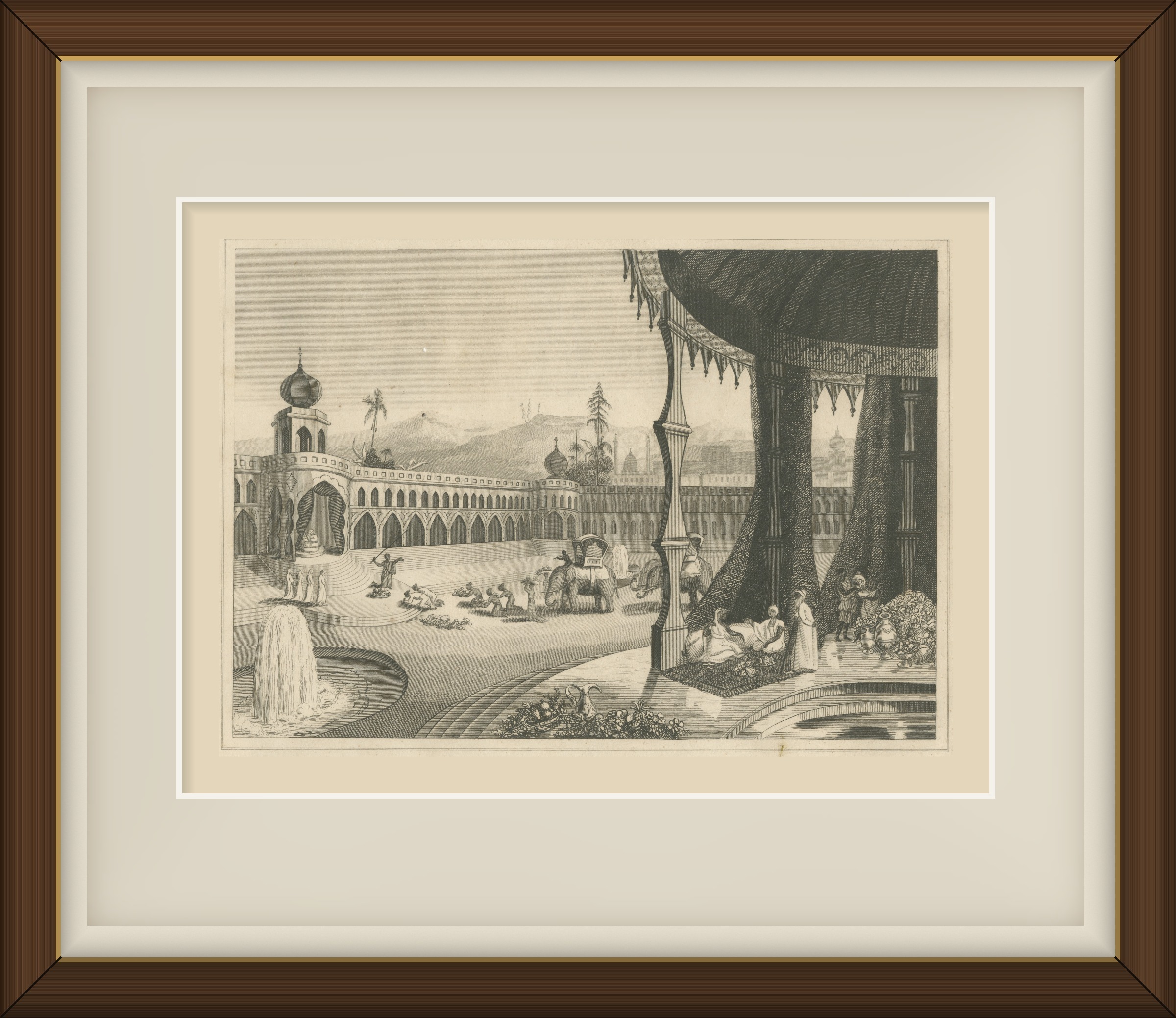
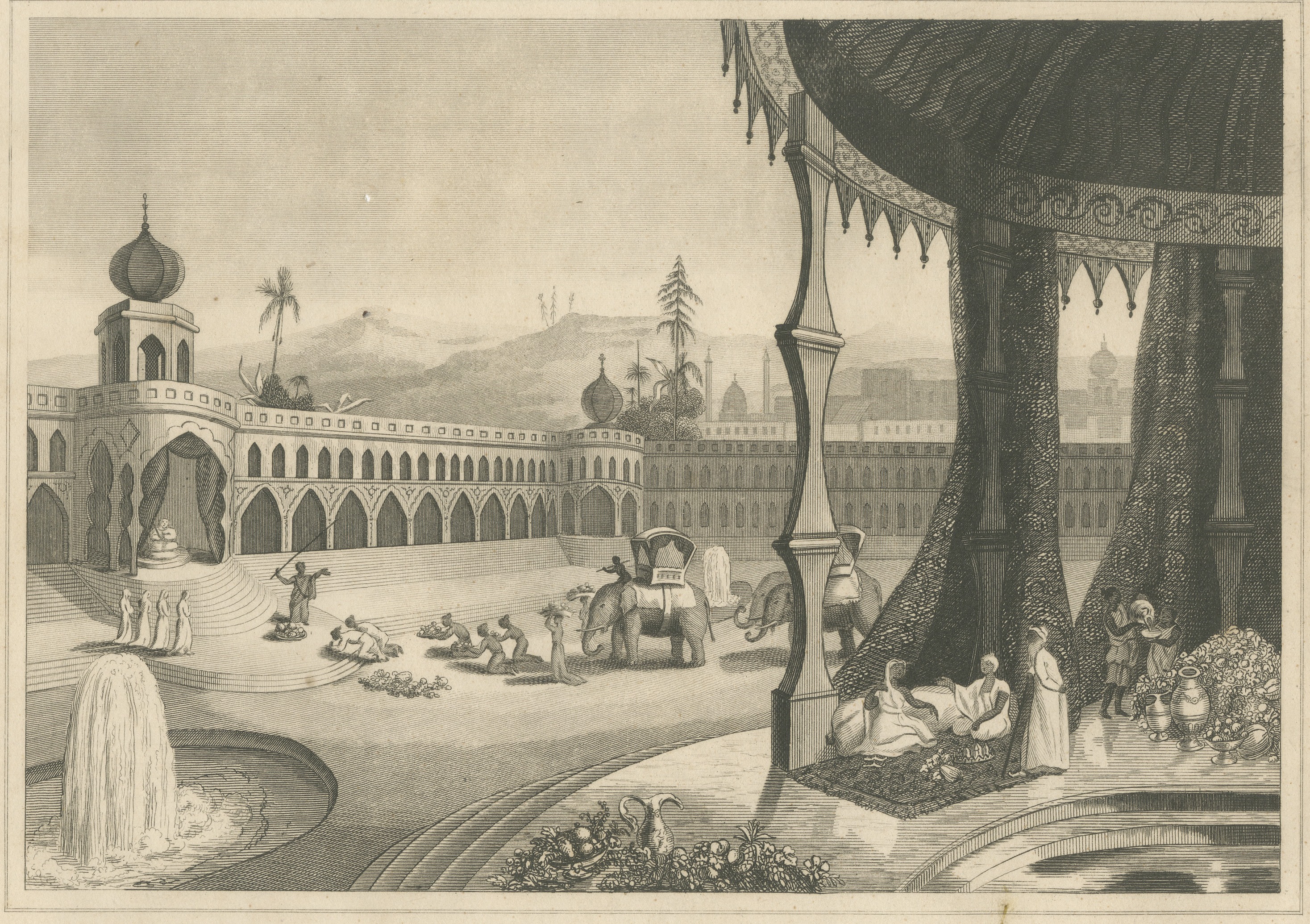
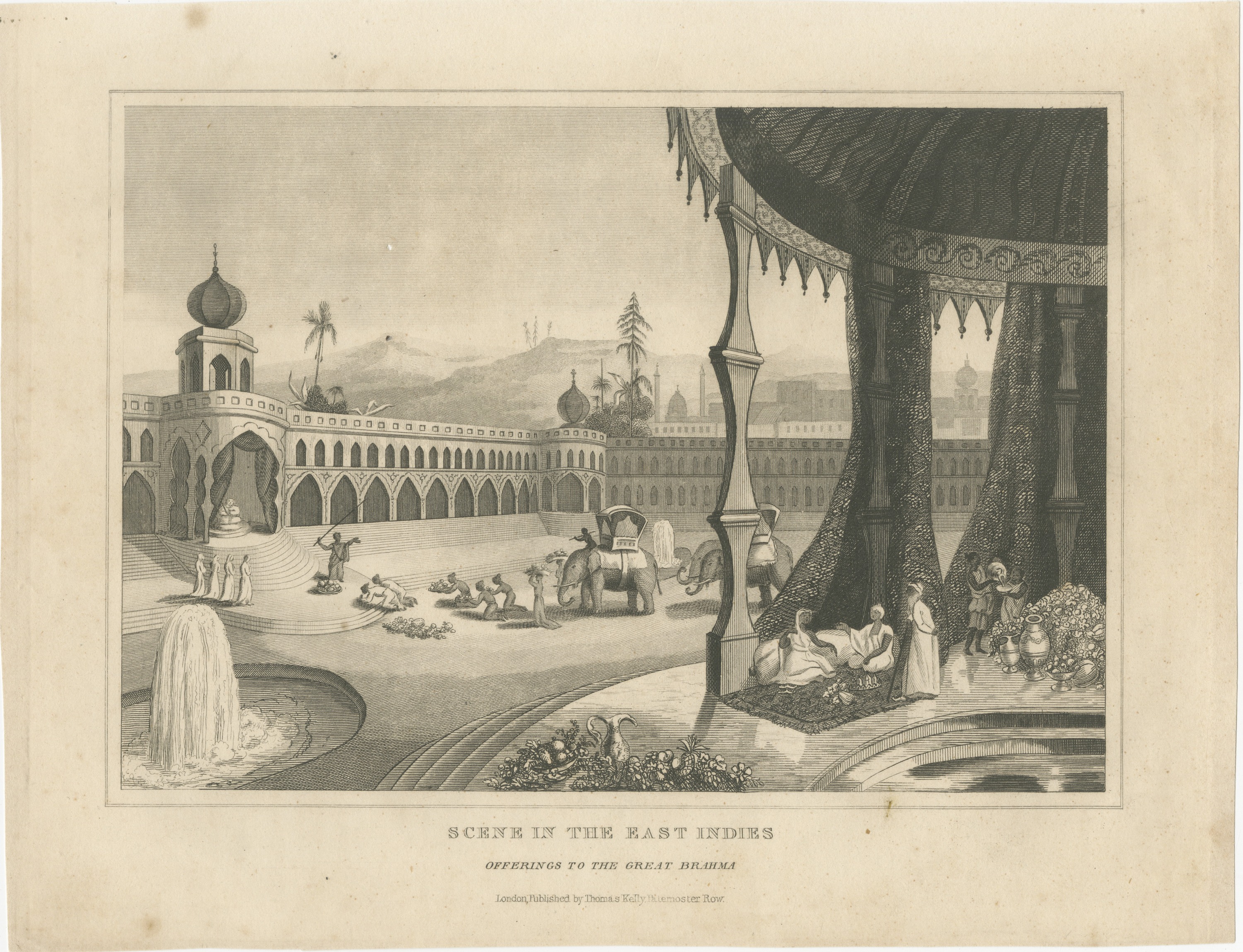
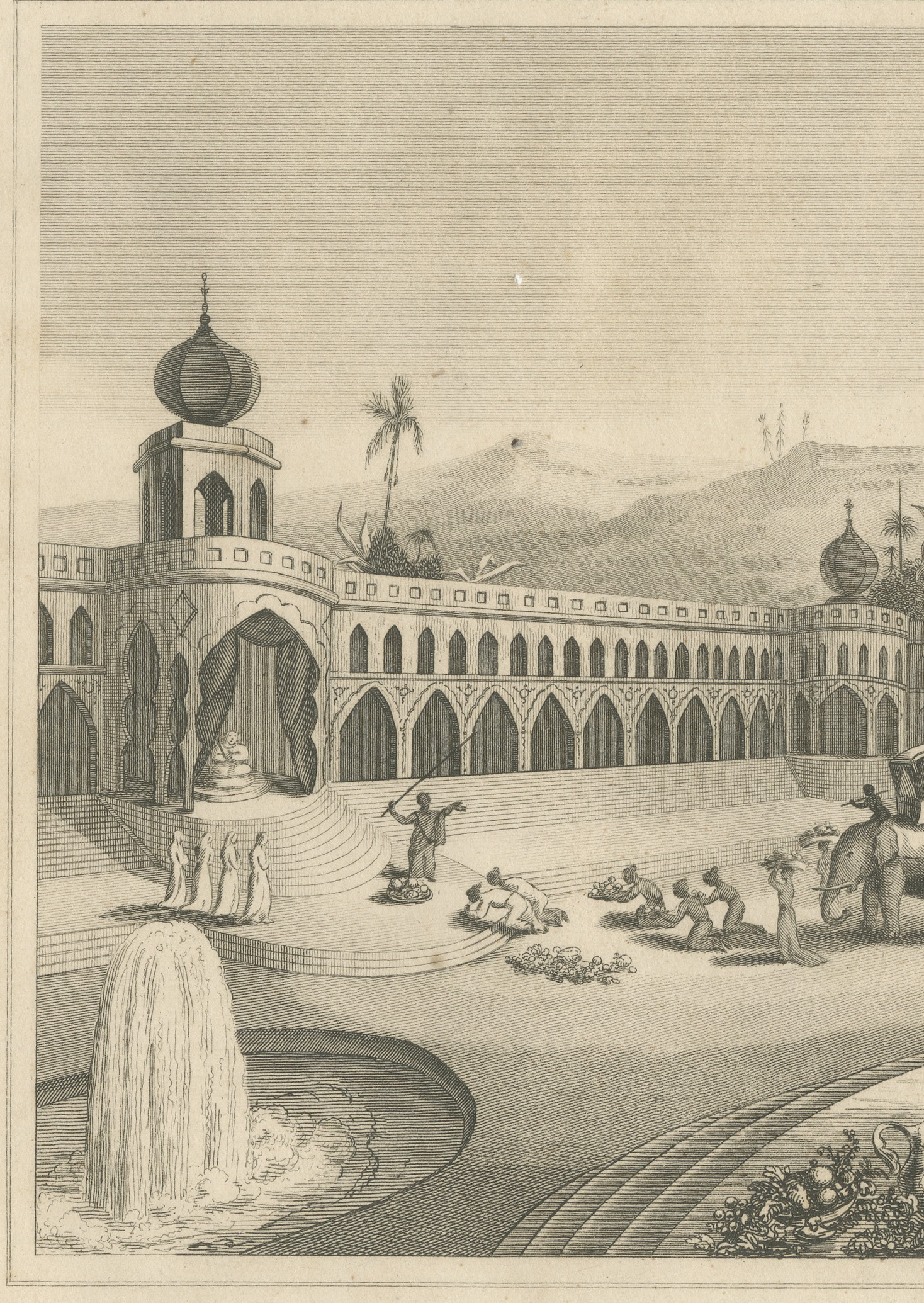
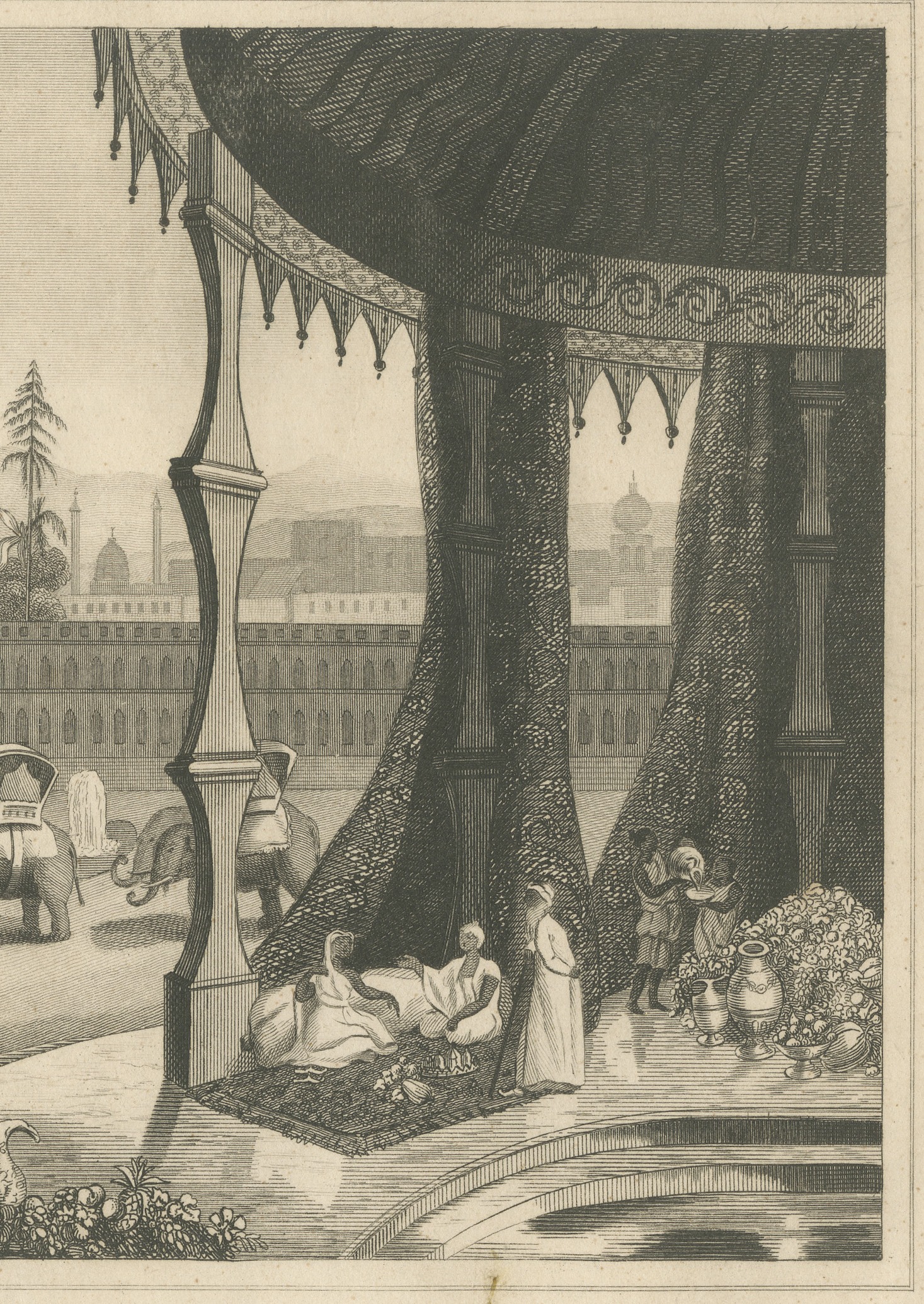
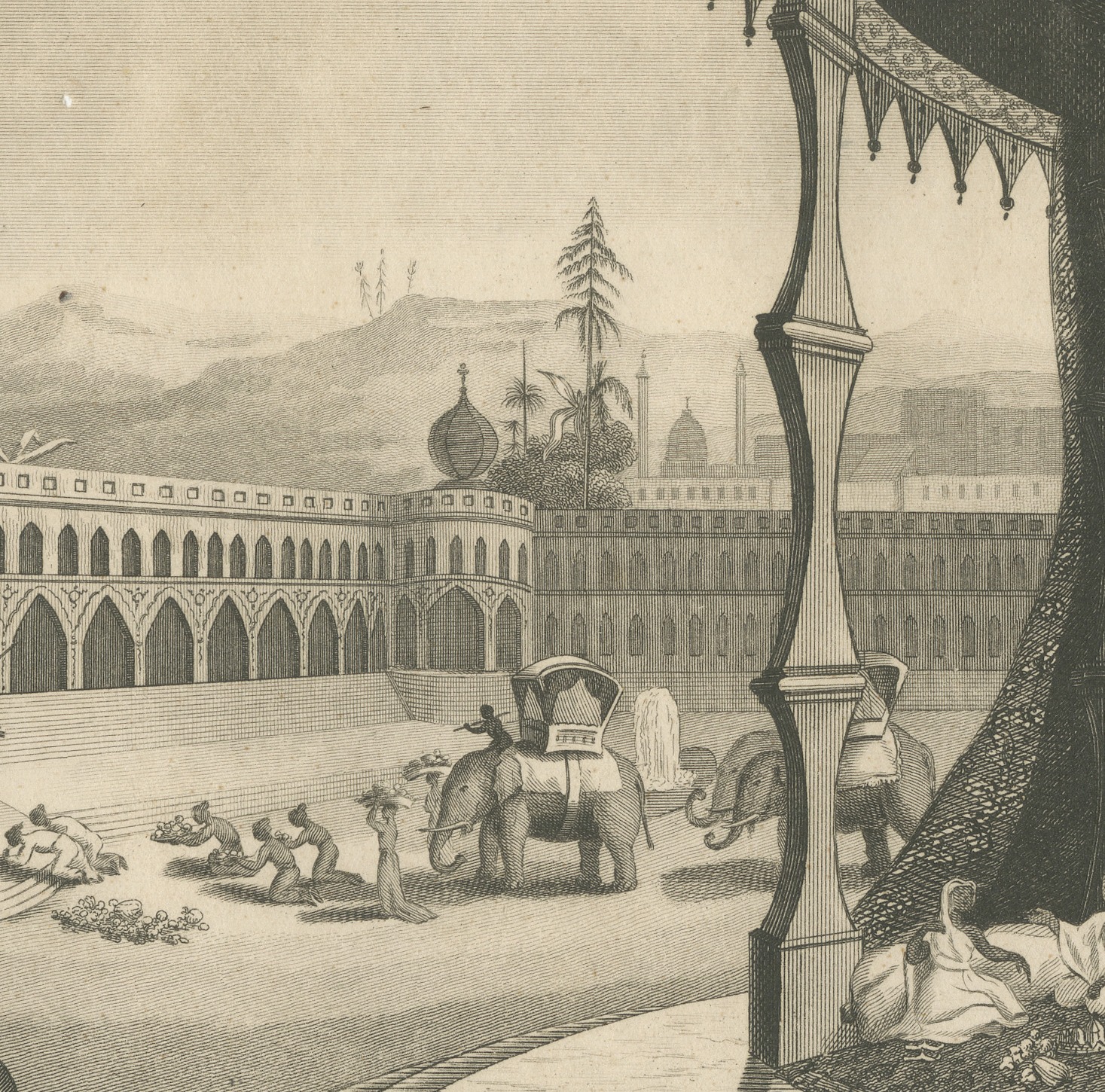
A grand ceremonial scene lettered "Scene in the East Indies" and "Offerings to the Great Brahma", with the imprint "London, Published by Thomas Kelly, Paternoster Row." The setting is a vast palace court enclosed by long two story arcades with pointed arches, entered at the left through a pavilion crowned by an onion dome. Before a curtained shrine at the top of a broad flight of steps, worshipers kneel and prostrate themselves, laying flowers and fruit on the ground, while elephants carrying canopied howdahs process across the court. In the foreground a great fringed canopy shelters richly dressed figures reclining on a carpet beside heaps of fruit, ewers and vases, with attendants standing by, and a fountain plays in a round basin at lower left. Beyond the walls rise palms, minarets, domes and distant mountains.
In the language of the time the East Indies meant India and the lands beyond it, and the naming of Brahma, the creator god of the Hindu trinity, reflects the way British publishers introduced Hindu belief to a general readership through the reports of travelers and officials of the East India Company. The composition, with its mixture of Mughal domes, Gothic arcades and theatrical drapery, is best seen as a European imagining of Indian ceremony rather than a record of a particular place.
Thomas Kelly of Paternoster Row was one of the most successful London publishers of part works, issuing illustrated geographies and histories of the wider world in weekly numbers. This plate carries his imprint without a street number or date, and its style places it around 1820. No artist or engraver is named.
The engraving is crisp, with fine work in the architecture and the massed figures. It will appeal to collectors of Indian subjects, of European views of the East and of Regency book illustration.
This is an original antique print, not a modern reproduction. This item is sold unframed.