 The sheet, as you receive it
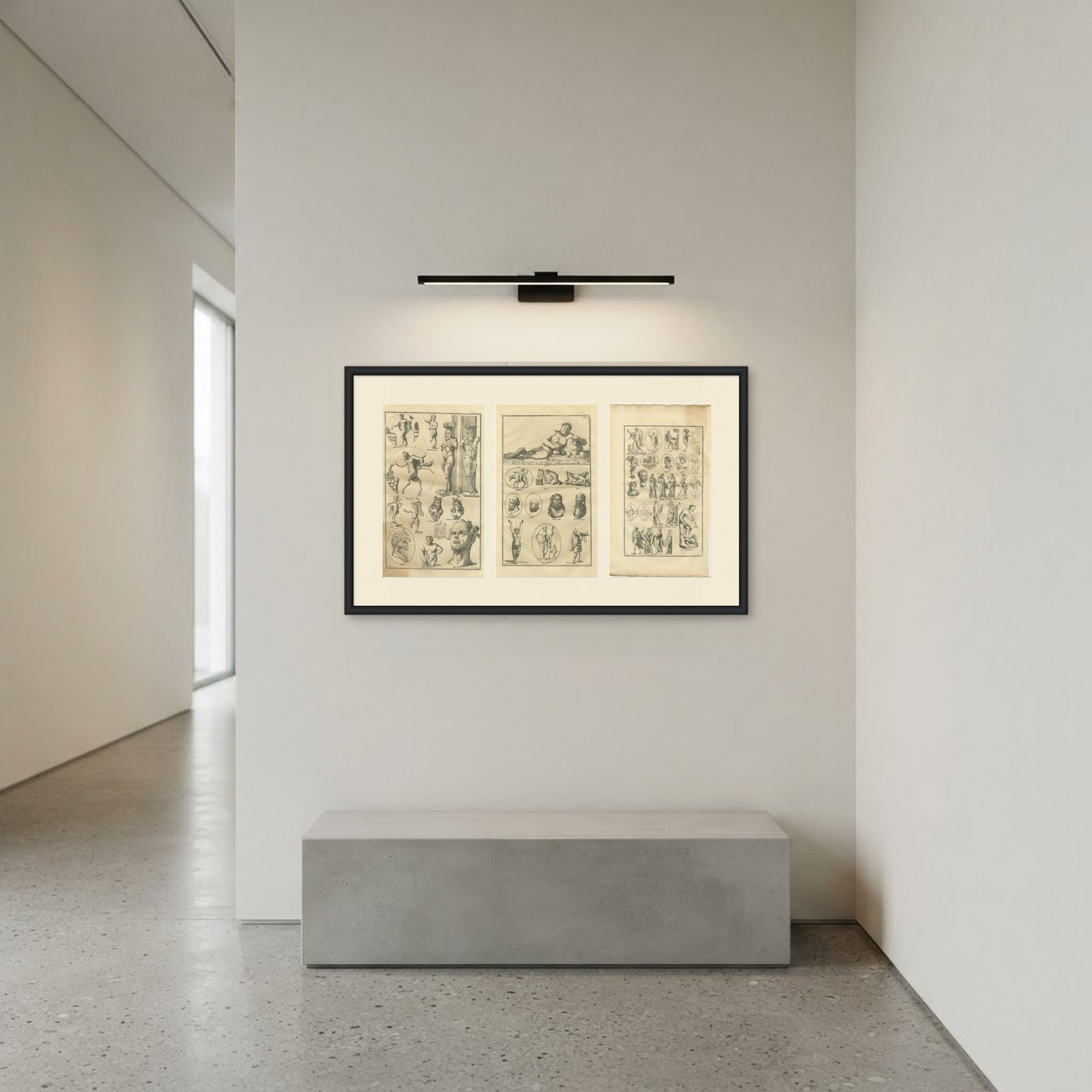 In the room 1
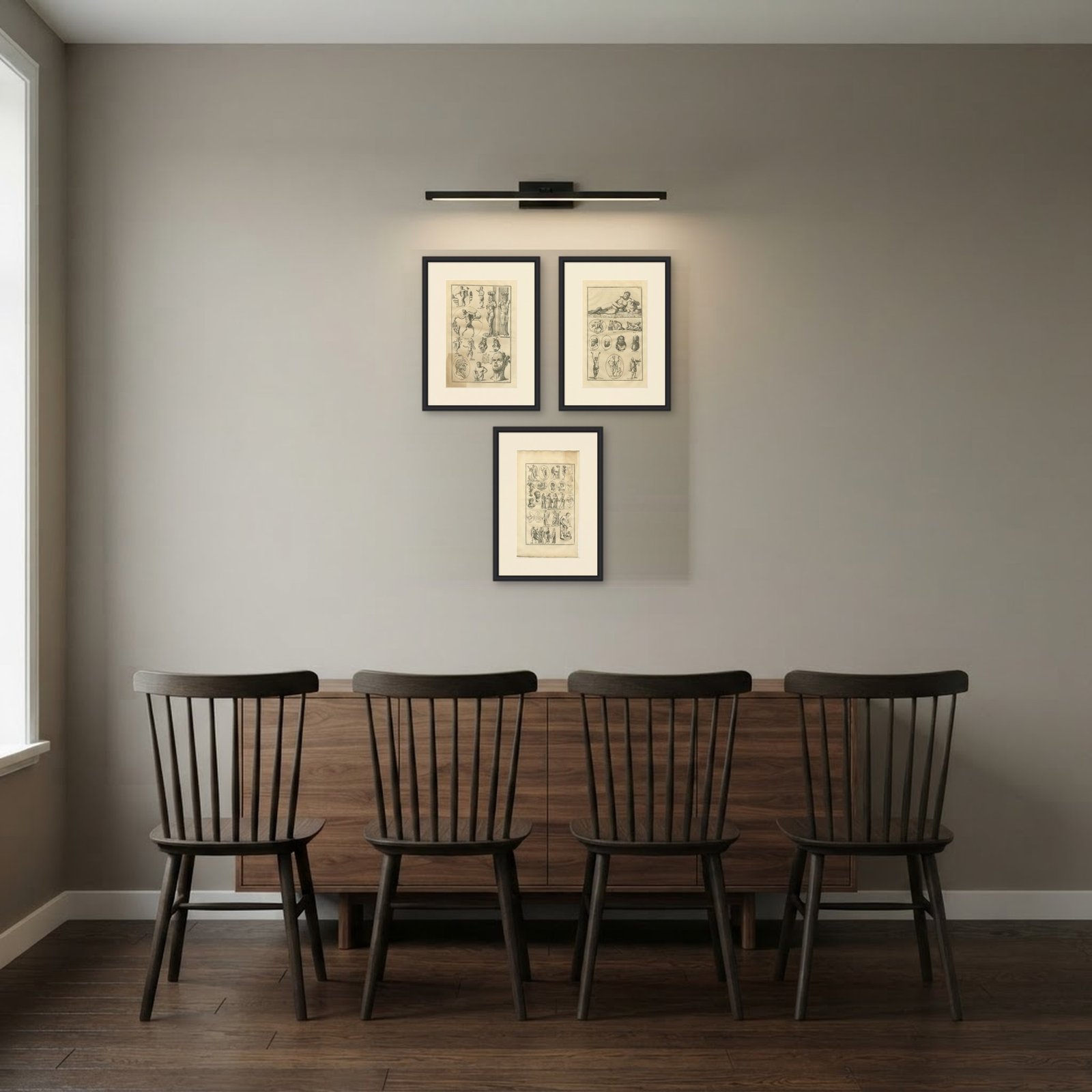
Interior designers: BarTrade members buy at their trade price. How it works
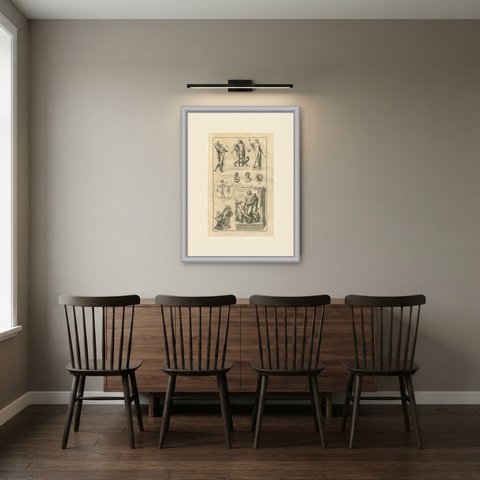
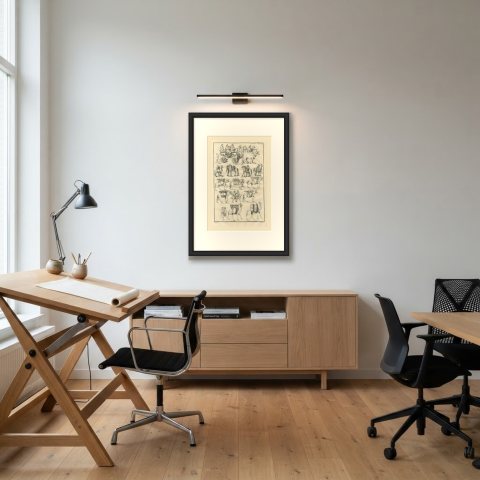
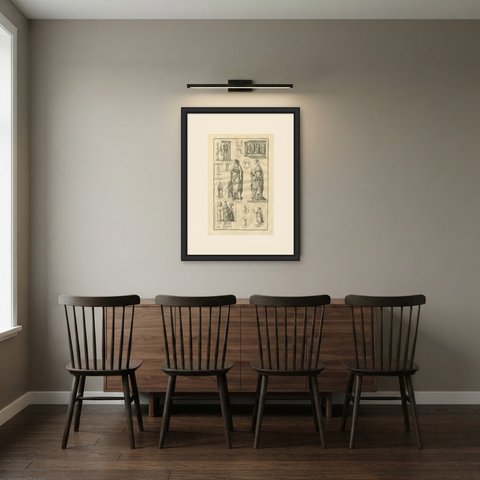
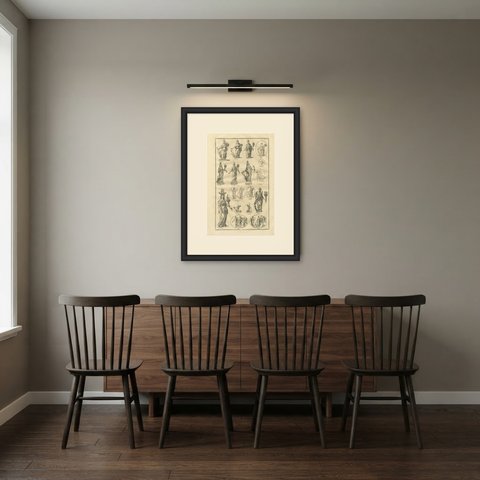
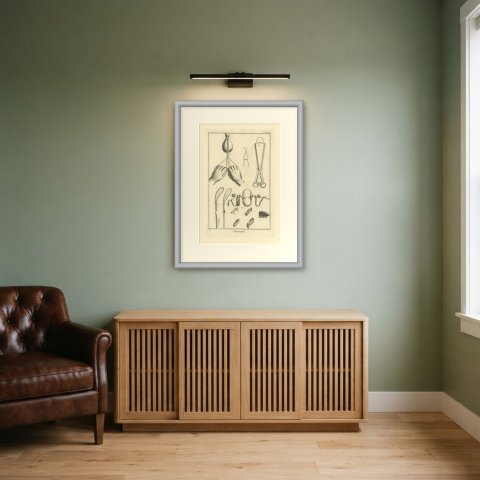
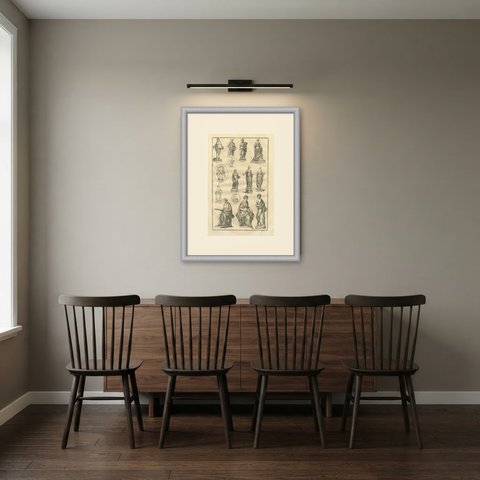
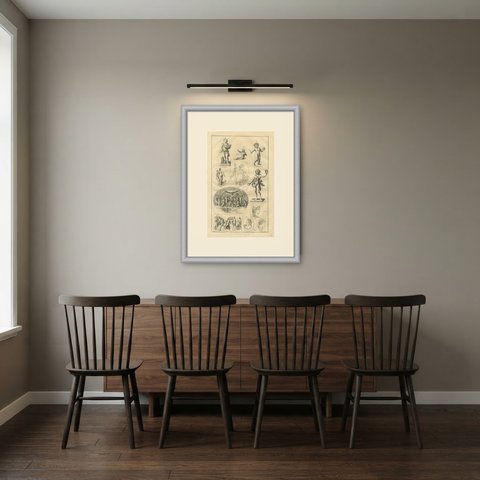
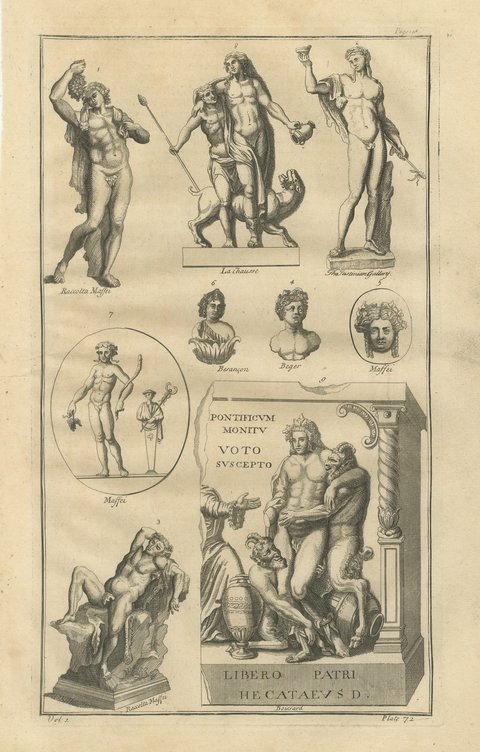
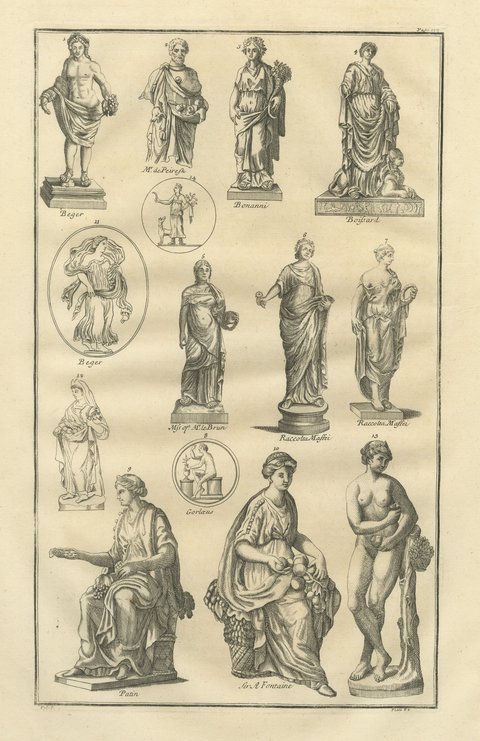
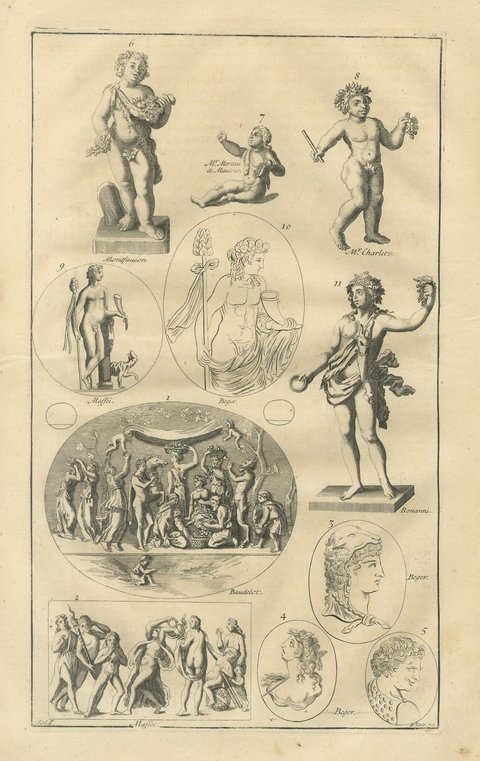
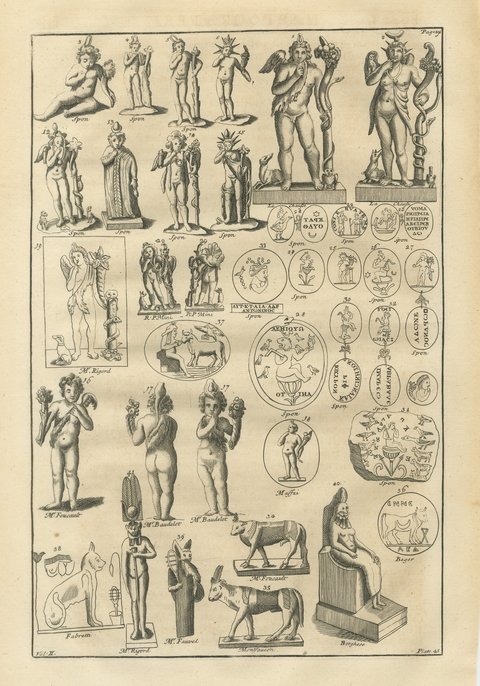
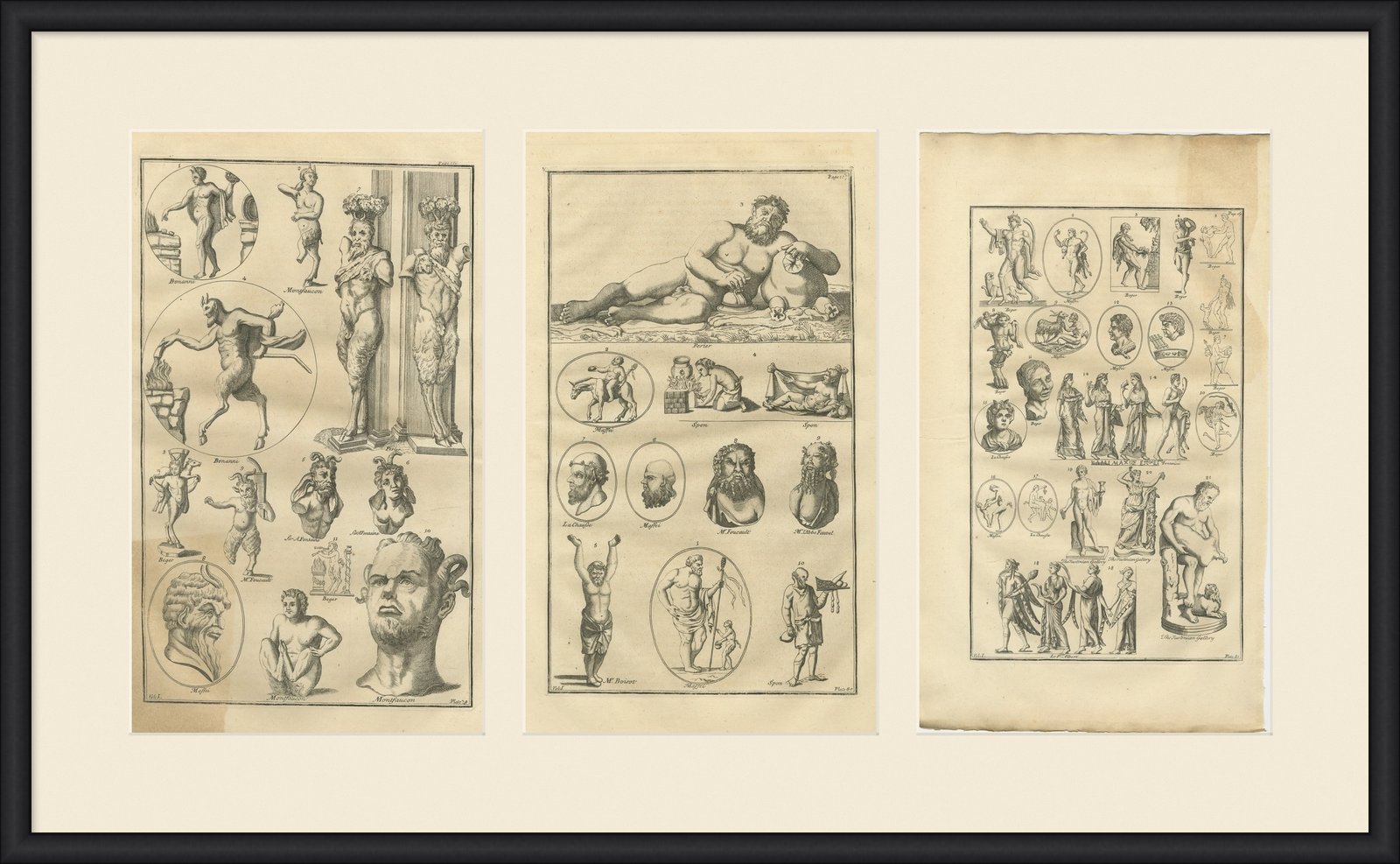
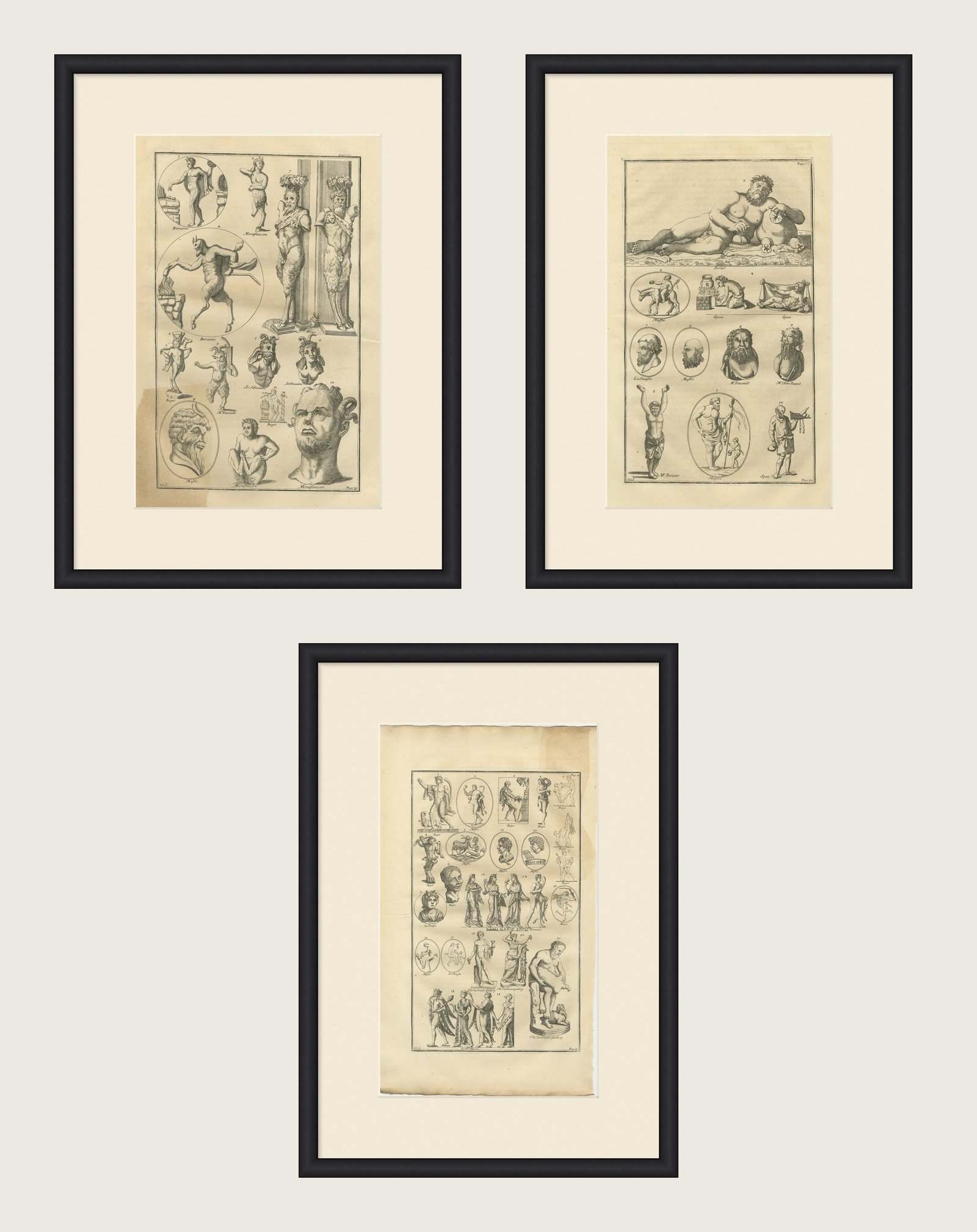
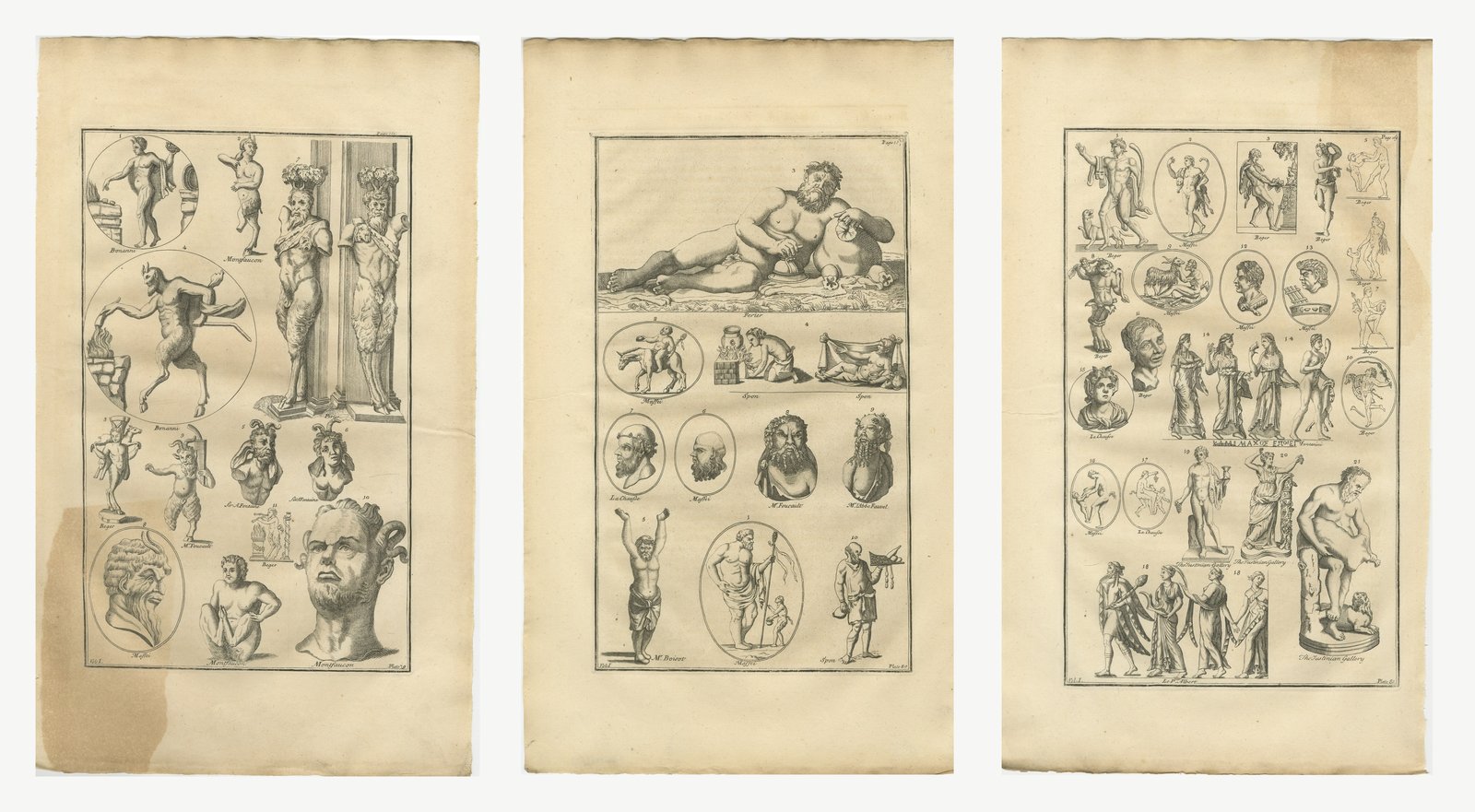
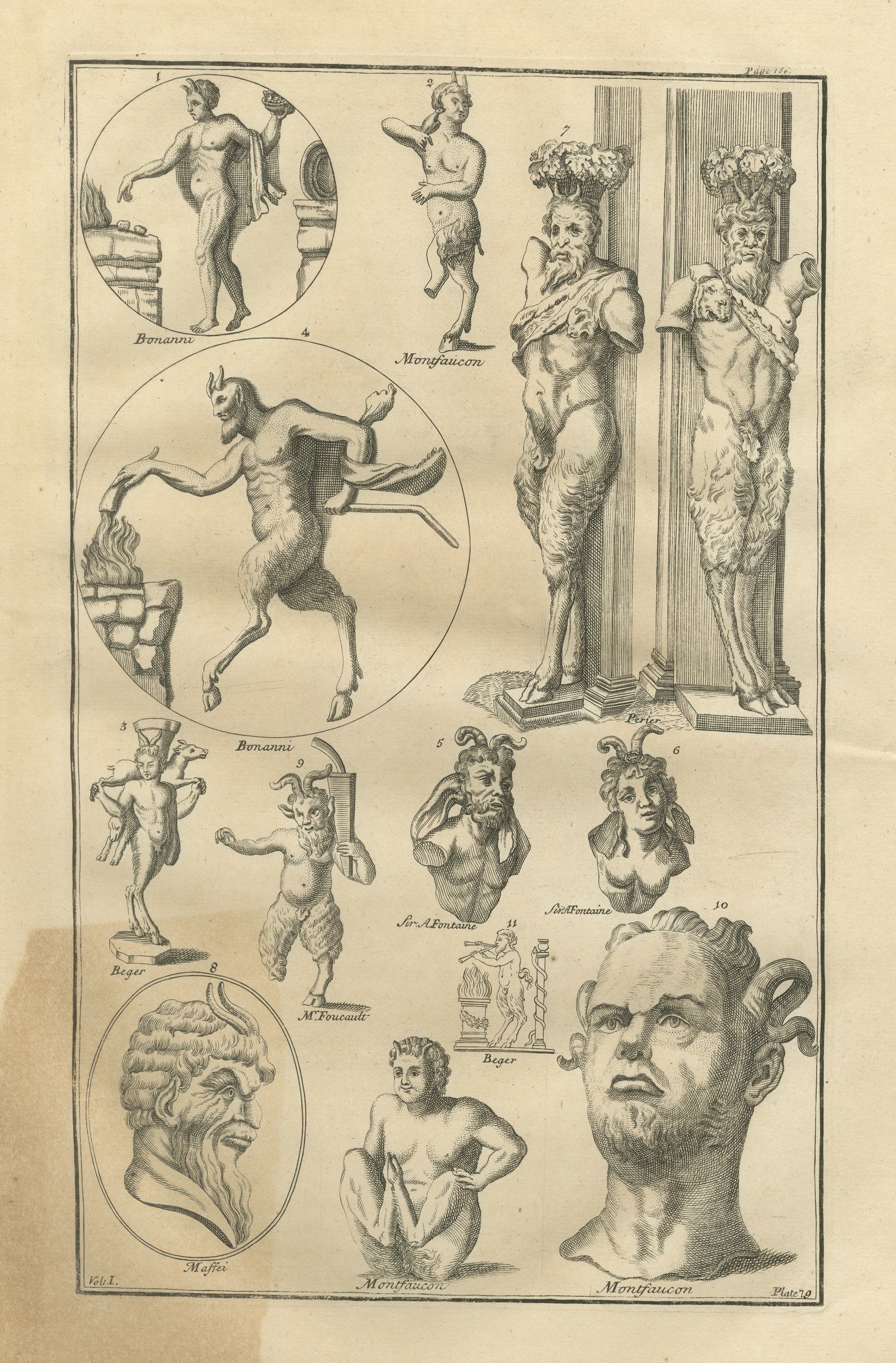
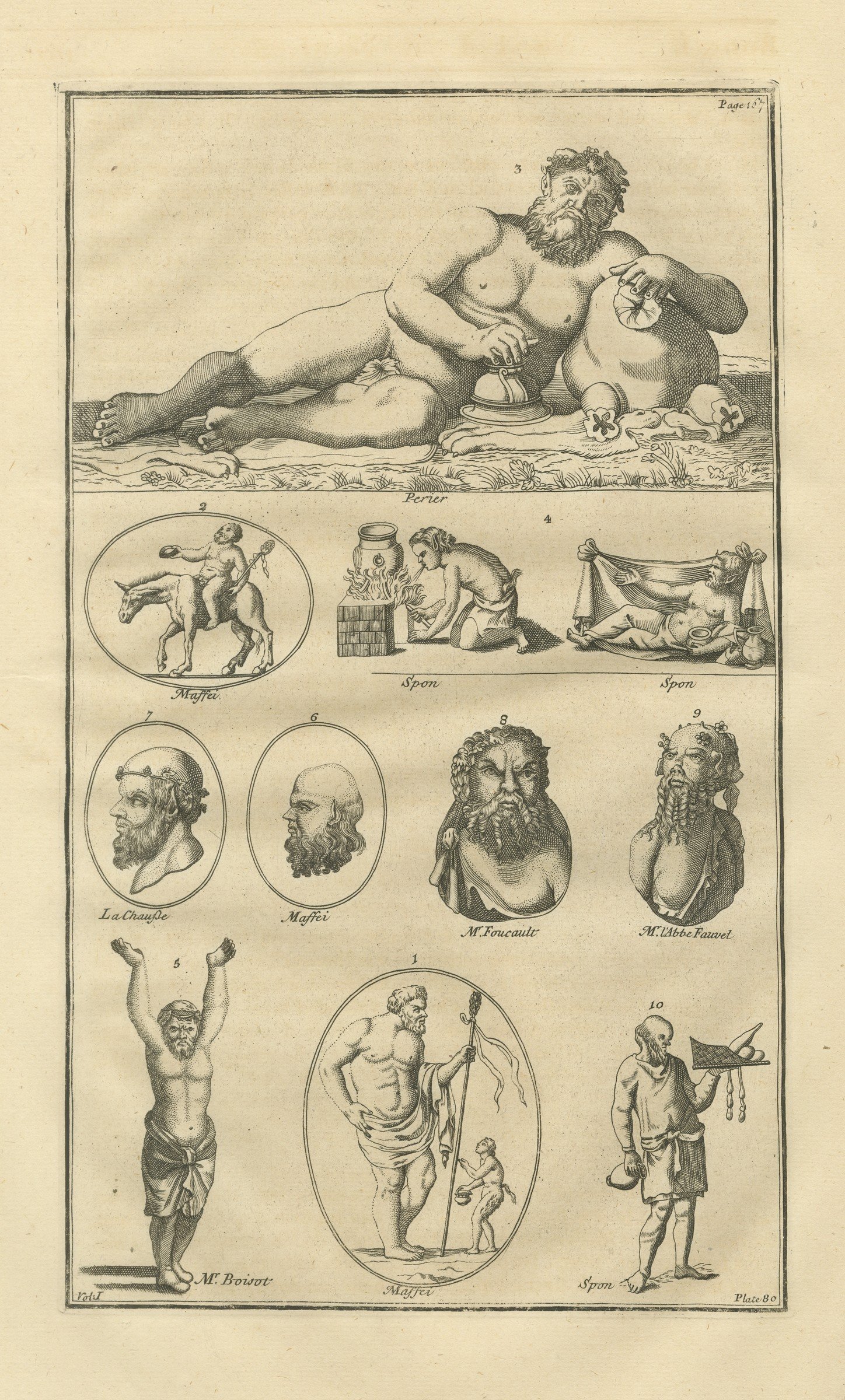
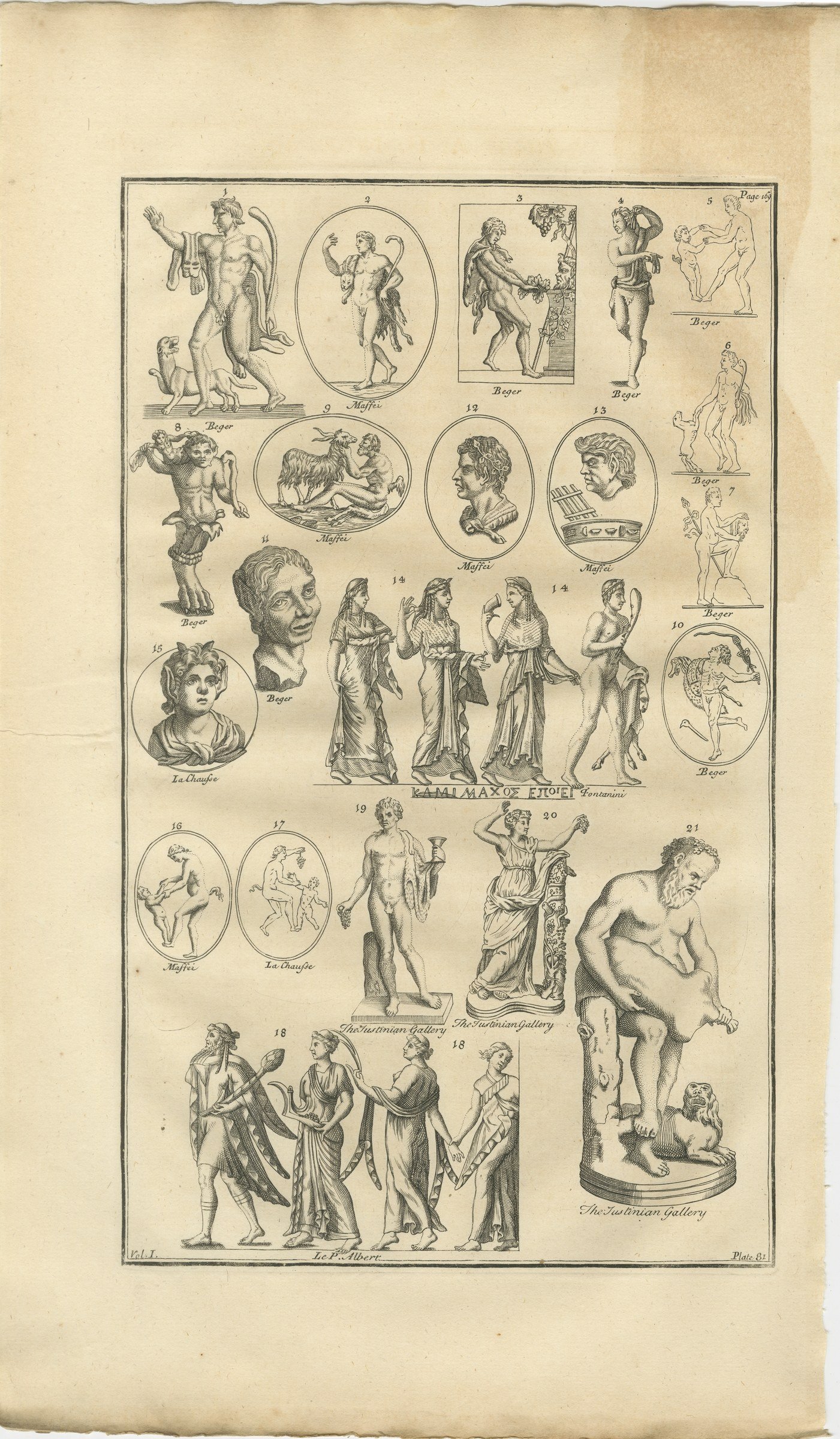
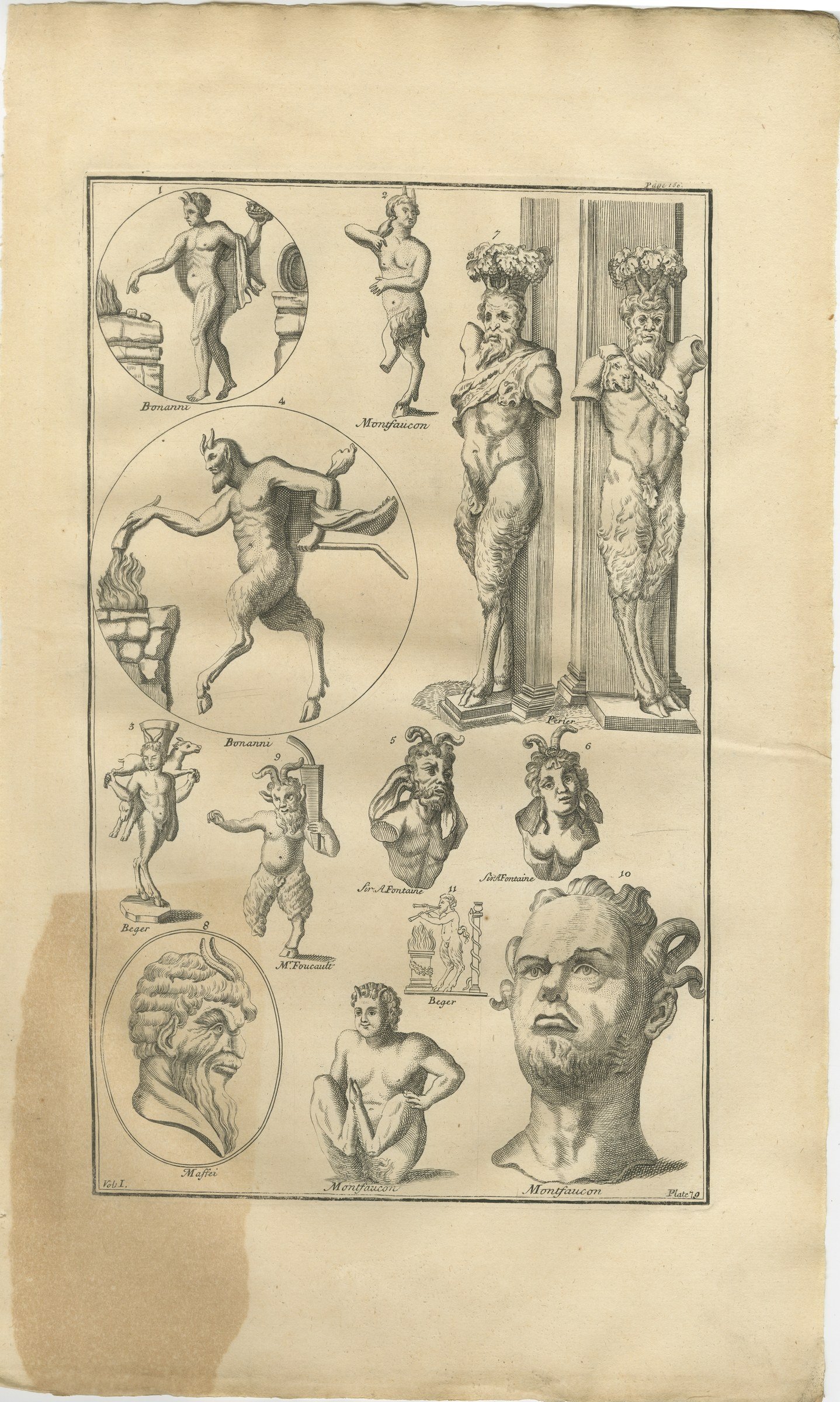
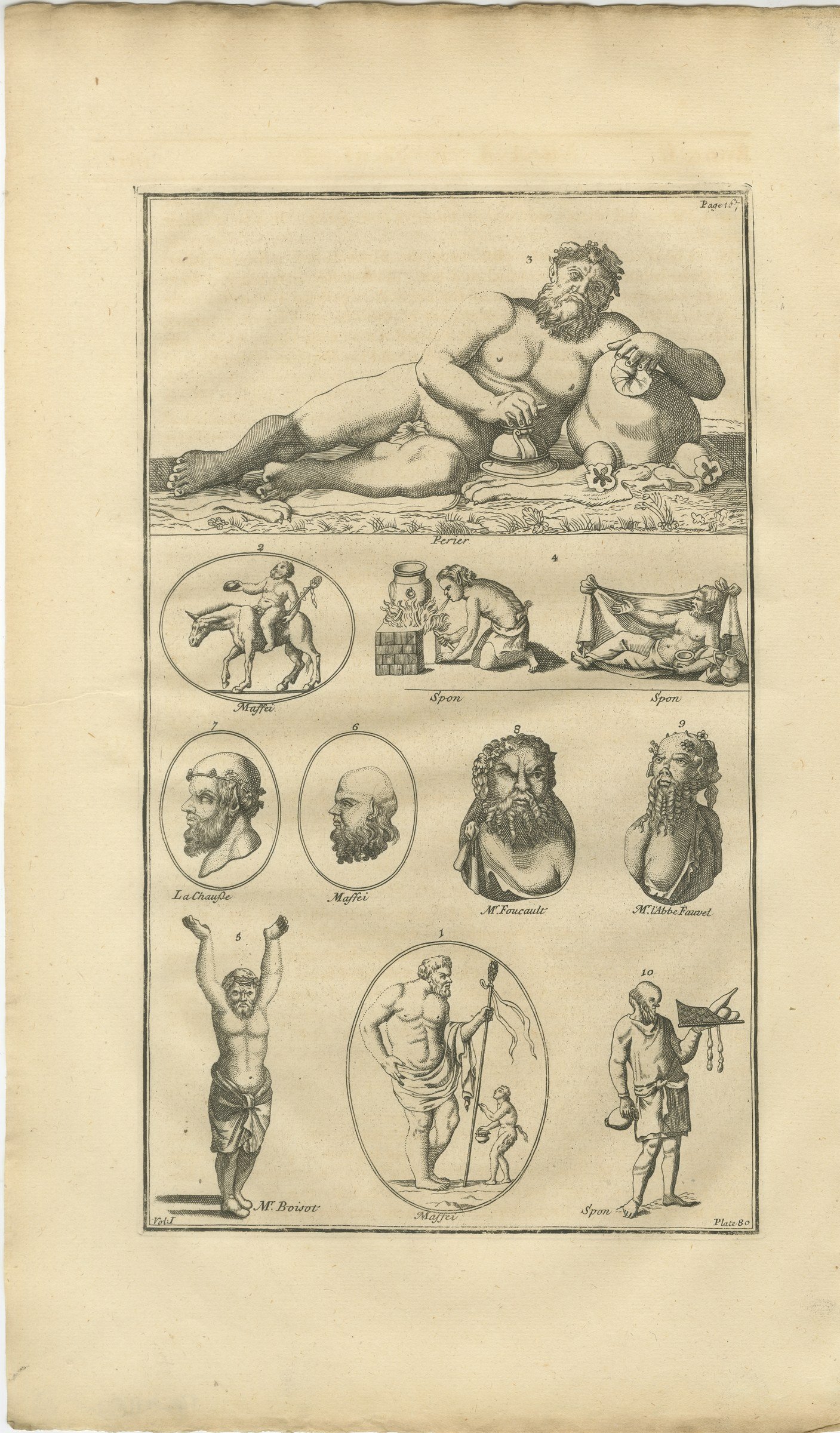
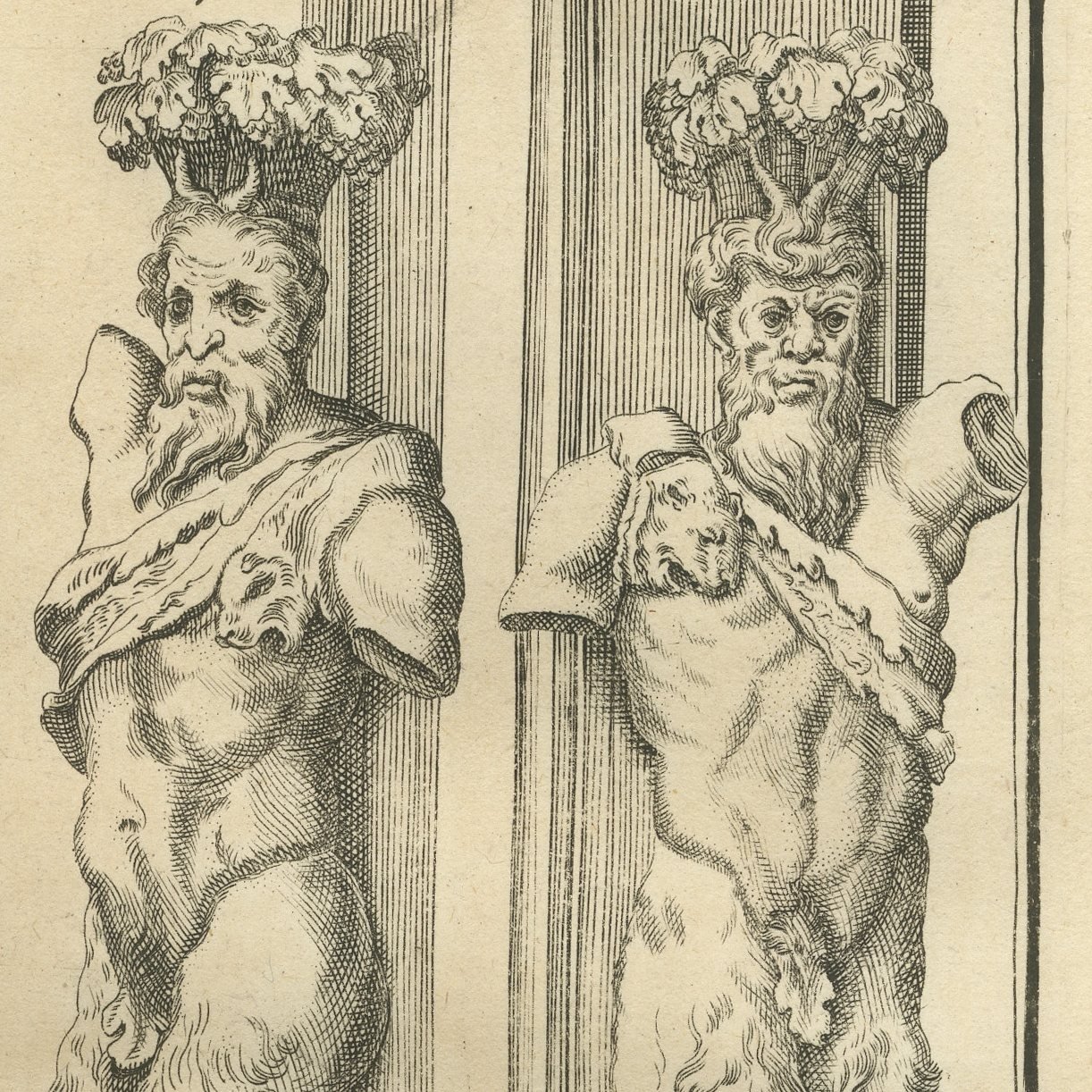
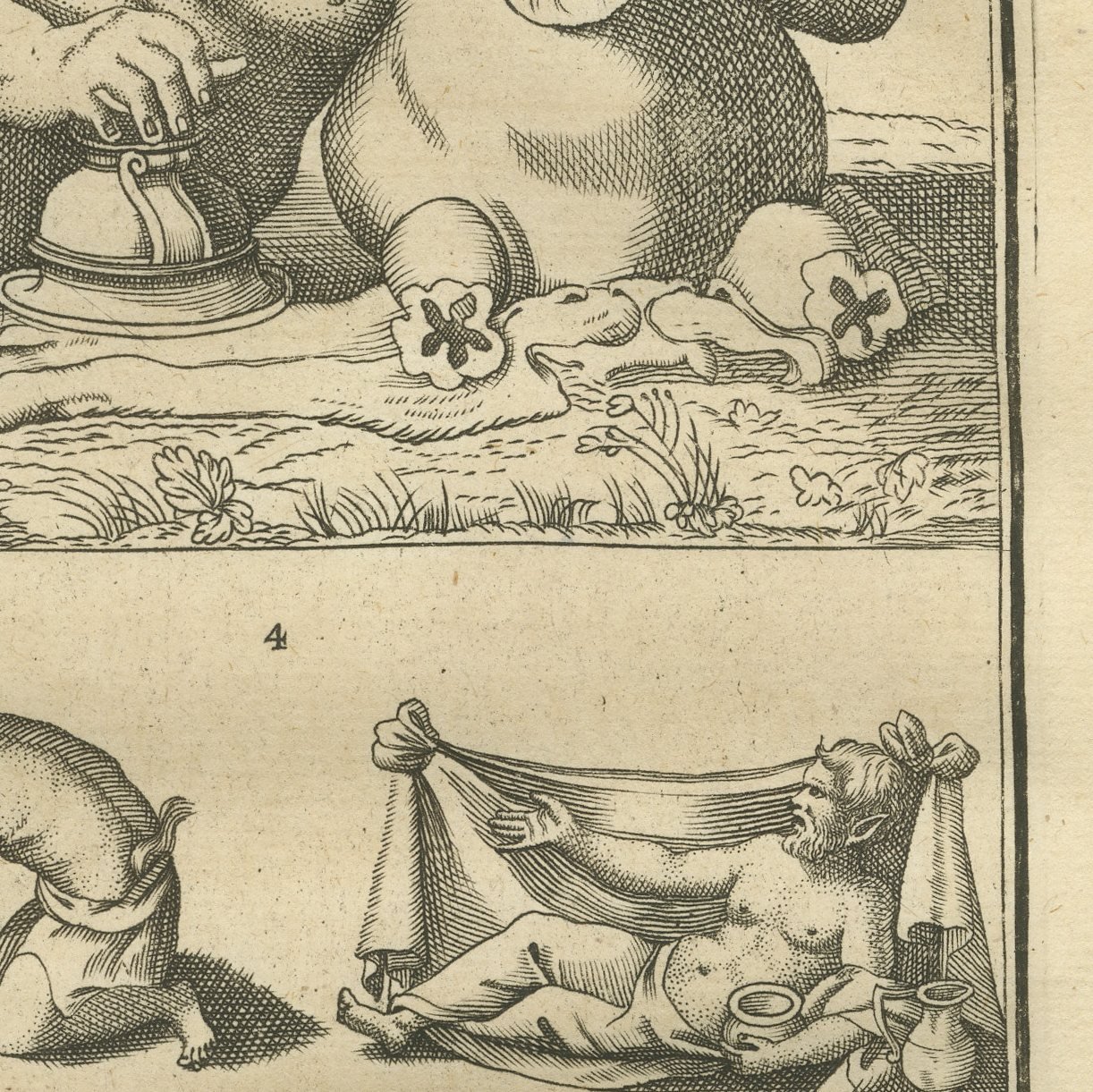
This is a set of three original antique engravings of 1721, sold together, carrying the whole train of Bacchus as Bernard de Montfaucon assembled it from the marbles and bronzes of Europe. The first sheet is given to satyrs and fauns: two tall telamon figures, goat legged and shaggy from the waist down, stand with their arms raised to carry an entablature, and around them are a satyr at rest against a tree stump, a young faun with the pipes and a row of heads with pointed ears and small horns. The second sheet belongs to Silenus, the fat bearded old tutor of the god, drawn as a colossal reclining figure propped on one elbow over a wineskin, again seated sideways on an ass with a boy steadying him, and then as standing bronzes, herms and a row of bald bearded heads. The third sheet carries the dancers: maenads in thin clinging drapery that streams behind them as they turn, one with the head thrown back, taken from a relief signed across its base in Greek KAΛΛIMAXOΣ EΠOIEI, Callimachus made it, with a drunken Silenus from the Justinian Gallery beside them.
The plates come from Volume the First of Antiquity Explained, and Represented in Sculptures, the English translation of L'Antiquité expliquée et représentée en figures, published in Paris in 1719 by Bernard de Montfaucon (1655 to 1741), a French Benedictine monk of the Congregation of Saint Maur. The translation is by David Humphreys, fellow of Trinity College, Cambridge, and was printed in London by J. Tonson and J. Watts in five folio volumes, the first two dated 1721 and the other three 1722. The first volume deals with the gods of the Greeks and Romans and with the heroes raised to divinity. Montfaucon arranged the surviving images of ancient monuments by subject, so that each plate gathers figures copied from statues, reliefs, altars, gems, coins and other objects, numbered to his commentary. These plates carry no engraver's name and no printed title.
The set is made up of Plates 79, 80 and 81 of Volume the First, each sheet lettered with its volume, plate and page number.
Three sheets, all age toned, with foxing through the margins and handling wear to the corners. Plate 79 carries a brown stain down the left margin. The paper is darker along the edges of all three.
The set is three original sheets sold together, never split. These are original antique prints, not modern reproductions. This item is sold unframed.