 The sheet, as you receive it
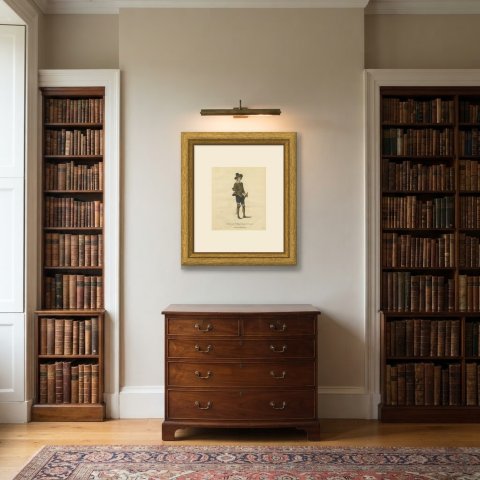
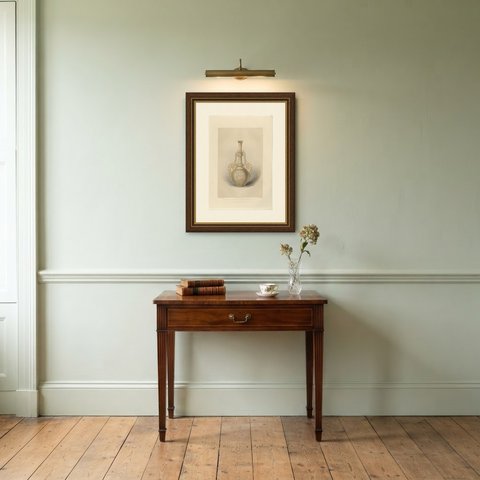
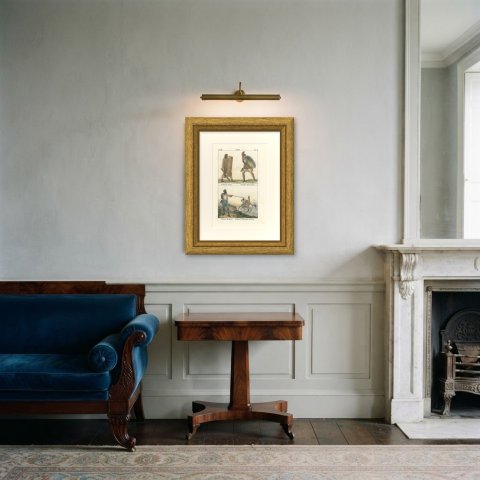
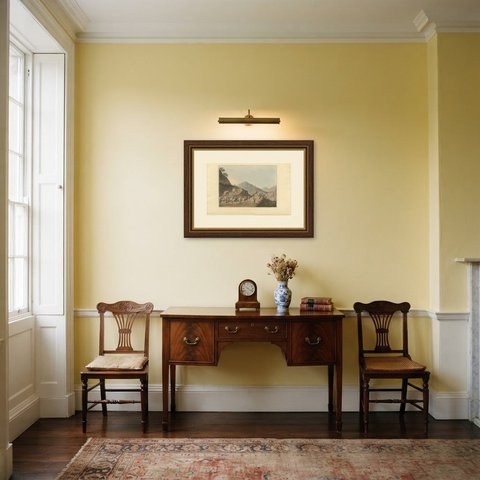
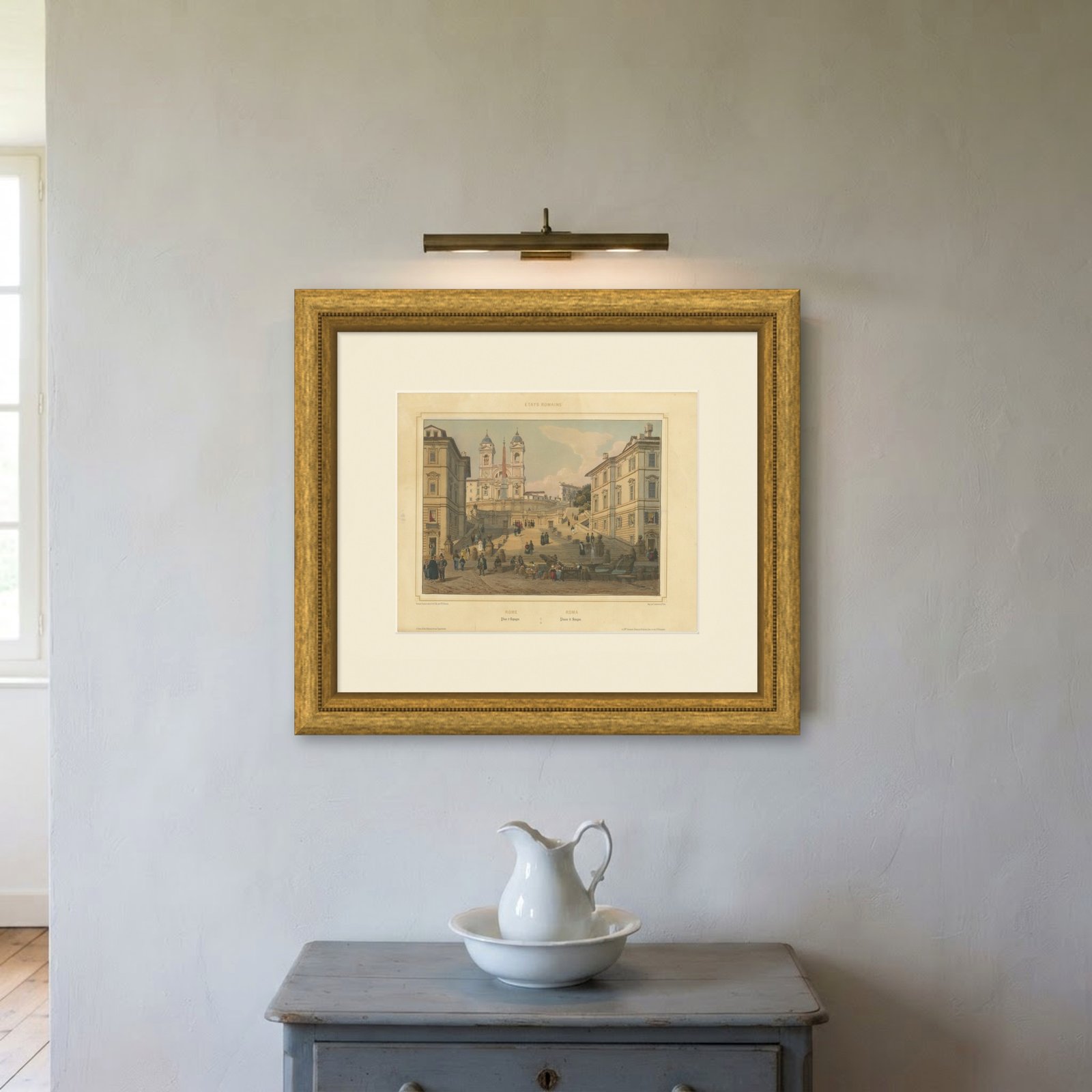
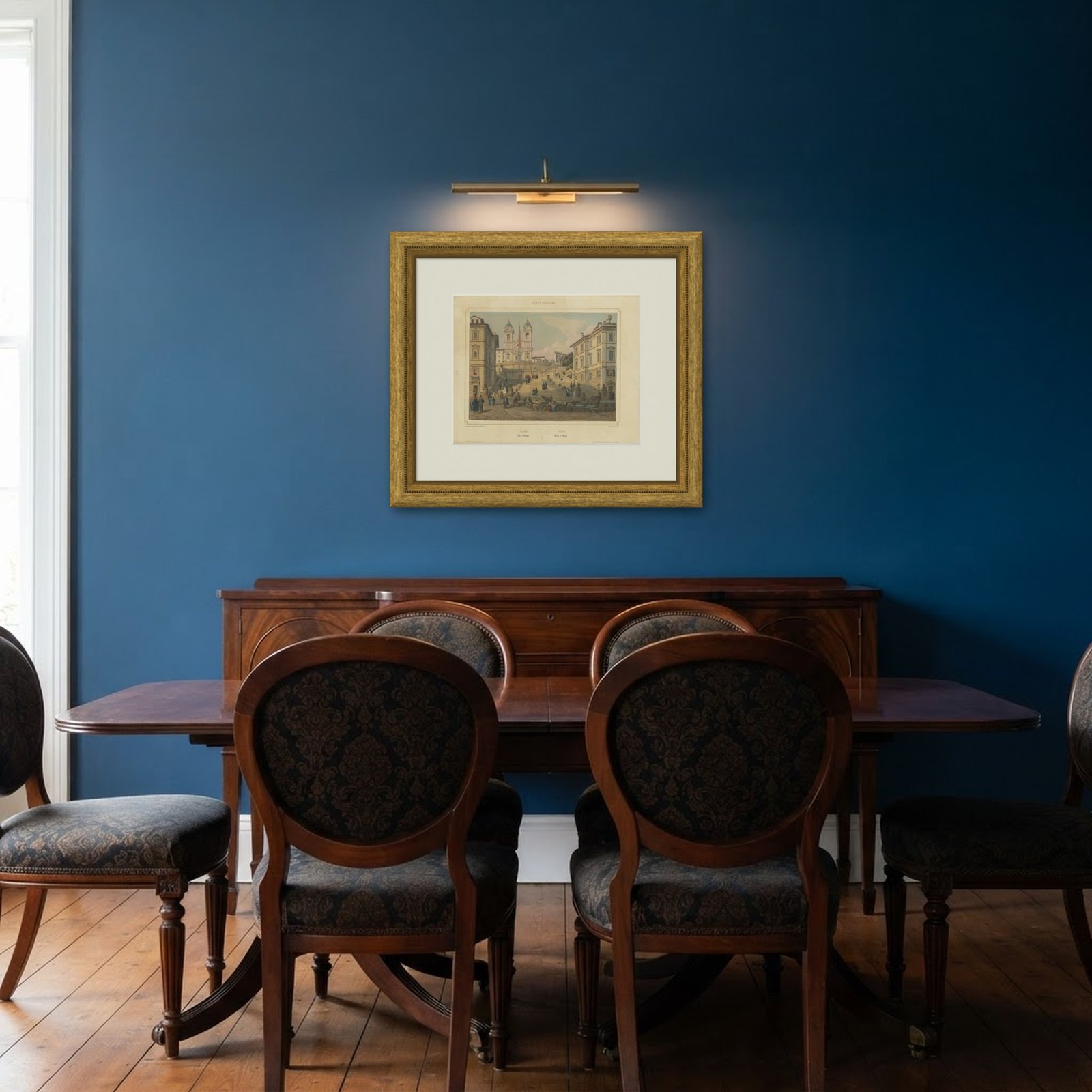 In the room
Interior designers: BarTrade members buy at their trade price. How it works
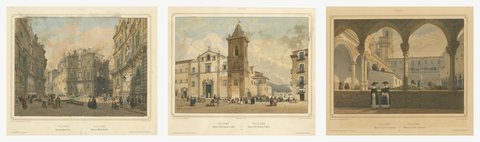
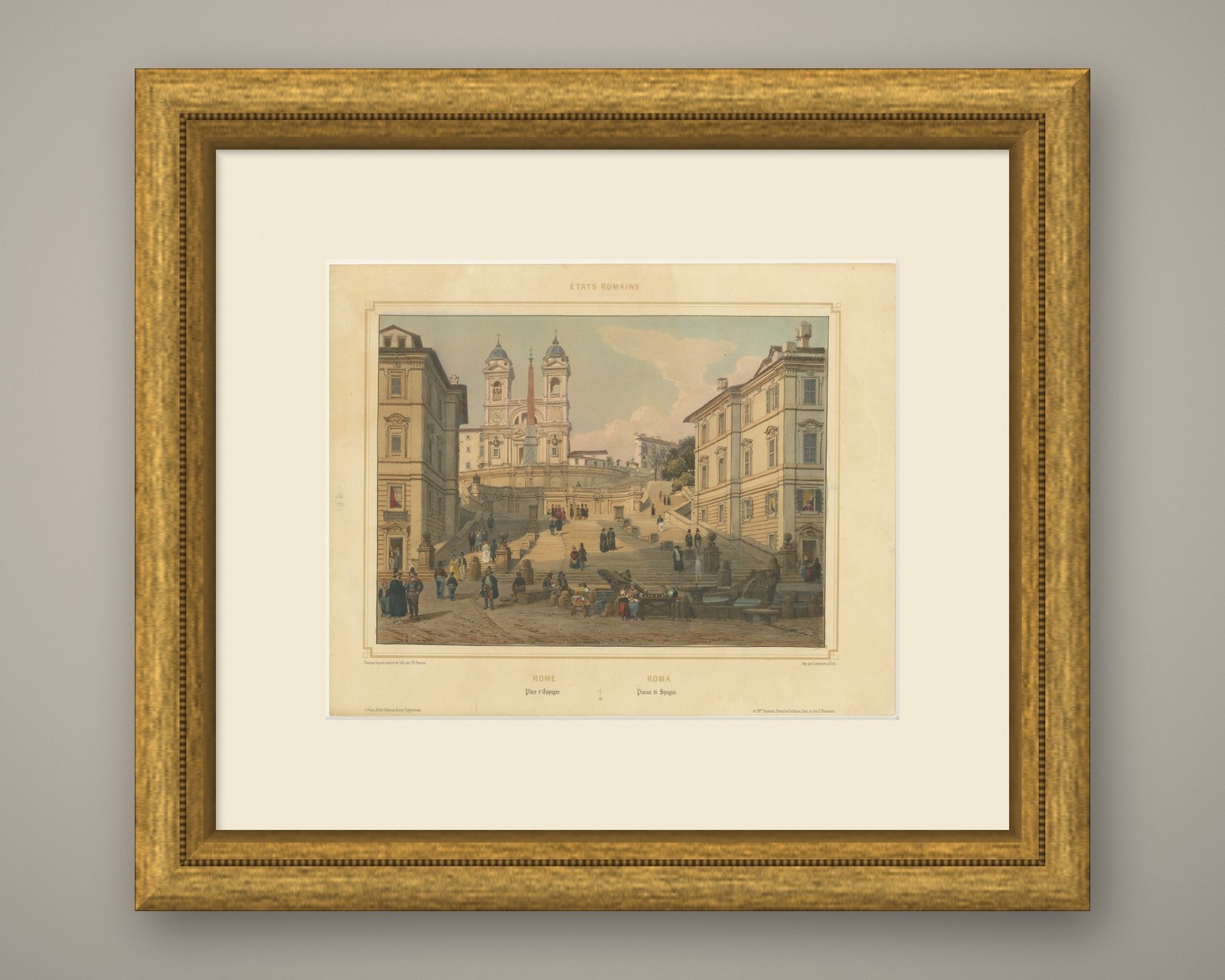
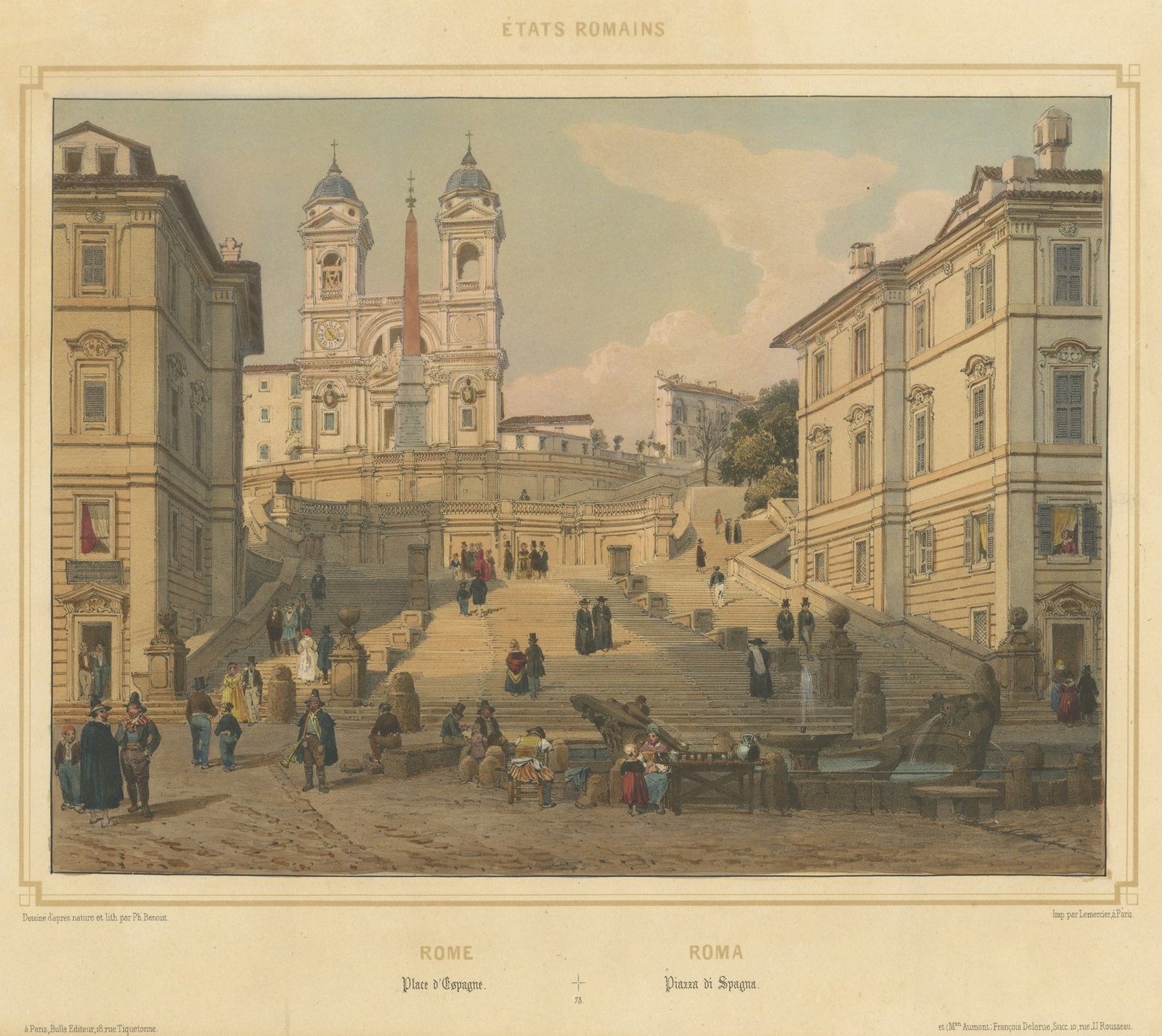
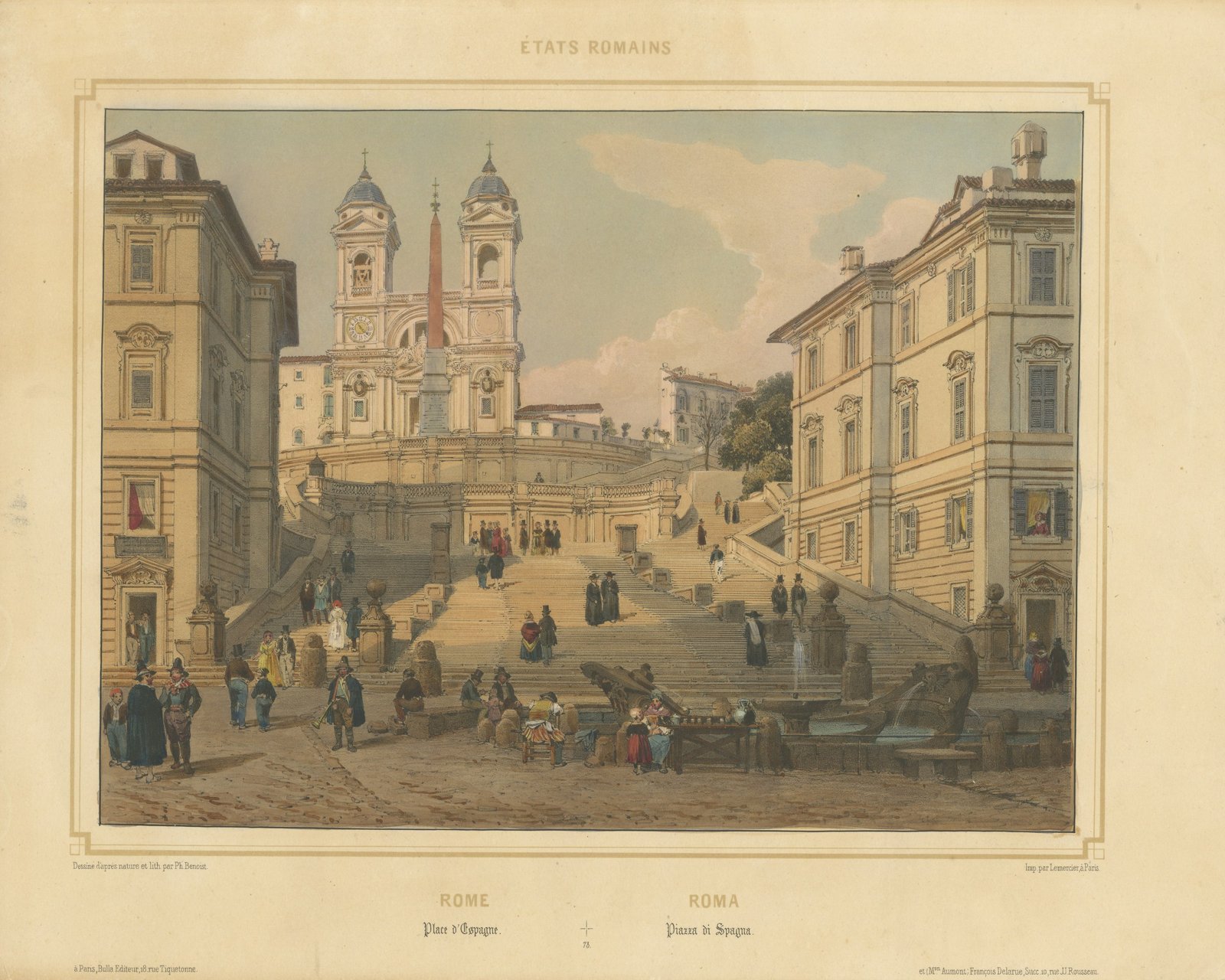
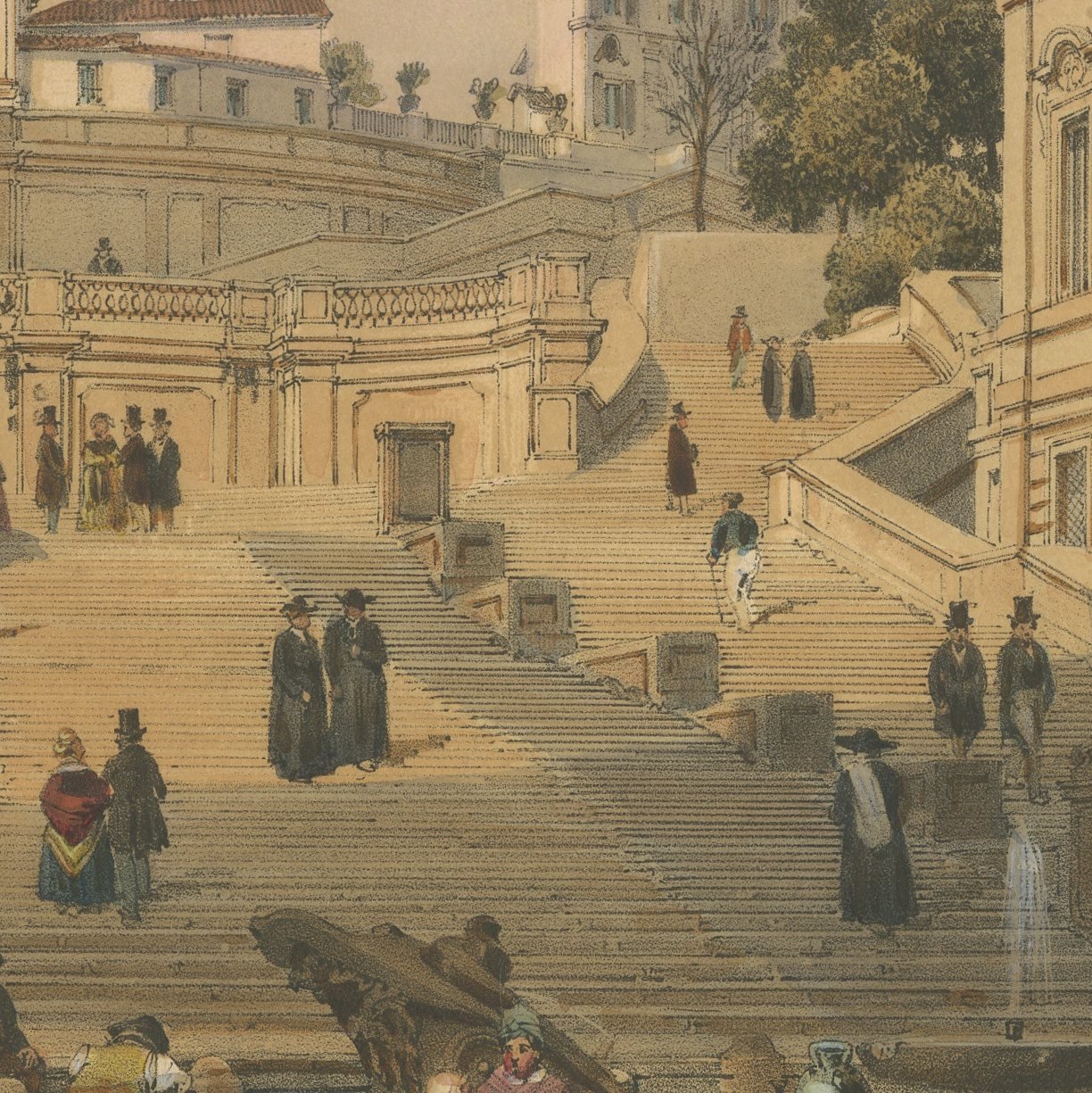
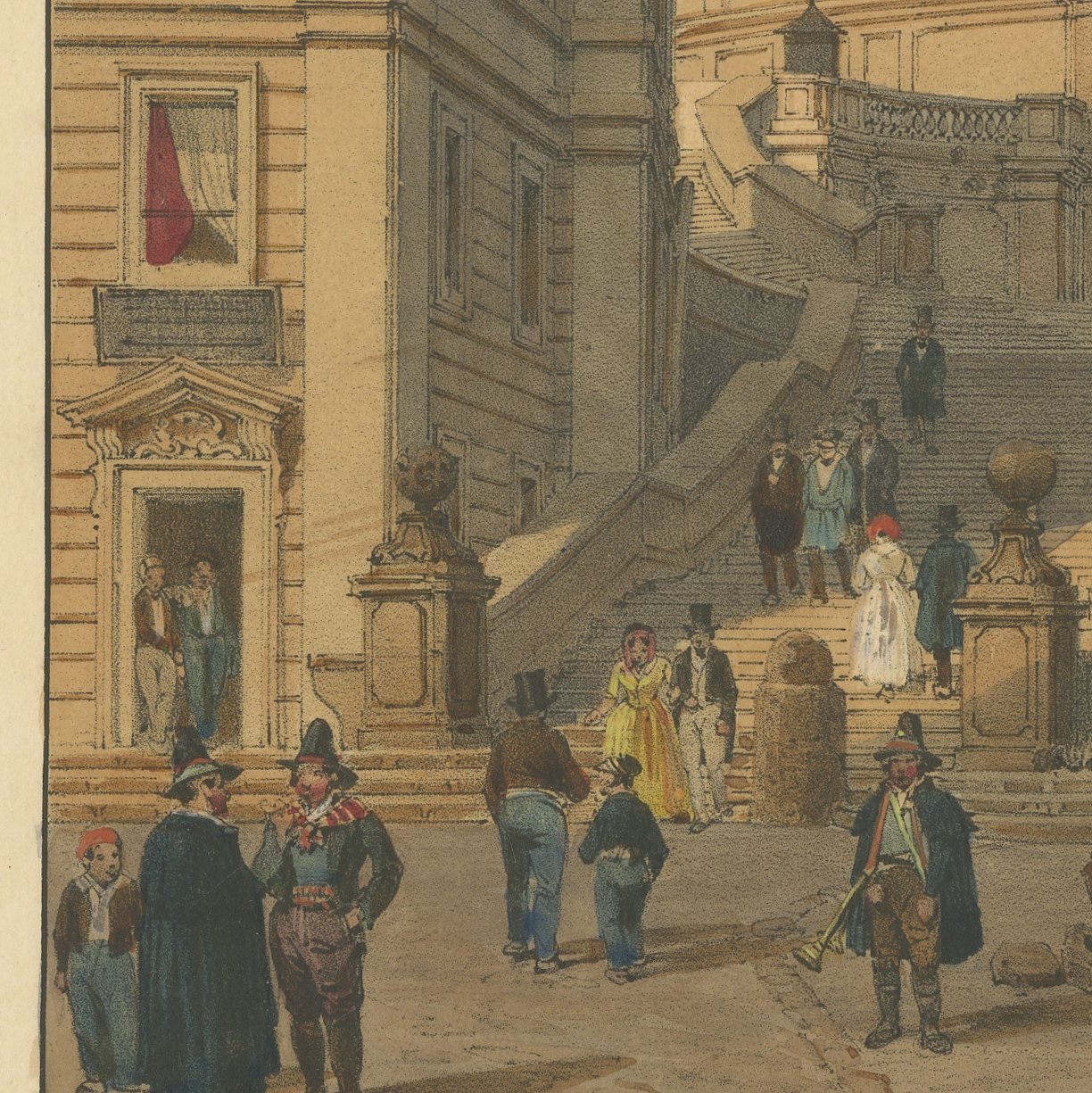
The Piazza di Spagna with the Spanish Steps and the church of Trinita dei Monti, Rome. This original antique tinted lithograph is lettered beneath the image in French and Italian, ROME, Place d'Espagne. and ROMA, Piazza di Spagna., under the section heading ETATS ROMAINS, and it was drawn from nature and lithographed by Philippe Benoist himself. The view shows the full sweep of the Spanish Steps rising to the twin towers of Trinita dei Monti, with the fountain and the flower sellers at the foot.
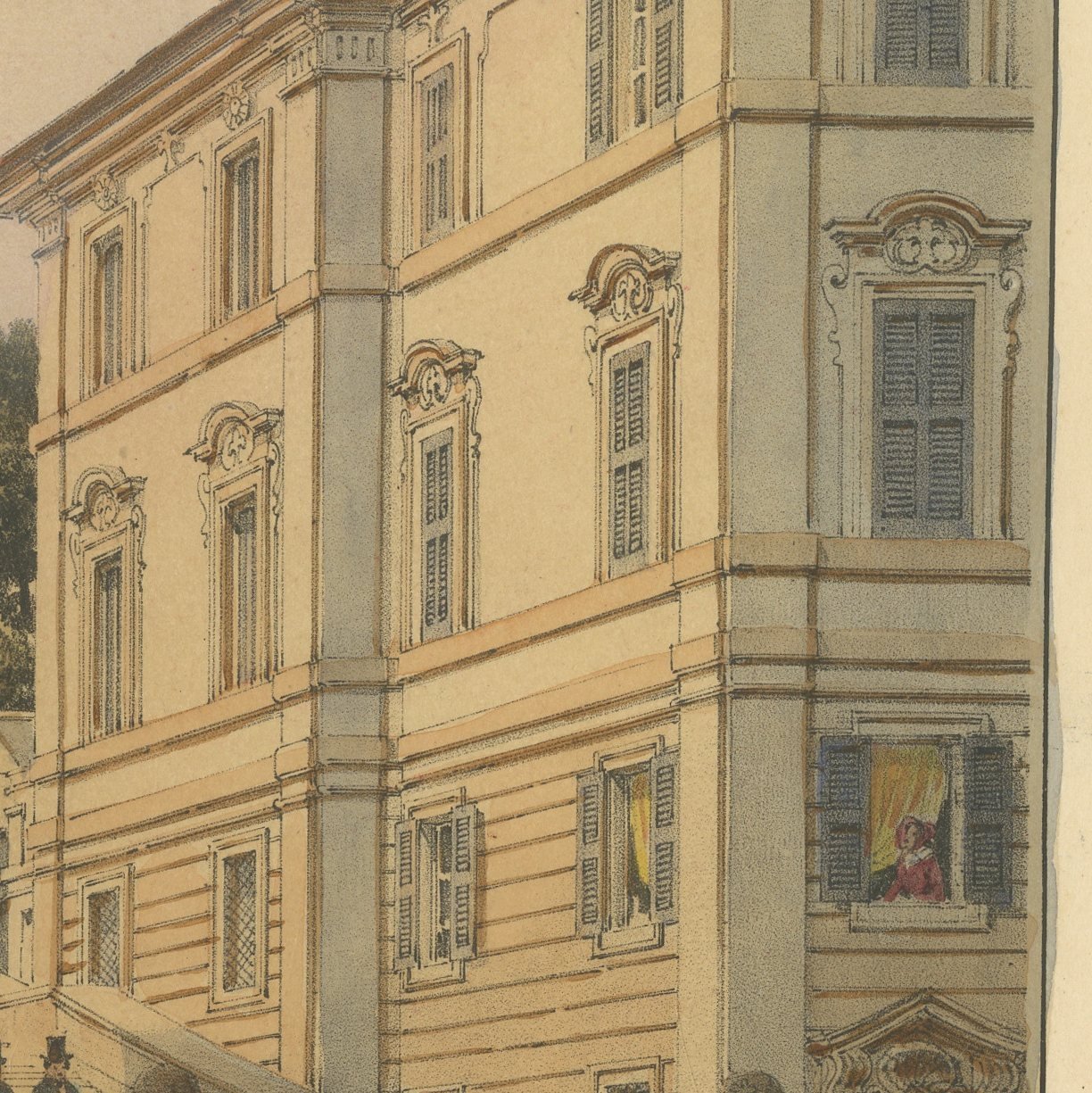
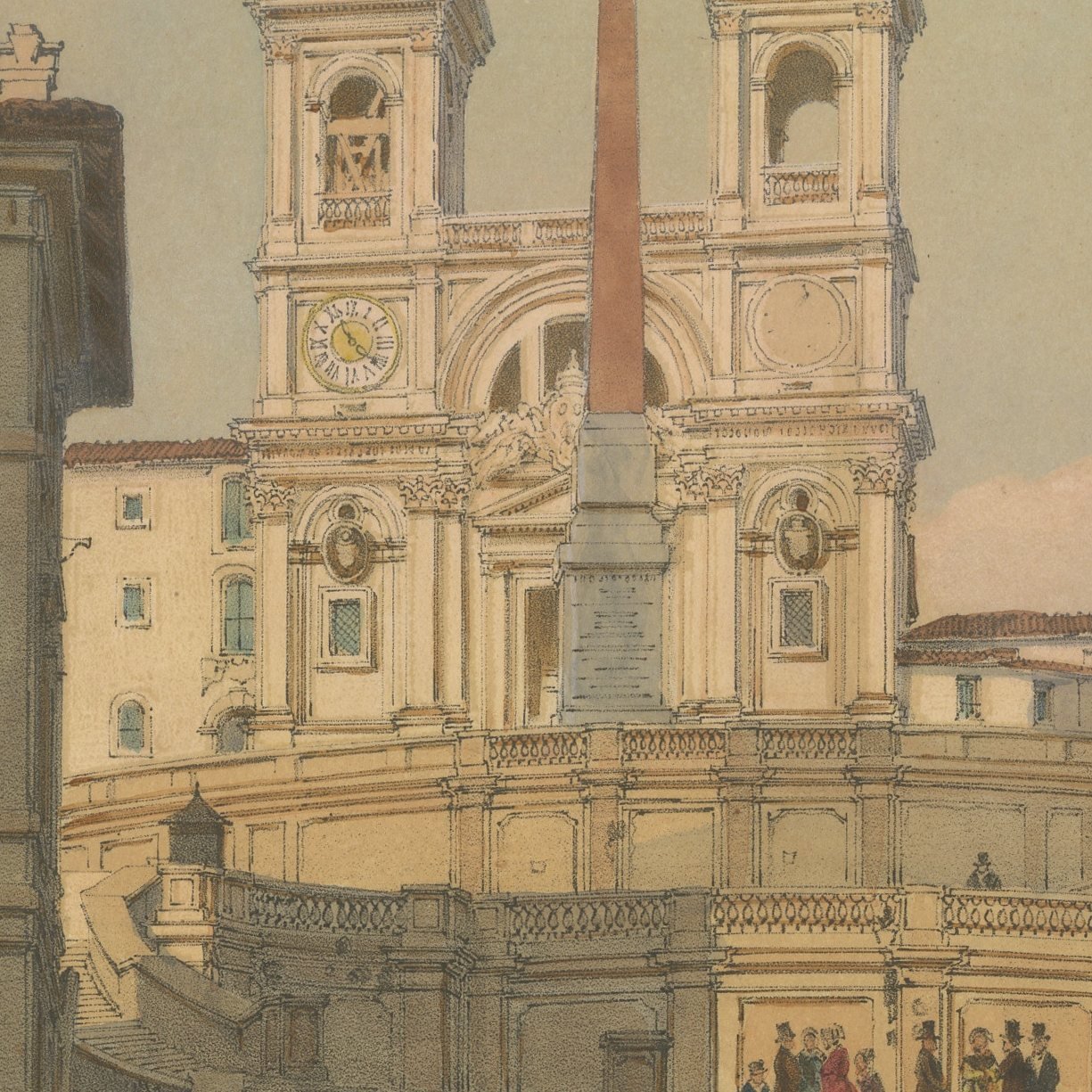
The plate comes from a French series of Italian views published in Paris by Bulla at 18 rue Tiquetonne and by Francois Delarue, successor to the Maison Aumont, at 10 rue Jean Jacques Rousseau, and printed by the house of Lemercier. Philippe Benoist, born in 1813, was a leading topographical lithographer working in Paris in the middle of the nineteenth century and is best known for the plates he drew for the great folio series on Paris and on Rome. Rose Joseph Lemercier ran the most important lithographic printing house in France, and the combination of Benoist on the stone and Lemercier at the press is the reason these views hold so much detail in the architecture while the crowds below stay loose and alive. The printing is a lithograph with a continuous tint stone laid across the whole image, with color worked over it by hand in separate touches and white body color used for the highlights. There is no plate mark, as there would be on an engraving. The sheet carries the plate number 75 between the two titles.
Views of this kind were made for the Grand Tour trade, for travelers who wanted to bring home the Italy they had just walked through, and they record these places as they looked before photography and before the rebuilding of the later nineteenth century. This is Rome as the traveler of the 1840s and 1850s found it, drawn on the spot. The combination of a warm tinted ground, hand applied color and a generous printed border means the sheet frames beautifully with very little work: a simple gilt or dark wood molding and a cream mat is all it needs. It hangs well in a dining room, a hall or a study, and a group of views from the same series on one wall makes a coherent arrangement.
Even age toning. All four corners complete.
This is an original antique print, not a modern reproduction. This item is sold unframed.