 The sheet, as you receive it
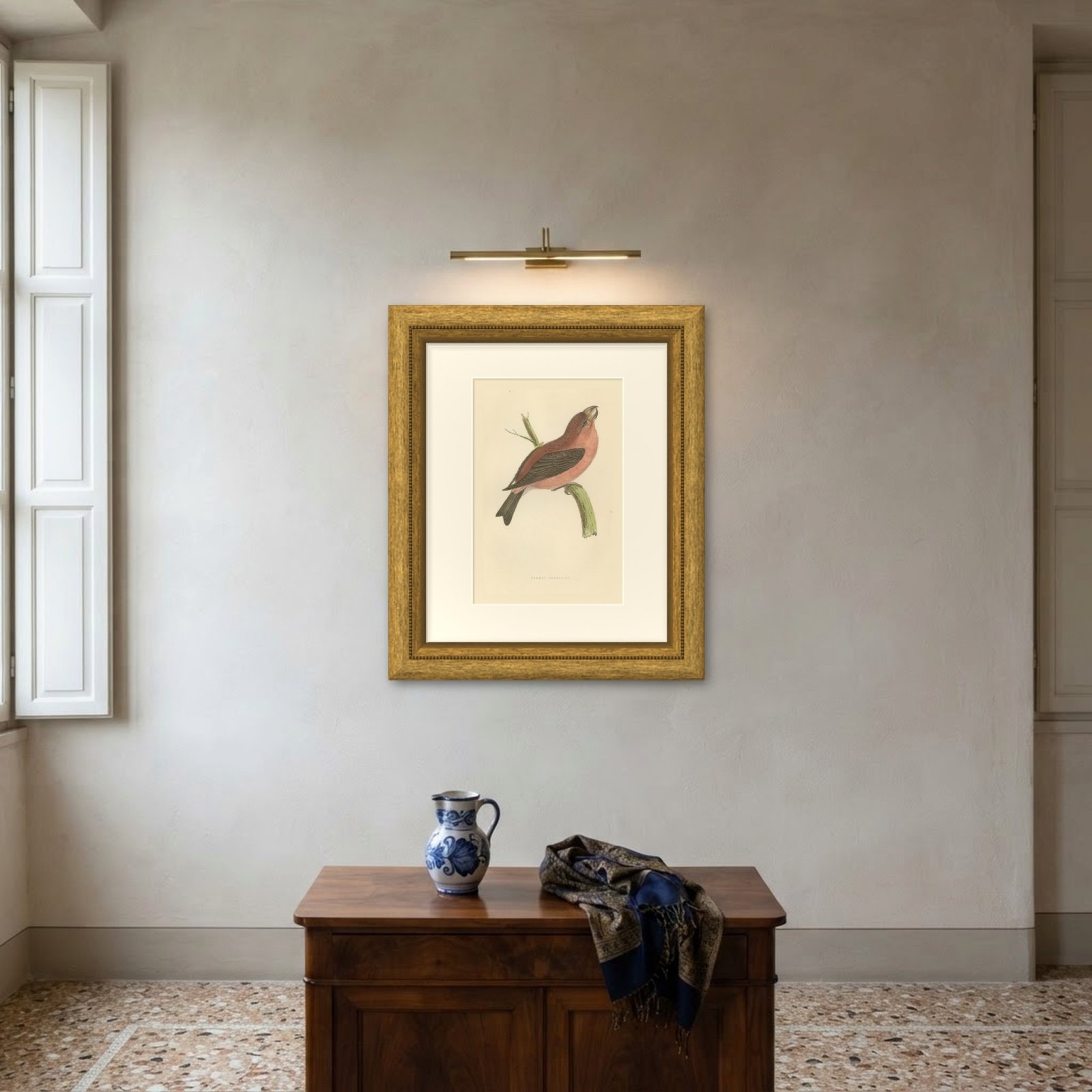
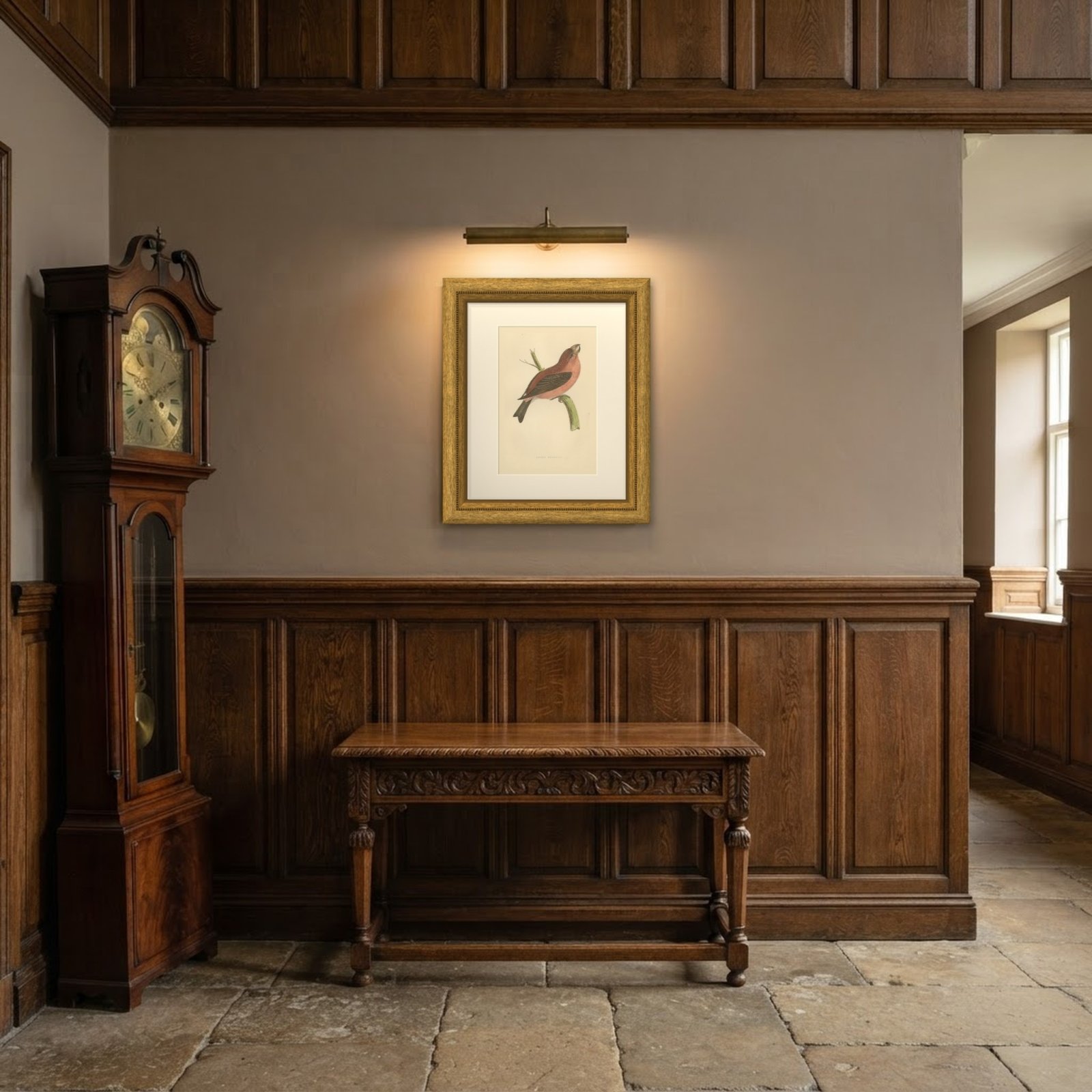 In the room
Interior designers: BarTrade members buy at their trade price. How it works
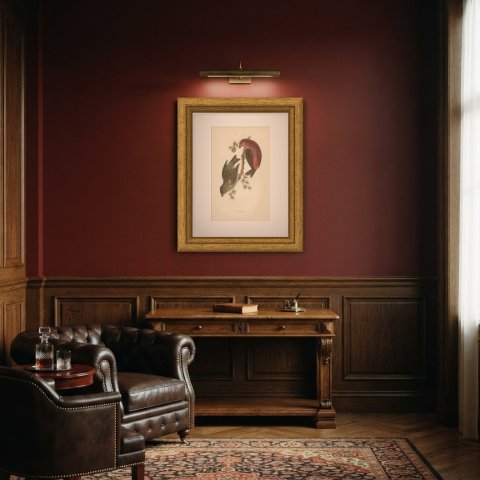
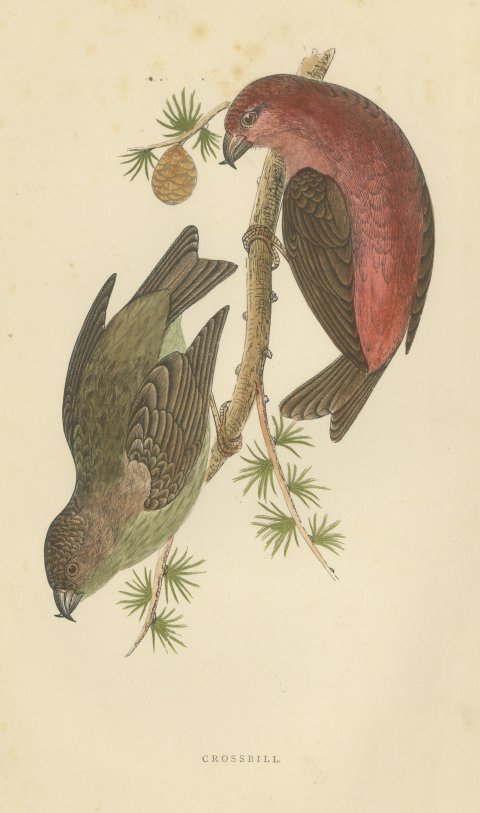
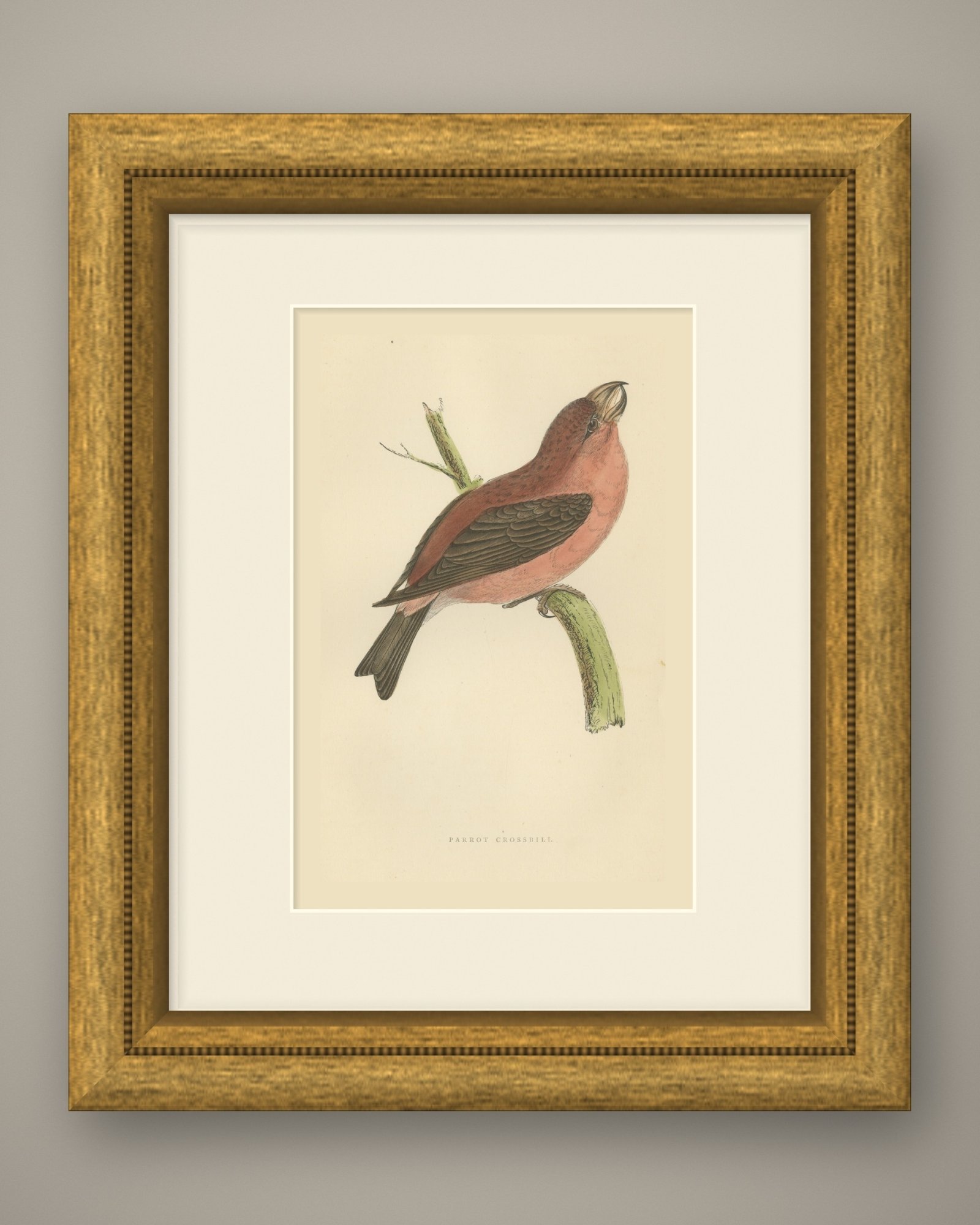
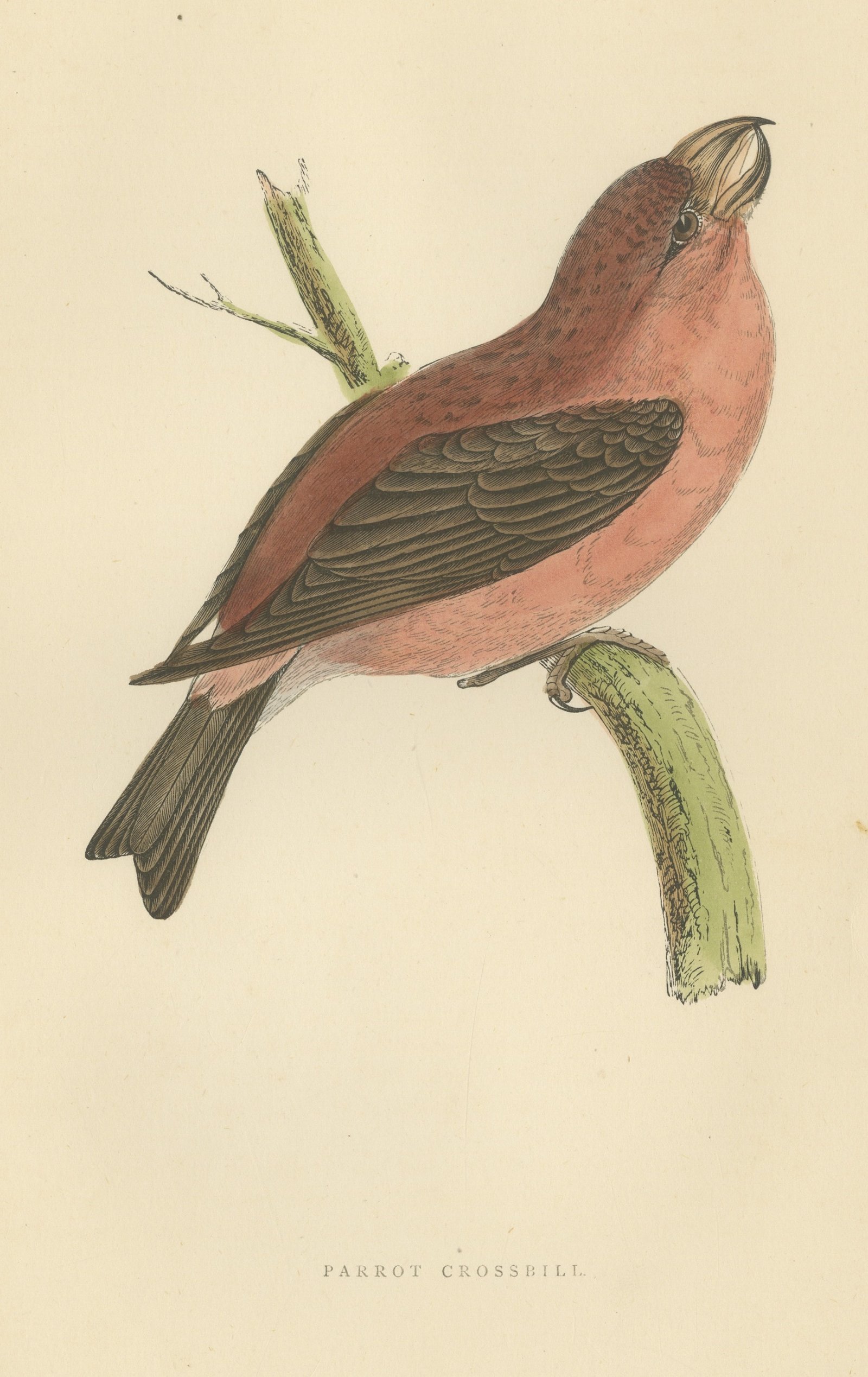
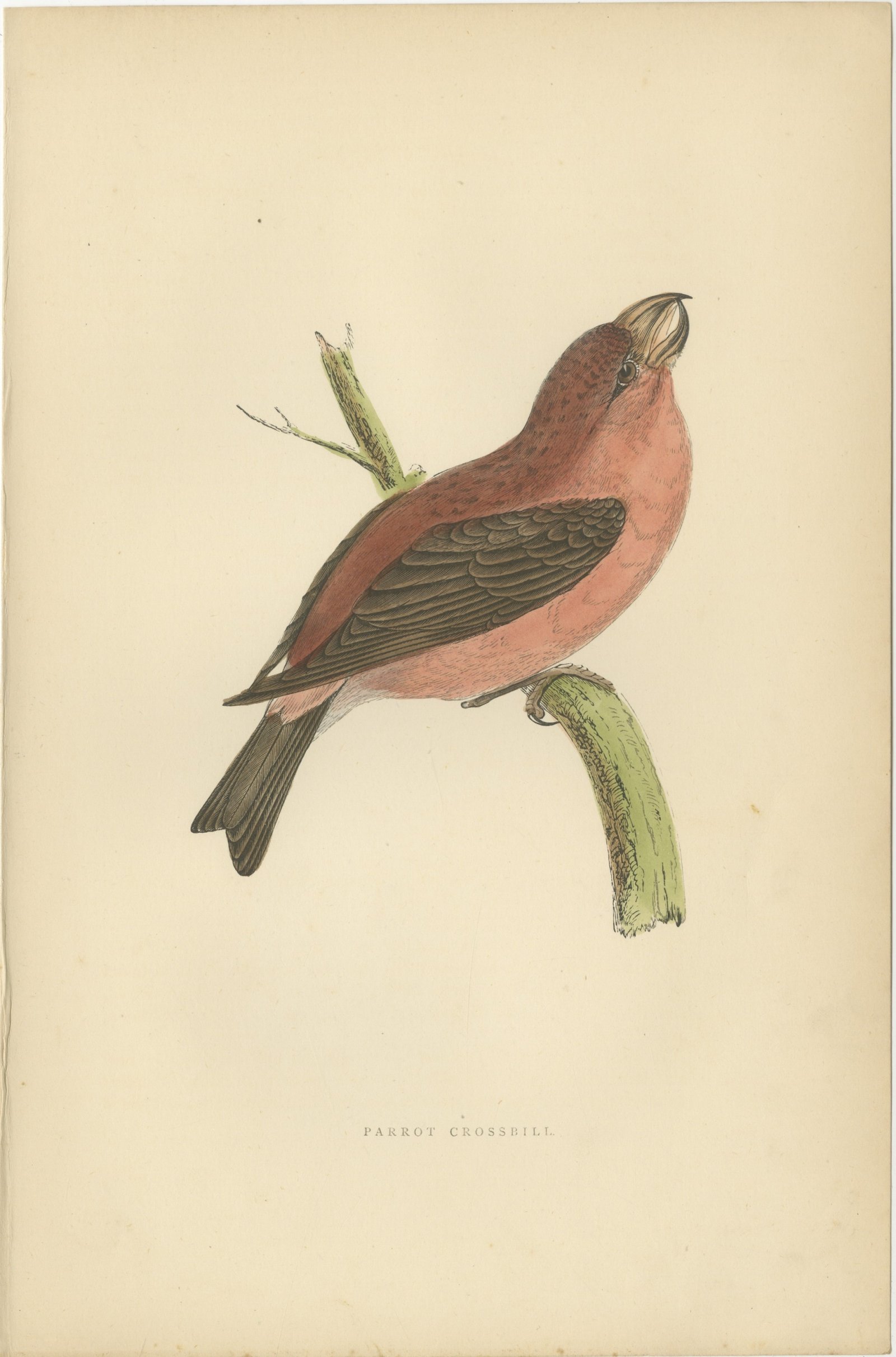
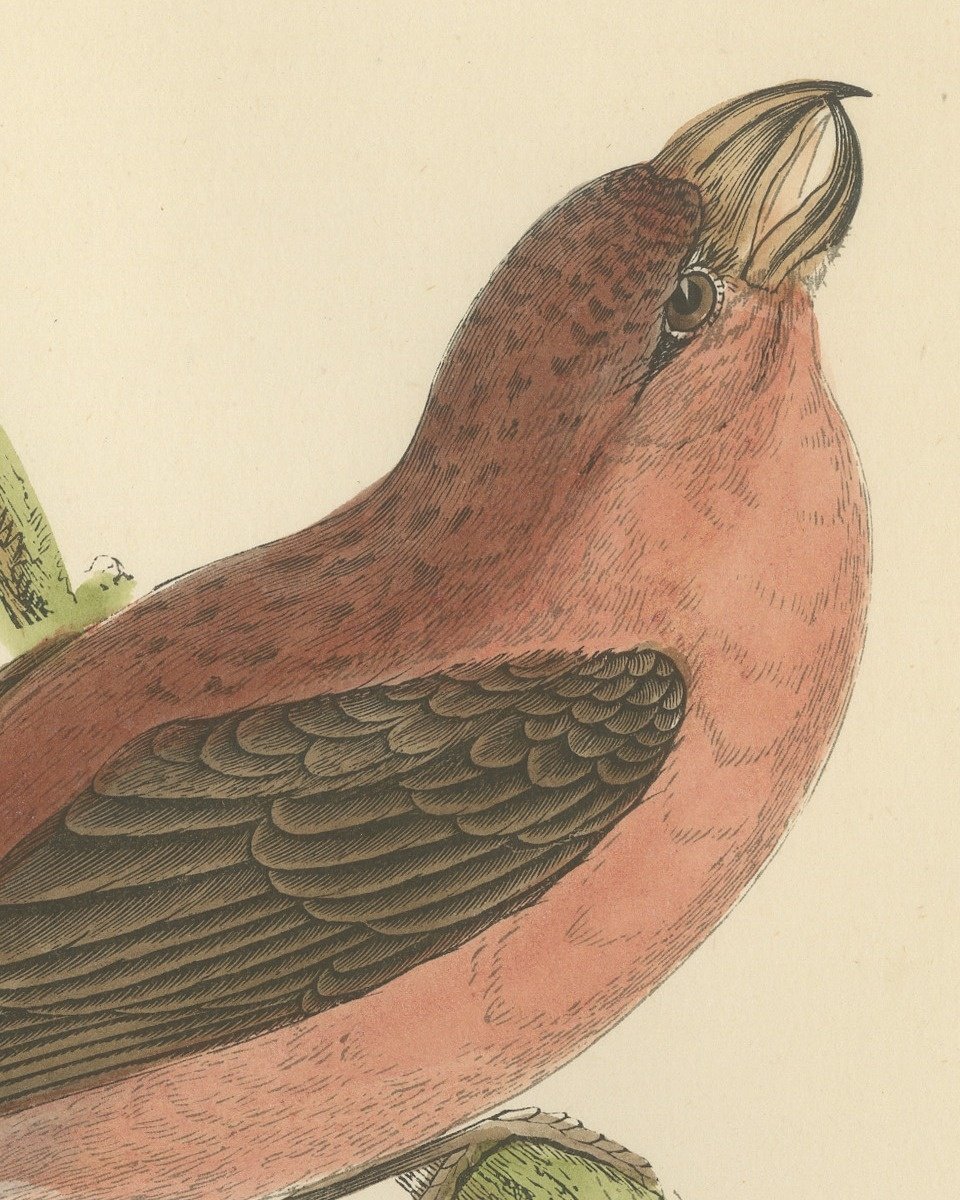
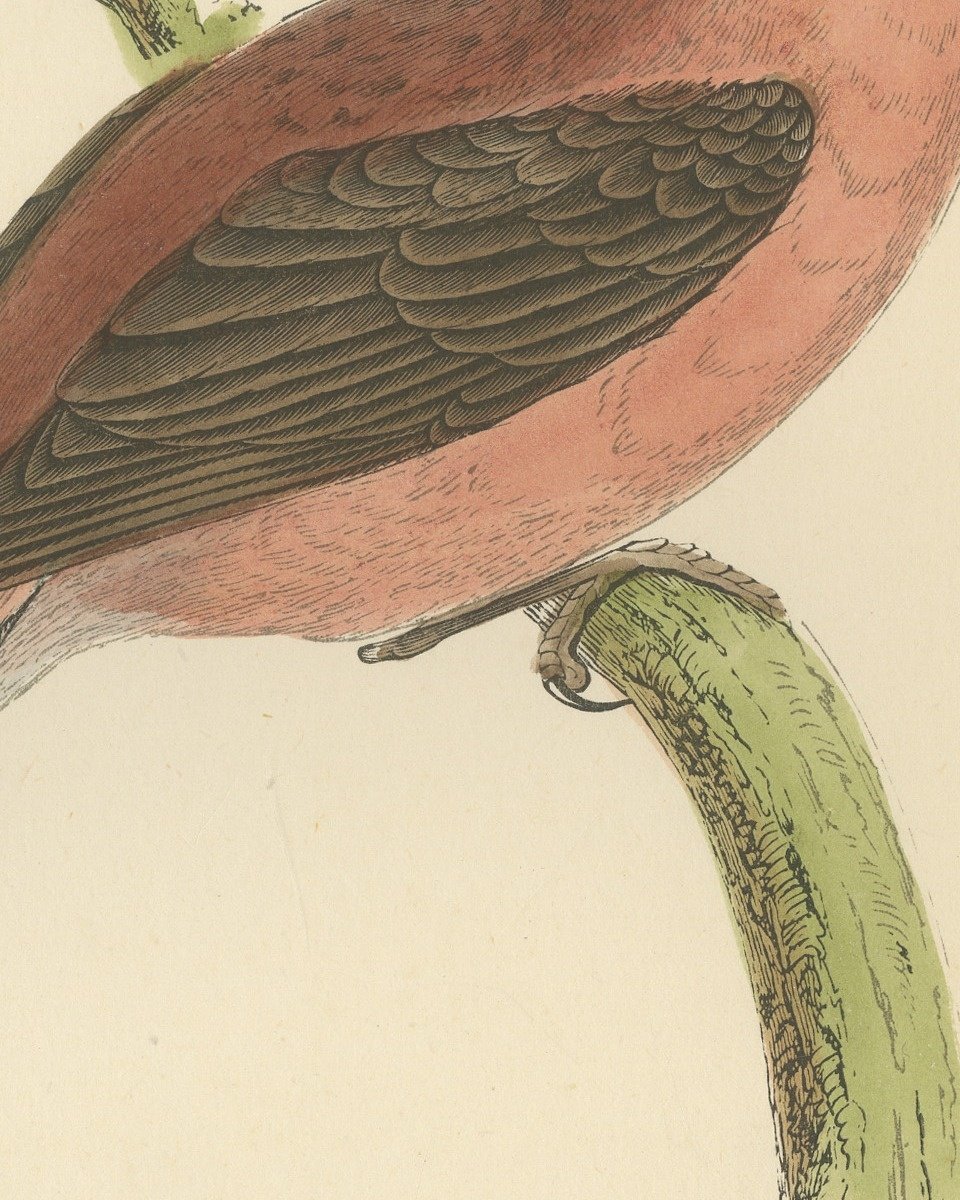
An original wood engraved bird plate, colored by hand, captioned "PARROT CROSSBILL." A single heavy billed crossbill perches on a stout broken branch at the lower right, its body angled toward the right and its head tilted back so that the bill points up and to the right. The crown and back are brick red with darker flecks, the face and breast salmon pink, the wings dark brown with neat scalloped edges, and the forked tail, also brown, hangs to the lower left. The massive bill is pale horn with crossed tips. A second broken stub with a thin twig rises behind the bird at the upper left; both branches are washed in light green.
The caption "PARROT CROSSBILL." is engraved in capitals below the picture, with a full stop. No plate number or engraver's credit appears on the plate. The Parrot Crossbill is Loxia pytyopsittacus, and the deep, strongly hooked bill that gives it its name is the dominant feature of the drawing.
The plate comes from the fourth edition of A History of British Birds by the Reverend Francis Orpen Morris (1810 to 1893), rector of Nunburnholme in Yorkshire. This edition was issued in six volumes by John C. Nimmo, London, and the plate belongs to the third volume, whose title page is dated 1896 and states that the plates are colored by hand. The wood blocks for the plates of the work were engraved by Benjamin Fawcett (1808 to 1893) of Driffield in Yorkshire. Each plate combines an engraved black key block with a printed gray tint, finished by hand in watercolor.
This is an original antique print, not a modern reproduction. This item is sold unframed.