 The sheet, as you receive it
 In the room
Interior designers: BarTrade members buy at their trade price. How it works
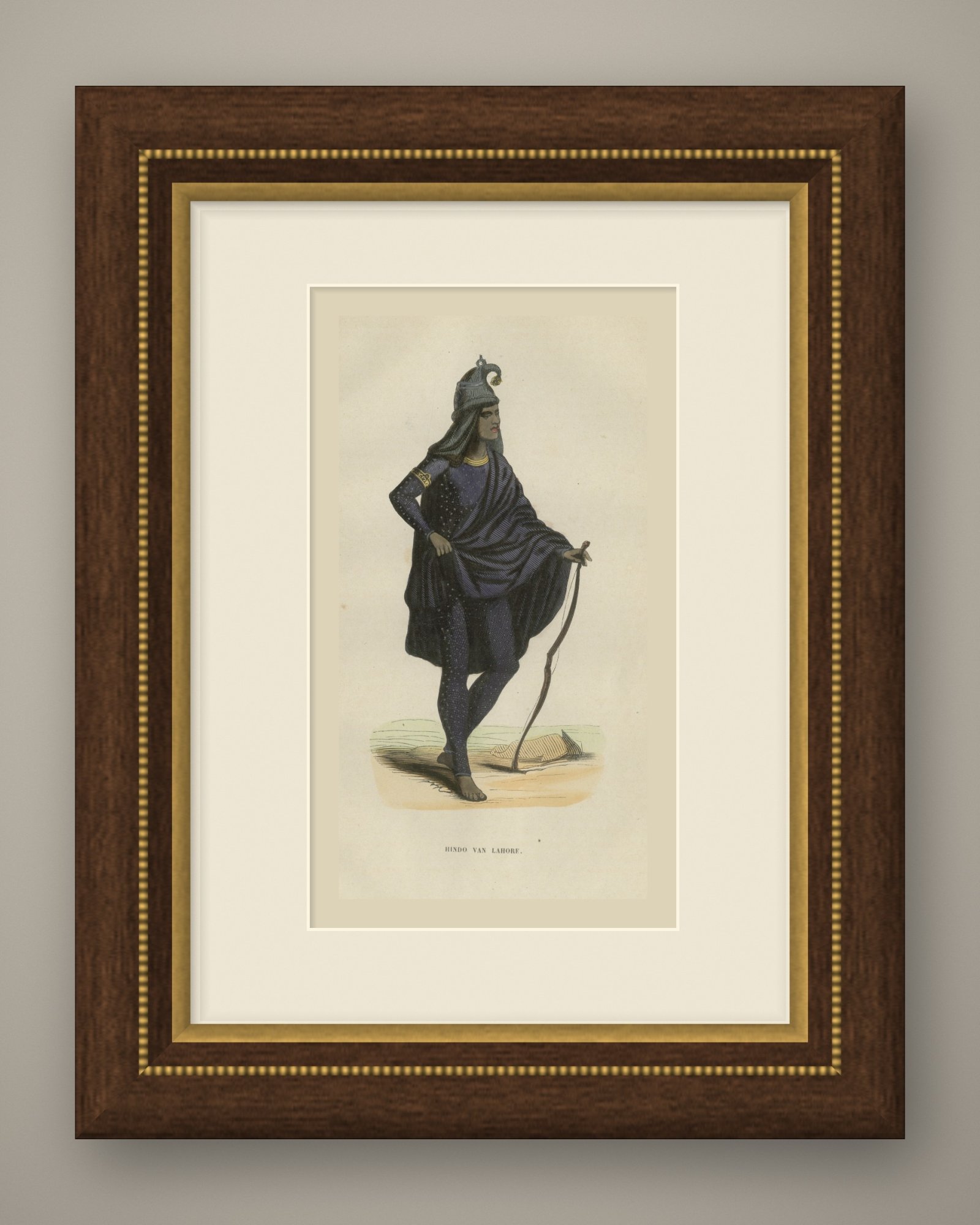
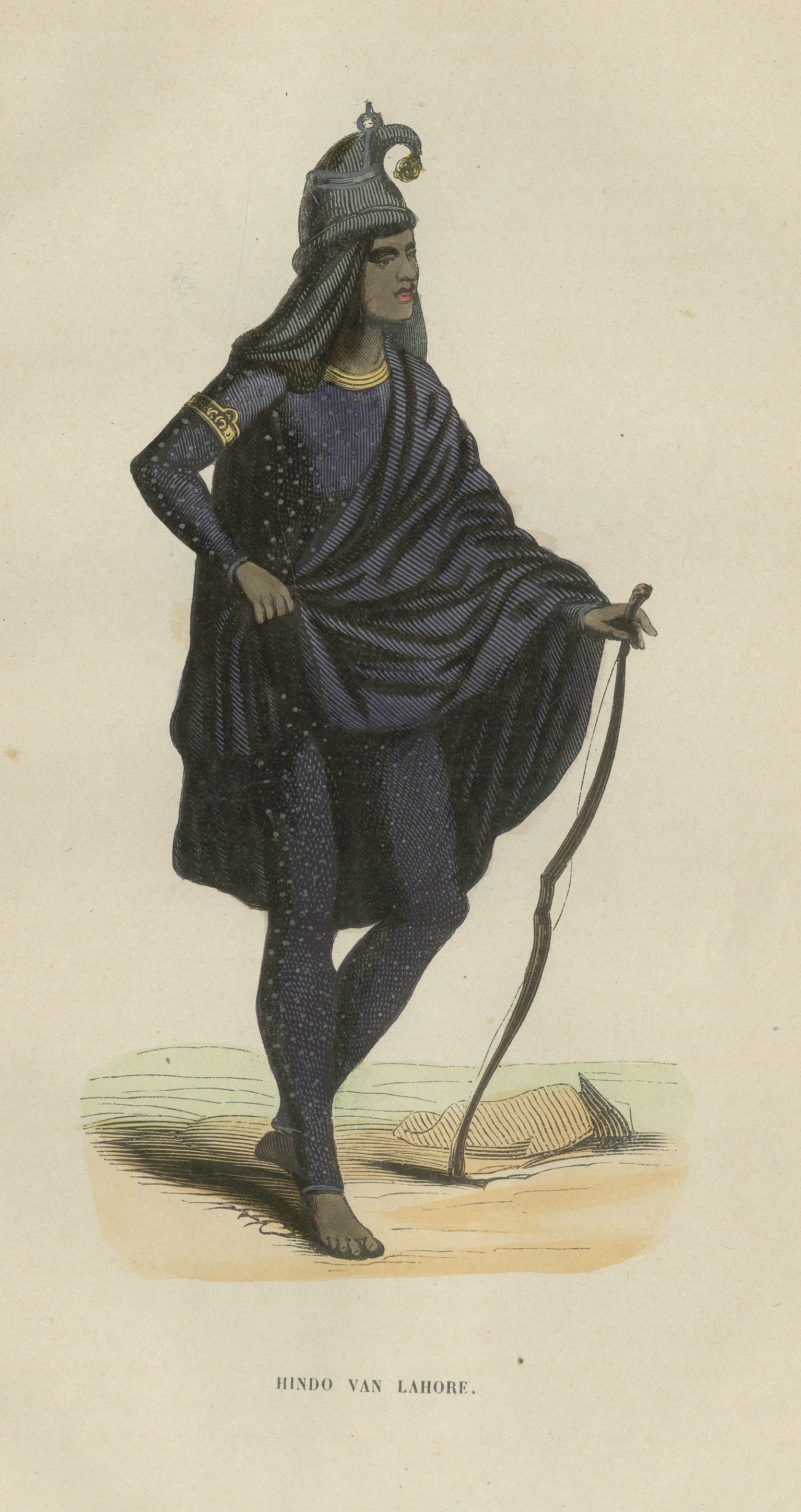
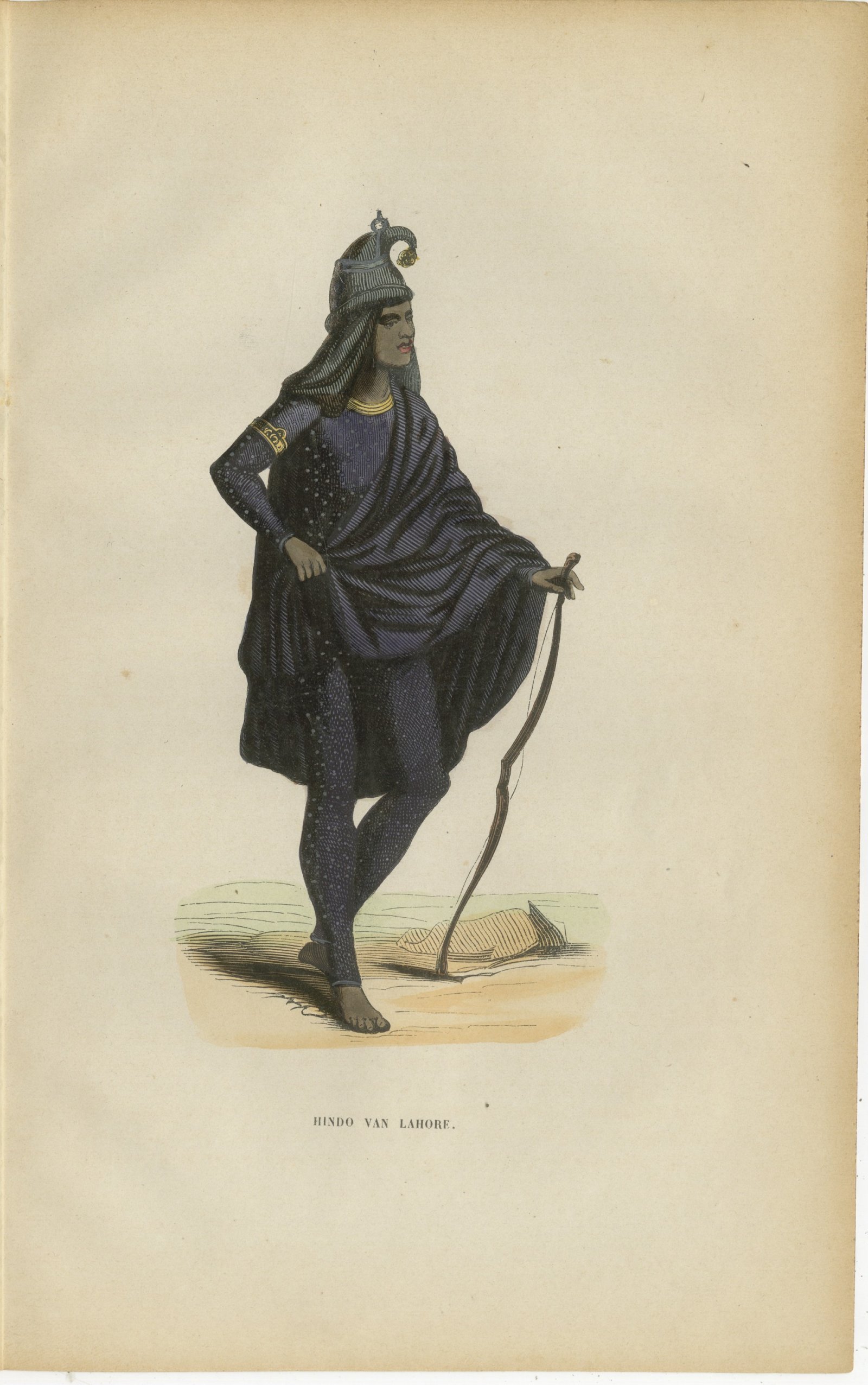
Man of Lahore, an original antique hand colored print of 1854 from the second volume of Heinrich Berghaus's work on the peoples of the world in its Dutch edition. The plate is captioned in Dutch HINDO VAN LAHORE., which reads in English as Hindu of Lahore. The figure is a man of Lahore, shown at full length and dressed almost entirely in dark blue. The coloring is applied by hand over a printed outline.
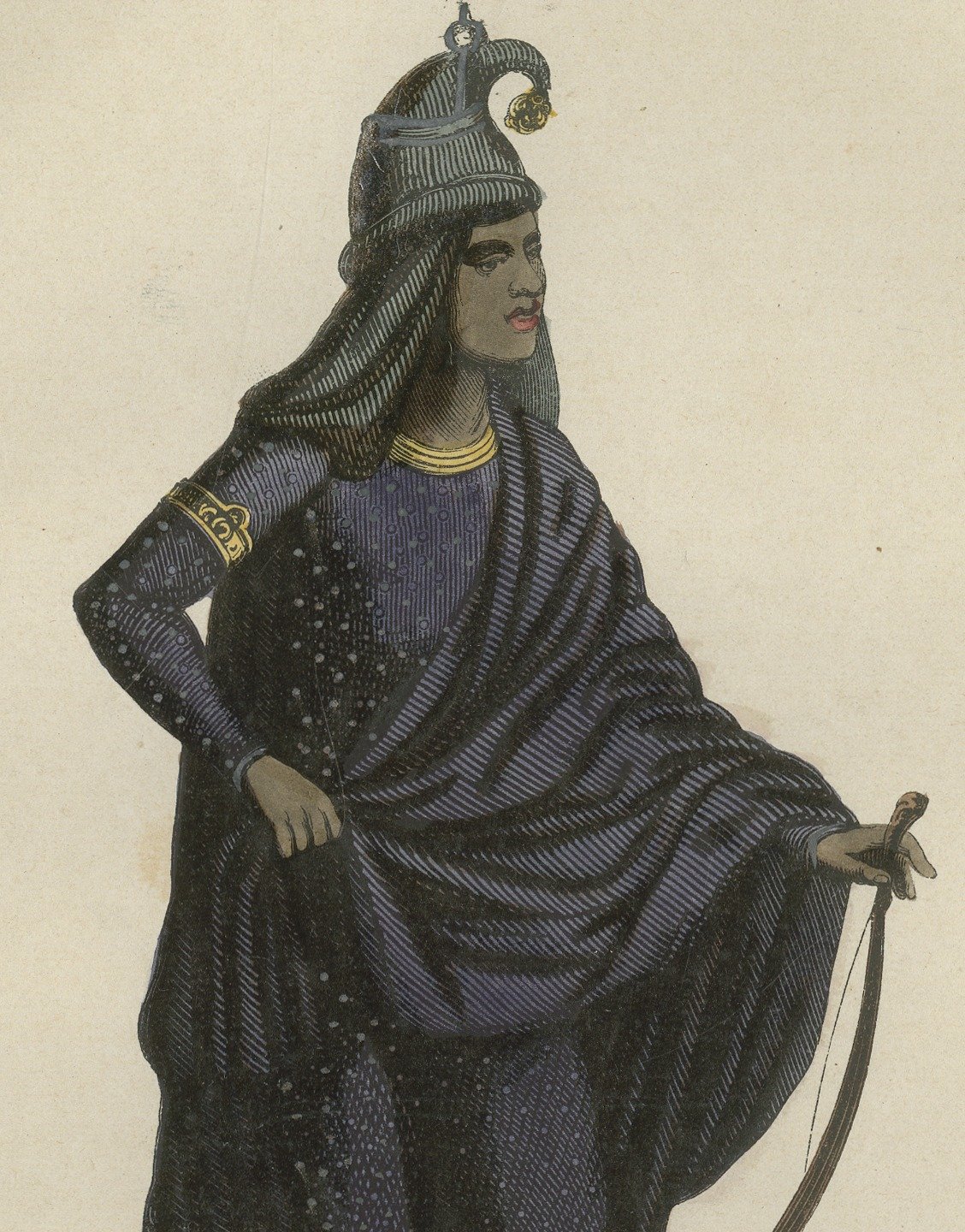
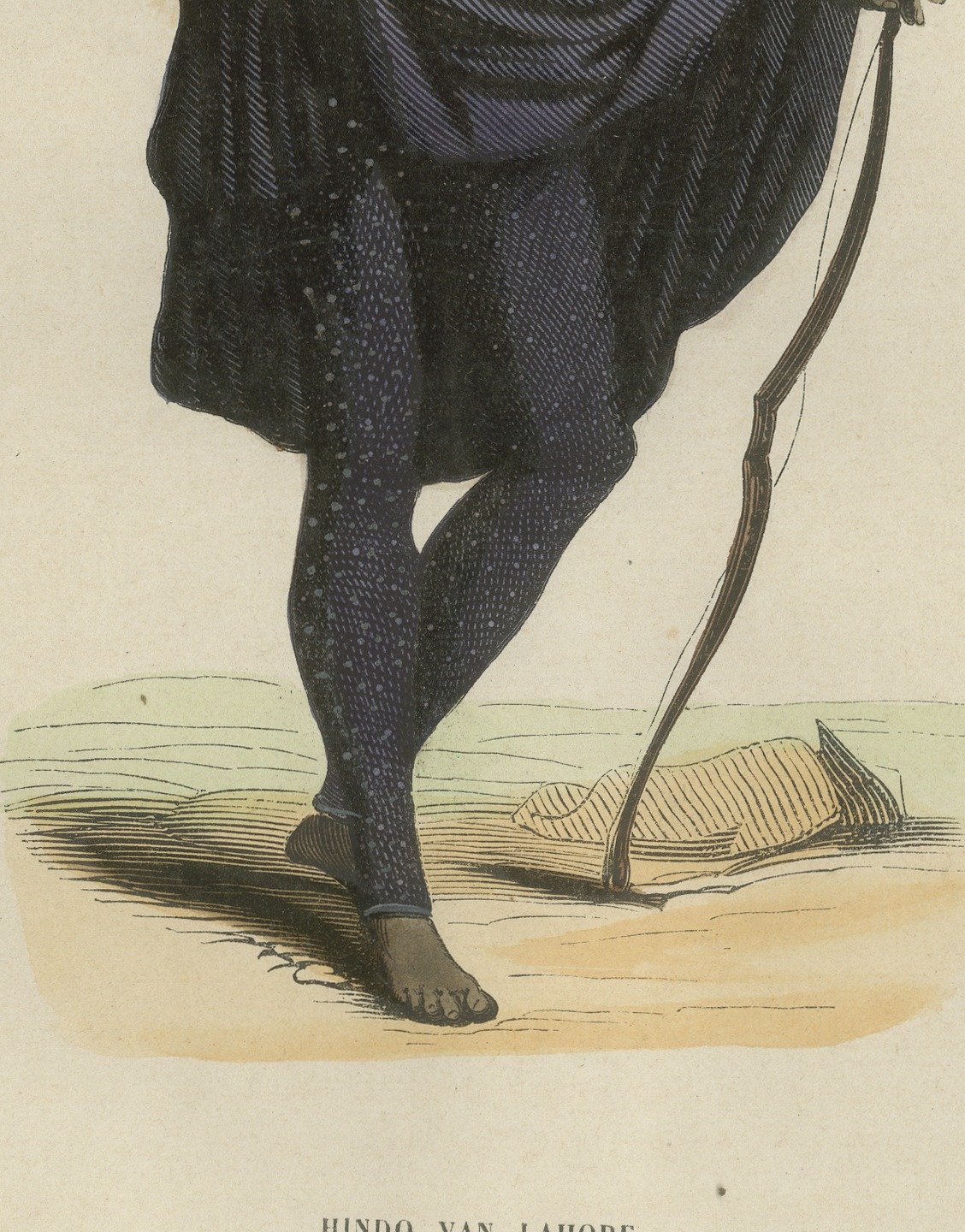
He steps forward on sandy ground, his face turned to the right in profile under a tall dark cap with a curled tip and a small gilt ornament, a dark cloth hanging from it behind his head. He wears a close-fitting dark blue garment covering arms and legs, dotted all over with small white points, with a gold collar at the neck and a gold armband on his upper right arm. A large dark blue mantle is thrown over his left shoulder and gathered in his right hand. In his left hand he holds a bow, its lower end resting on the ground. He goes barefoot, and a low pale shape lies on the ground behind him at right.
The caption is the only lettering on the sheet. No artist, lithographer or printer is named on the plate, and it carries no plate number. The figure stands on the plain paper of the page with no frame line, and the caption is printed in small capitals below.
The plate comes from the second volume of De Volken van den Aardbodem, the Dutch edition of Heinrich Berghaus's illustrated work on the peoples of the world, translated from the German by M. J. van Oven and published at Gorinchem by J. Noorduyn en Zoon in 1854. The title page of the volume announces 120 extra fine plates colored after nature. Berghaus was a German geographer, best known for his Physikalischer Atlas. Lahore was the capital of the Sikh state of Ranjit Singh and was annexed by the British in 1849.
Loss or wear at the bottom right corner. Light uneven toning, browner towards the edges. Marked handling soiling along all four edges. Foxing over much of the margin. Minor edge wear, shallow nicks along the right.
This is an original antique print, not a modern reproduction. This item is sold unframed.