 The sheet, as you receive it
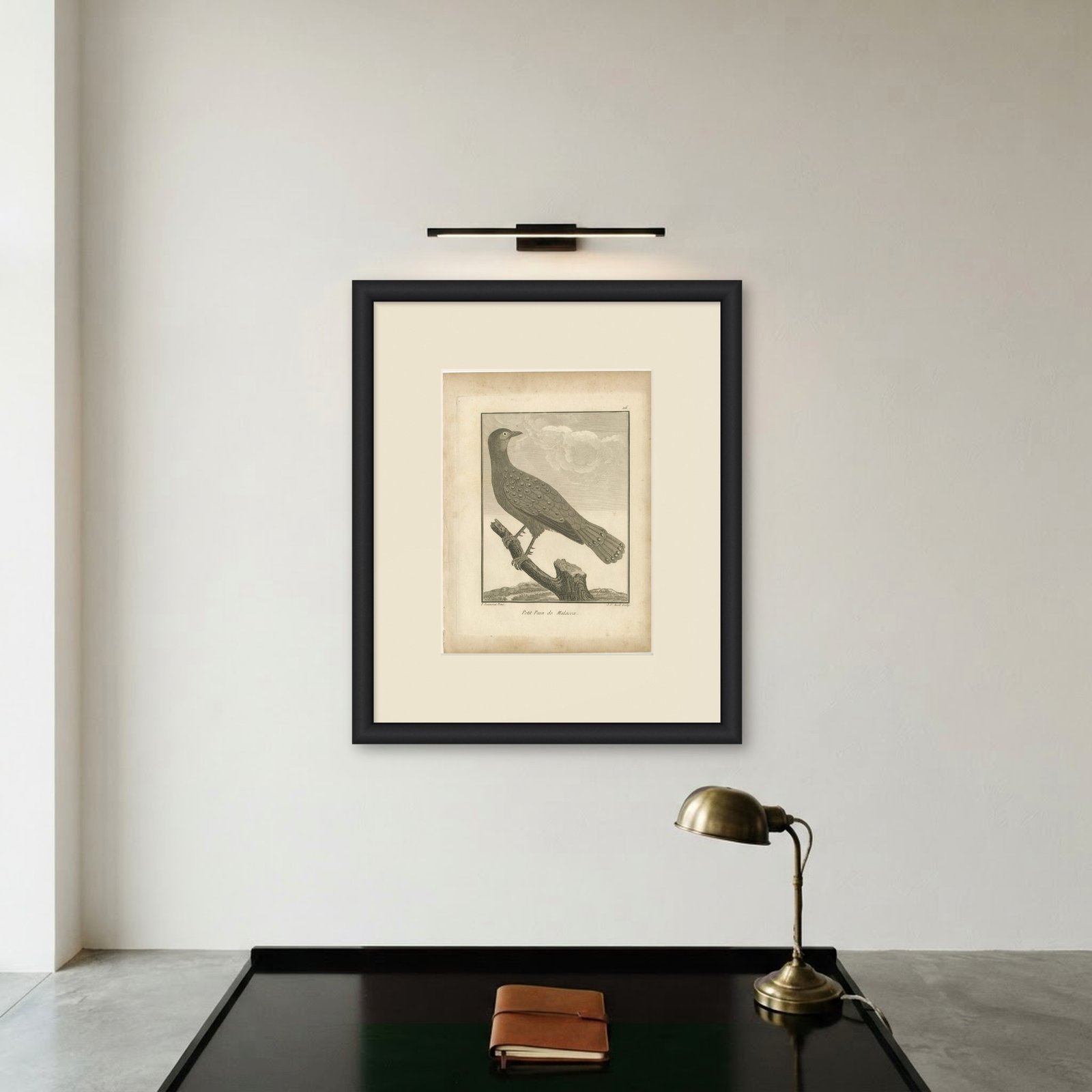
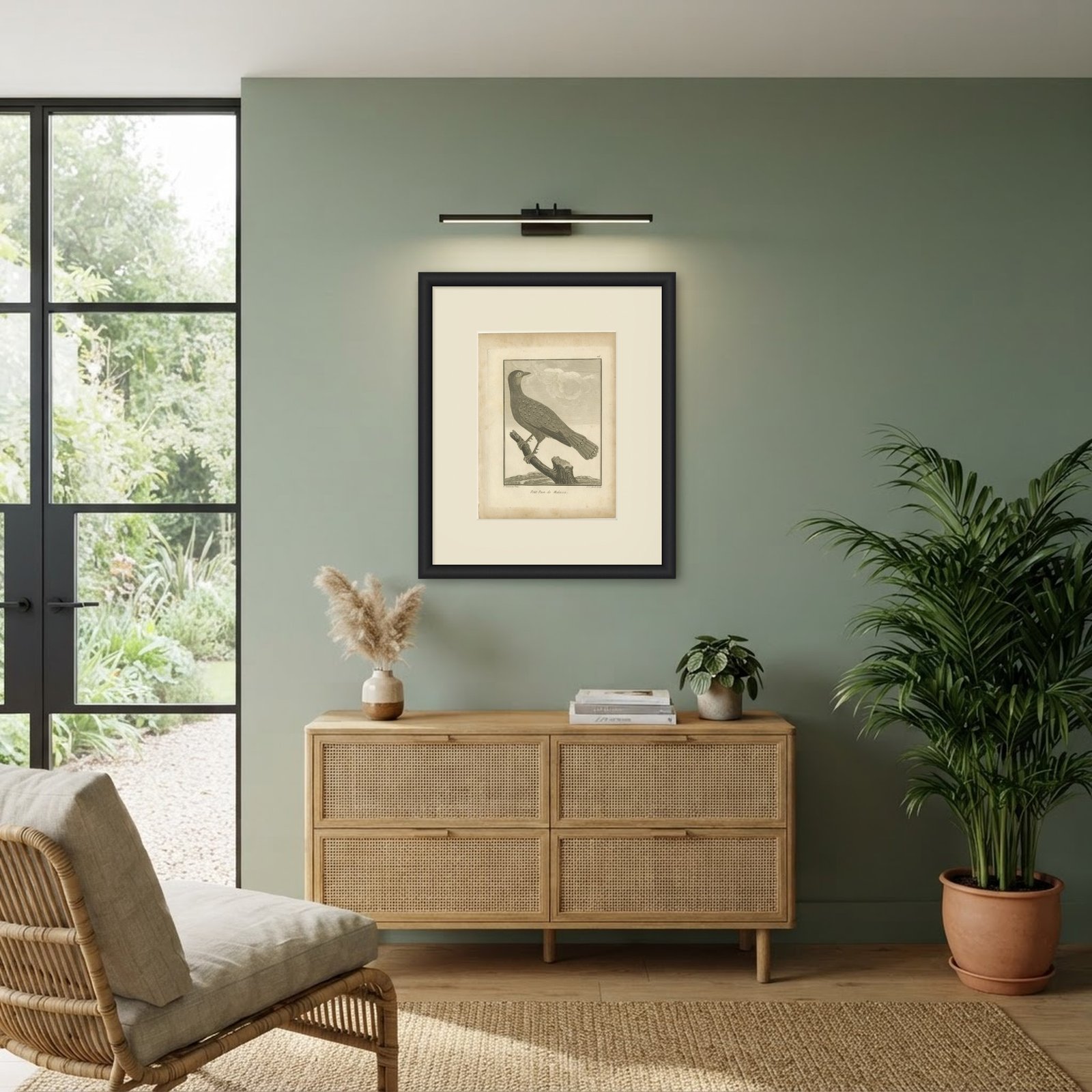 In the room
Interior designers: BarTrade members buy at their trade price. How it works
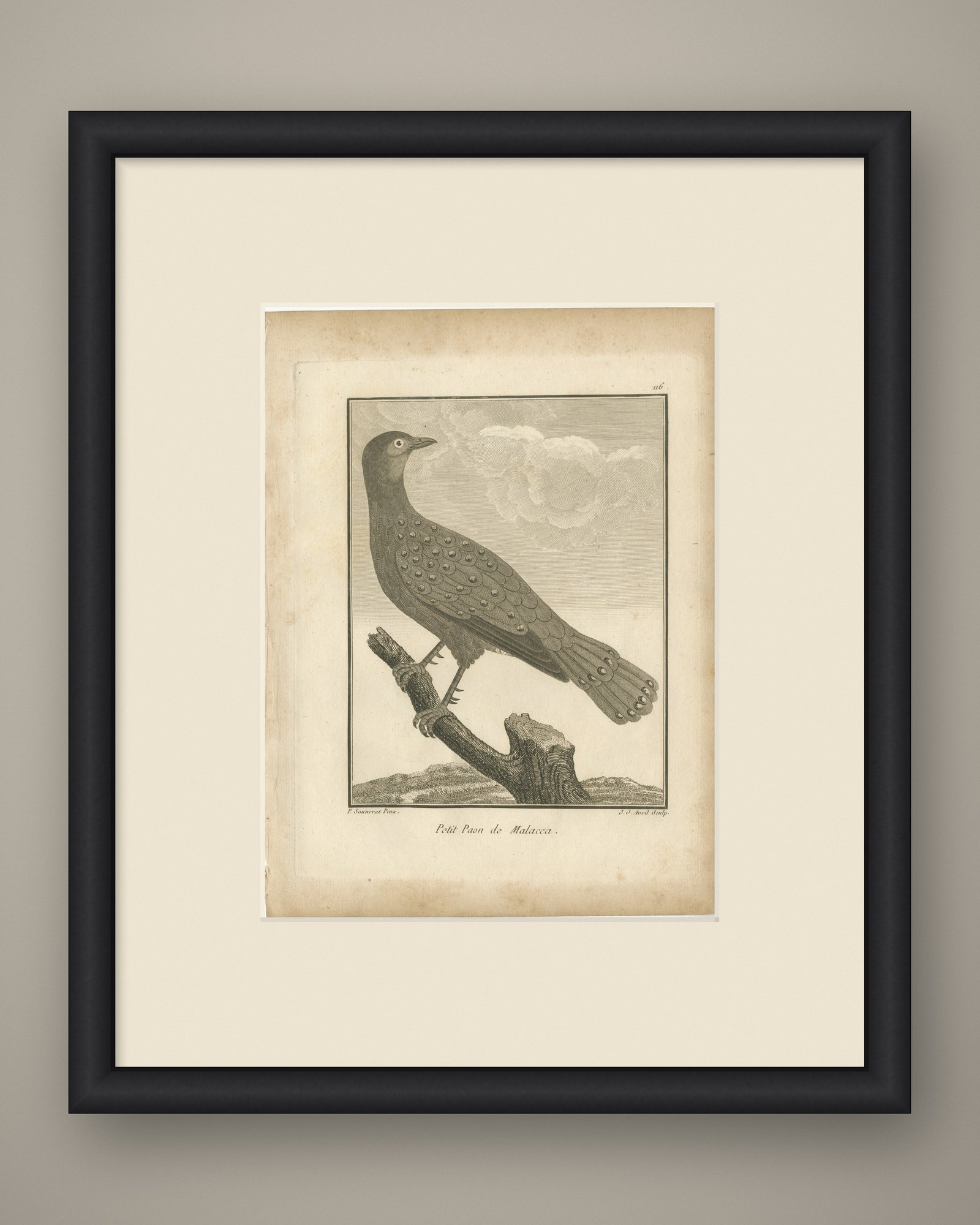
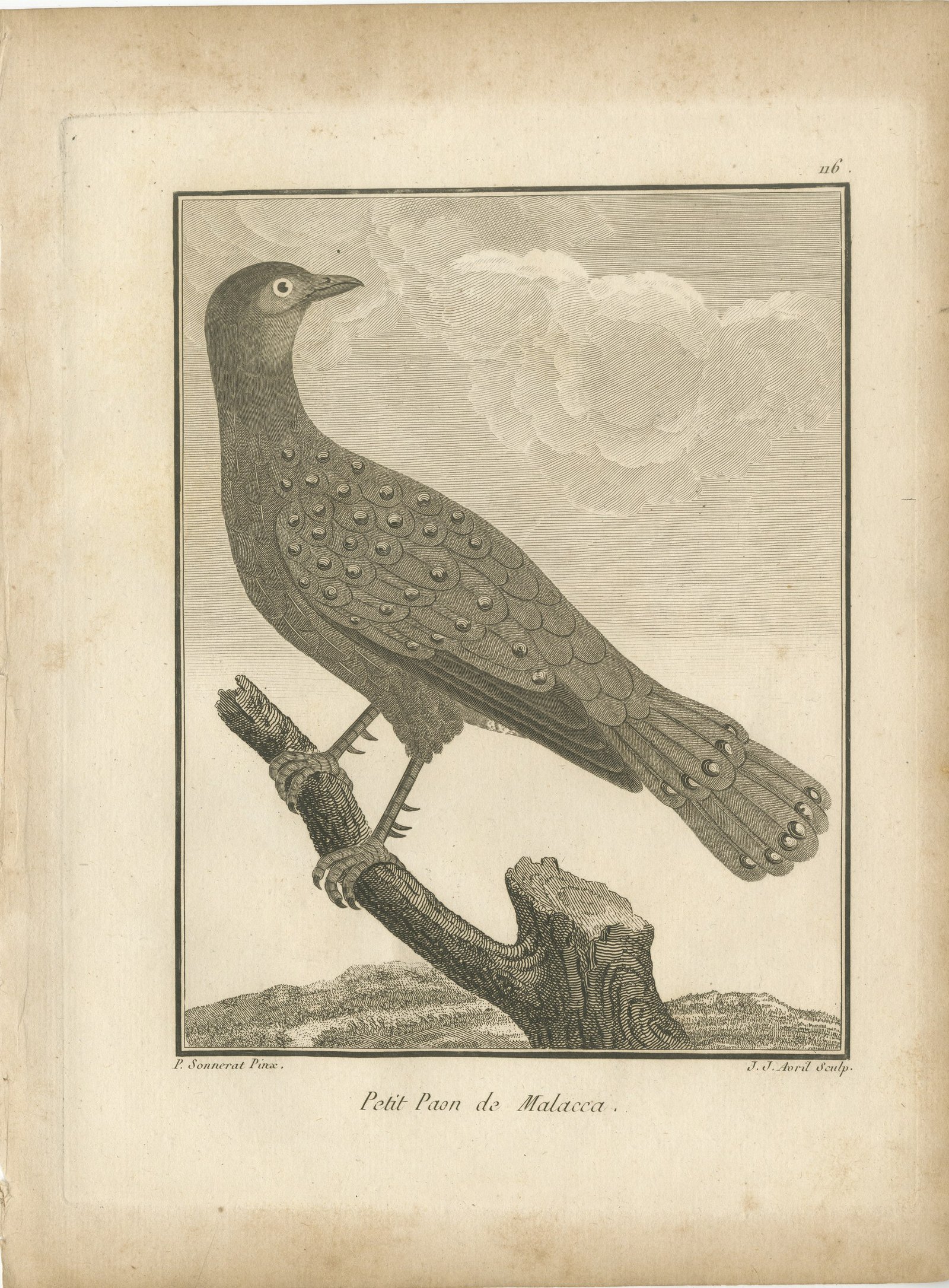
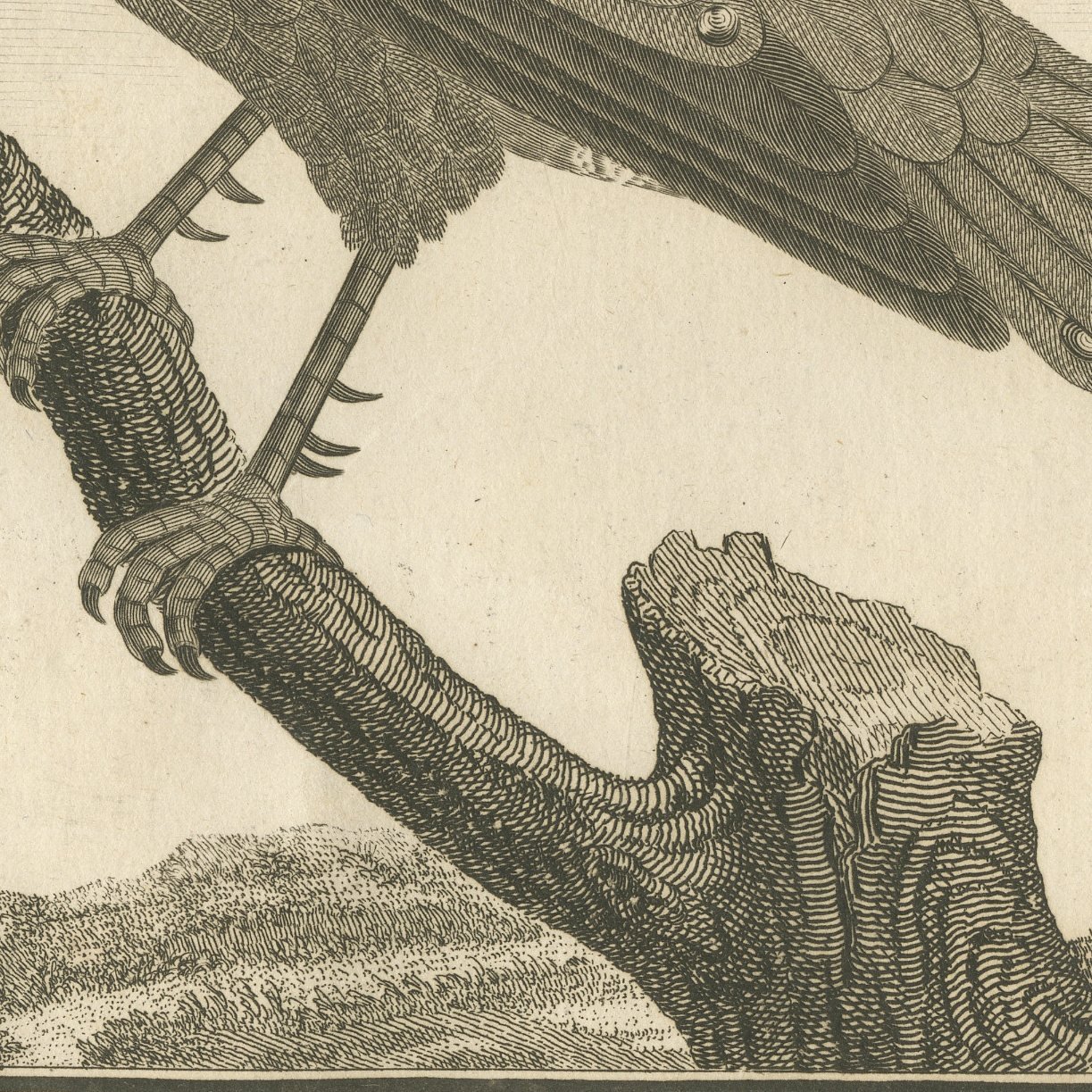
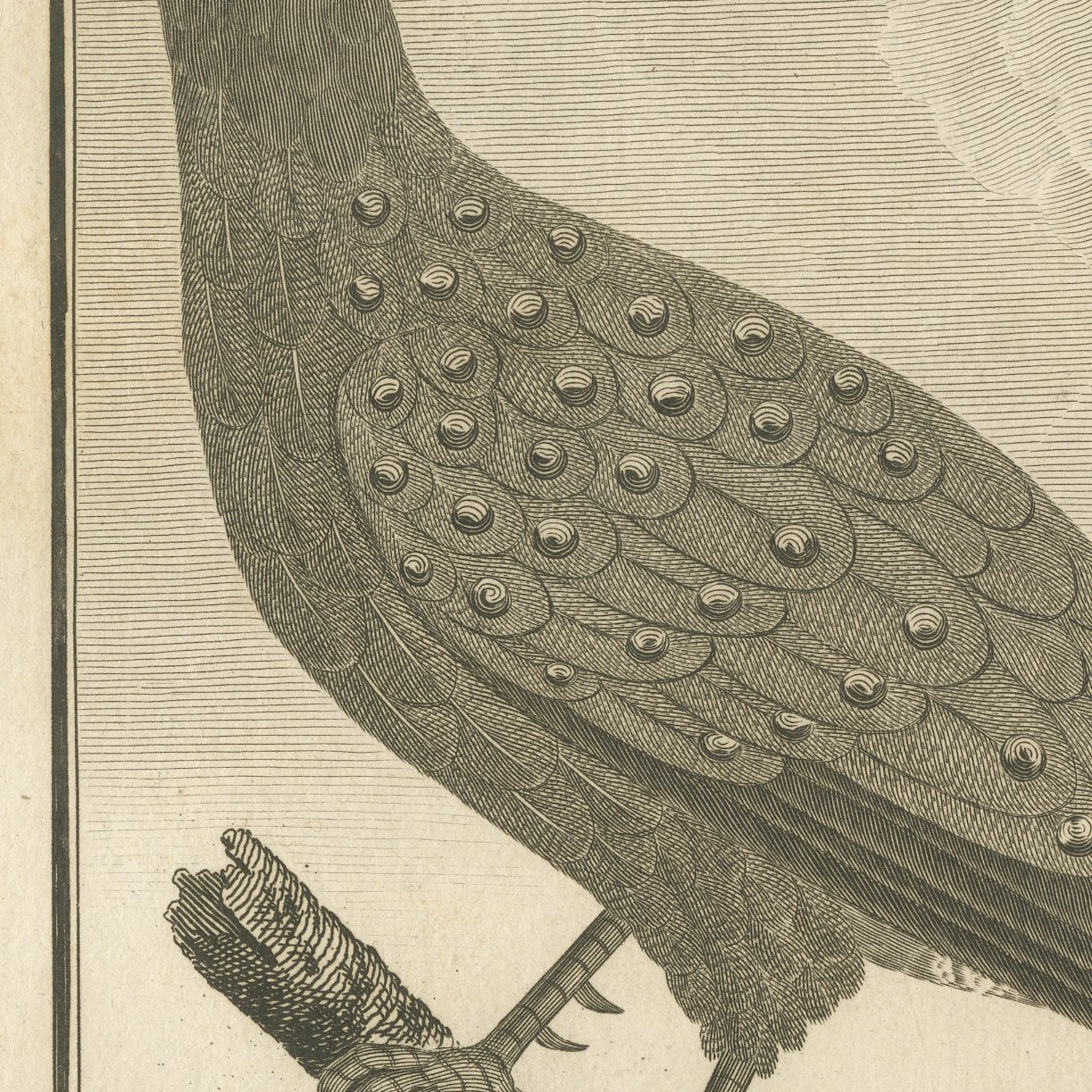
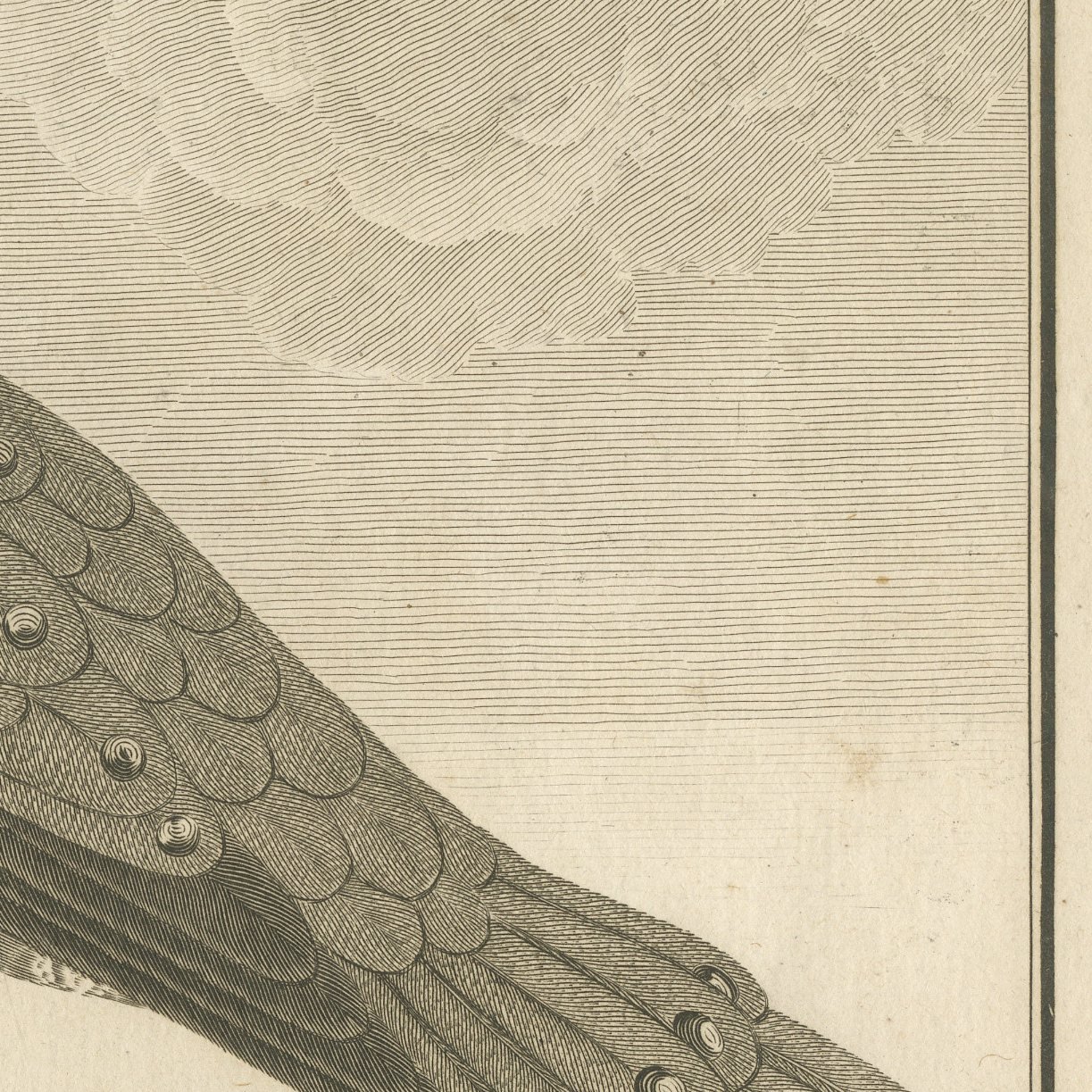
An original antique plate from Sonnerat's Voyage aux Indes Orientales et a la Chine, numbered 116, showing the little peacock-pheasant of Malacca in profile, the ocelli of the tail and wing coverts picked out in the engraving. Beneath the image the sheet is lettered Petit Paon de Malacca., with P. Sonnerat pinx. at the lower left and J. J. Avril sculp. at the lower right, and the plate number 116 at the upper right.
This plate belongs to the Collection de planches pour servir au Voyage aux Indes Orientales et a la Chine, published in Paris by Dentu in 1806. It is the plate volume that accompanies Sonnerat's account of the years he spent in India, China, Malacca, Madagascar and the islands of the Indian Ocean as a naturalist and naval commissary in the service of France. The image is a copper engraving, printed in black on laid paper with a clear plate mark, the lettering cut below the image in the same plate. No color was applied, which is how the volume was issued.
The bird plates run for nearly thirty sheets through the middle of the volume and cover the Coromandel and Malabar coasts, Gingi and Pondicherry, Malacca, China, Madagascar and the Cape. Each bird is drawn at the full height of the plate against a plain ground, usually on a branch or a rock, with the plumage worked up line by line in the engraving. What Sonnerat produced was not a studio compilation. He was in India for seven years, based at Yanam and at Pondicherry, and he went on to Canton, to Malacca, to Madagascar and to the Cape of Good Hope. The drawings he brought back were engraved in Paris by Jean-Baptiste Marie Poisson, Jean-Jacques Avril, Desmoulins, Fessart and Milsan, among the better reproductive engravers working in the city at the end of the eighteenth century.
Noticeable uneven toning. Marked handling soiling along all four edges. Scattered light foxing in the margin. Slight wear at the top left corner.
This is an original antique print, not a modern reproduction. This item is sold unframed.