 The sheet, as you receive it
 In the room 1
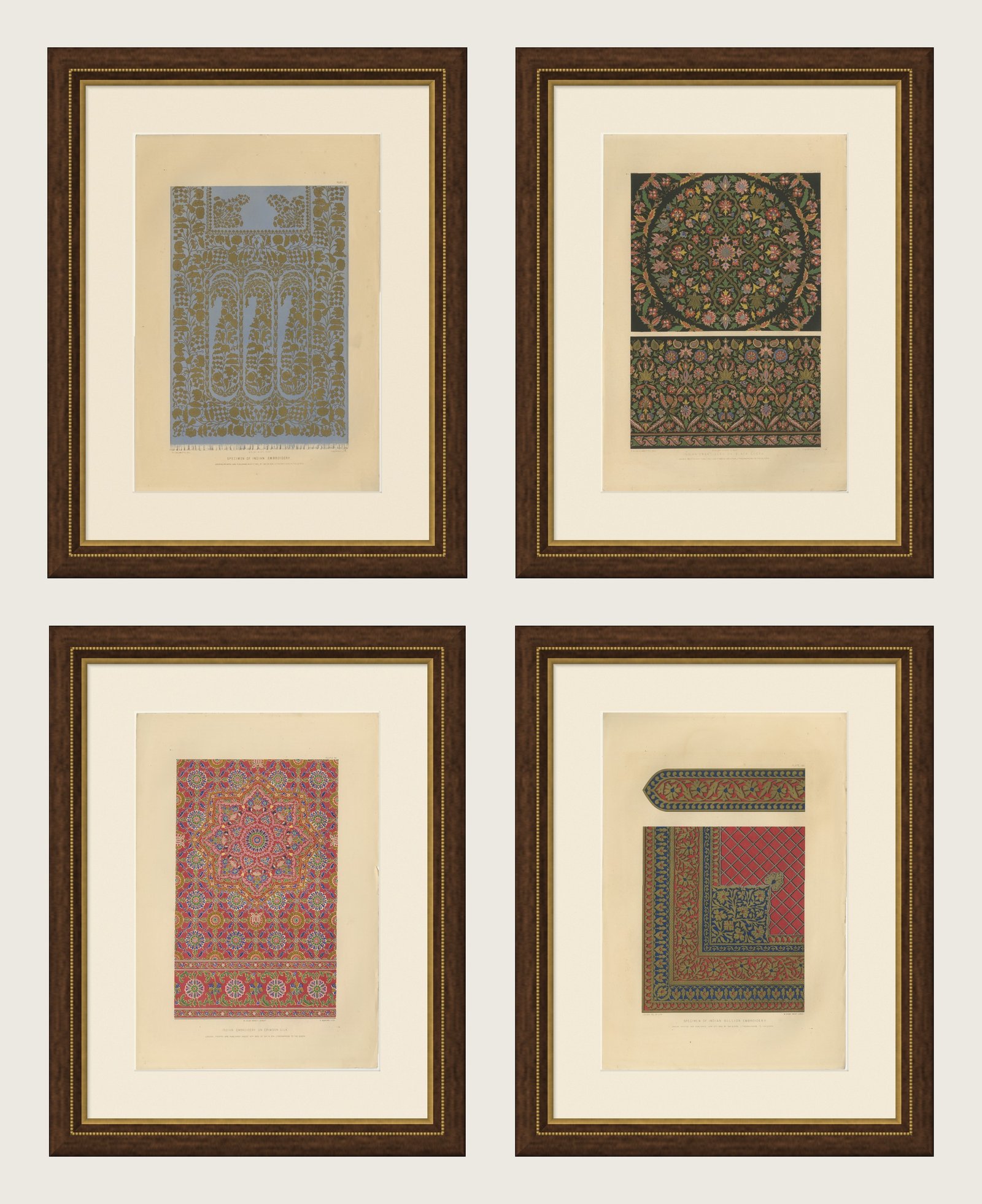
Interior designers: BarTrade members buy at their trade price. How it works
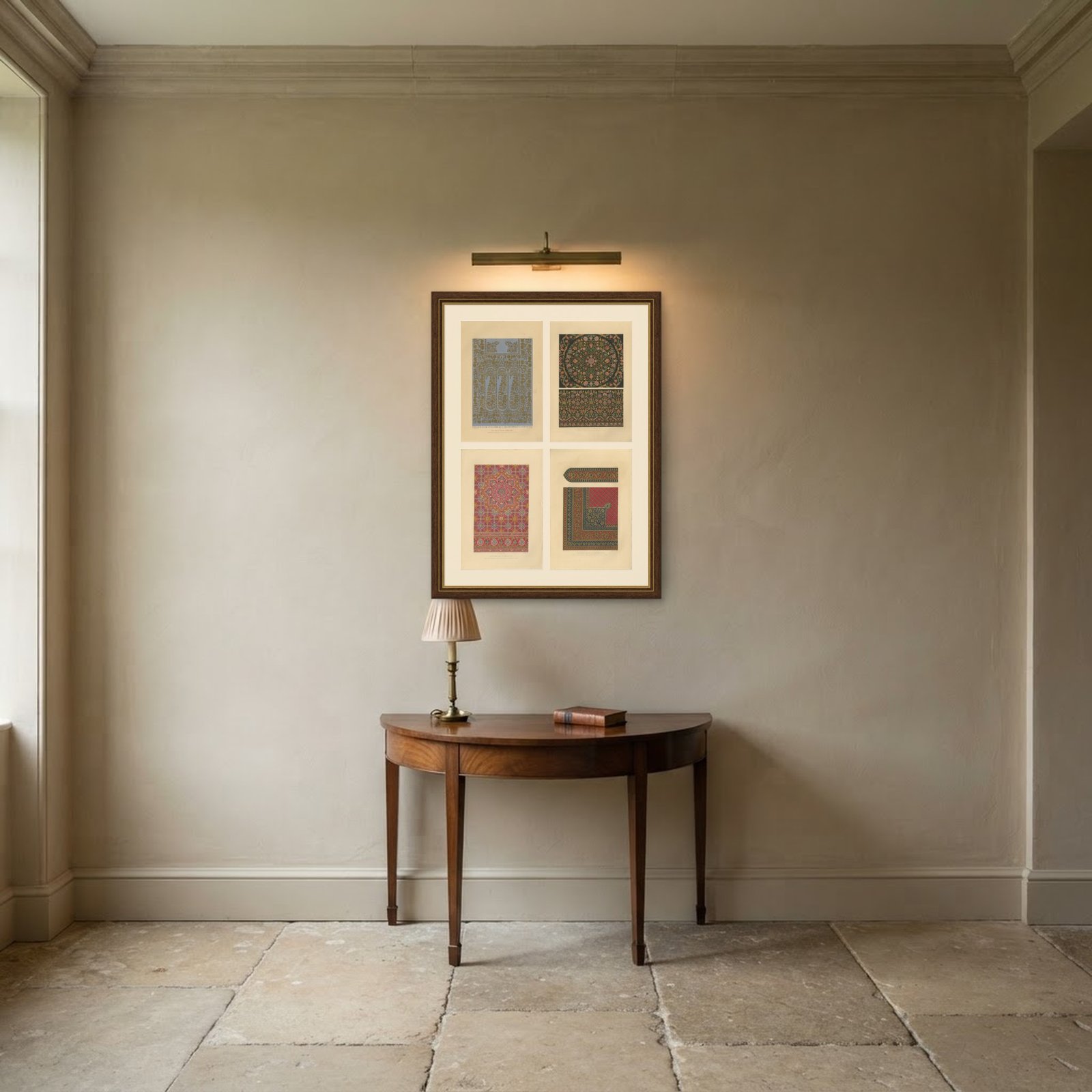
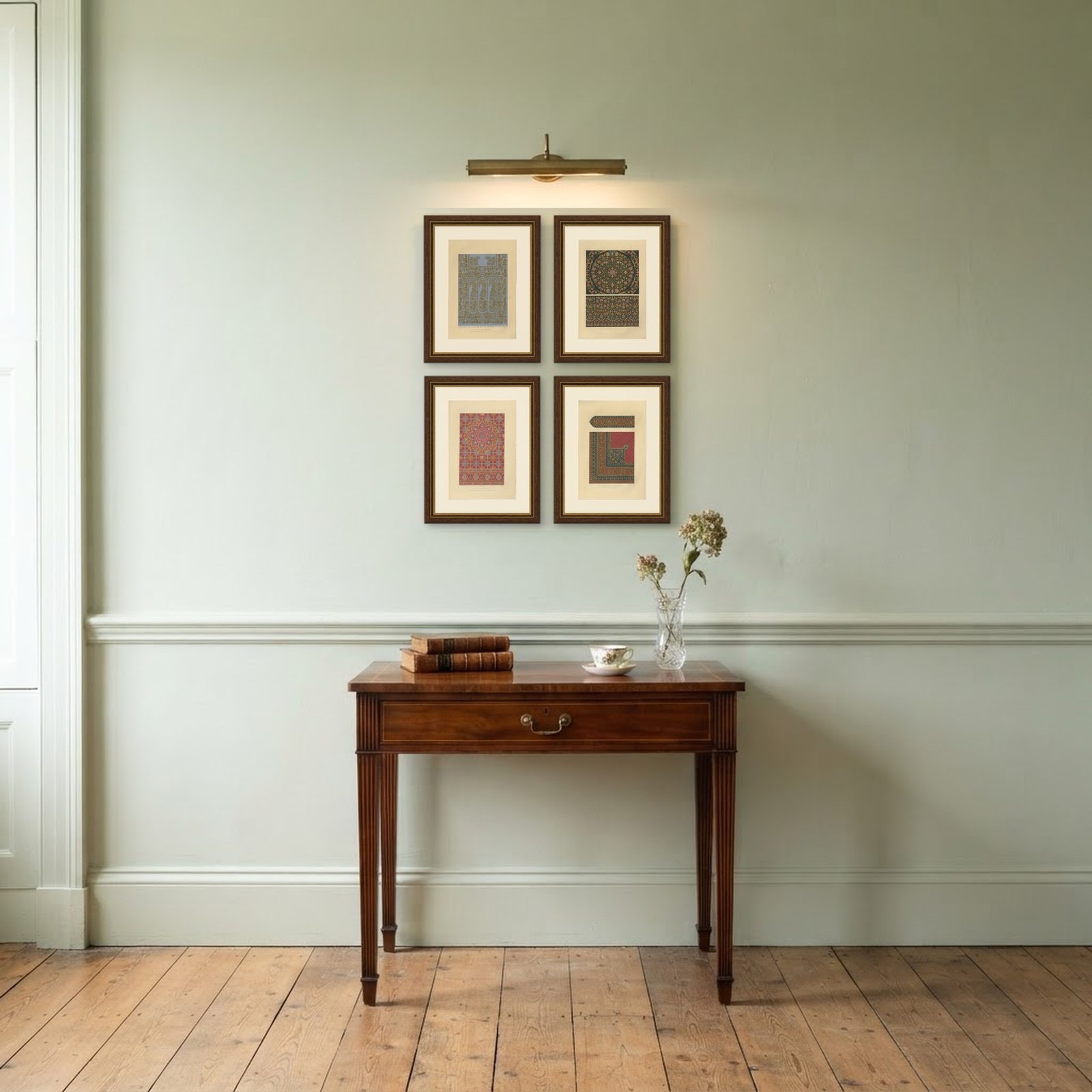
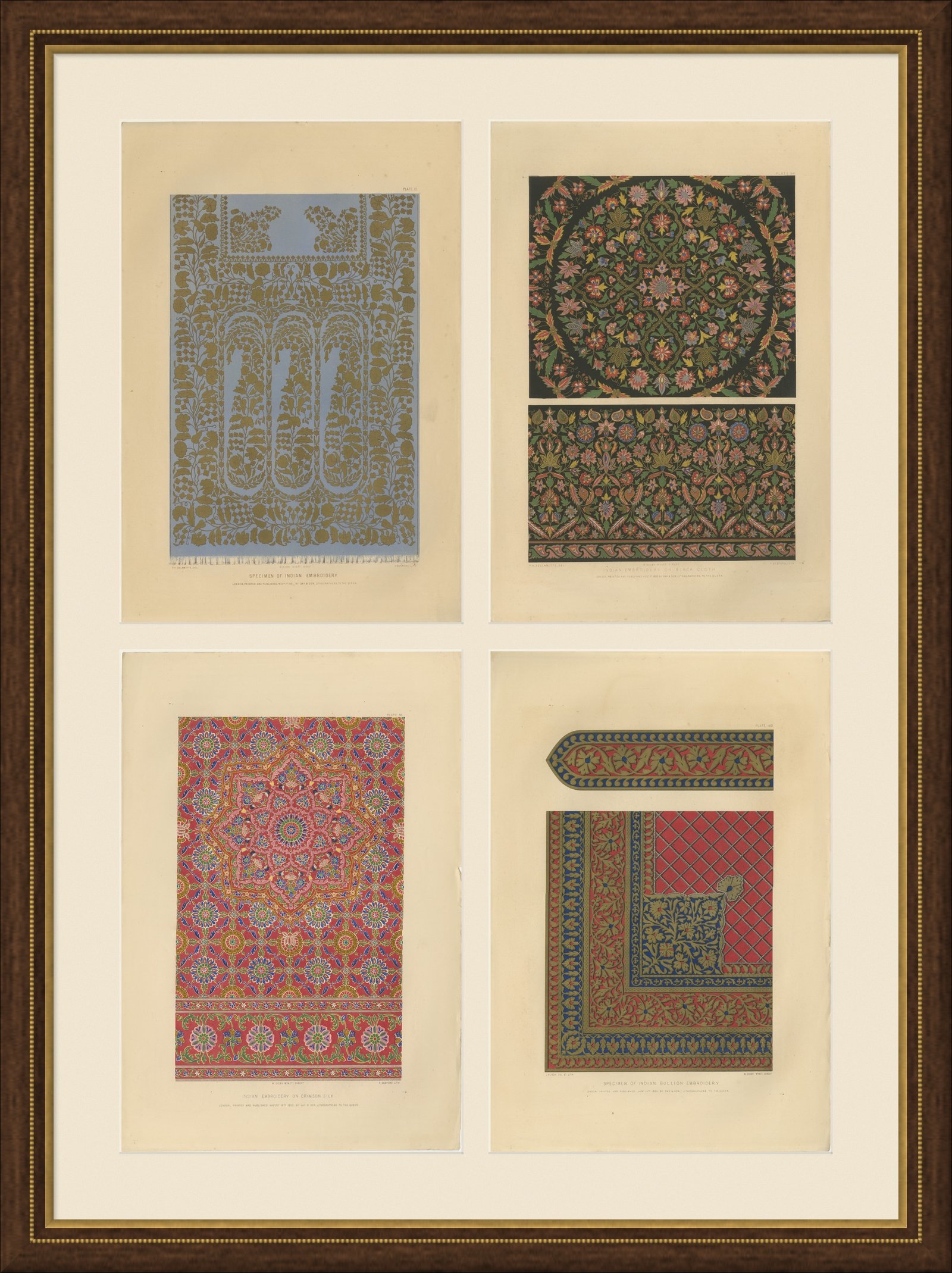
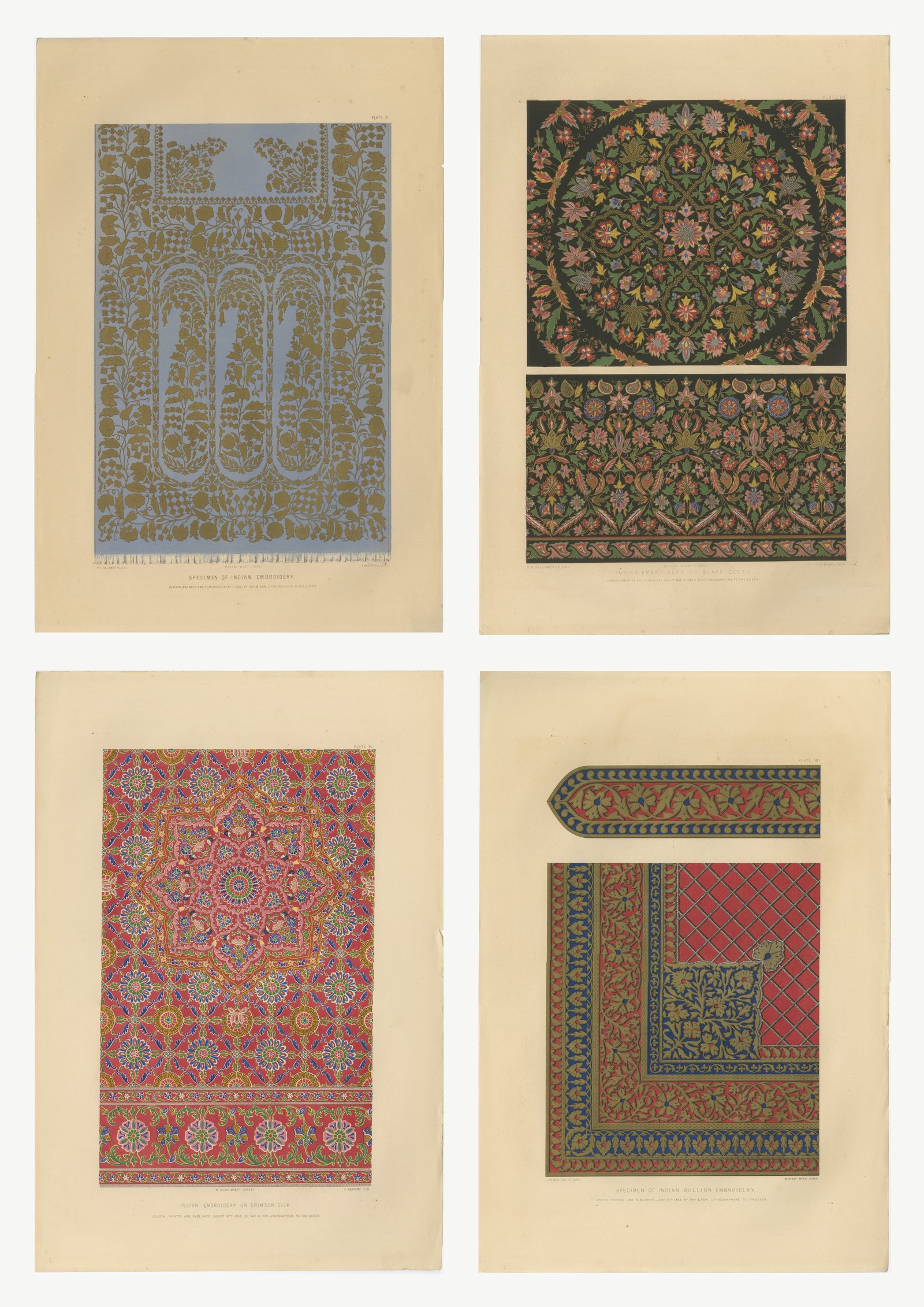
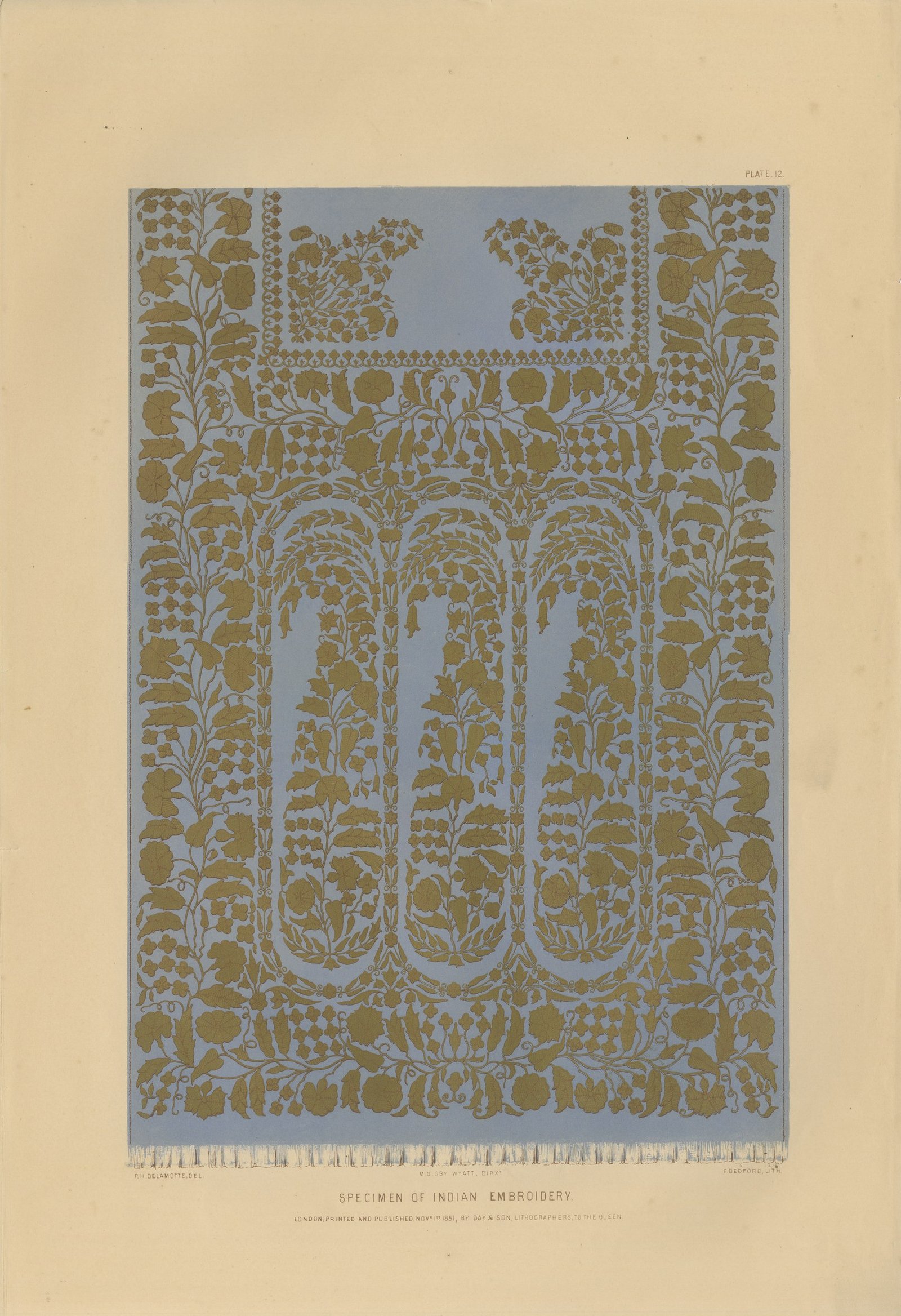
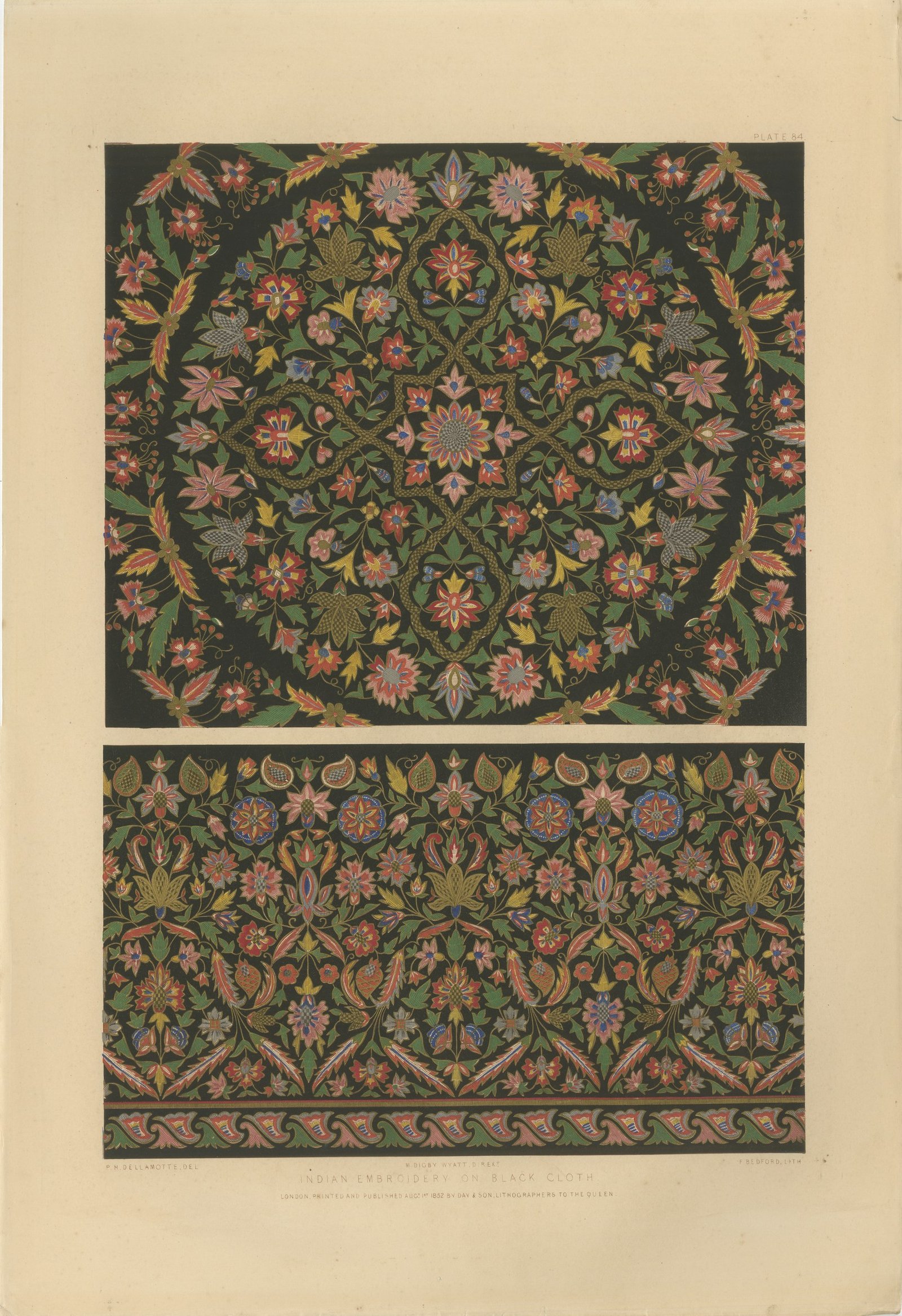
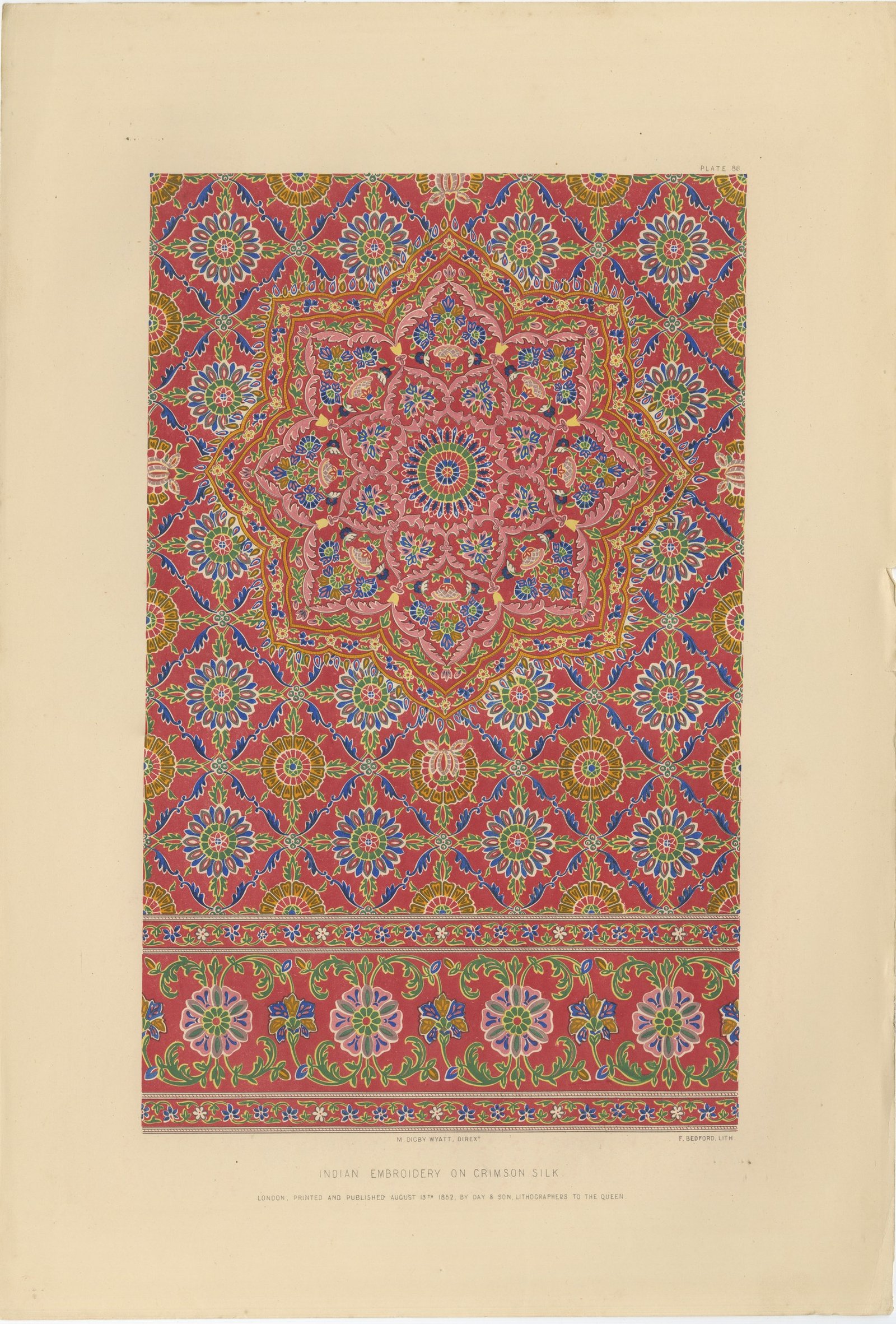
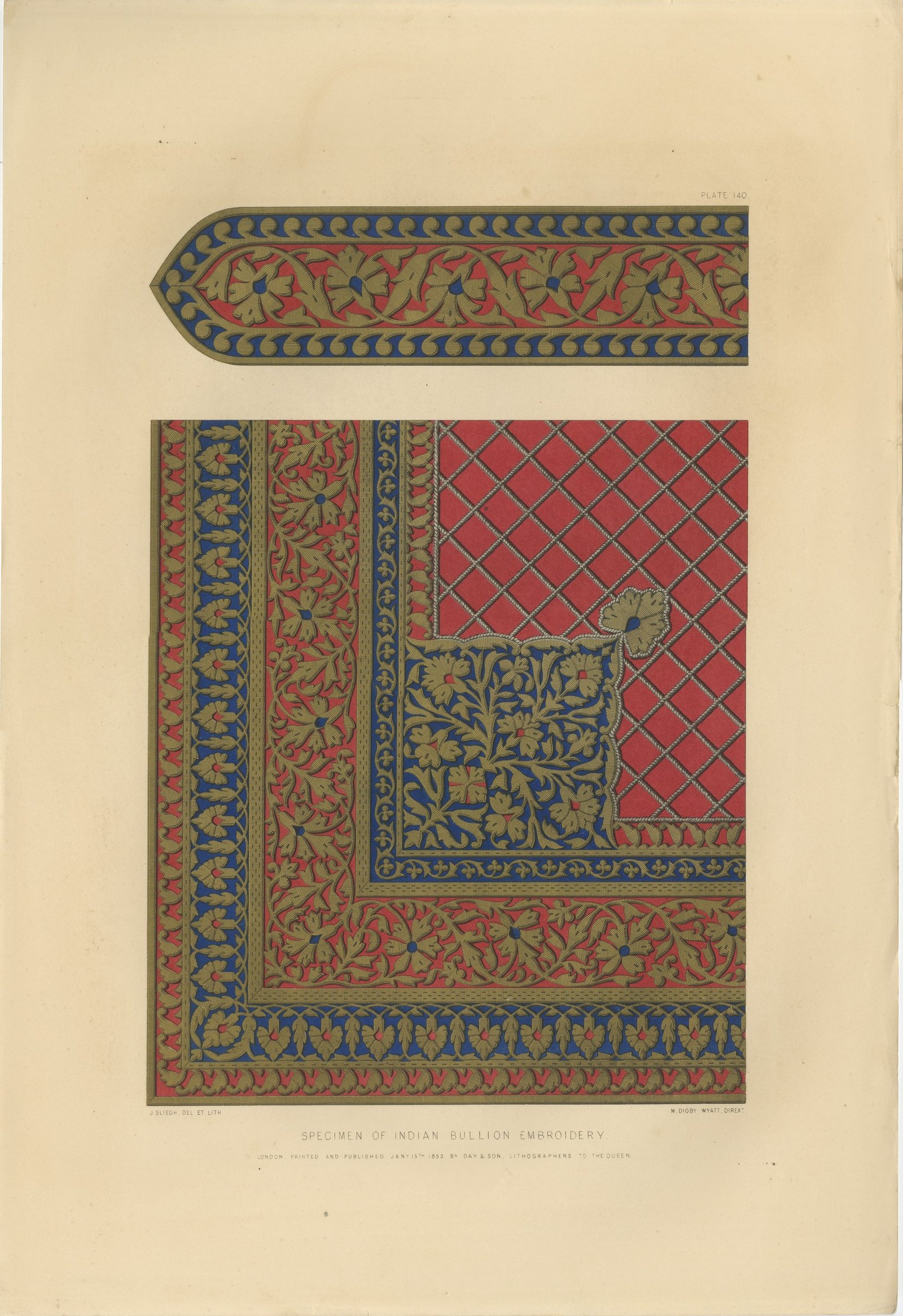
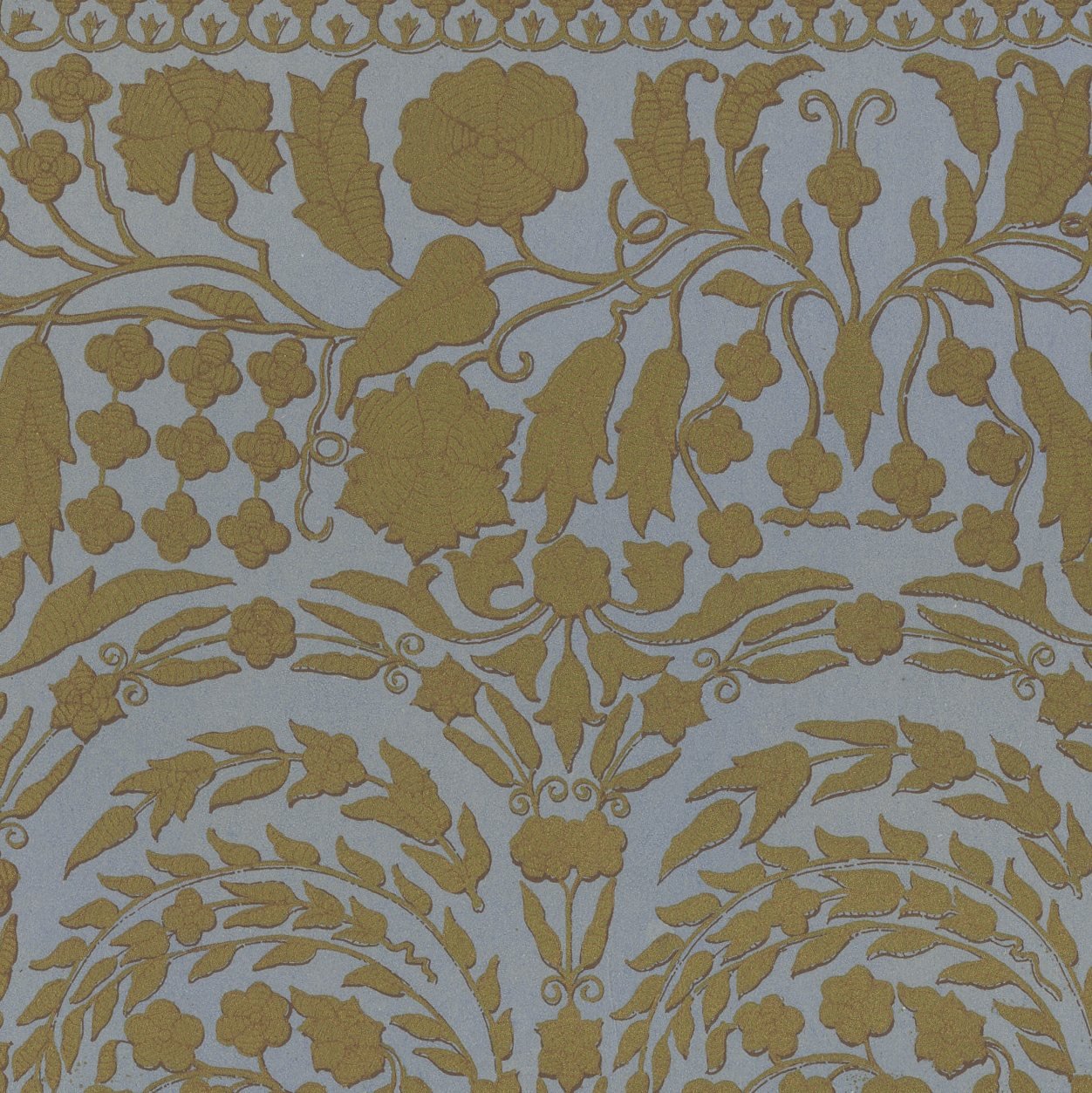
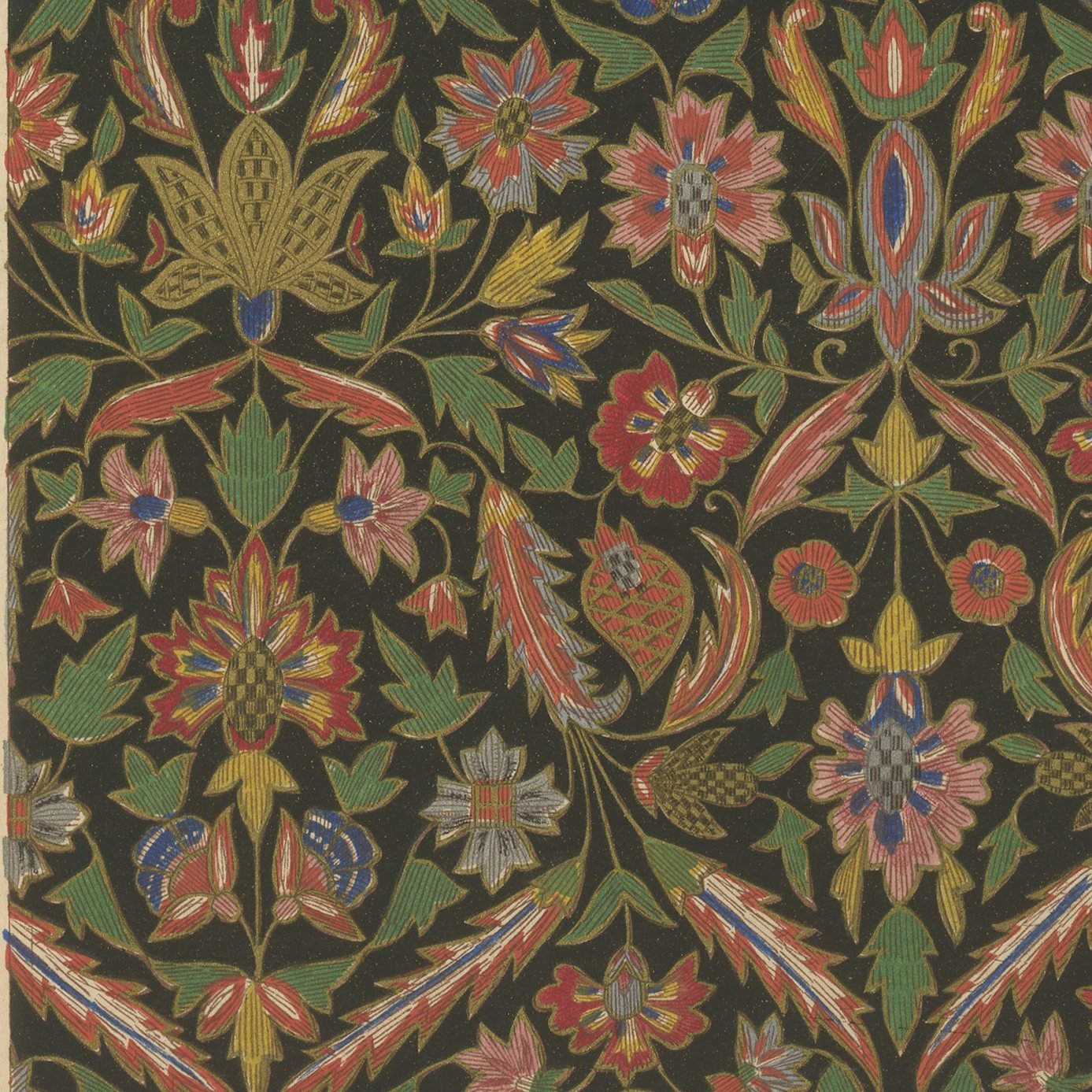
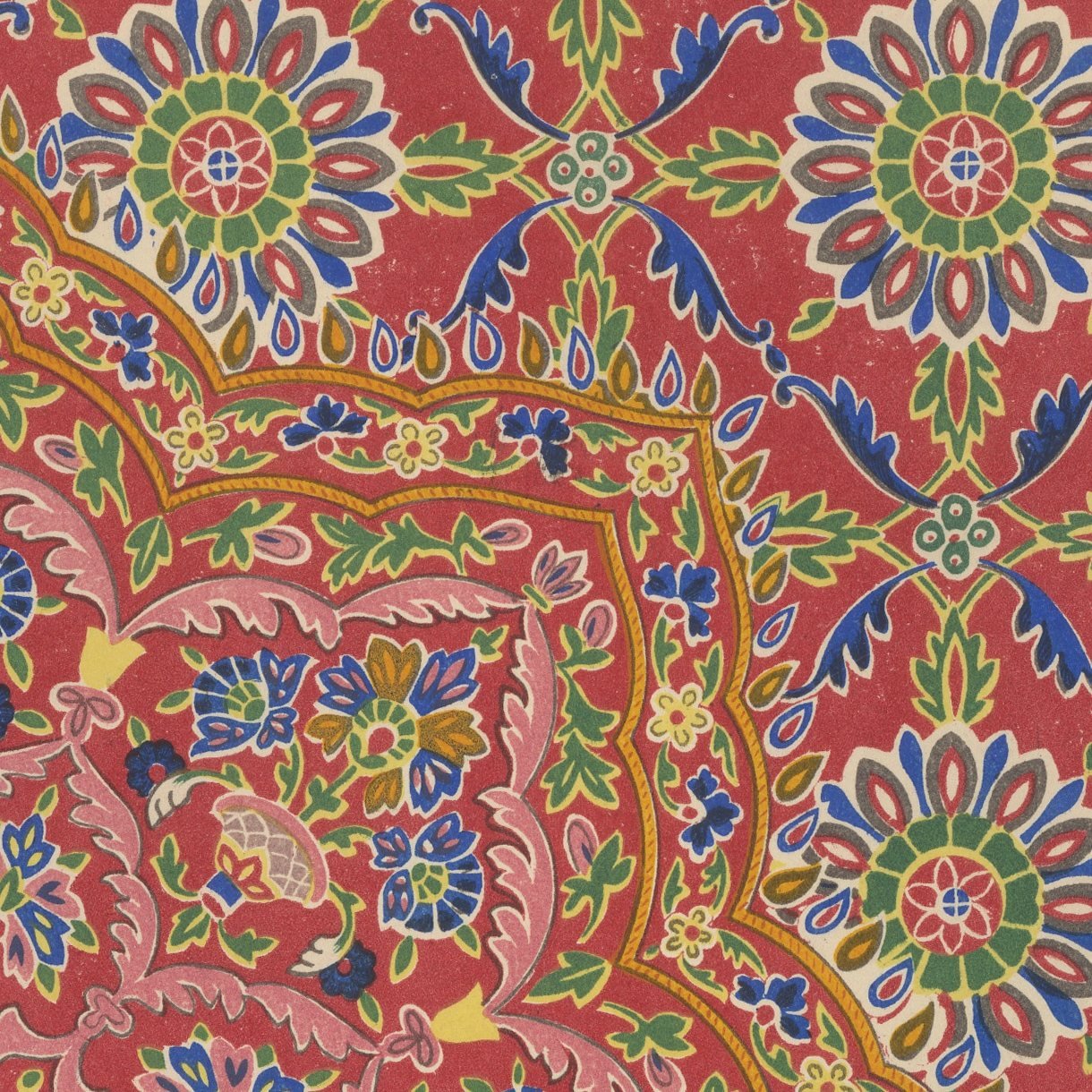
This is a set of four original sheets sold together, all of them recording Indian embroidery shown at the Great Exhibition and all published in London by Day and Son. One gives a vine of gold thread on a clear cornflower blue ground above a deep white fringe; one gives flowering stems in emerald, crimson and pink on a ground of true black; one gives scrolling green leaves and blue and white flowers on crimson silk; and the fourth gives heavy coiled bullion work in gold laid over blue and crimson. All four are upright sheets of the same size and each is drawn by one of Wyatt's team and printed by Day and Son with the metal thread carried as true gold.
The plates come from The Industrial Arts of the Nineteenth Century, Matthew Digby Wyatt's record of the Great Exhibition of 1851, issued in parts by Day and Son, lithographers to the Queen, between 1851 and 1853 and dedicated by permission to Prince Albert. Wyatt had been secretary to the executive committee of the Exhibition, and the work presents, in the words of its title, the choicest specimens produced by every nation, drawn by a team of artists and reproduced in chromolithography, then a new and costly process. Every plate carries its own publication date in the imprint at the foot, with the names of M. Digby Wyatt as director and of the artists who drew or lithographed it.
All four sheets record Indian embroidery shown at the Exhibition, each on a different ground.
Four sheets, all age toned. Plate 12 the most toned of them. Foxing in the margins of plate 12 and 84. Handling wear to the corners of all of them.
These are original antique prints, not modern reproductions. This item is sold unframed.