 The sheet, as you receive it
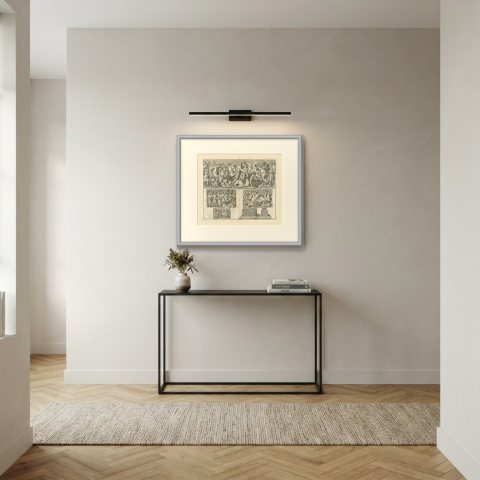
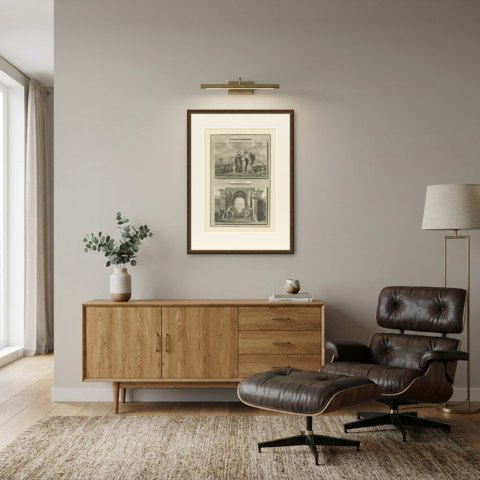
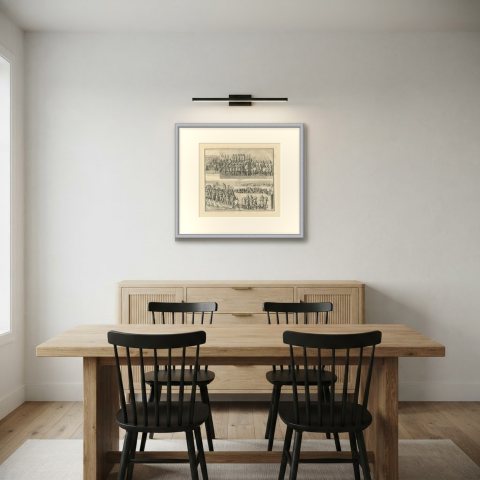
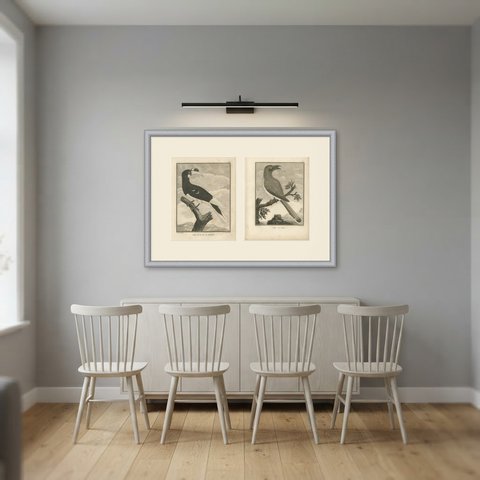
 In the room 1





Interior designers: BarTrade members buy at their trade price. How it works
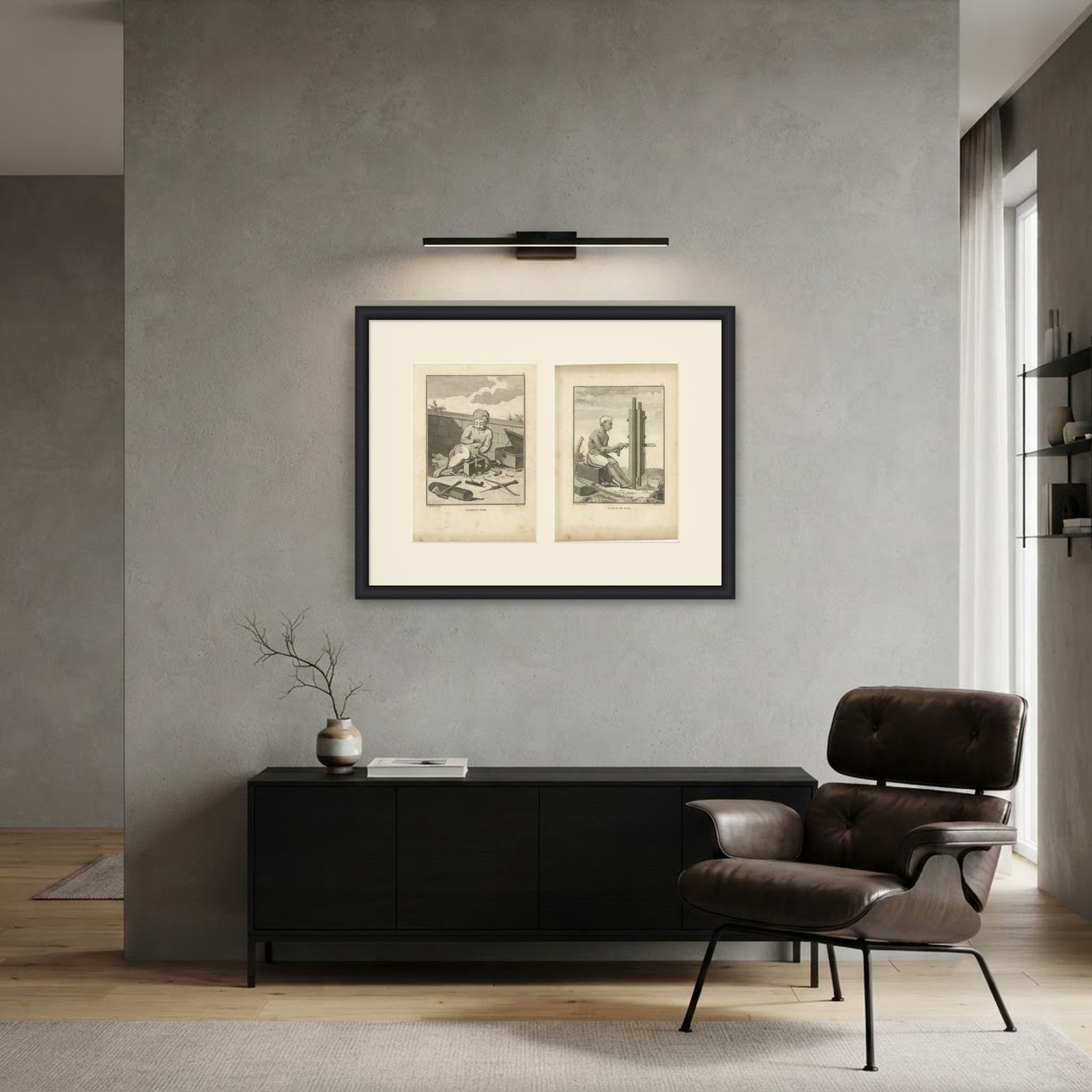
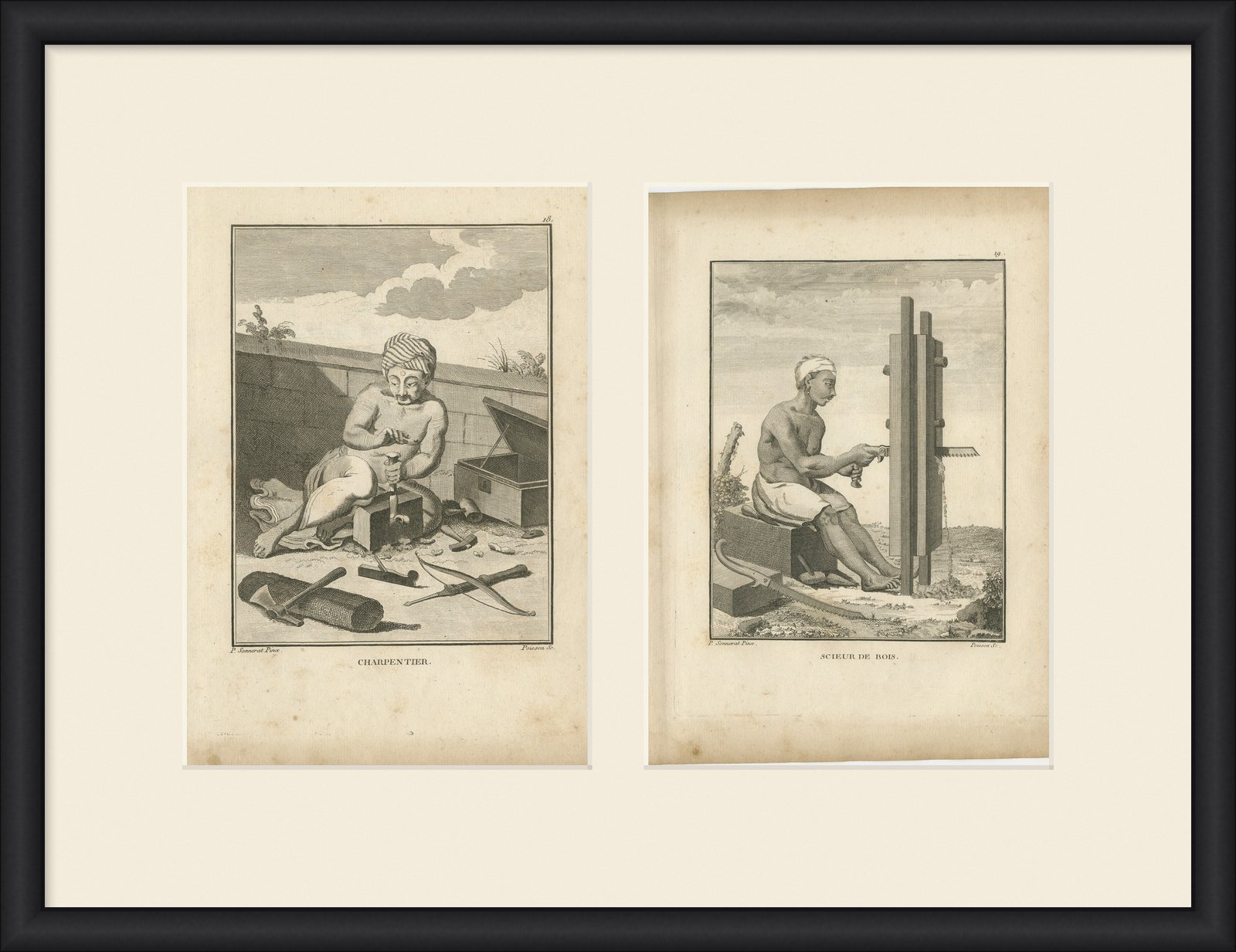
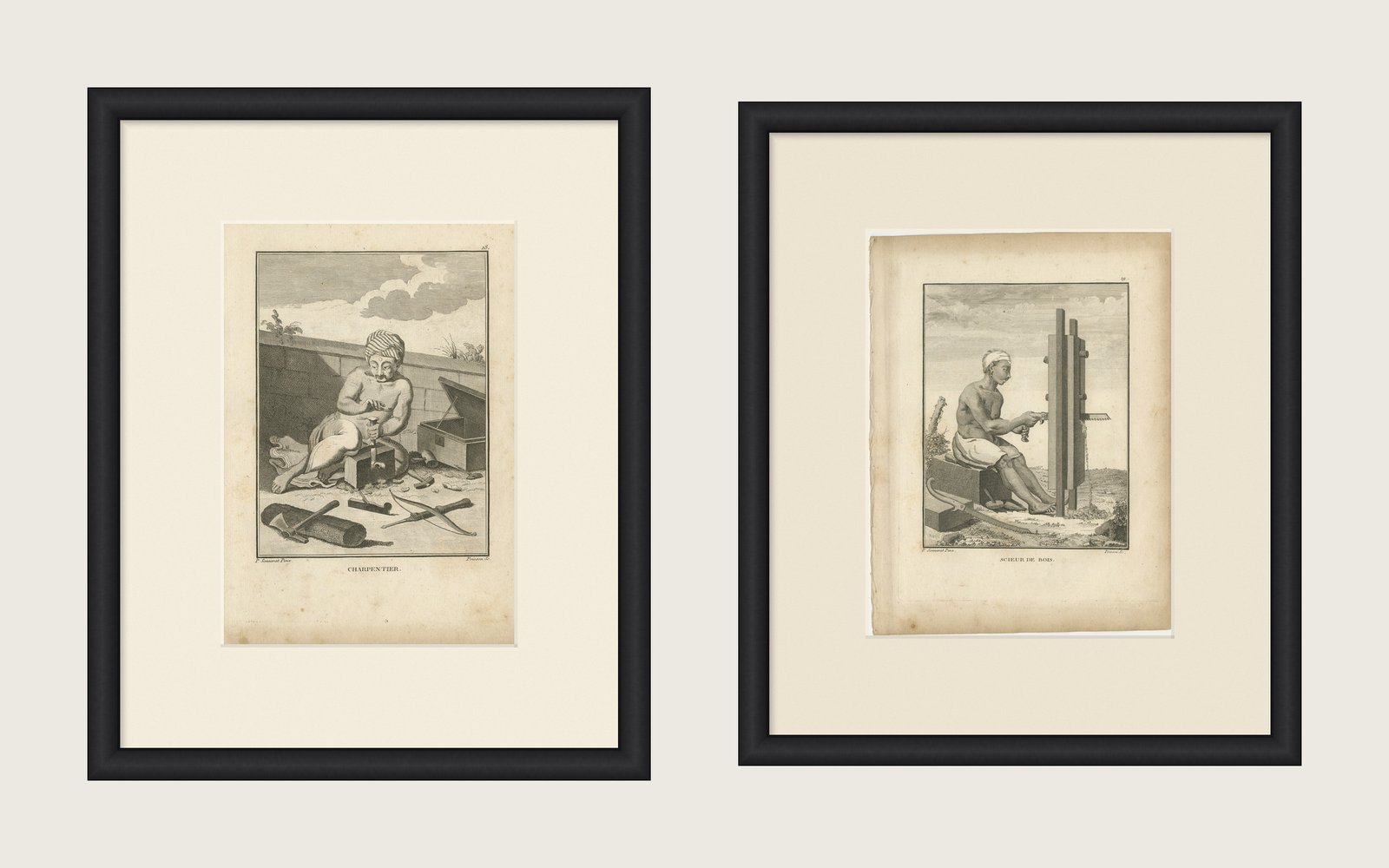
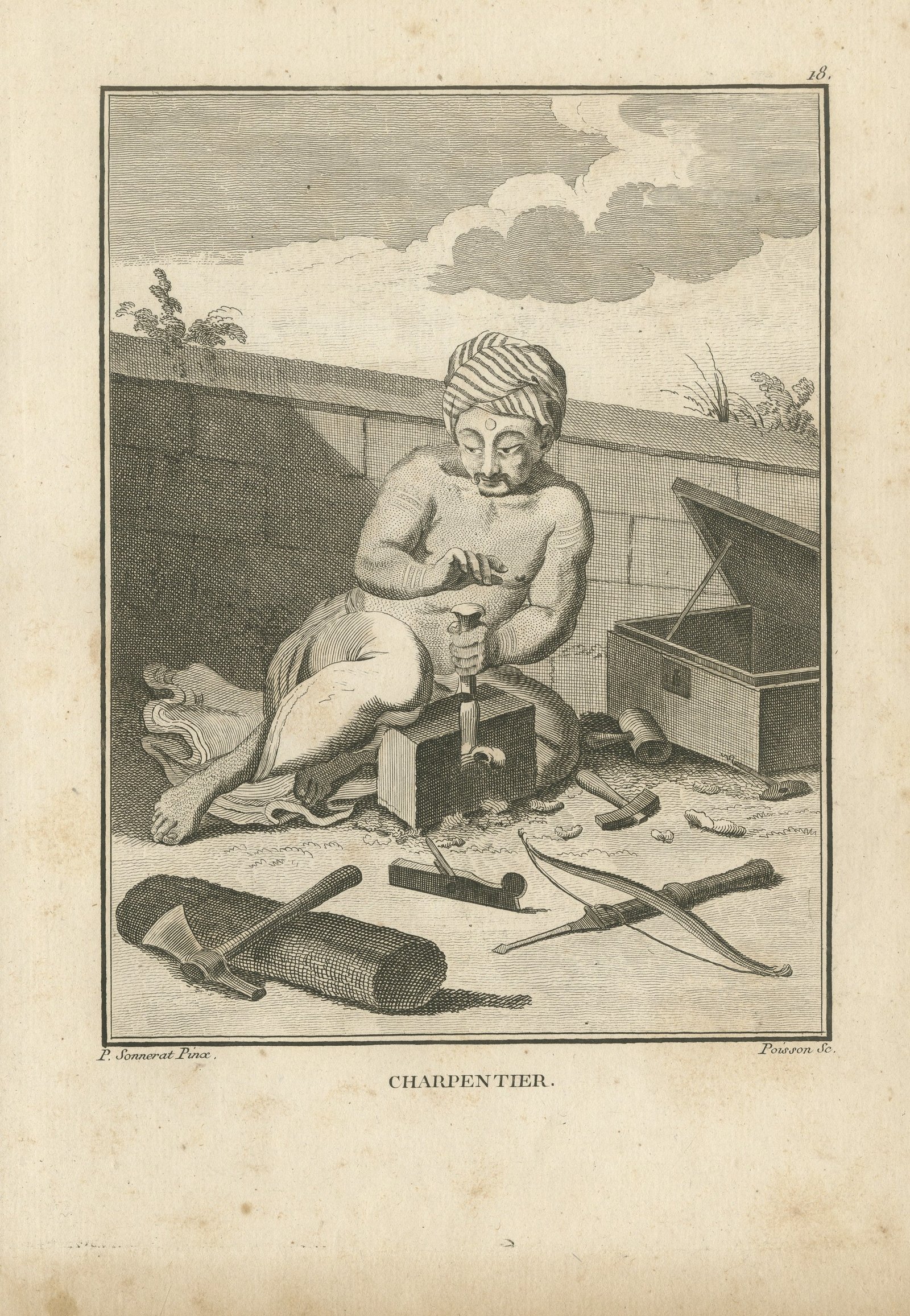
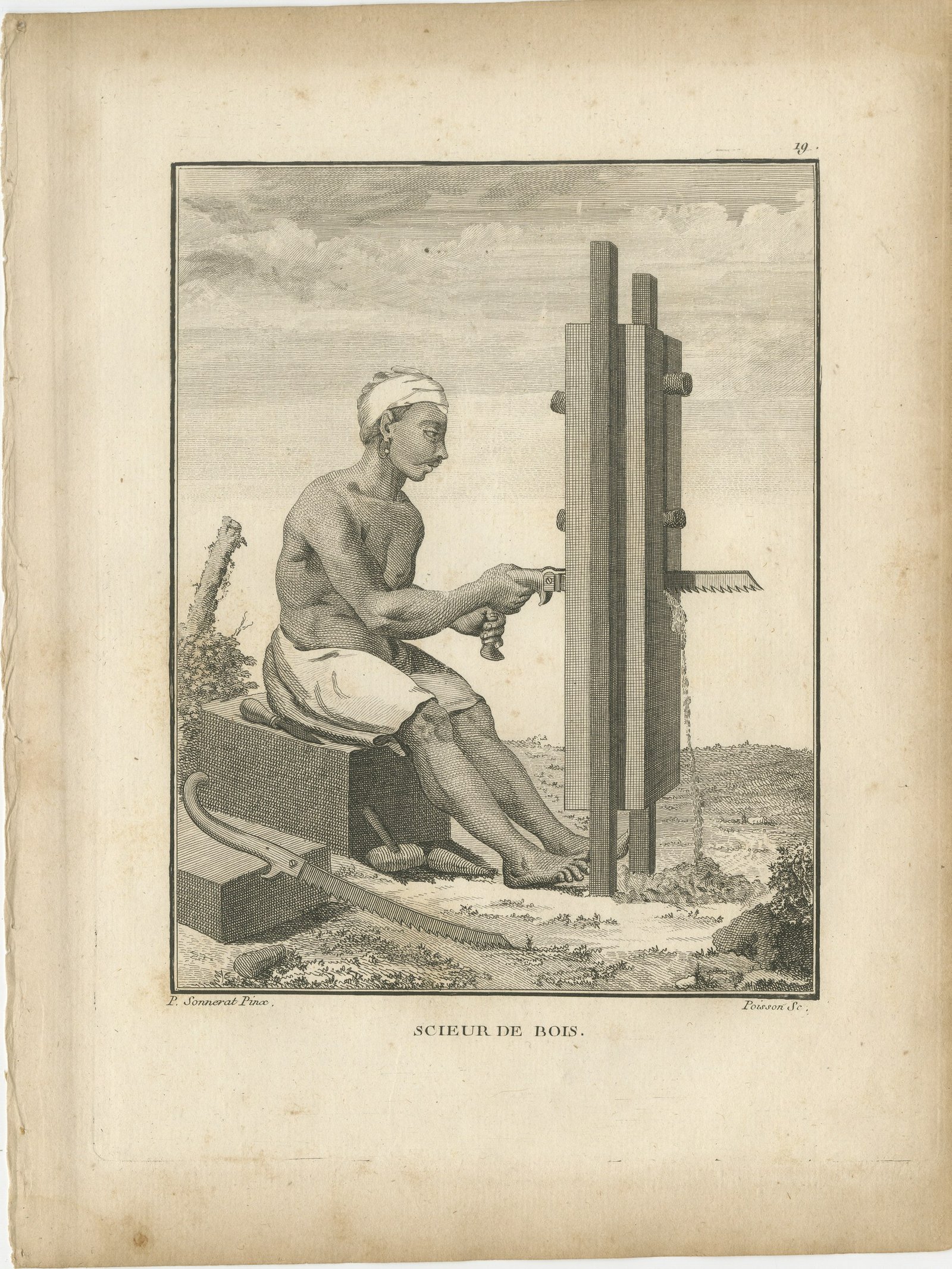
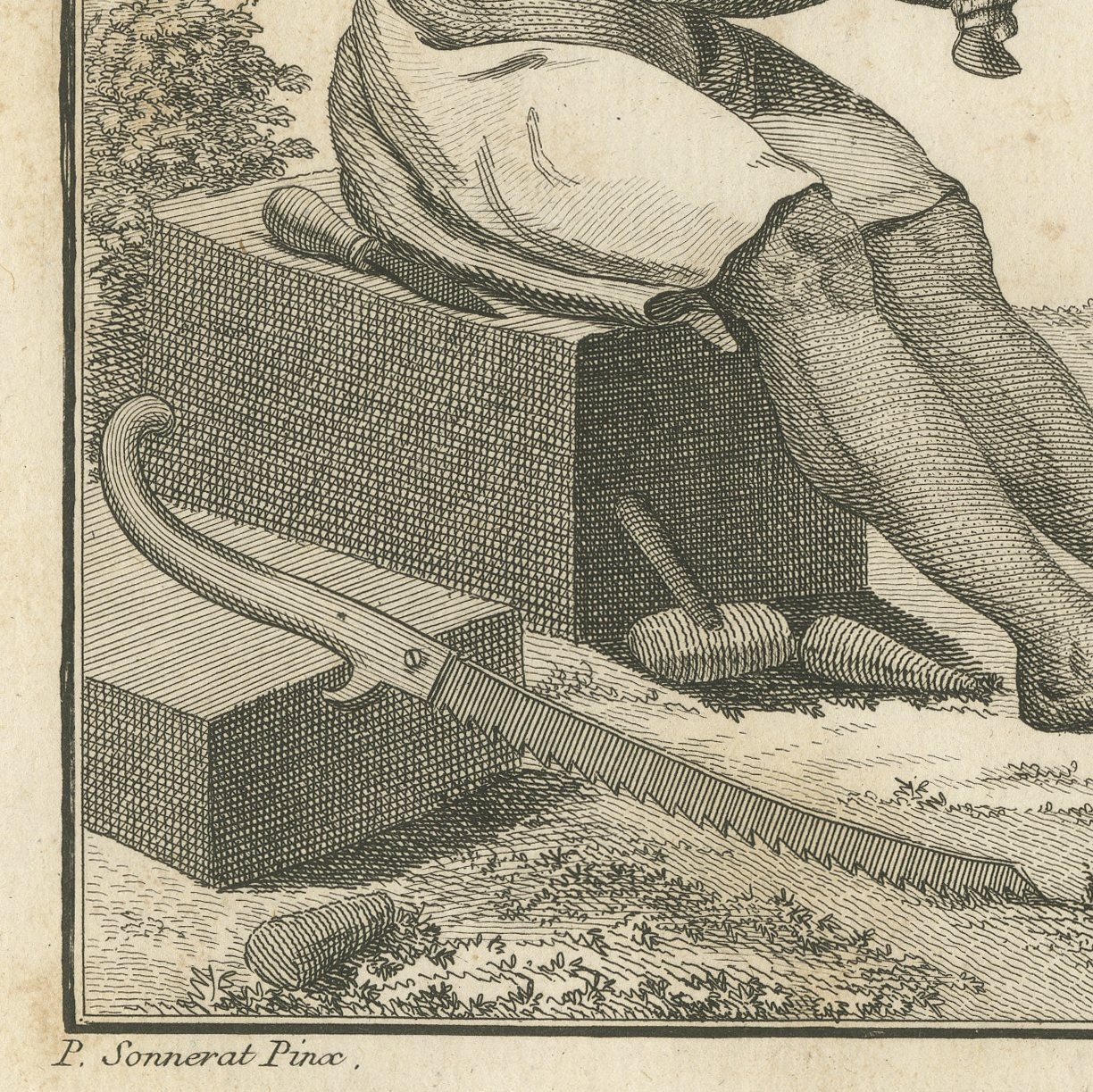
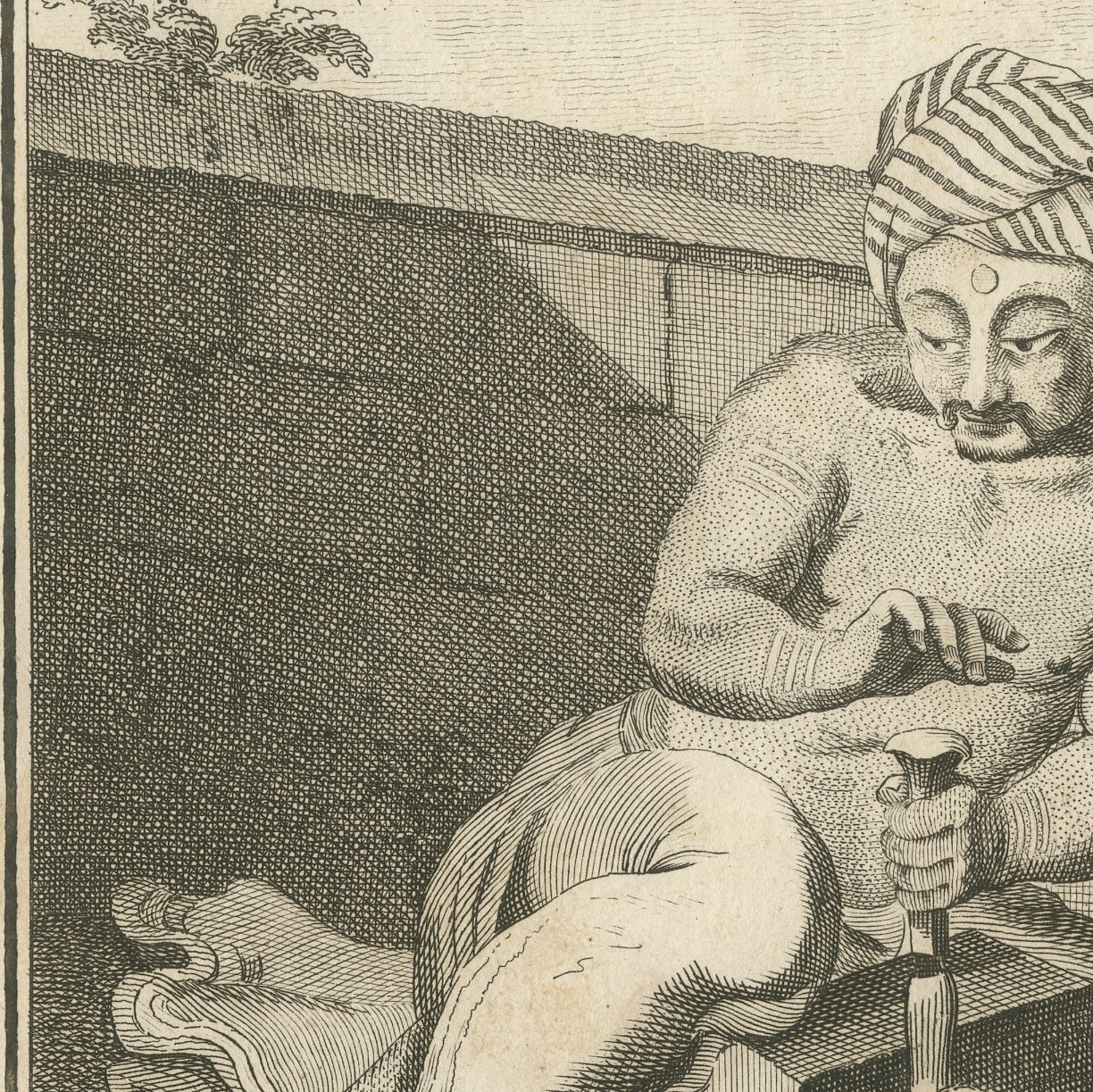
This set of two original antique copper engravings, Plates 18 and 19 from Sonnerat's Voyage aux Indes Orientales et a la Chine, is sold as one set. They are two original sheets sold together as one lot, and the set is never split. Plate 18 shows an Indian carpenter squatting at his work with his tools about him, planing and shaping timber in the open air. Plate 19 shows indian sawyers cutting a log lengthwise with a long saw, one man above the timber and one below. Each sheet carries its engraved plate number at the upper right, the artist and engraver credits at the foot of the image and its caption lettered beneath.
Pierre Sonnerat published his Voyage aux Indes Orientales et a la Chine in Paris in 1782, and the plates were reissued in this separate folio volume by Dentu in 1806 under the title Collection de planches pour servir au Voyage aux Indes Orientales et a la Chine. Every image was drawn by Sonnerat himself during the voyage he made for the French crown between 1774 and 1781 and then cut on copper by the Paris engravers who worked for him. They are original copperplate engravings, printed from the intaglio plates onto laid paper. The engraved plate number stands at the upper right, the artist and engraver credits run along the foot of the image and the caption is lettered beneath. The sheets are uncolored, as the plate volume was issued.
The plates of Indian life are the part of Sonnerat's work that collectors look for first. He recorded the trades, the tools, the ceremonies and the religion of the Tamil country at a moment when very few Europeans were doing so with any care, and he did it without the condescension that runs through most travel books of his century. The working plates in particular are a straightforward record of how things were made. Both sheets are the same size and the same orientation and come from one volume of one book, which is why they are offered as a set and not one at a time. Sonnerat is remembered in the names of the things he found. The mangrove genus Sonneratia carries his name, so does the gray junglefowl Gallus sonneratii, and the botanical author abbreviation Sonn. stands for him. He was the first to put the name aye-aye into print, and the name indri entered European use through him as well. The plates in this volume are the record of that work.
Noticeable uneven toning on some sheets. Marked handling soiling along the edges of both sheets. Scattered light foxing in the margins of both sheets. Slight wear at the corners of both sheets.
These are original antique prints, not modern reproductions. This item is sold unframed.