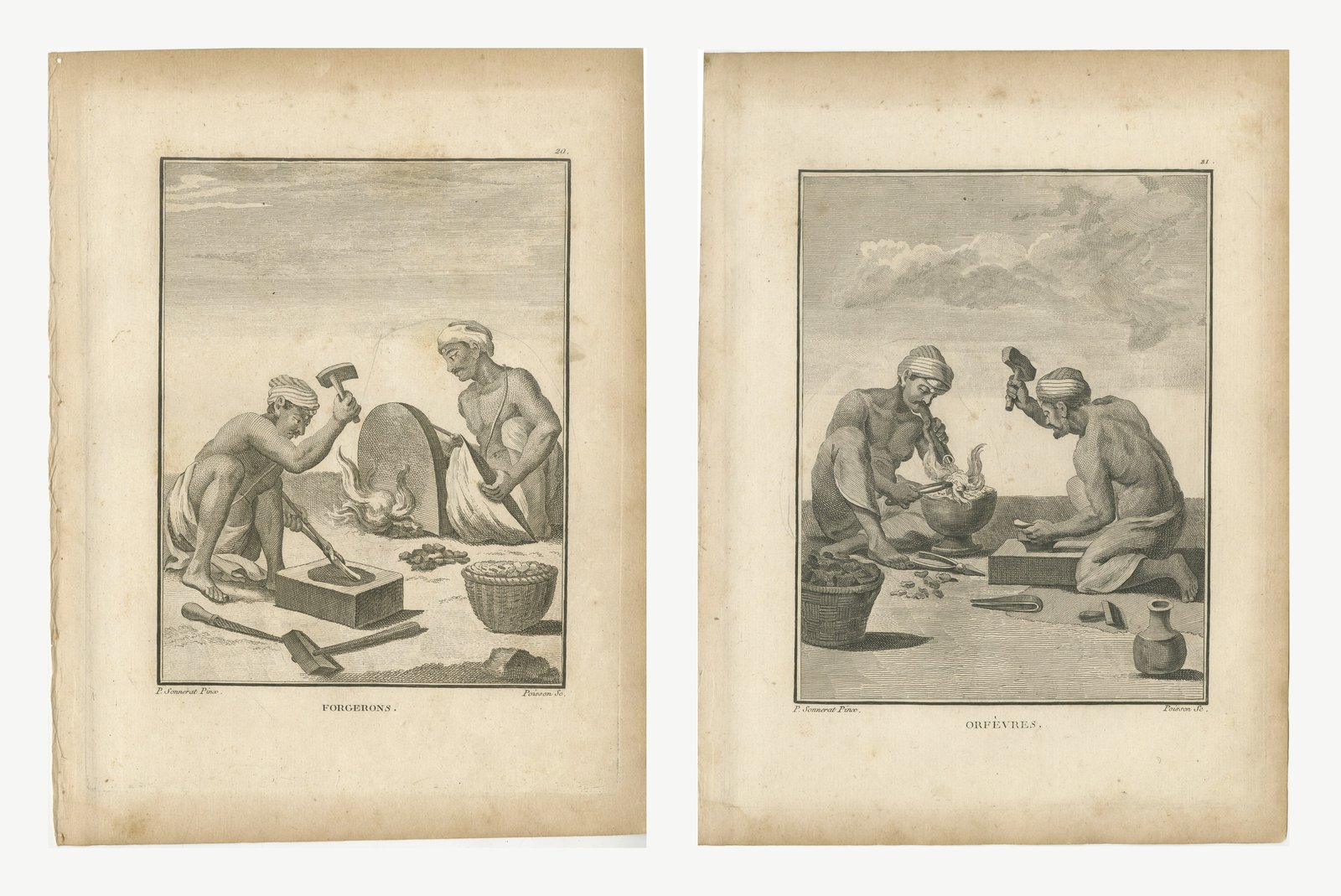
 The sheet, as you receive it
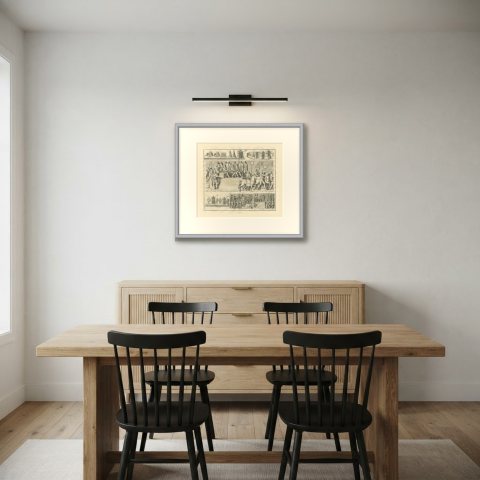
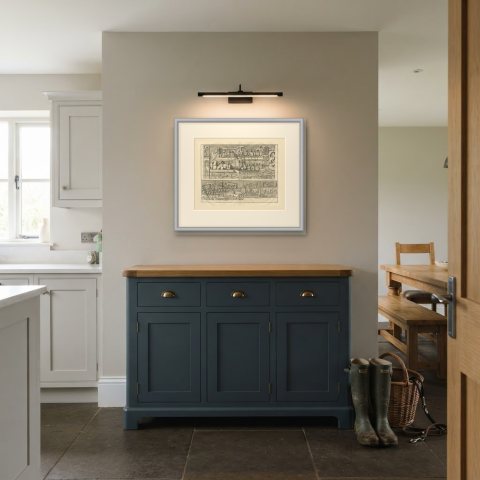
 In the room 1
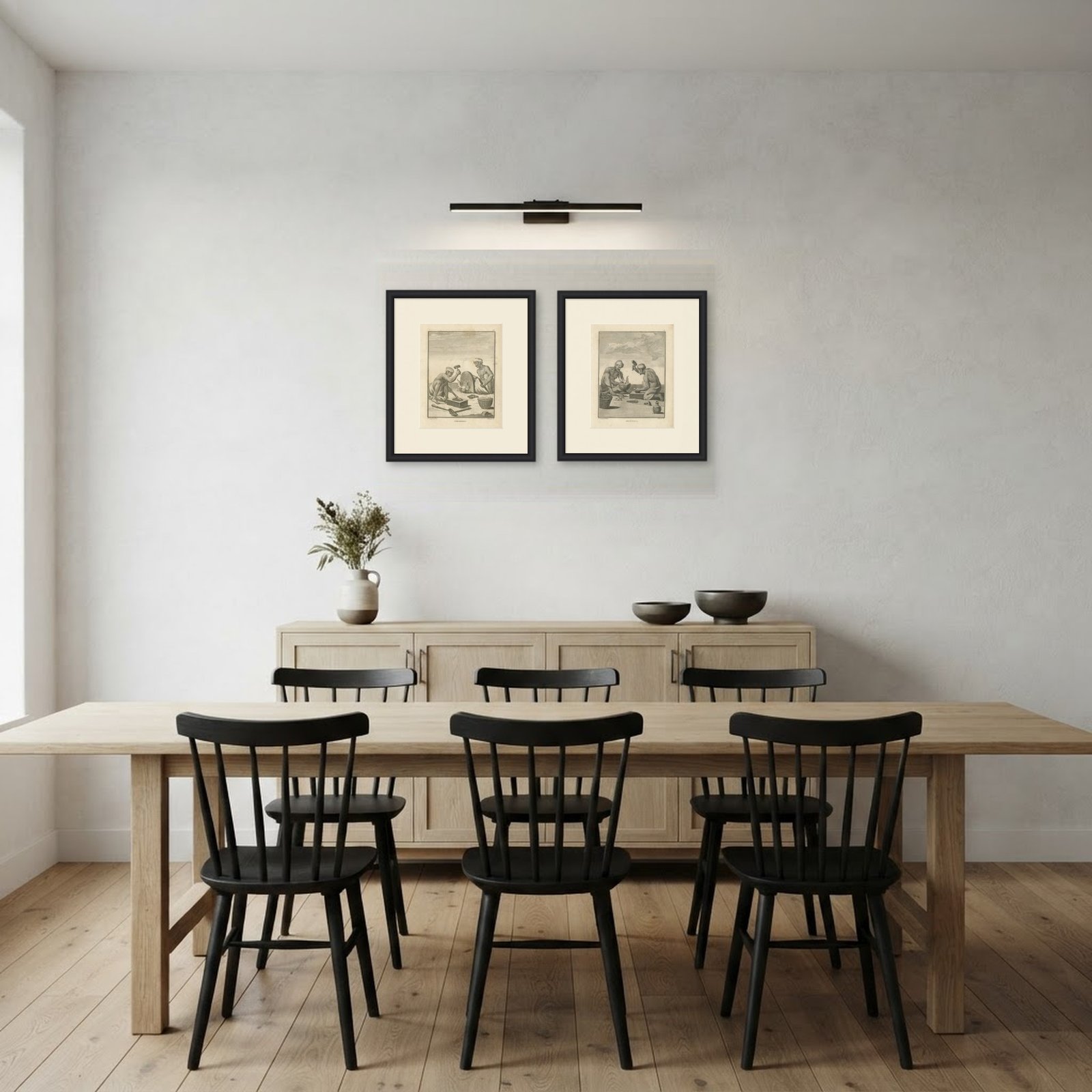


Interior designers: BarTrade members buy at their trade price. How it works
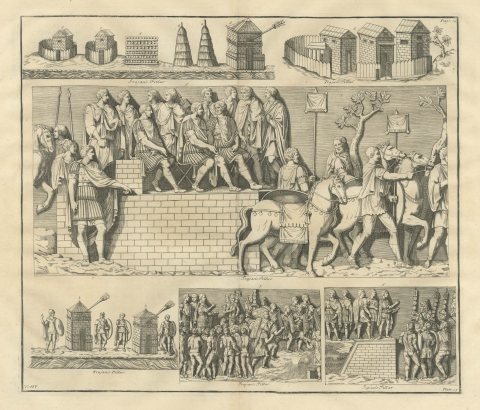
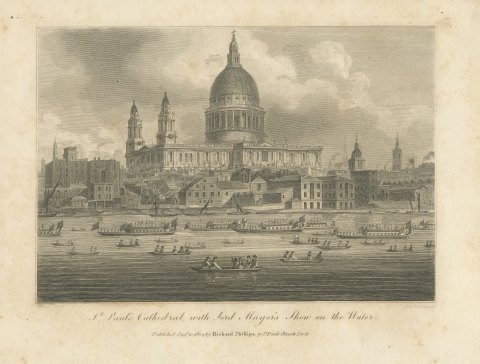
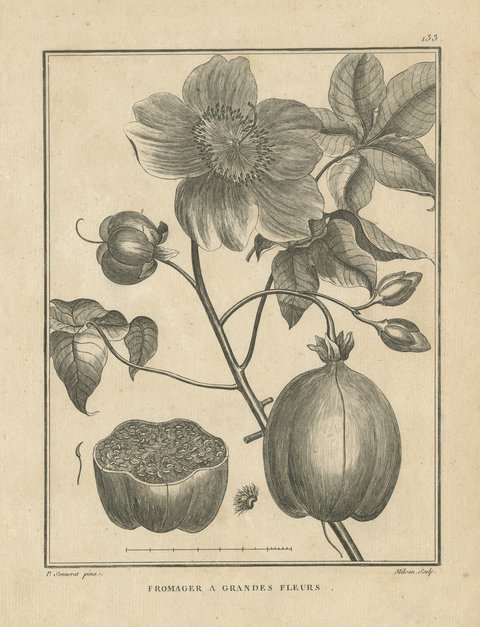
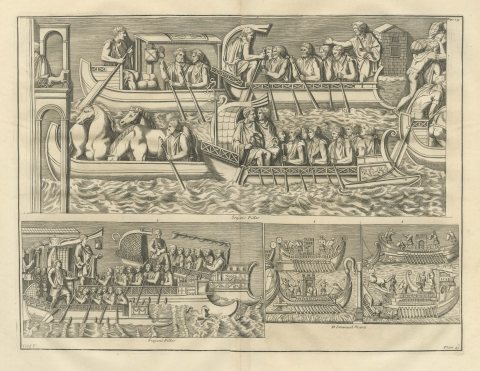
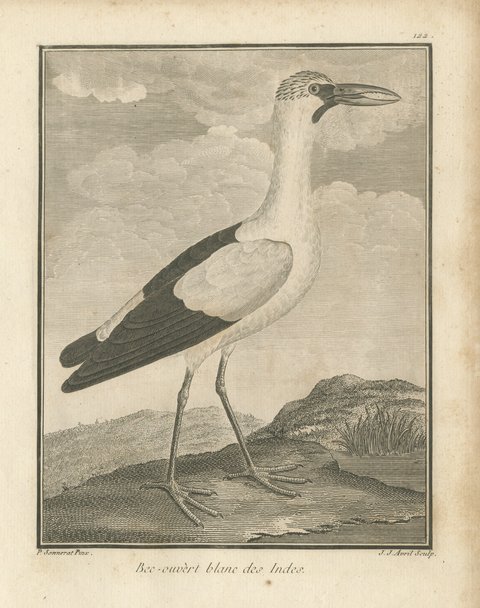
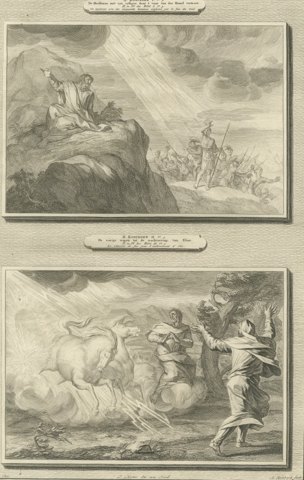
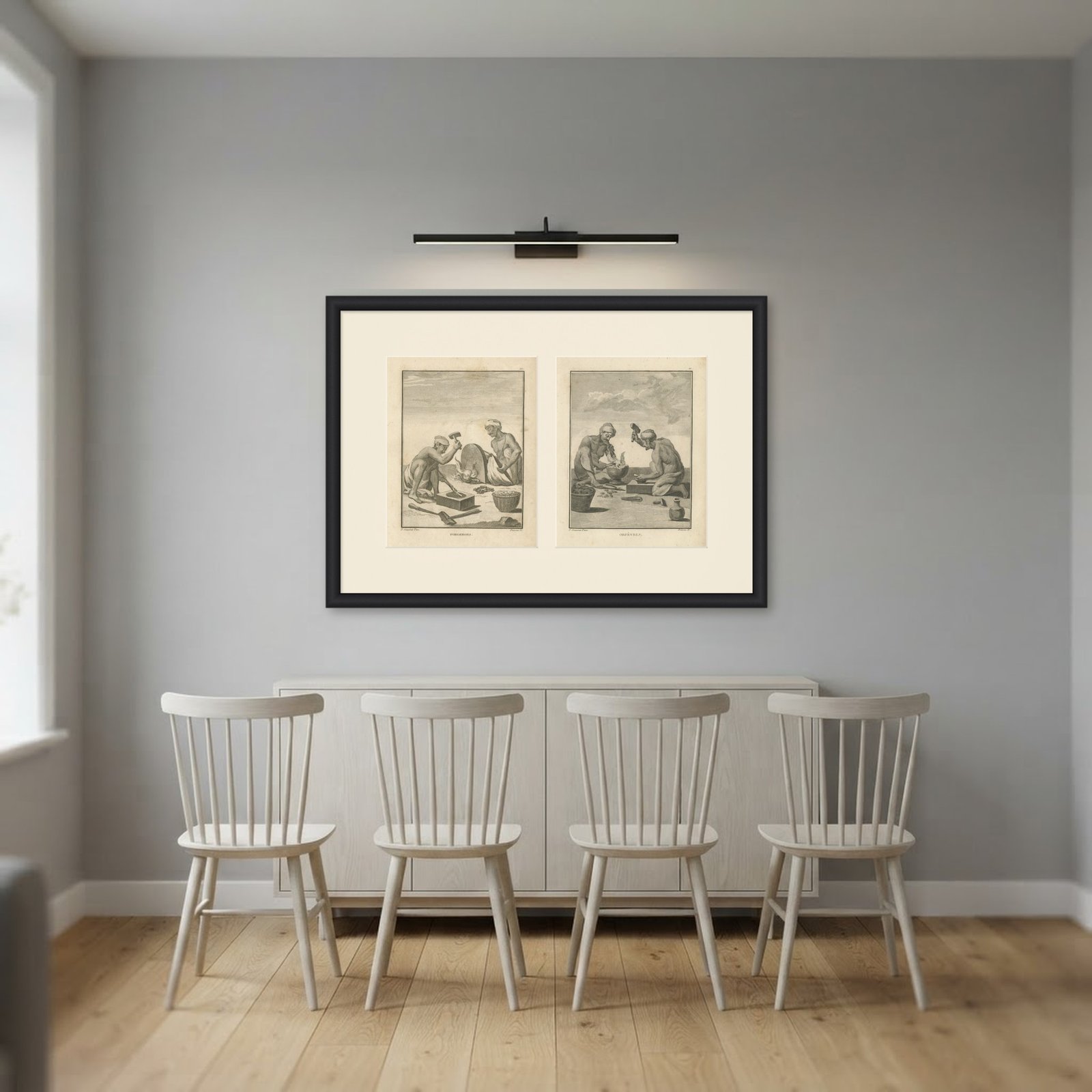
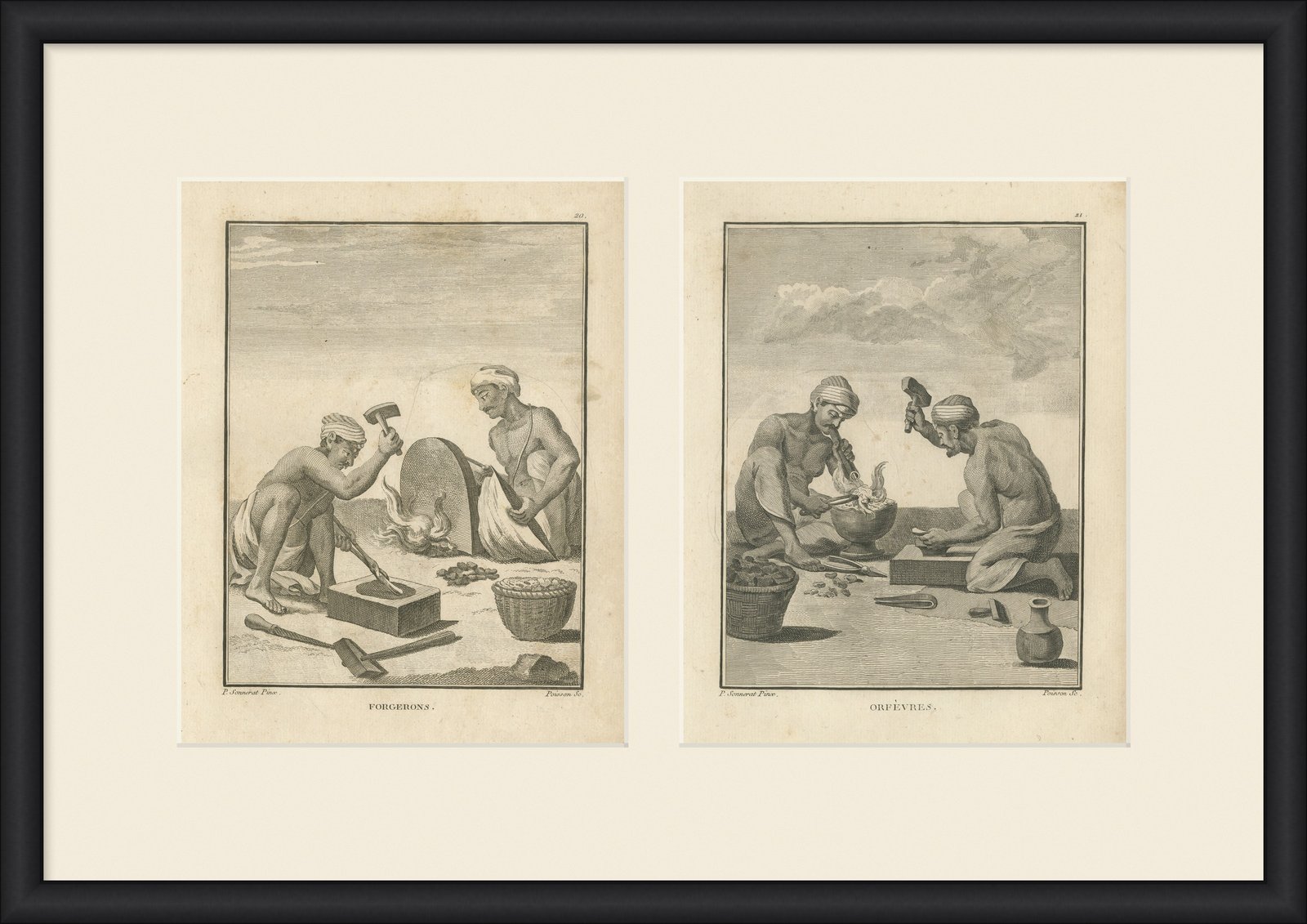
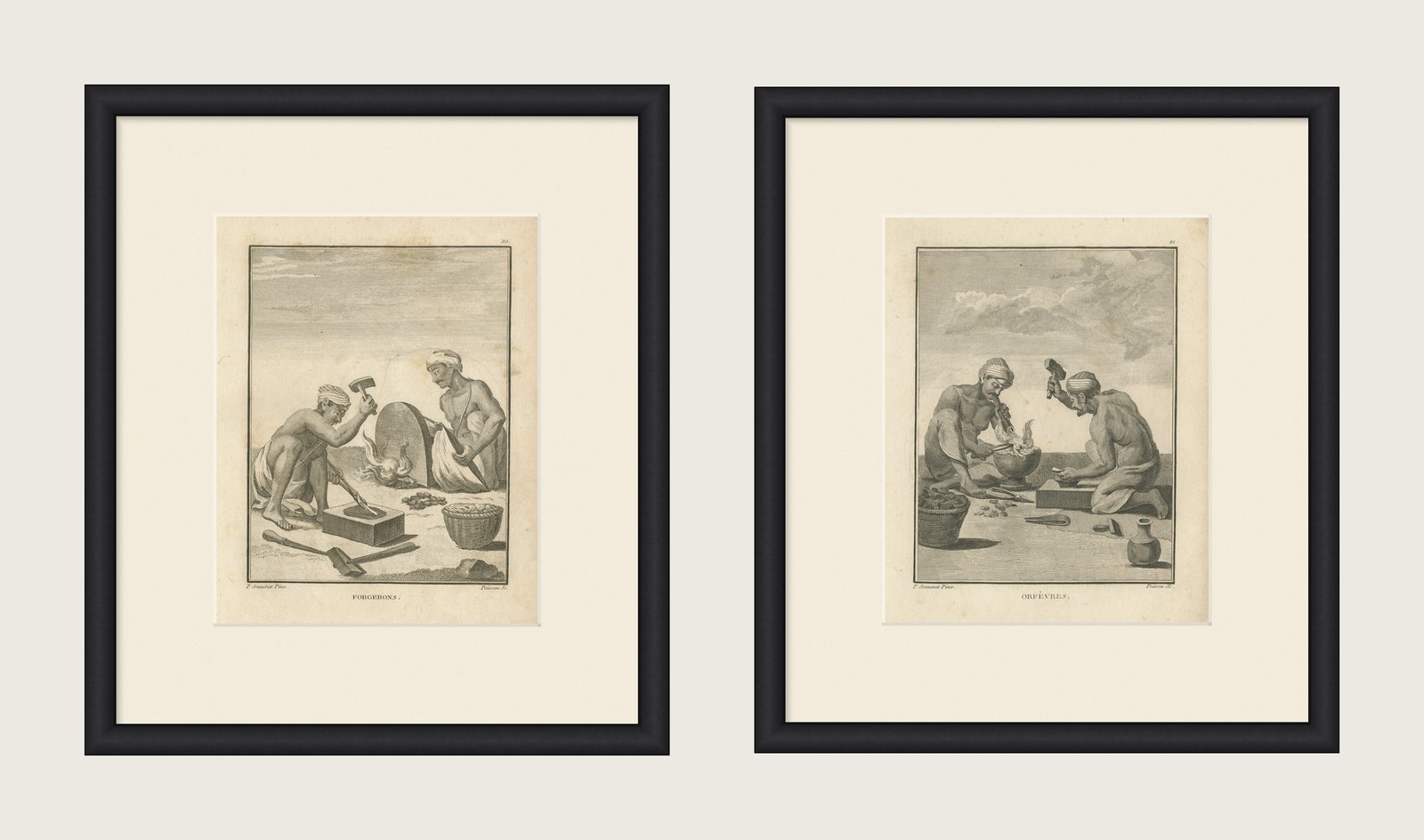
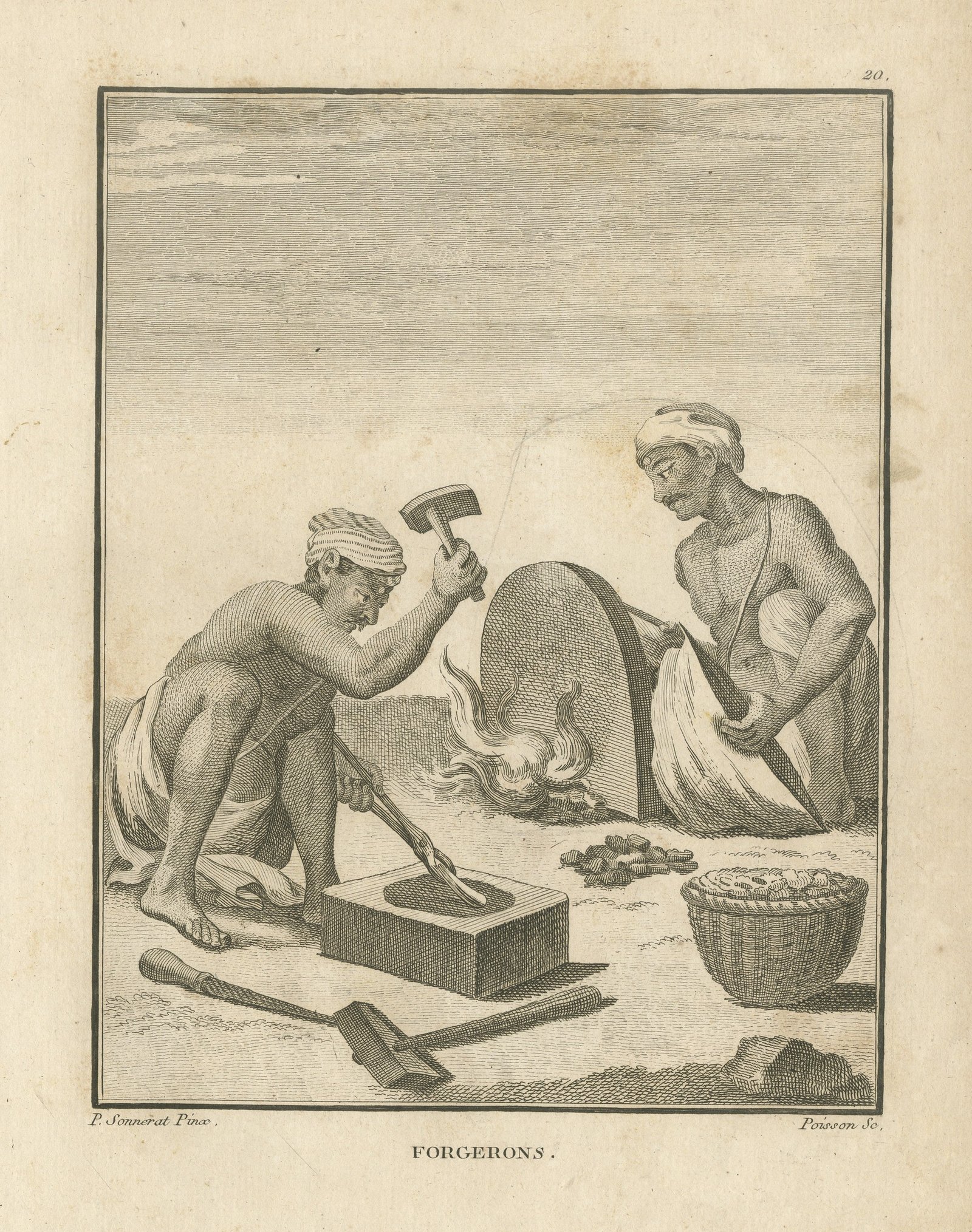
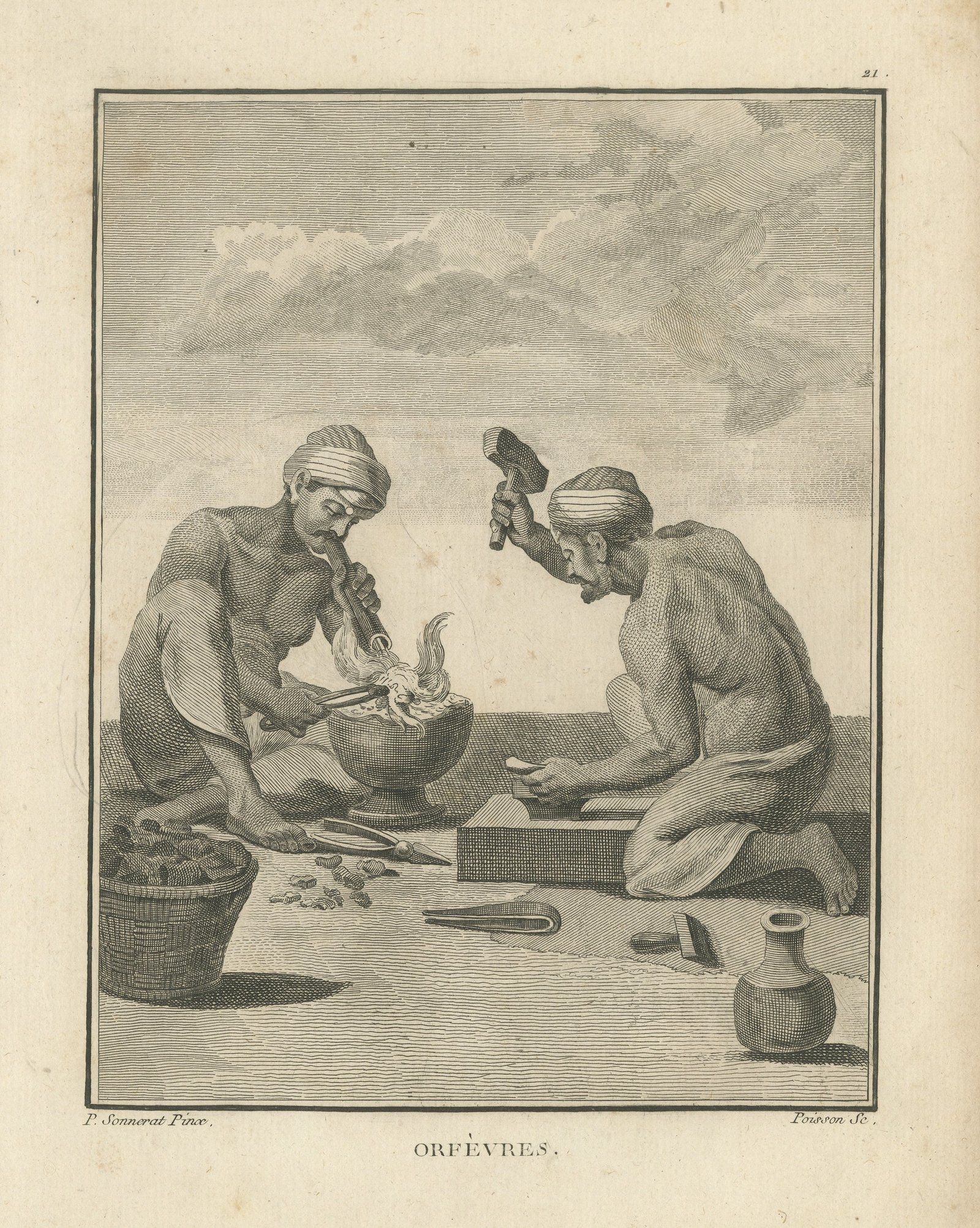
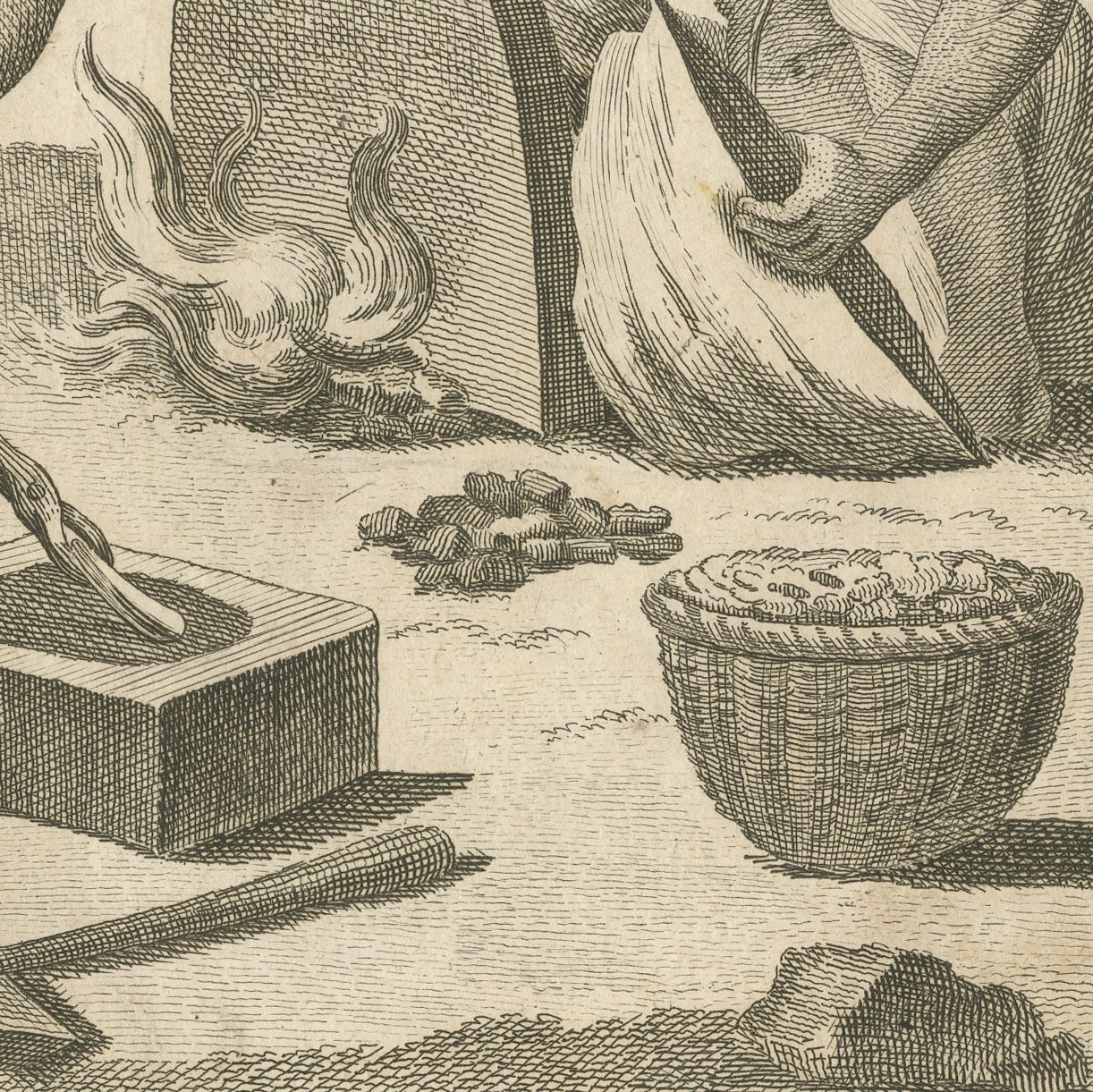
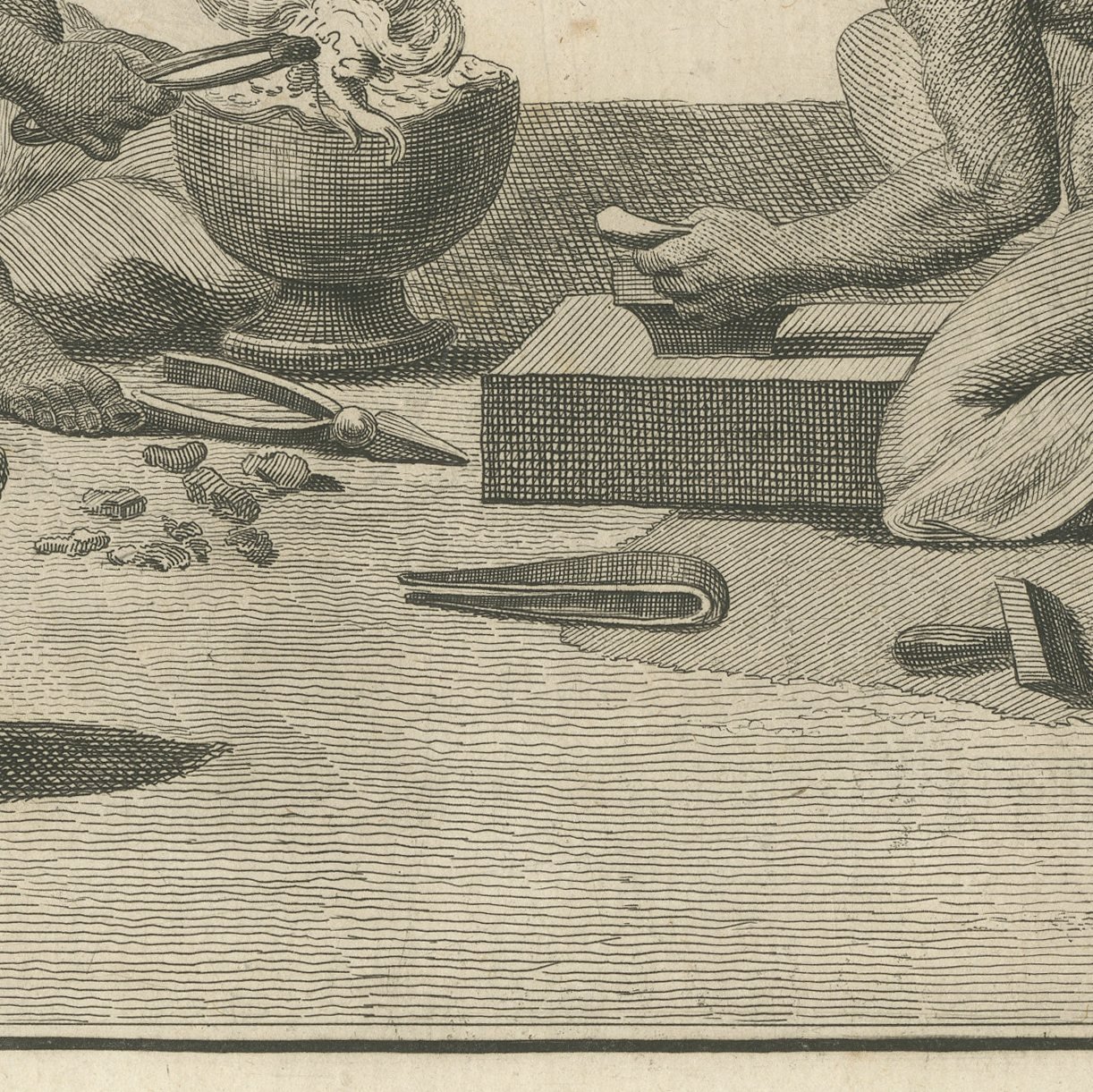
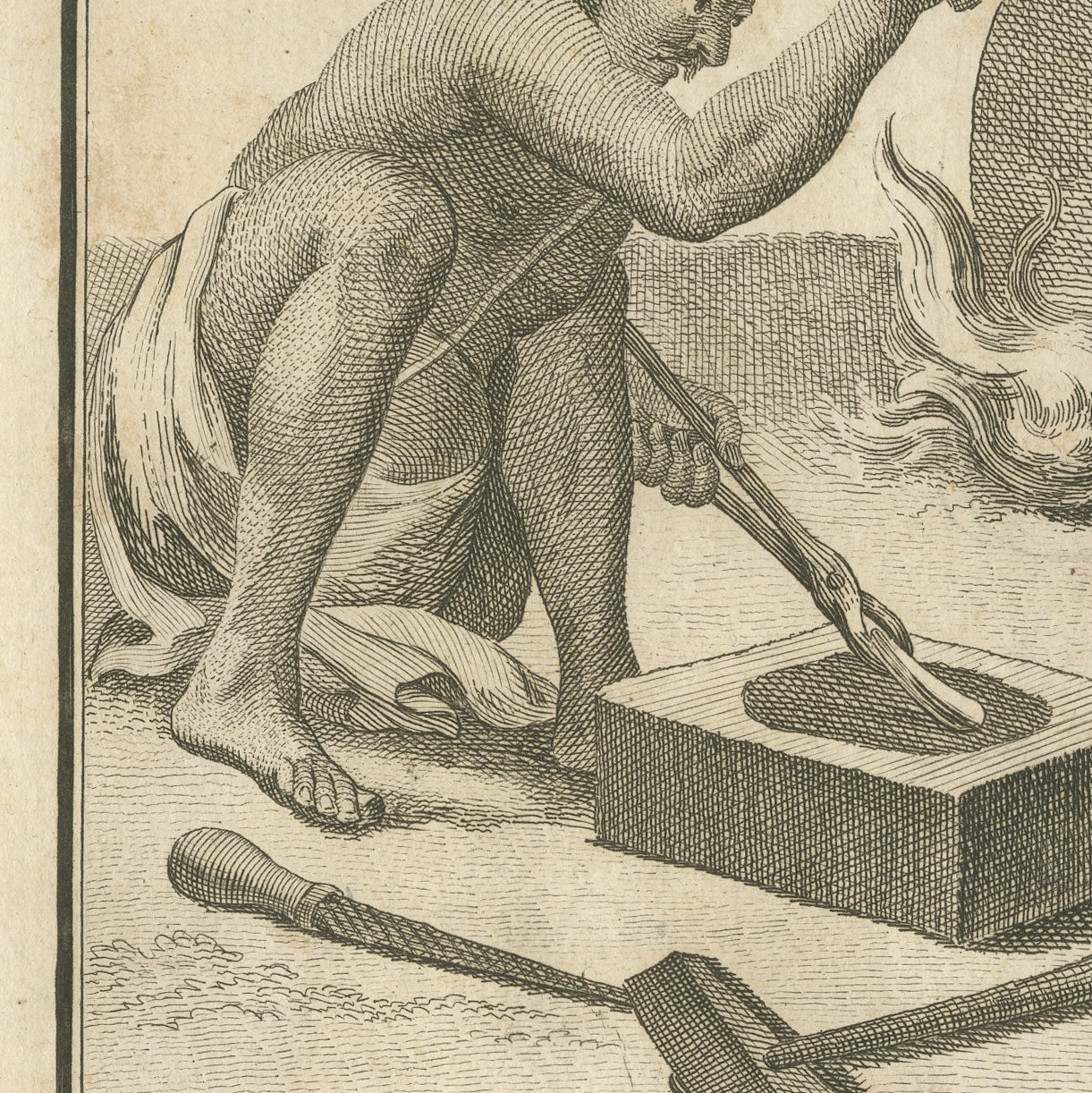
This set of two original antique copper engravings, Plates 20 and 21 from Sonnerat's Voyage aux Indes Orientales et a la Chine, is sold as one set. They are two original sheets sold together as one lot, and the set is never split. Plate 20 shows indian blacksmiths at a ground level forge, one working the bellows while another strikes the iron on a low anvil. Plate 21 shows indian goldsmiths seated at their work with crucible, blowpipe and small hammers, finishing jewelry and vessels. Each sheet carries its engraved plate number at the upper right, the artist and engraver credits at the foot of the image and its caption lettered beneath.
These plates belong to the Collection de planches pour servir au Voyage aux Indes Orientales et a la Chine, published in Paris by Dentu in 1806. It is the plate volume that accompanies Sonnerat's account of the years he spent in India, China, Malacca, Madagascar and the islands of the Indian Ocean as a naturalist and naval commissary in the service of France. The images are copper engravings, printed in black on laid paper with a clear plate mark, the lettering cut below each image in the same plate. No color was applied, which is how the volume was issued.
The plates of Indian life are the part of Sonnerat's work that collectors look for first. He recorded the trades, the tools, the ceremonies and the religion of the Tamil country at a moment when very few Europeans were doing so with any care, and he did it without the condescension that runs through most travel books of his century. The working plates in particular are a straightforward record of how things were made. Both sheets are the same size and the same orientation and come from one volume of one book, which is why they are offered as a set and not one at a time. What Sonnerat produced was not a studio compilation. He was in India for seven years, based at Yanam and at Pondicherry, and he went on to Canton, to Malacca, to Madagascar and to the Cape of Good Hope. The drawings he brought back were engraved in Paris by Jean-Baptiste Marie Poisson, Jean-Jacques Avril, Desmoulins, Fessart and Milsan, among the better reproductive engravers working in the city at the end of the eighteenth century.
Noticeable uneven toning on some sheets. Marked handling soiling along the edges of both sheets. Scattered light foxing in the margins of both sheets. Slight wear at the corners of both sheets. Shallow nicks along an edge of both sheets.
These are original antique prints, not modern reproductions. This item is sold unframed.