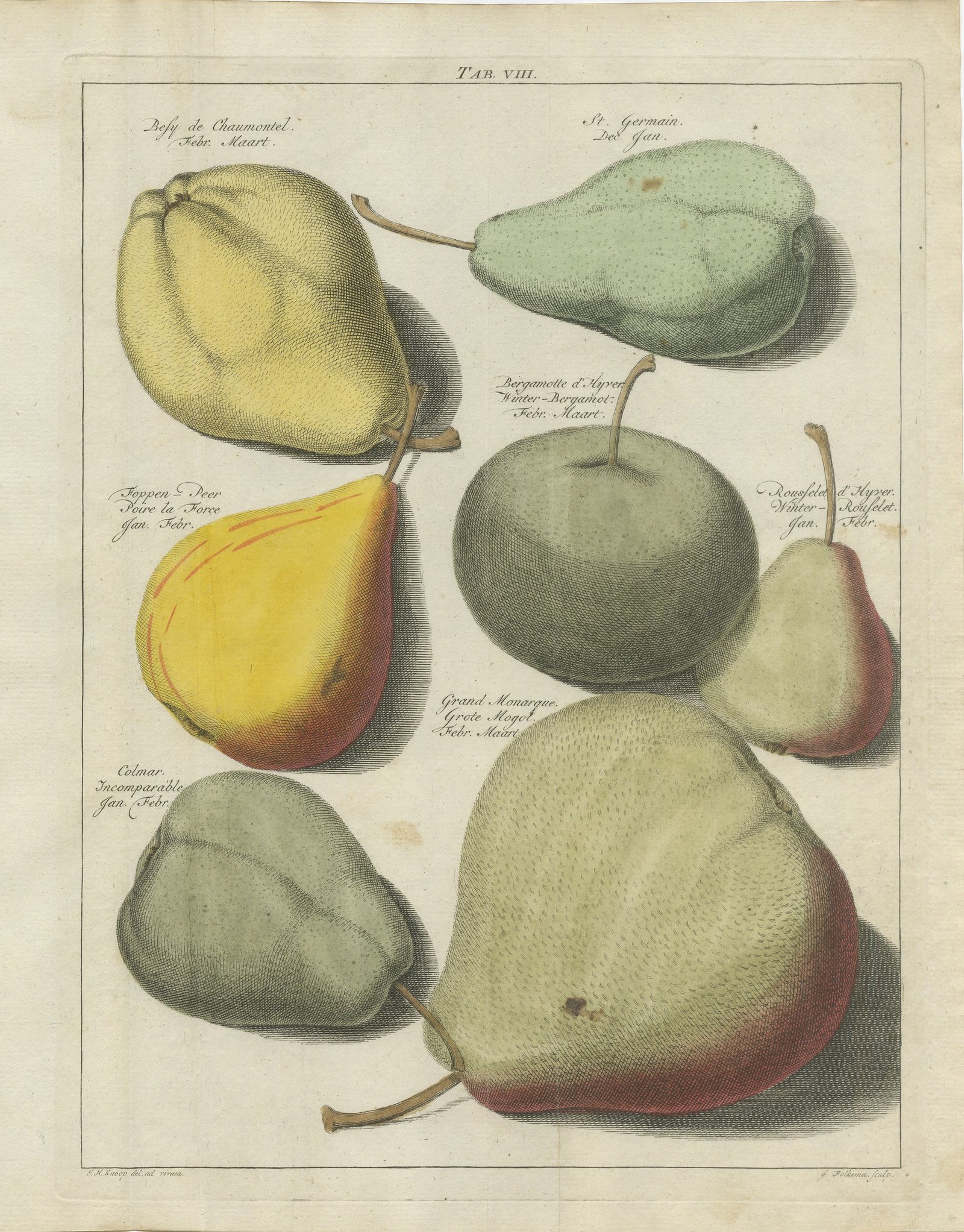
 The sheet, as you receive it
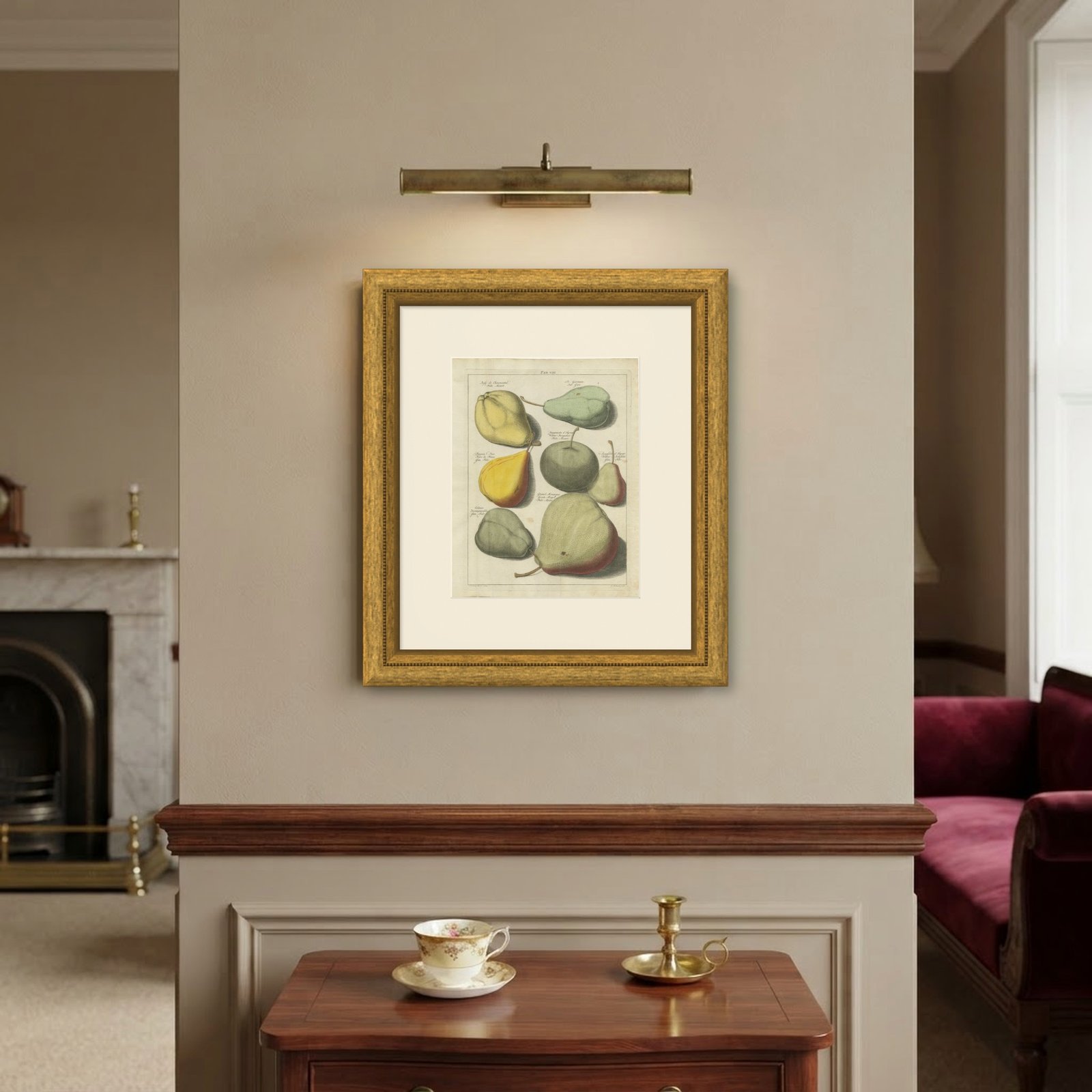
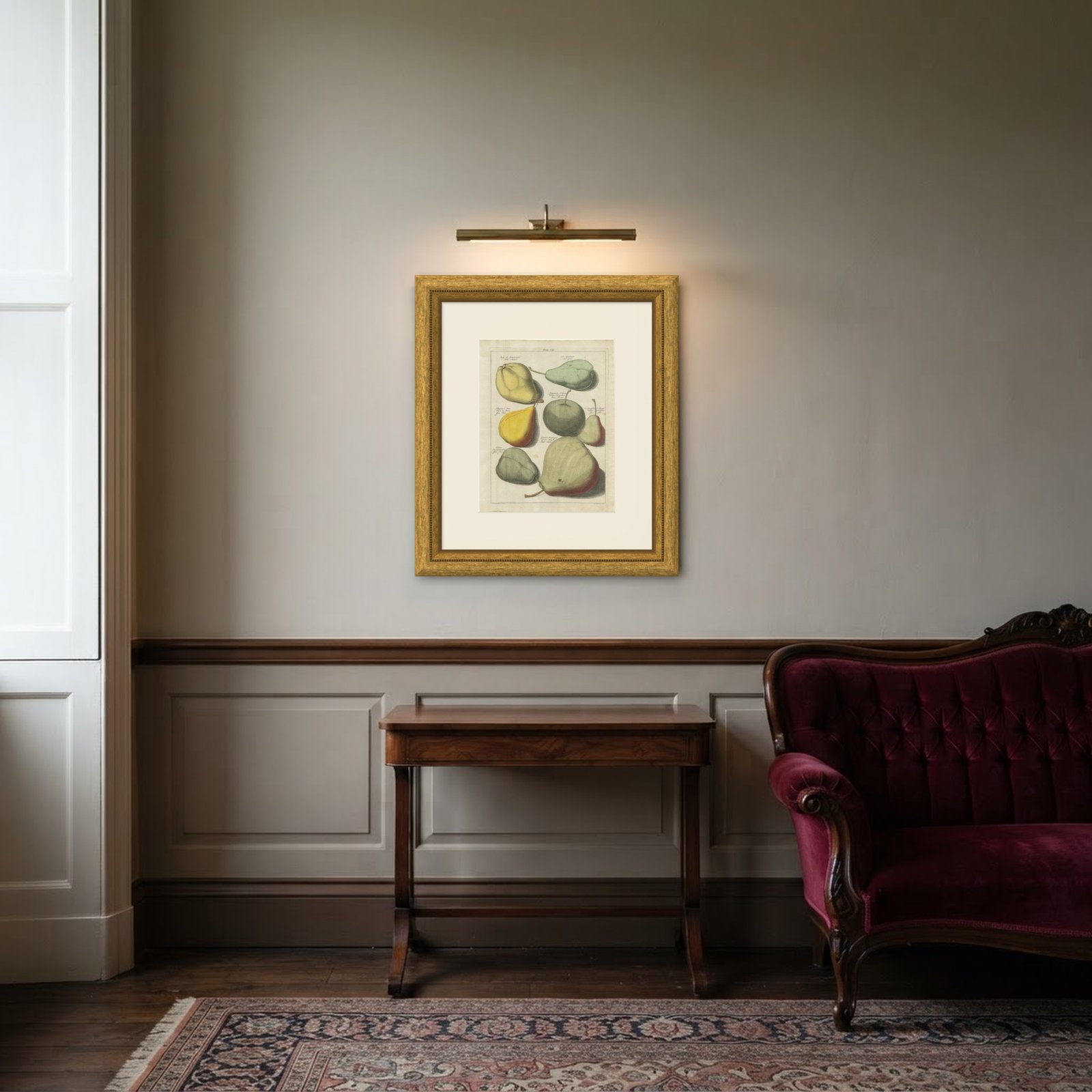 In the room

Interior designers: BarTrade members buy at their trade price. How it works
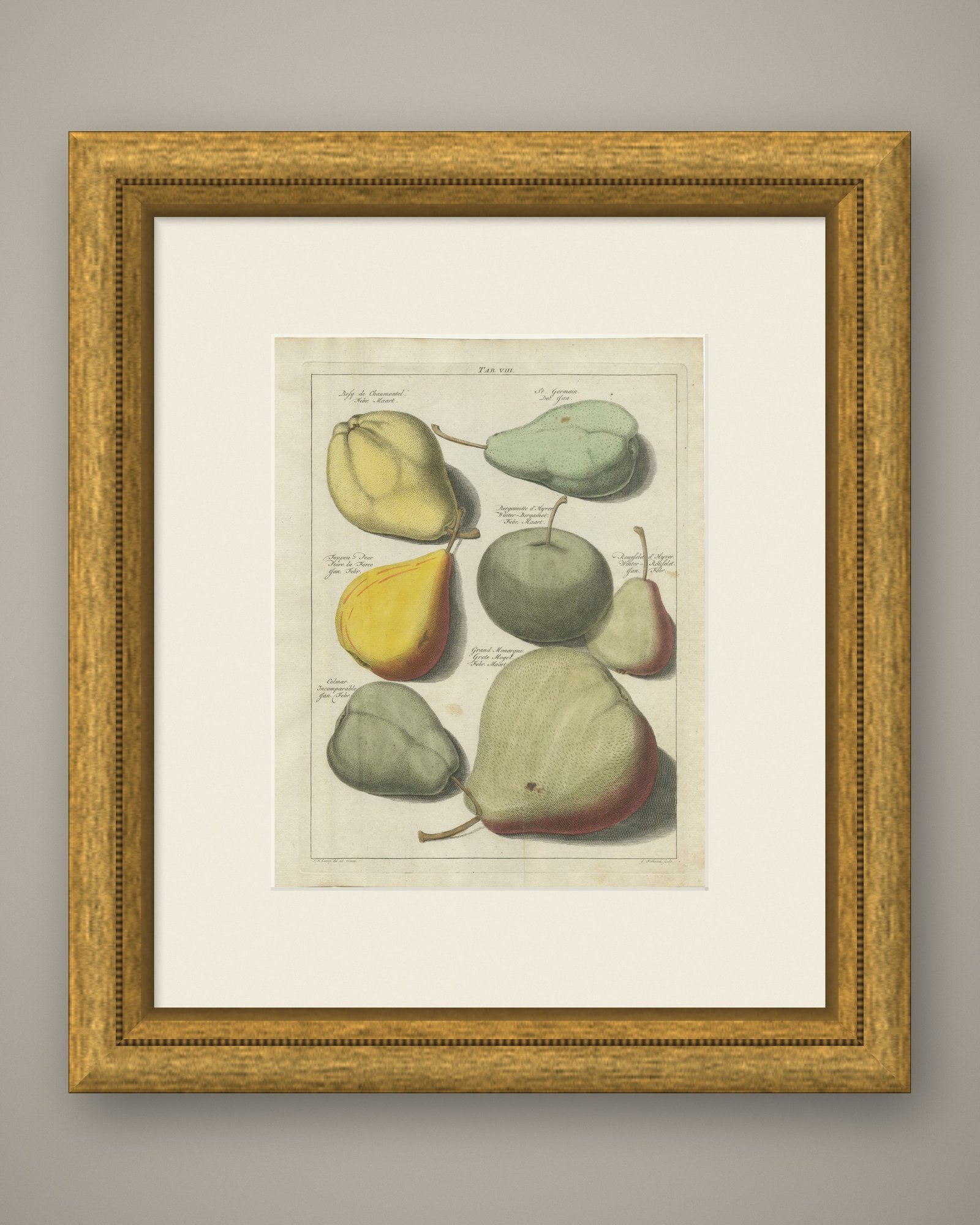
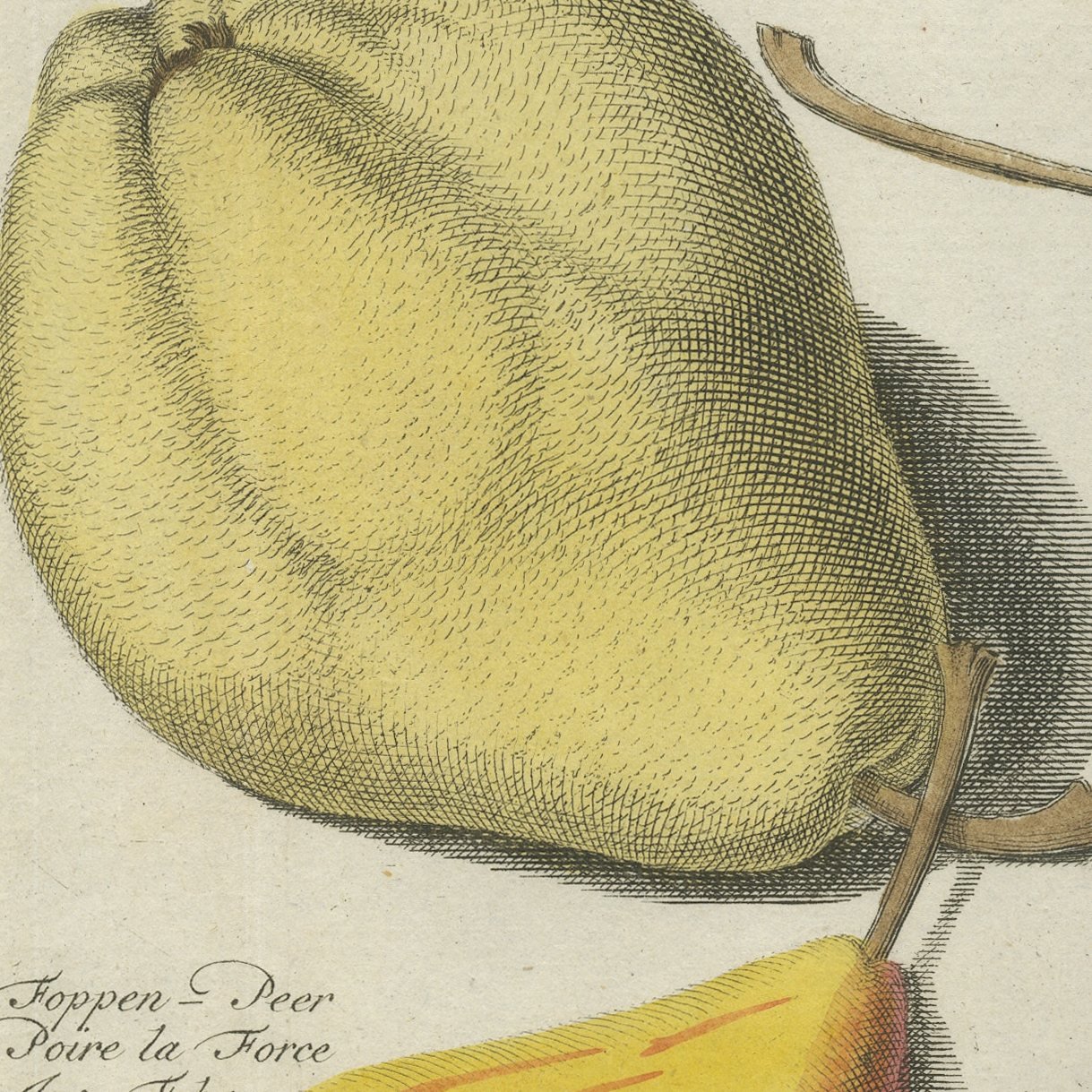
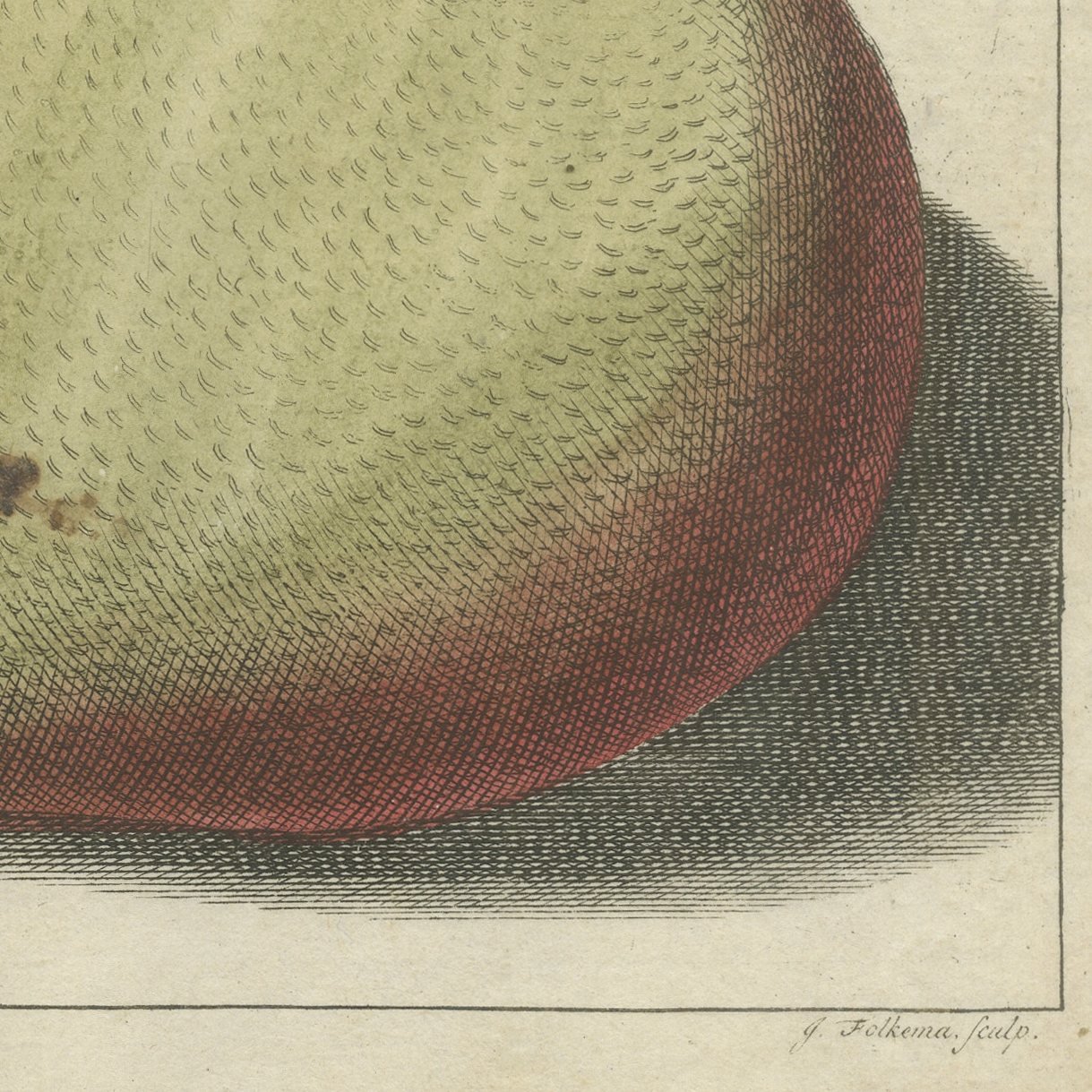
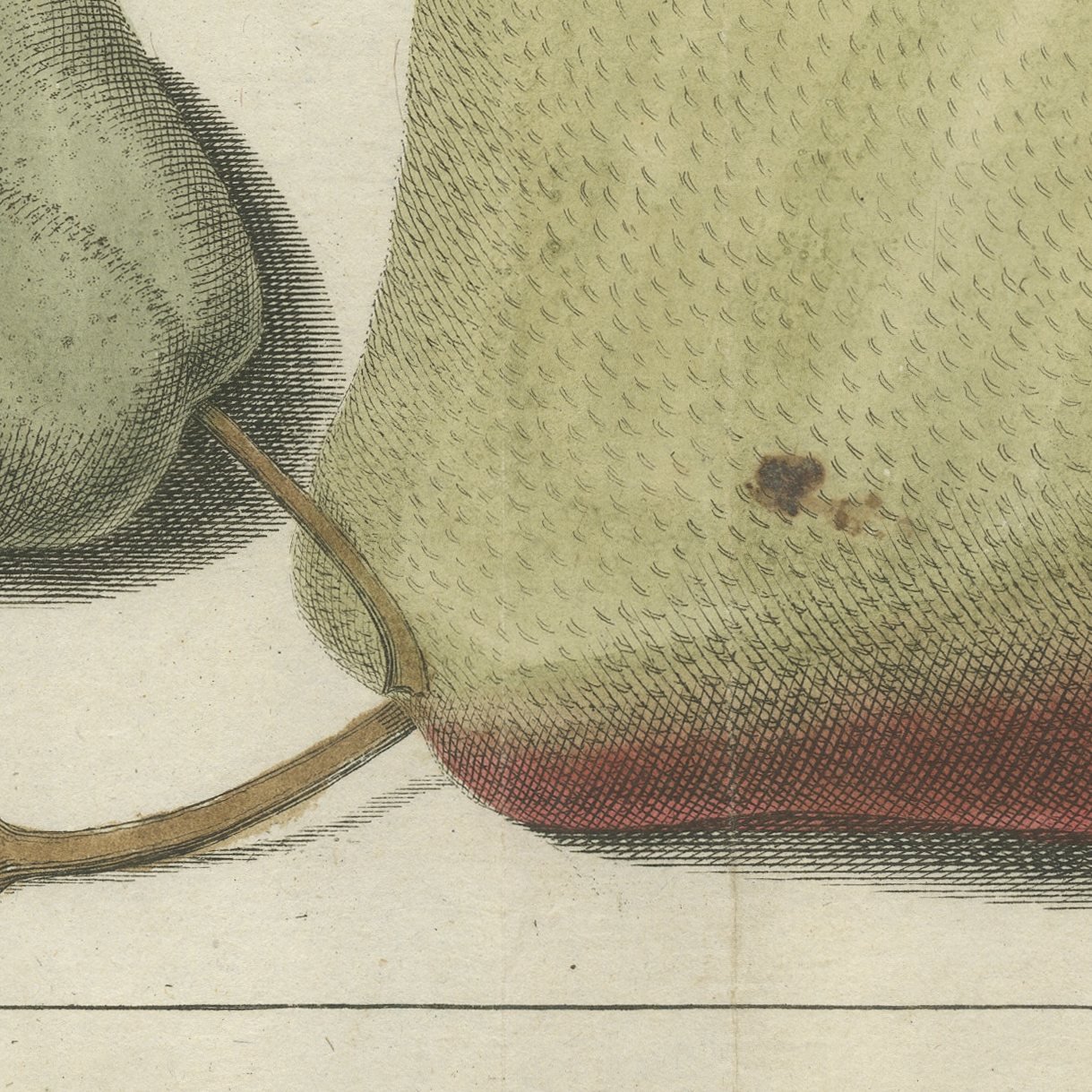
An original hand-colored copper engraving of seven named pear varieties, the largest fruit in Knoop's pear series, each lettered with its name and its ripening months: Besy de Chaumontel, Saint Germain, Bergamotte d'Hyver or Winter-Bergamot, Foppen-Peer or Poire la Force, Rousselet d'Hyver, Grand Monarque or Grote Mogol, and Colmar or Incomparable. With only seven fruits on the sheet each is drawn big and commanding, the Grote Mogol and the Chaumontel filling their space like portraits. All are late varieties, eaten between December and March. Knoop drew them from the living fruit, and the engraver followed the heavy russeting and the broad shoulders closely. Hand-applied watercolor over the engraved hatching builds the warm browns and bronze greens in uneven passes, crossing the outline in places.
This sheet was published at Amsterdam and Dordrecht in 1790 by Allart, Holtrop, de Leeuw and Krap, in Johann Hermann Knoop's description and figures of the best sorts of apples and pears, introduced by Johannes Florentius Martinet. Knoop had charge of the Mariënburg garden at Leeuwarden and knew his fruit as a working gardener rather than a compiler, which is why his plates are still consulted on old Dutch varieties. Each is a copper engraving finished by hand in watercolor, the washes sitting over the engraved line and varying in strength from fruit to fruit as only hand color does.
This is the show plate of the pear series. Fewer varieties mean larger drawings, and the great winter pears, Grote Mogol, Saint Germain, Chaumontel and Colmar, were the most prestigious fruit a Dutch gardener could put on a table in midwinter. Saint Germain and Chaumontel are still named in heritage orchard lists, so the sheet documents fruit that has not entirely disappeared. Of all the plates in the volume this is the one that works best as a single statement: the scale of the fruit and the depth of the hand coloring carry across a room, which suits a dining room chimney breast or the main wall of a kitchen. For a collector it is the natural partner to the crowded first pear plate.
Light uneven toning, browner towards the edges. Handling soiling along the bottom and top edges. Scattered light foxing in the margin. All four corners complete.
This is an original antique plate, not a modern reproduction. This item is sold unframed.