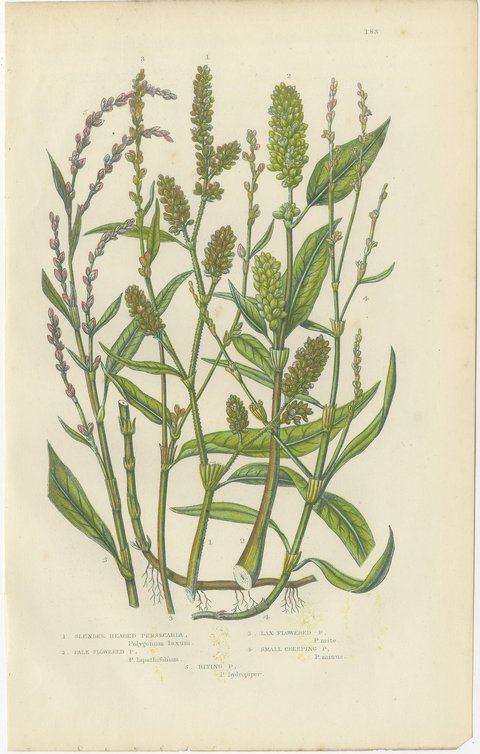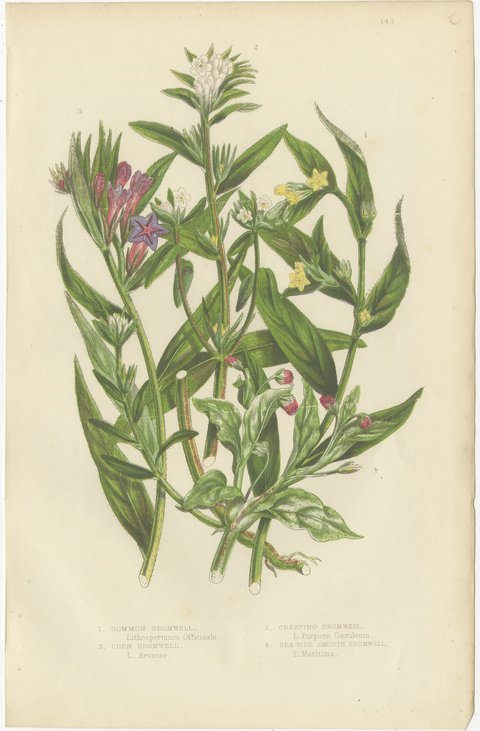
 The sheet, as you receive it
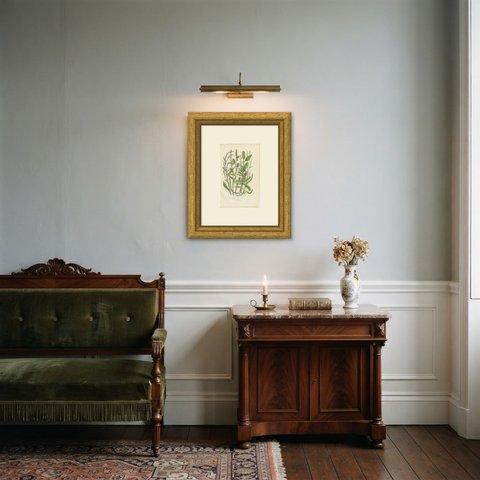
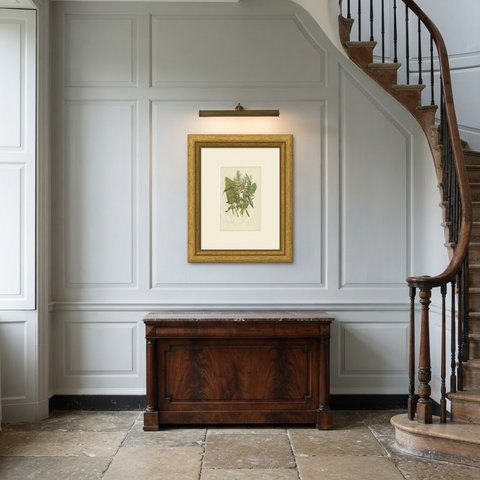
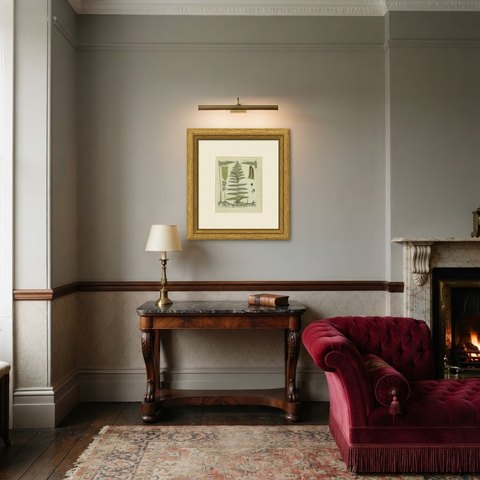
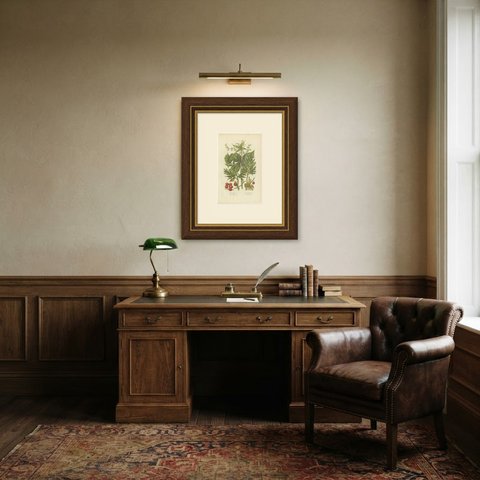
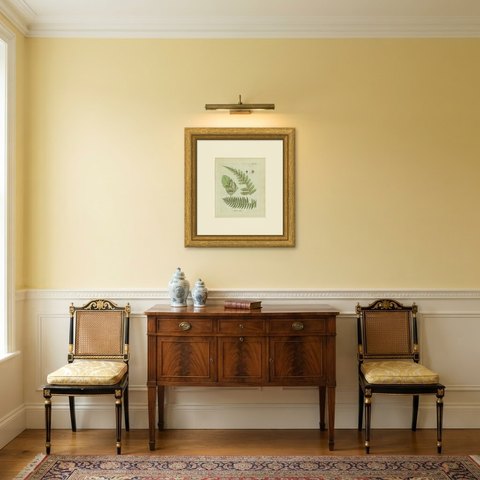
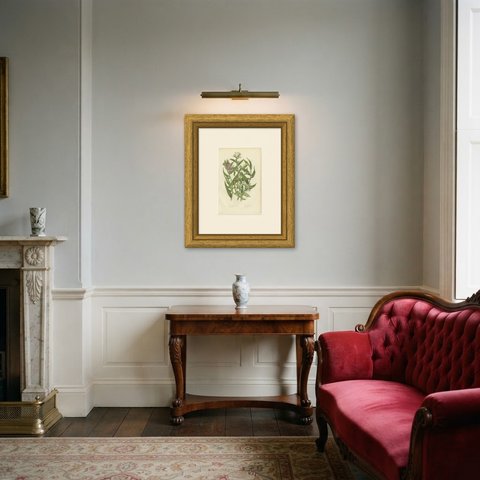
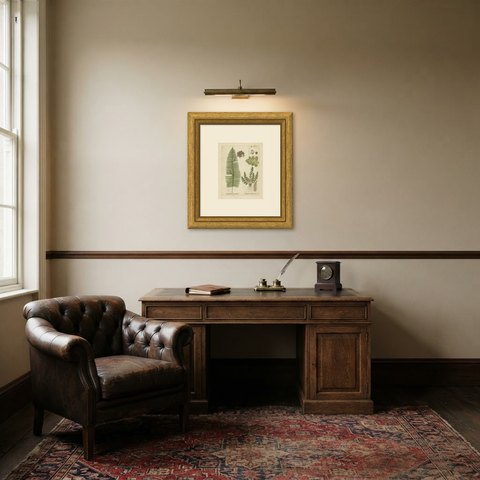
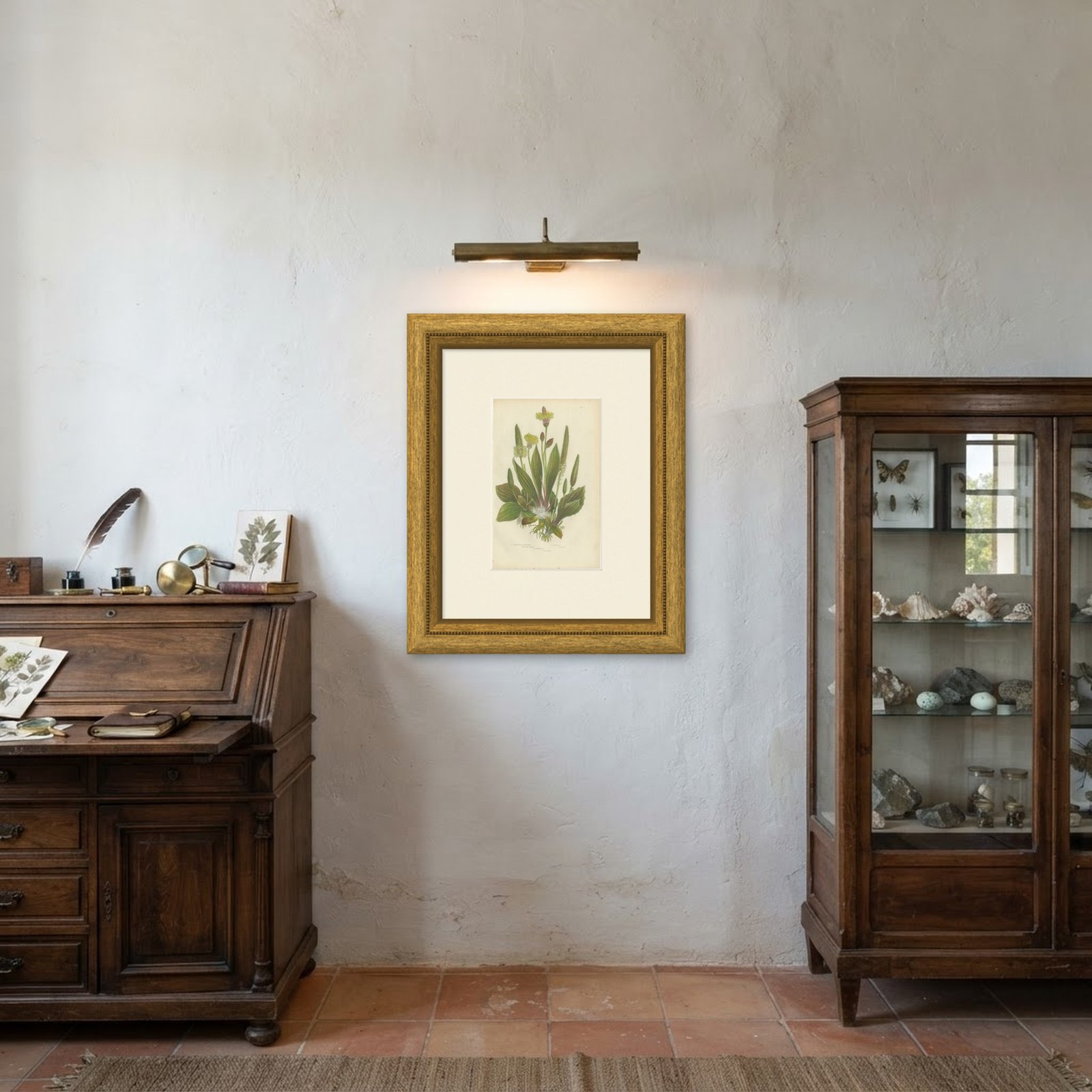 In the room
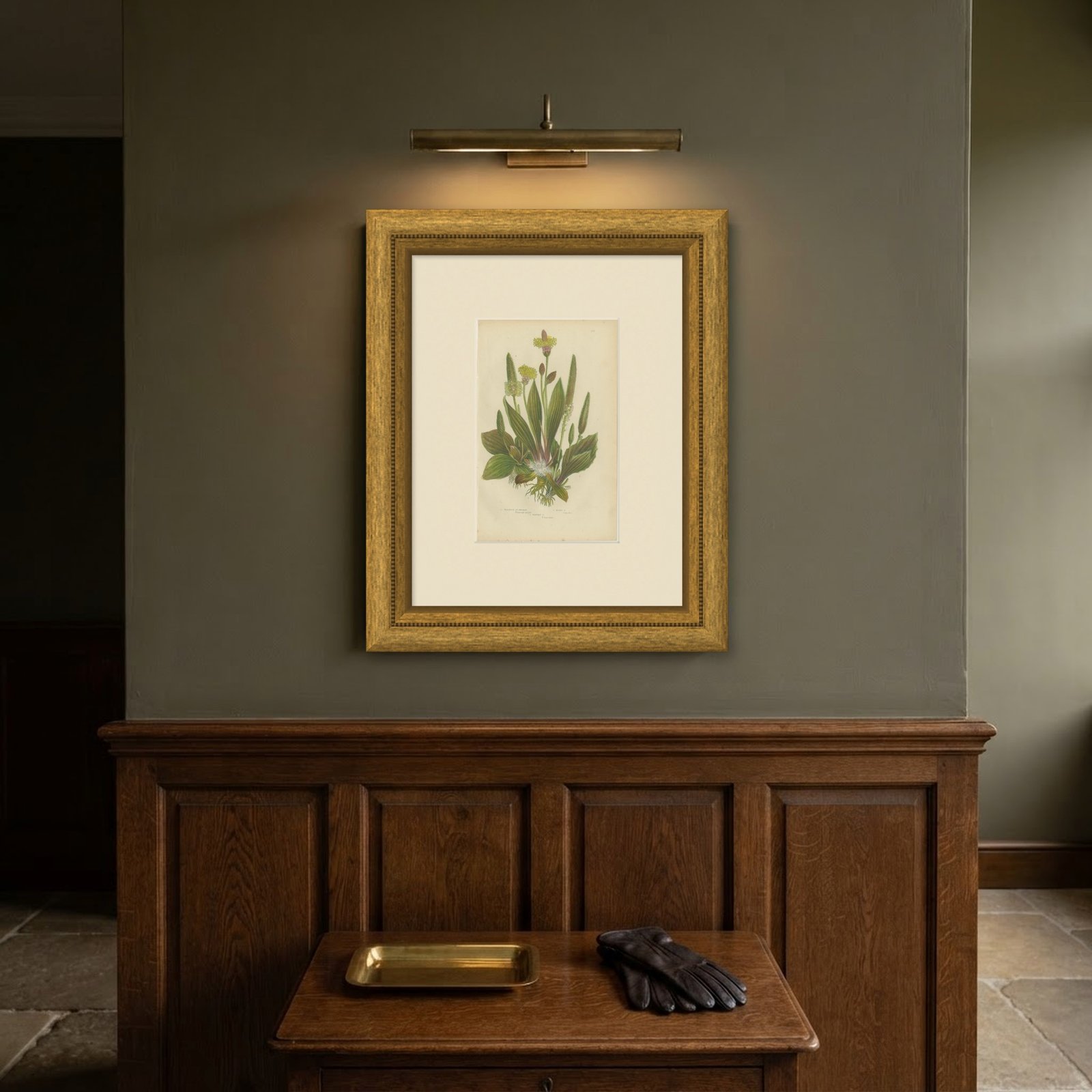
Interior designers: BarTrade members buy at their trade price. How it works
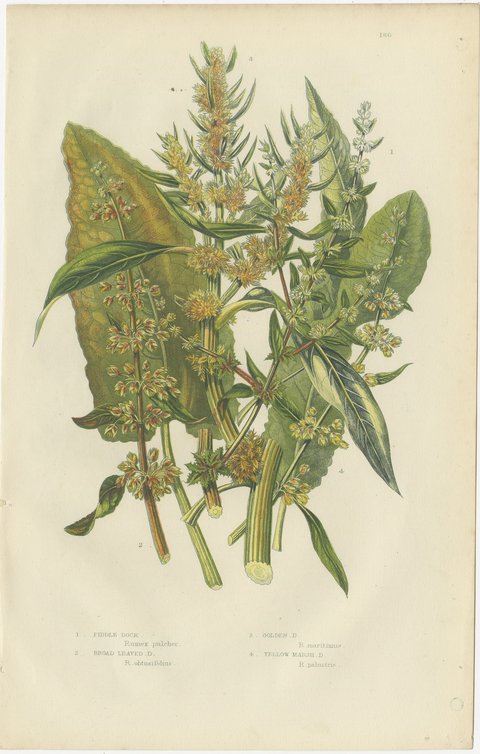
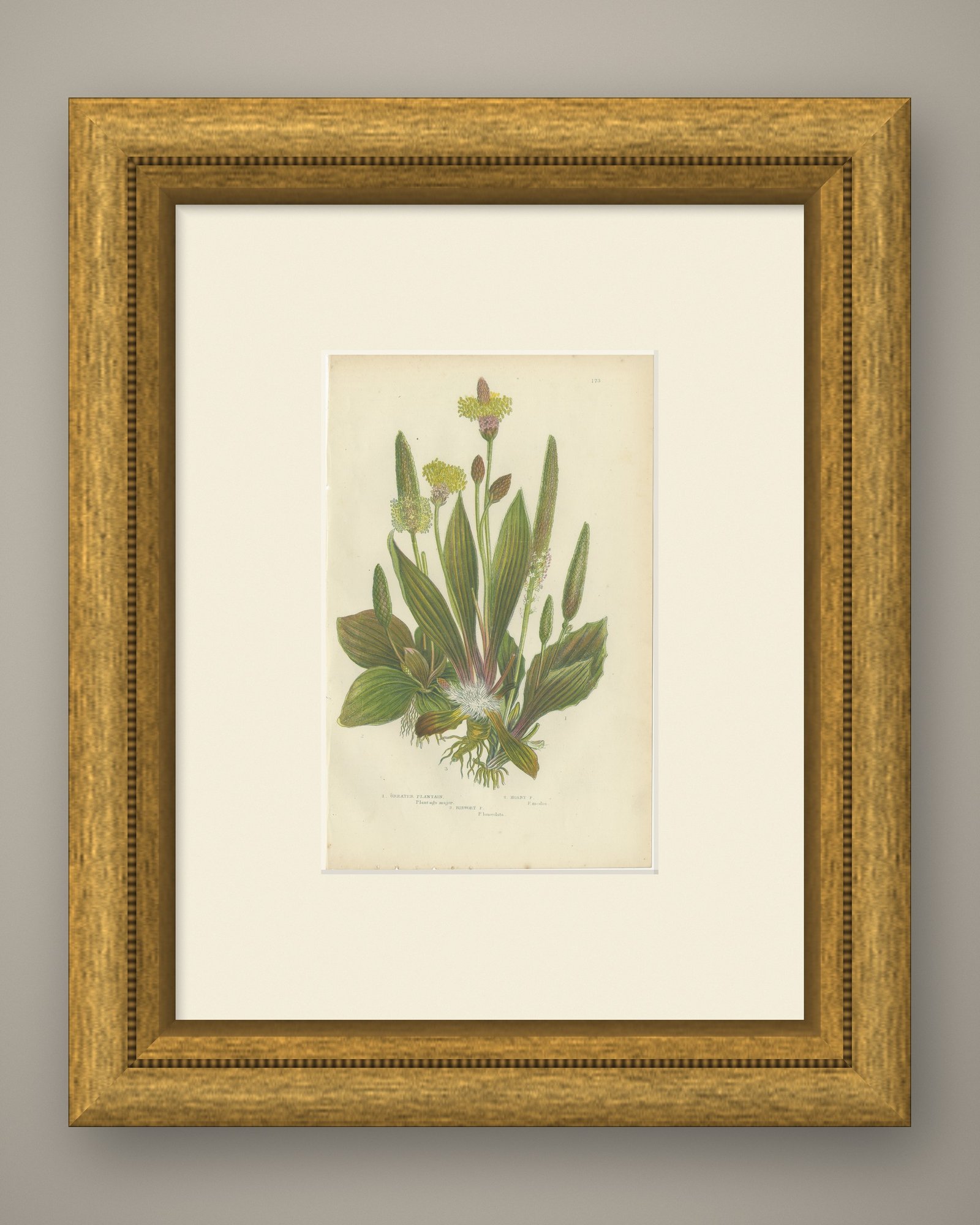
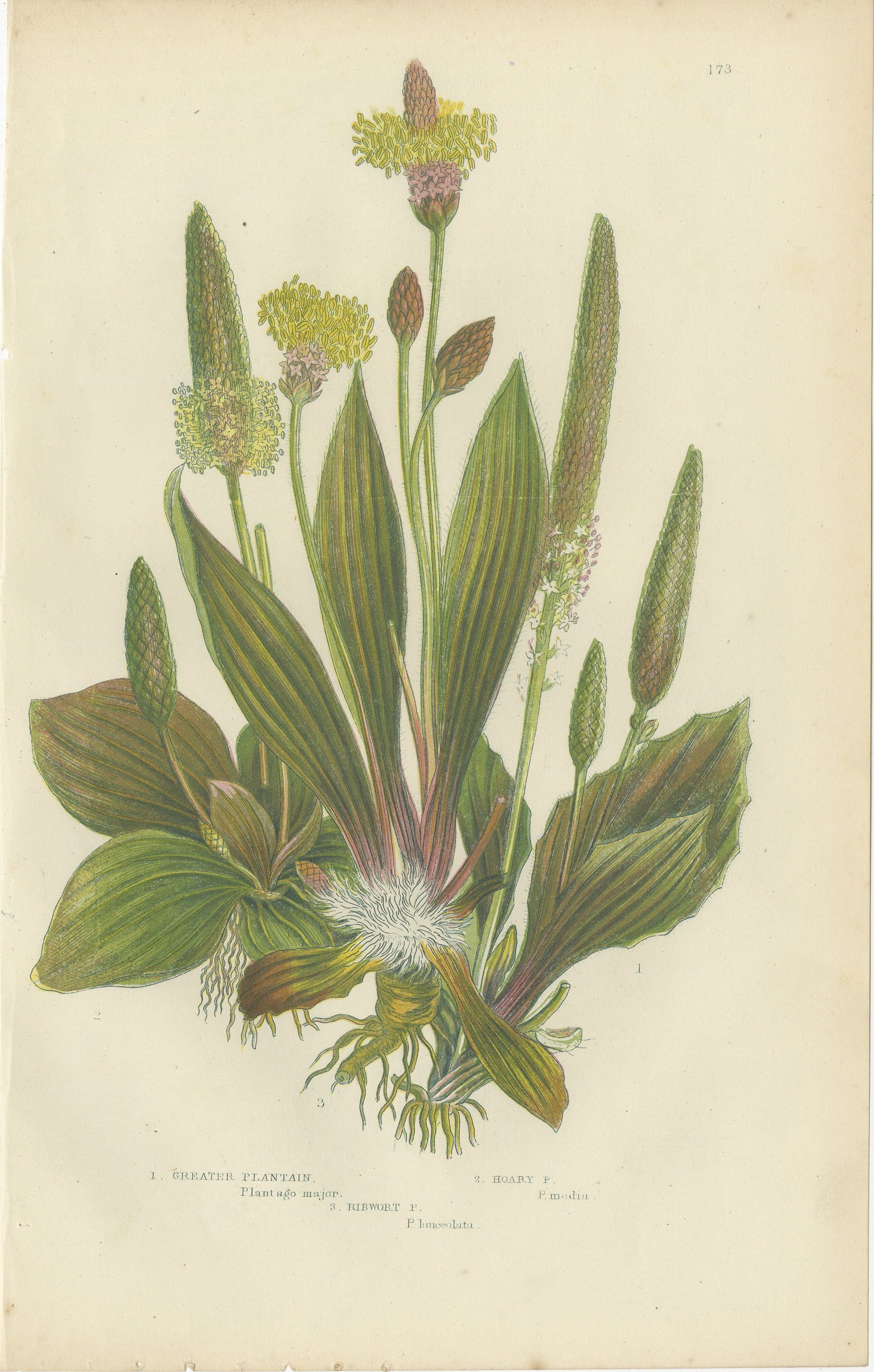
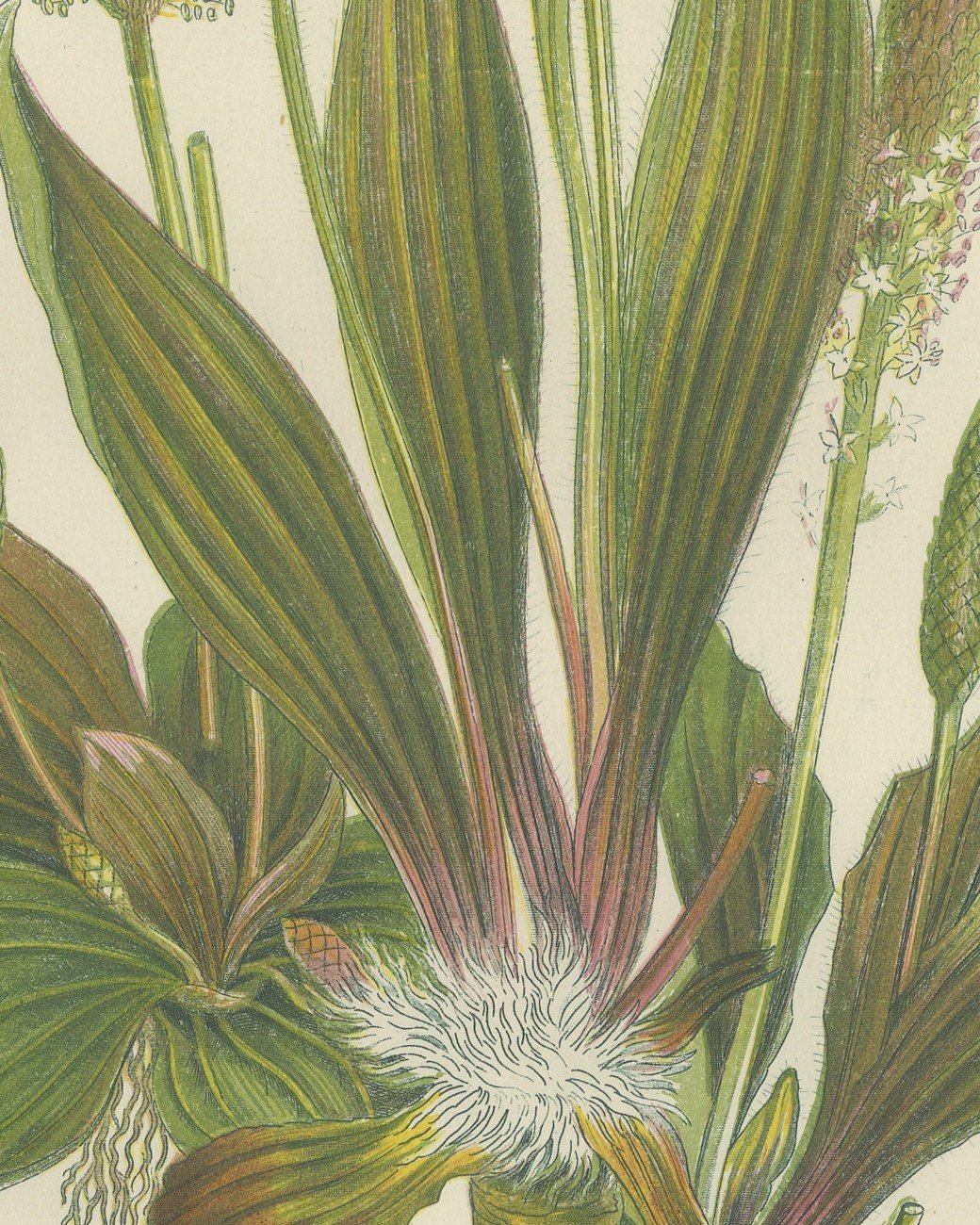
Plate 173 of Anne Pratt's British flora, an original antique color plate printed for Frederick Warne and Co. of London, gives the three common British plantains of grass and waysides. Long green and brown seed spikes rise through the sheet on bare stalks, some still in flower with rings of pale anthers and one in the soft lilac of the hoary plantain. The broad ribbed leaves of Plantago major spread at the right and those of the hoary plantain at the lower left, and the long narrow ribwort leaves rise through the center with the fibrous roots drawn below.
Anne Pratt brought out The Flowering Plants, Grasses, Sedges, and Ferns of Great Britain through Frederick Warne and Co. of Bedford Street, Covent Garden, in six volumes covering more than fifteen hundred species. The plates were printed in color by William Dickes of London, a licensee of the Baxter color process, and this sheet comes from Volume IV, which the title page records as carrying 249 species in color.
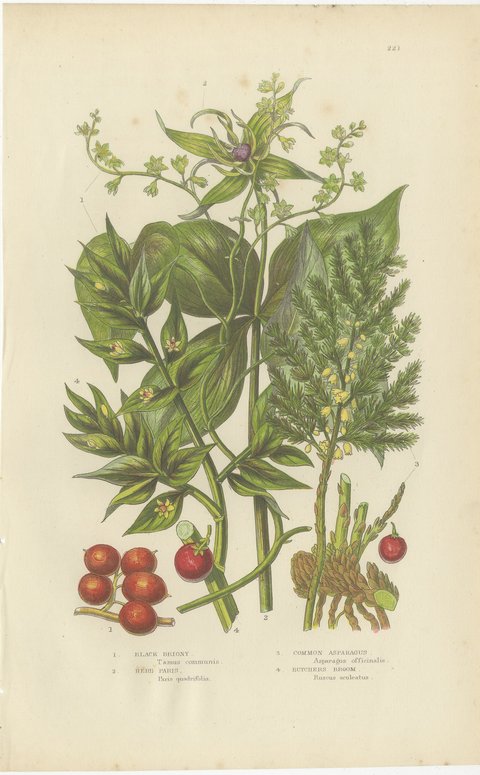
What makes Pratt's plates worth hanging is her method. Each species is given whole, with root, stem, leaf, flower and often the ripe fruit on the same sheet, and several related species are grouped together so that the differences between them can be read at a glance. The result is a composition rather than a specimen sheet, and it reads as a picture at a distance and as botany close up.
Even age toning. Handling soiling along the bottom, right and top edges. Slight wear at the bottom right and top left corners. Minor edge wear, shallow nicks along the left.
This is an original antique print, not a modern reproduction. This item is sold unframed.