 The sheet, as you receive it
 In the room
Interior designers: BarTrade members buy at their trade price. How it works
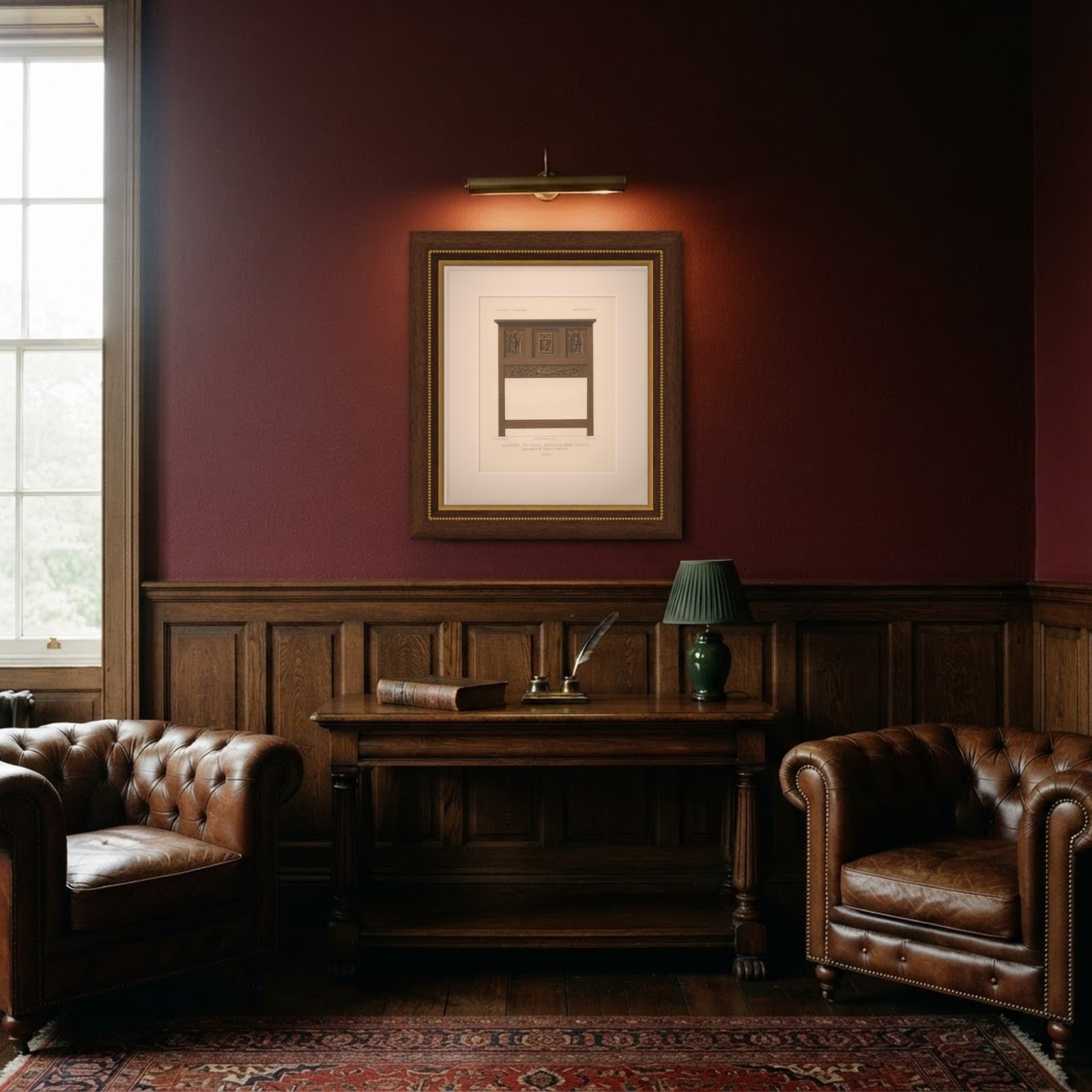
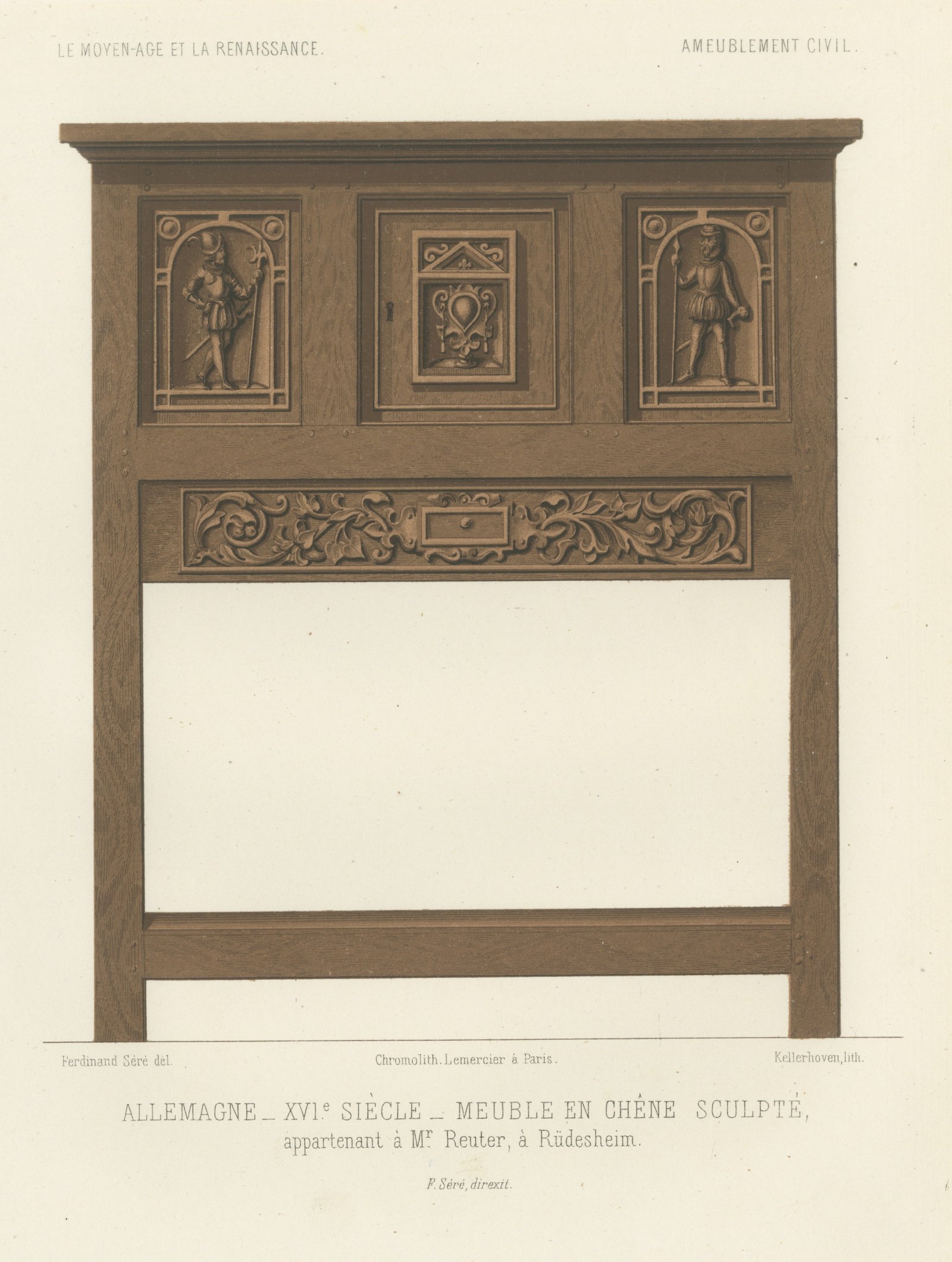
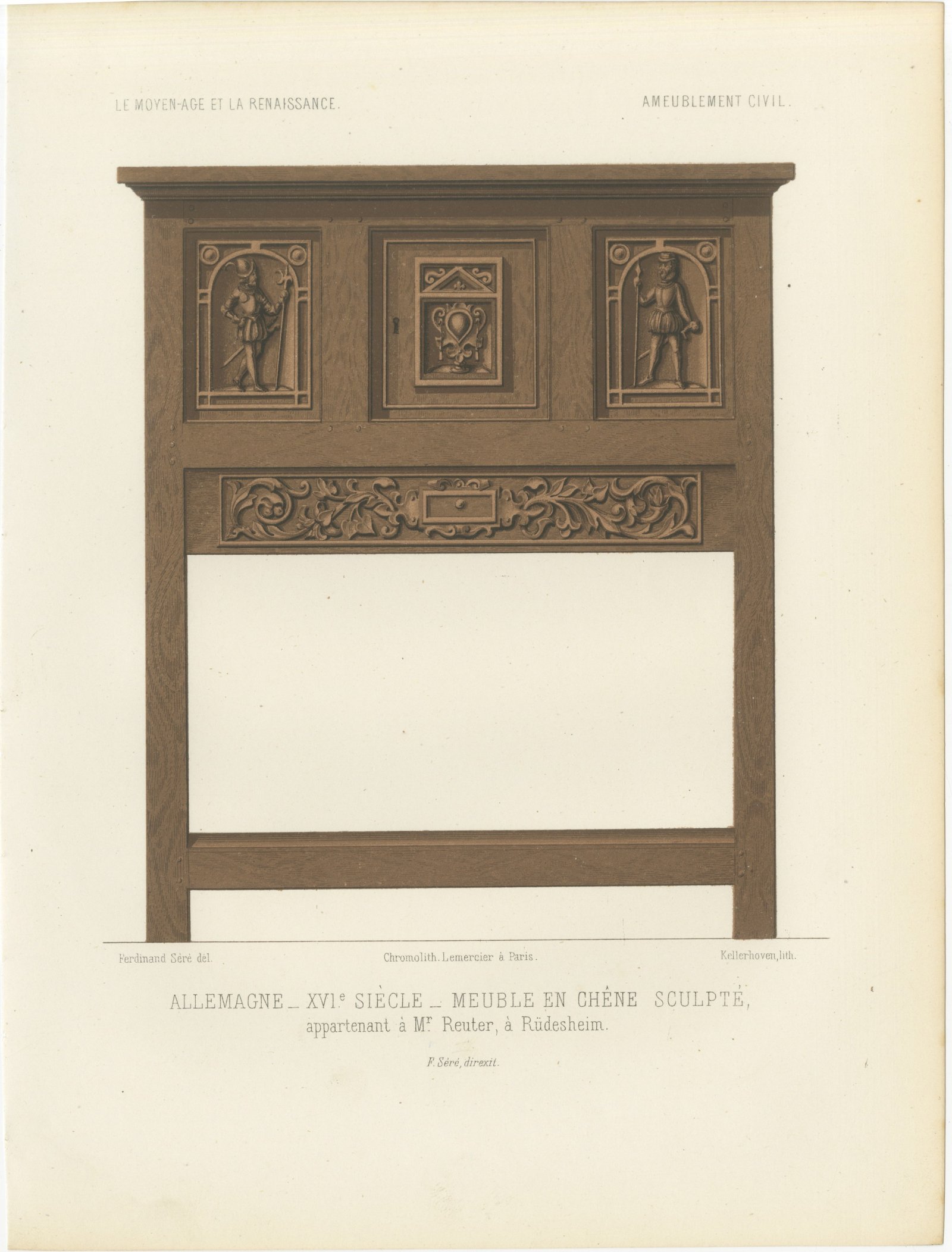
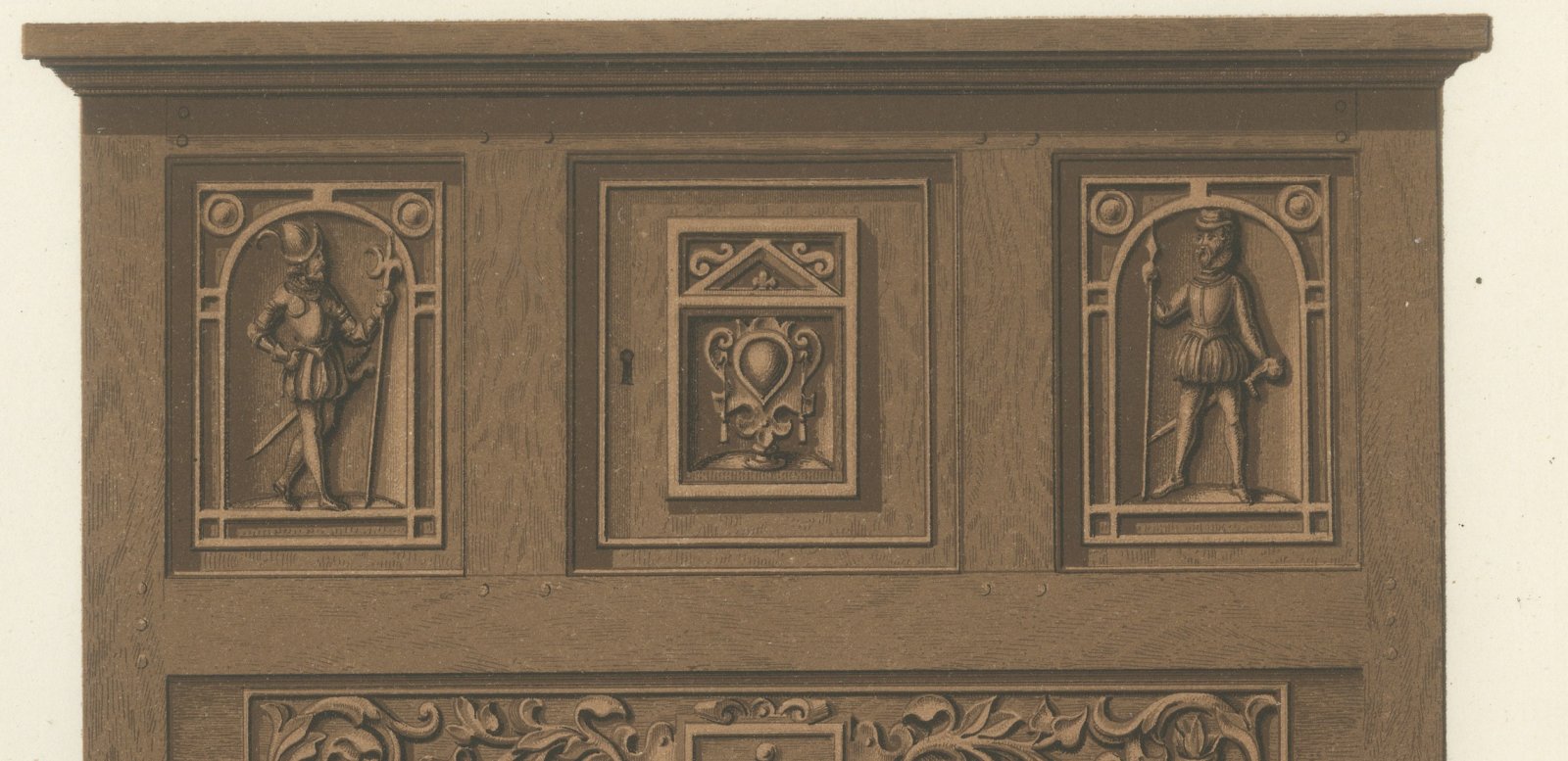
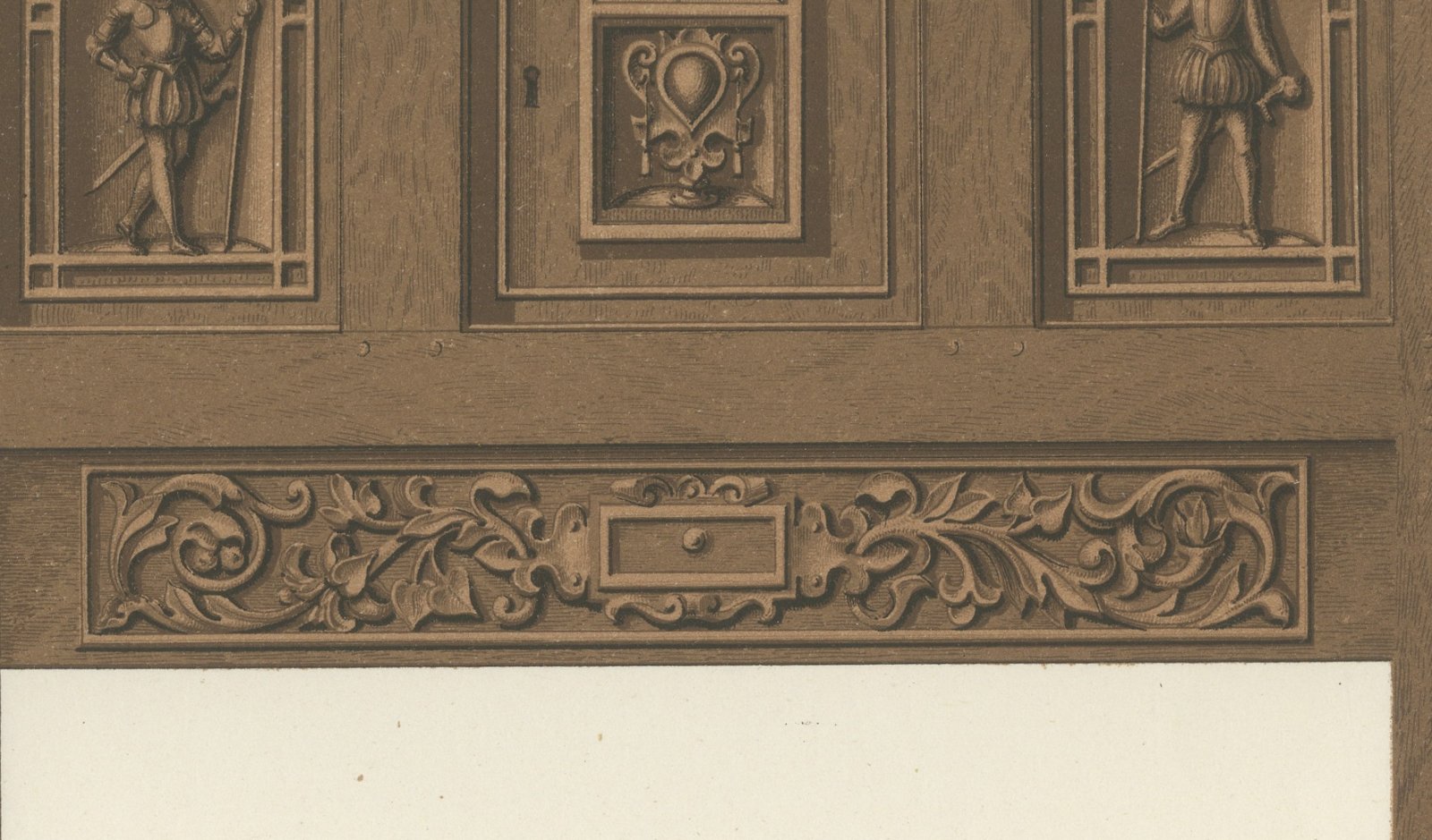
This is an original antique chromolithograph, printed in oak browns on a cream sheet, lettered "ALLEMAGNE, XVIe SIÈCLE, MEUBLE EN CHÊNE SCULPTÉ, appartenant à Mr Reuter, à Rüdesheim." The cabinet is drawn in front elevation under a molded cornice. The upper stage has three panels: at each side an arched niche holds a standing man in sixteenth century dress, the left in armor with a halberd and the right in a slashed doublet and hose with a spear, while the center panel is a small door with a keyhole and a carved cartouche under a pediment. Beneath runs a frieze of acanthus scrolls around a small central drawer, and the lower part stands open between the uprights above a plain floor rail.
The caption translates as "Germany, sixteenth century, carved oak piece of furniture, belonging to Mr. Reuter at Rüdesheim." The running head reads "AMEUBLEMENT CIVIL". The credits read "Ferdinand Séré del.", "Chromolith. Lemercier à Paris" and "Kellerhoven, lith.", with "F. Séré, direxit" beneath the caption.
Le Moyen Âge et la Renaissance was published in Paris in five volumes between 1848 and 1851. Paul Lacroix, who also wrote as the Bibliophile Jacob, edited the text, and Ferdinand Séré directed the illustrations, which is why his name and the word direxit stand beneath every plate. The work surveys the manners, crafts, sciences and arts of medieval and Renaissance Europe, and its chromolithographed plates record objects held around 1850 in churches, museums and private collections. This plate is from the fourth volume, dated 1851, and shows a later companion to the Gothic cabinet from Geisenheim in the same section.
It pairs naturally with the Geisenheim cabinet plate, the two sharing the same format and coloring.
This is an original antique print, not a modern reproduction. This item is sold unframed.