 The sheet, as you receive it
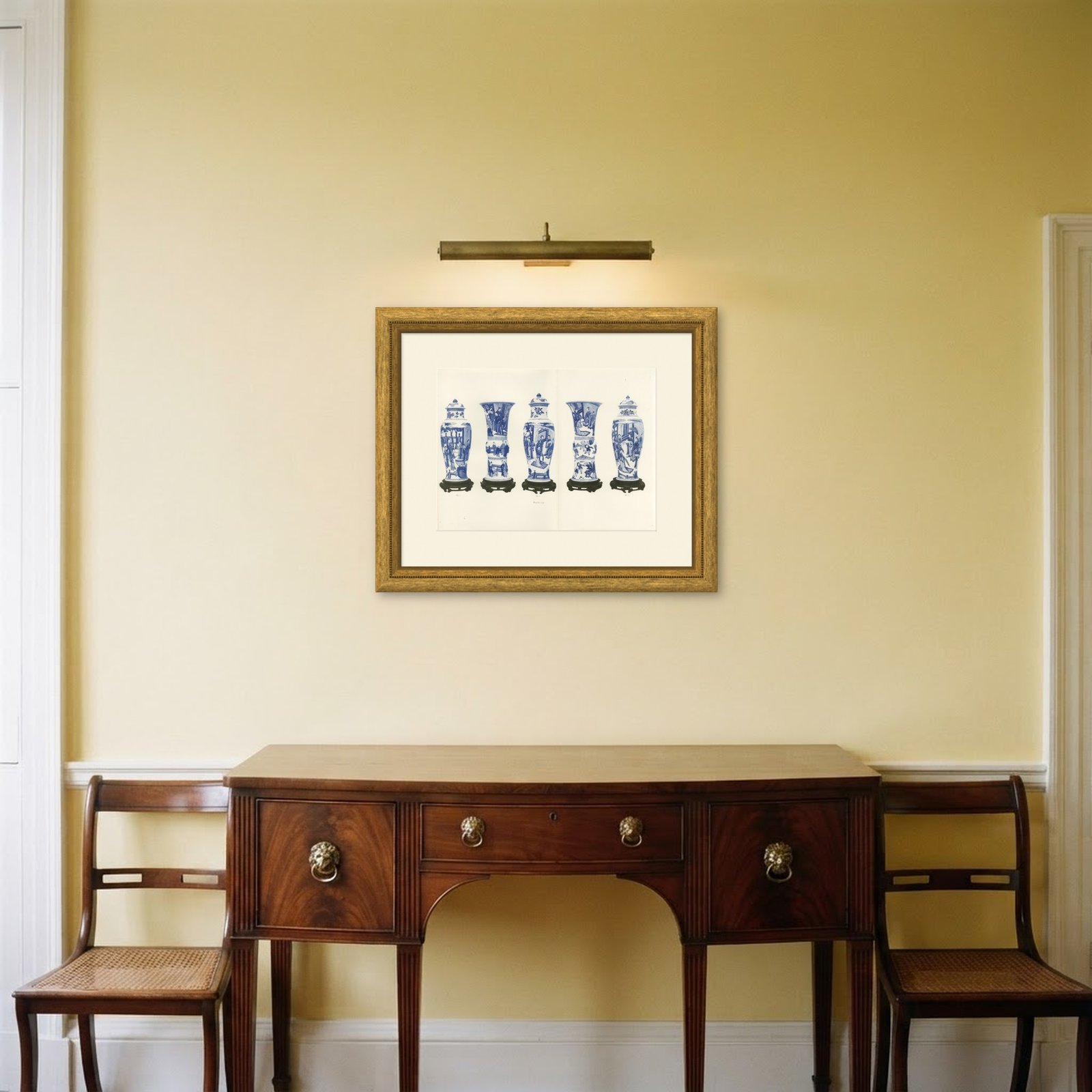 In the room
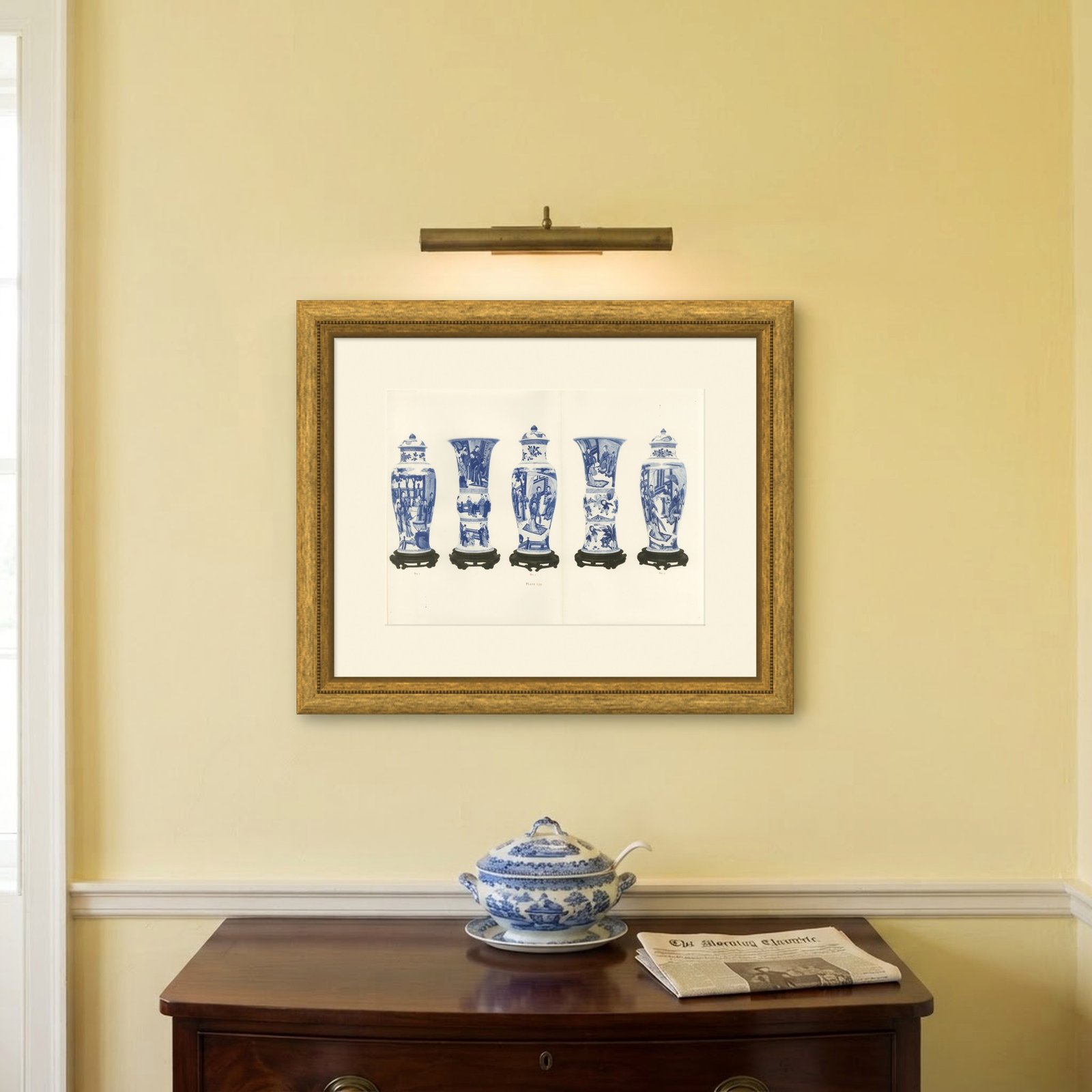
Interior designers: BarTrade members buy at their trade price. How it works
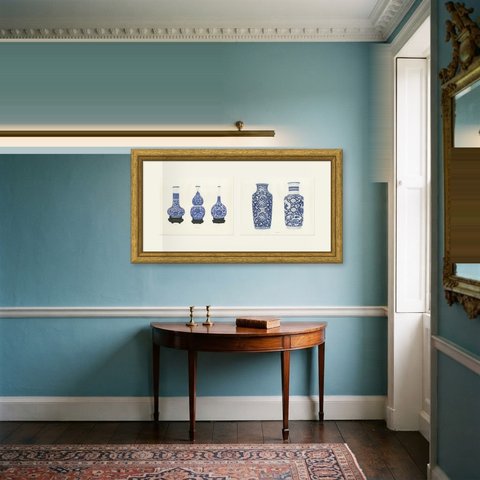
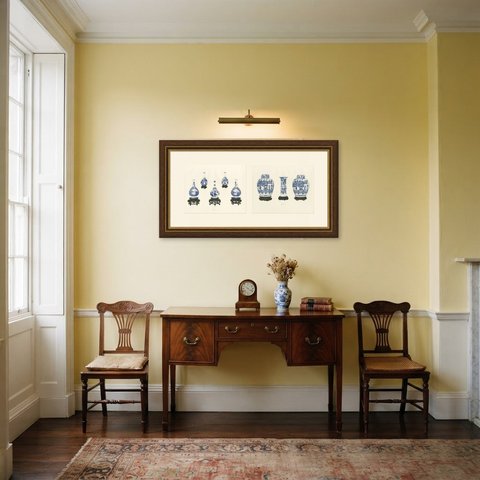
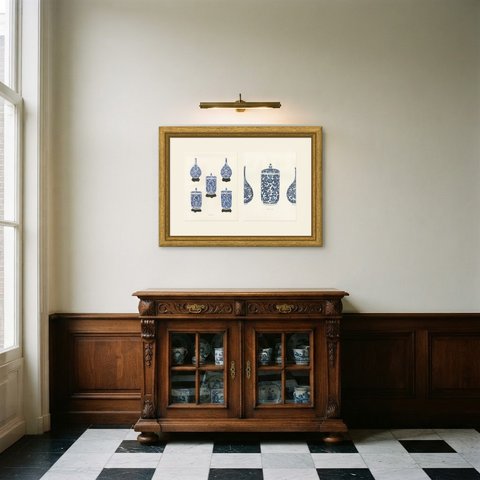
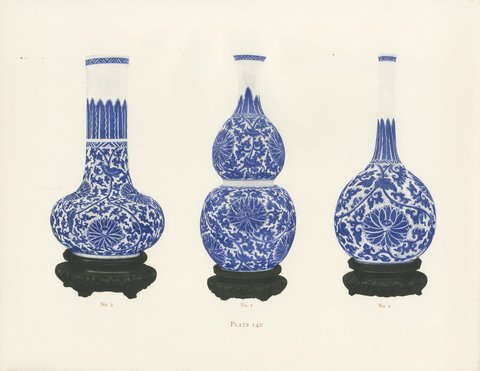
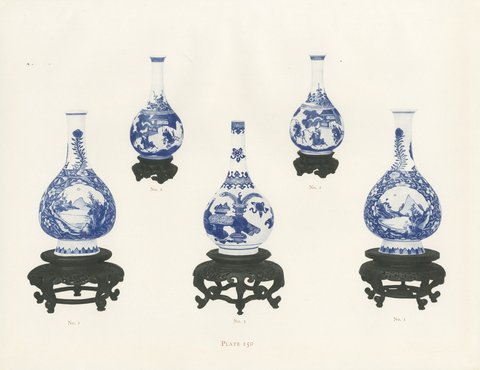
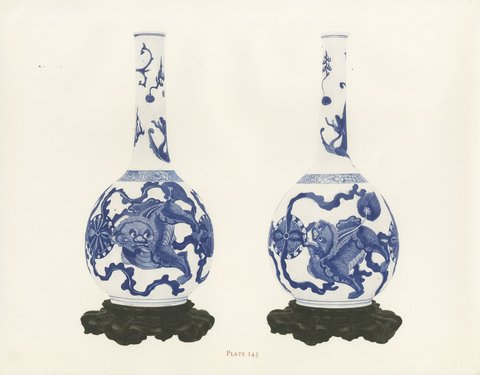
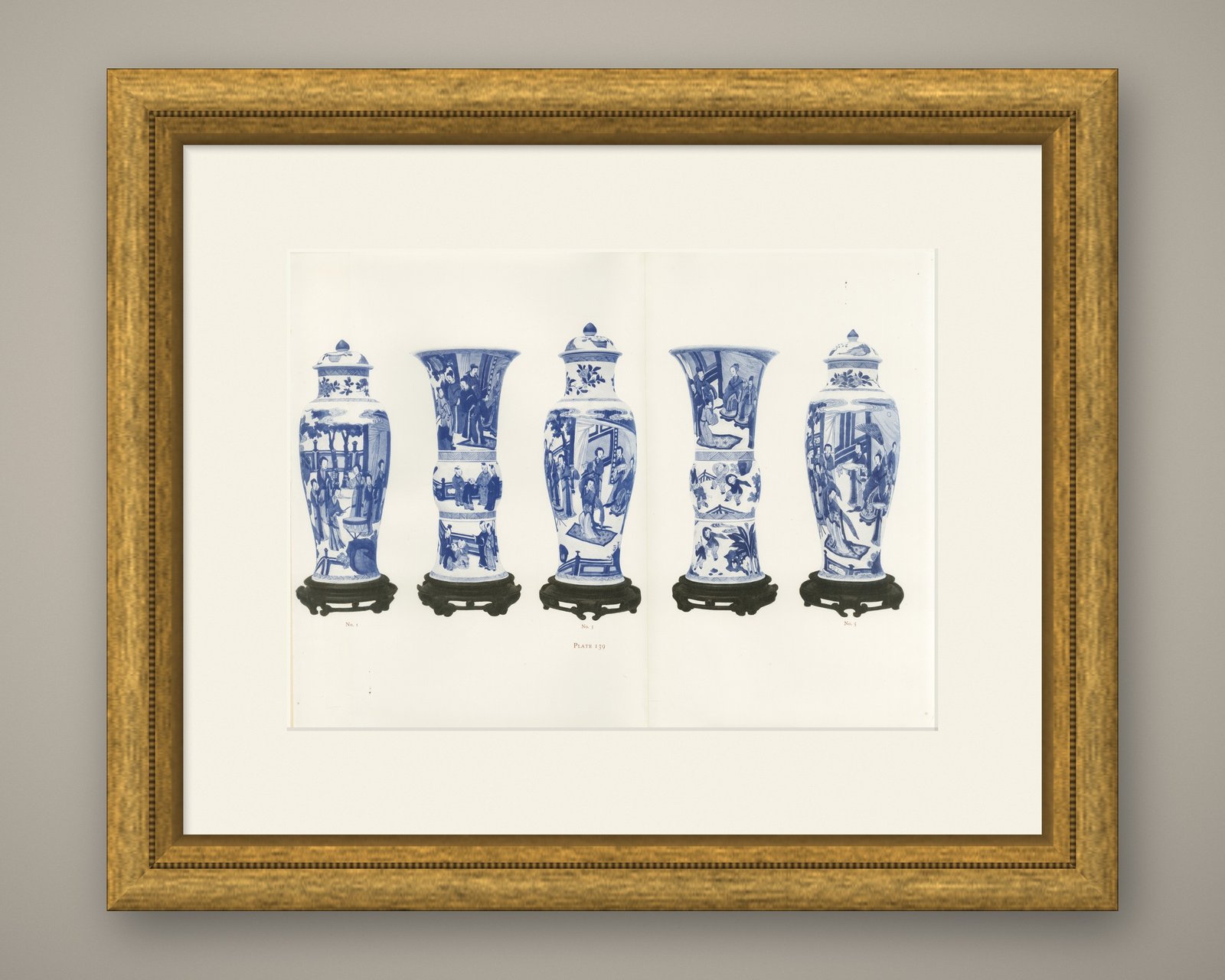
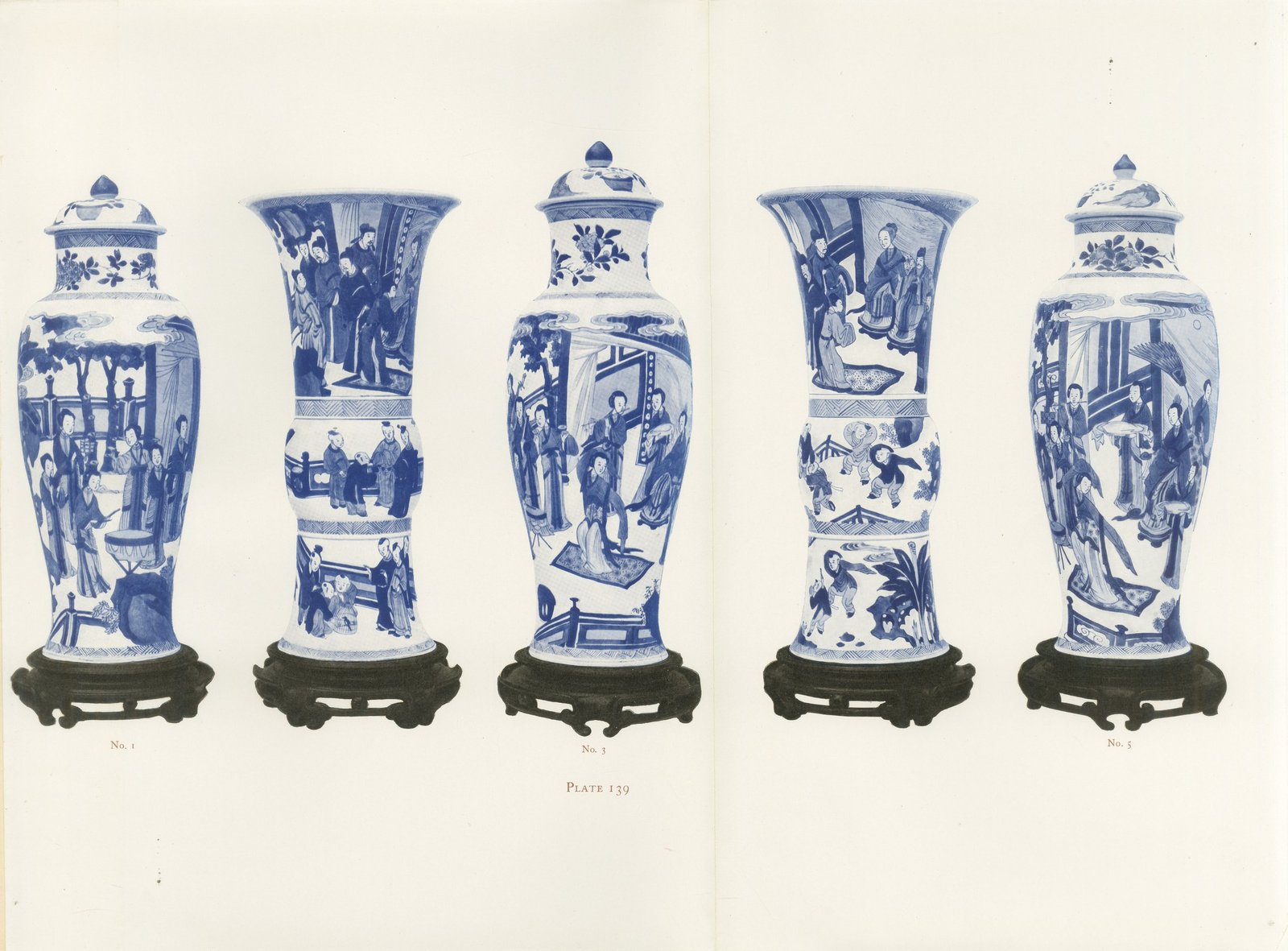
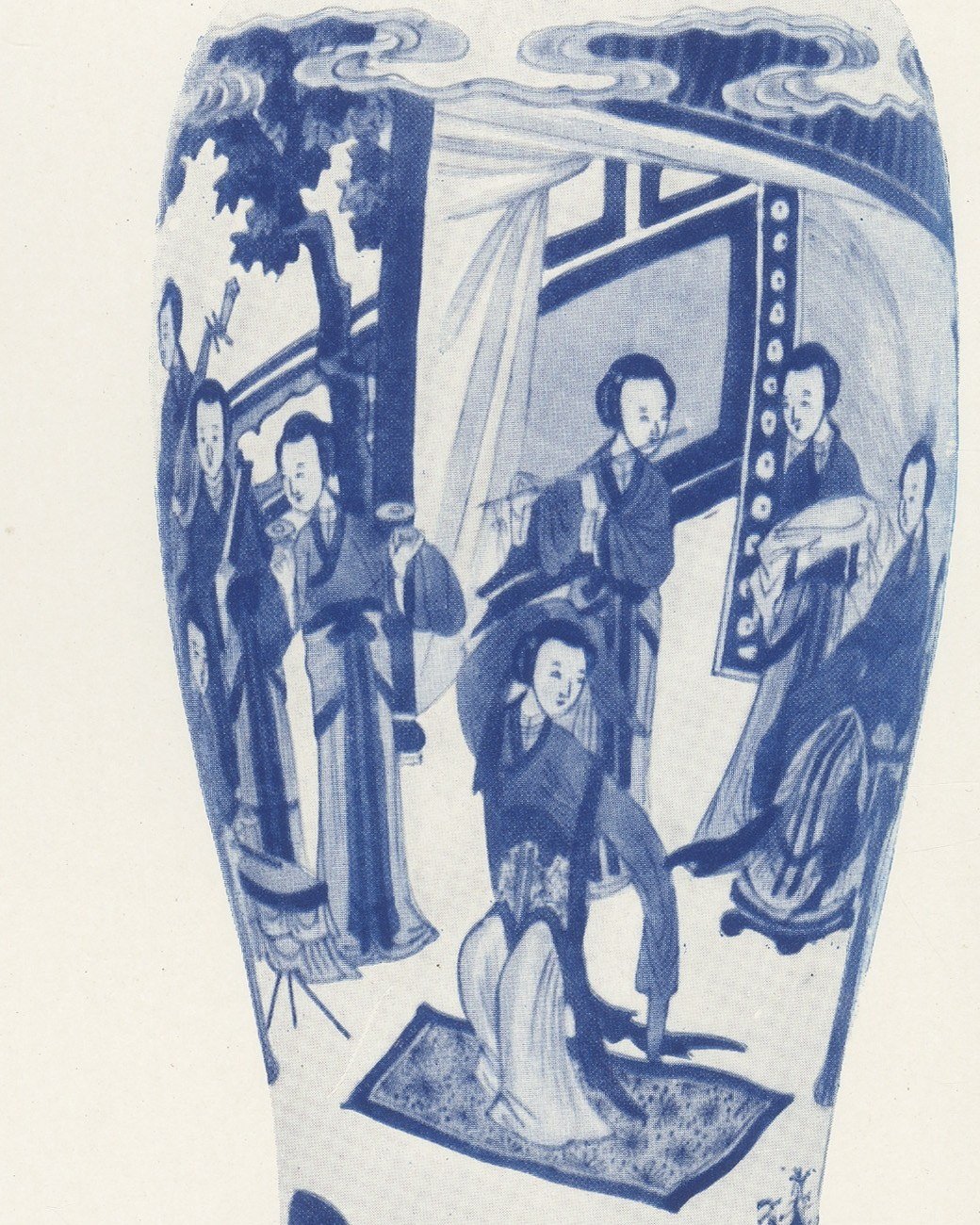
Plate 139 from Volume II of Gorer and Blacker's Chinese Porcelain and Hard Stones, an original 1911 color plate of a garniture of three vases and two beakers painted in cobalt with the dancing girl and reception designs, Kang-he period. Garniture of three vases and two beakers. Decorated with various shades of cobalt blue; the scenes on the vases show variations of the dancing girl design, the empress seated in a pavilion watching a girl dancing upon a carpet with a band of six girls playing drum, flute, sheng, cymbals and bells. The necks of the beakers carry a reception design, the emperor and empress seated among mandarins. The book gives it to the Kang-he period and records height 17 5/8 inches (45 cm); diameter 6 1/2 inches (16.5 cm), the book giving a size for each piece shown. In the collection of J. B. Lee, Esq.
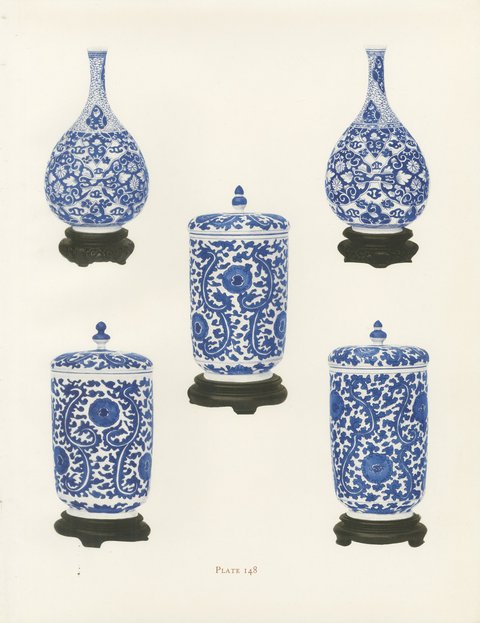
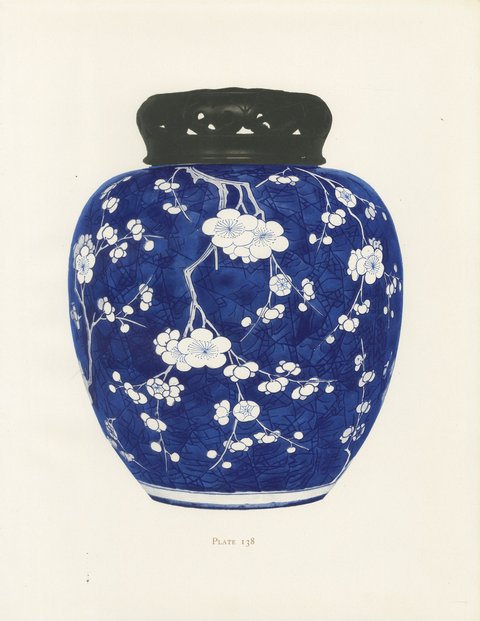
Chinese Porcelain and Hard Stones, by Edgar Gorer and J. F. Blacker, was published in London by Bernard Quaritch in 1911 in two volumes with two hundred and fifty four color plates, and this sheet is one of them, from Volume II. The plates are color collotypes, a photographic process that reproduces continuous tone without a visible dot screen, which is why the glazes keep their depth on paper.
Edgar Gorer was one of the most visible dealers in Chinese art of his generation. He traded as S. Gorer and Son at 170 New Bond Street with a branch at 500 Fifth Avenue in New York, dealt chiefly in Kangxi, Yongzheng and Qianlong porcelain, and sold to Sir William Lever. He died on 7 May 1915 when the Lusitania was torpedoed, and his body was never recovered.
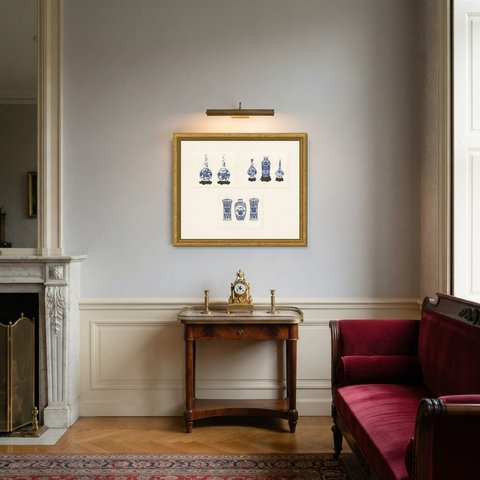
Framed simply in a dark wood molding with a generous cream mount, it holds a wall on its own and sits comfortably beside furniture of almost any period.
It is a folding plate, opening to 42 cm wide, and carries the folds it was bound with. This is an original antique print, not a modern reproduction.
Even age toning. Light handling soiling along the left edge. Some light foxing in the margin. Slight wear at the top right corner. Minor edge wear, shallow nicks along the right.