 The sheet, as you receive it
 In the room
Interior designers: BarTrade members buy at their trade price. How it works
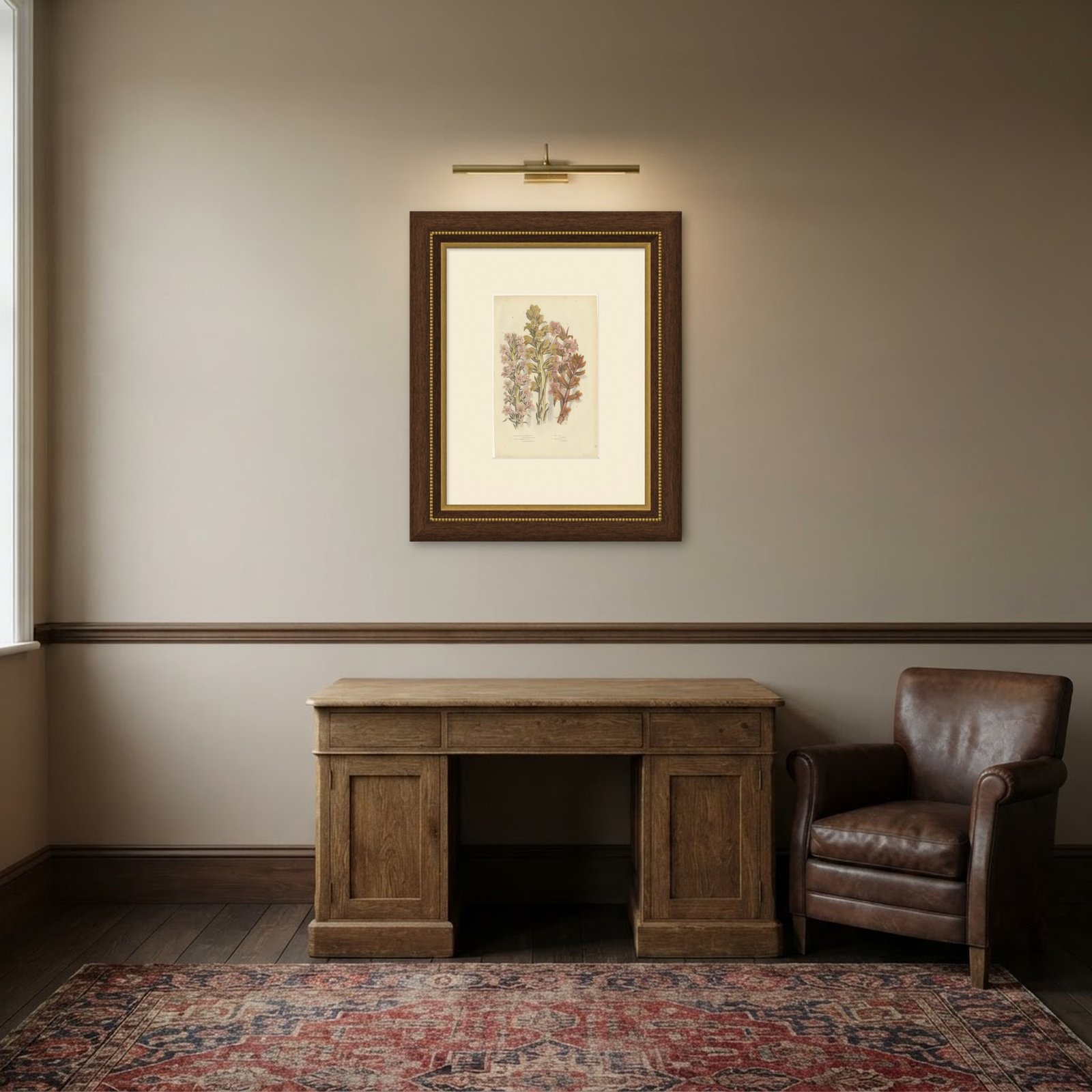
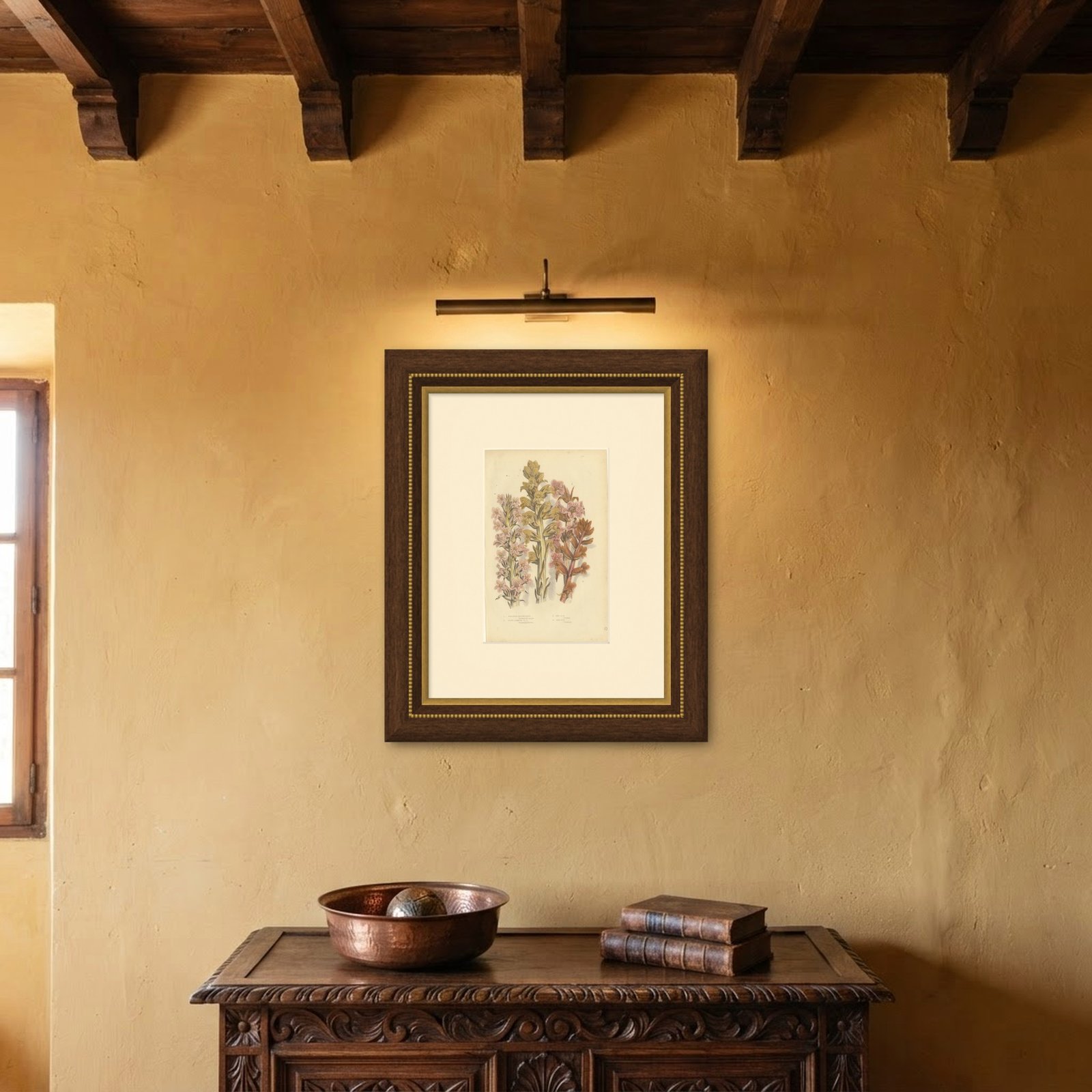
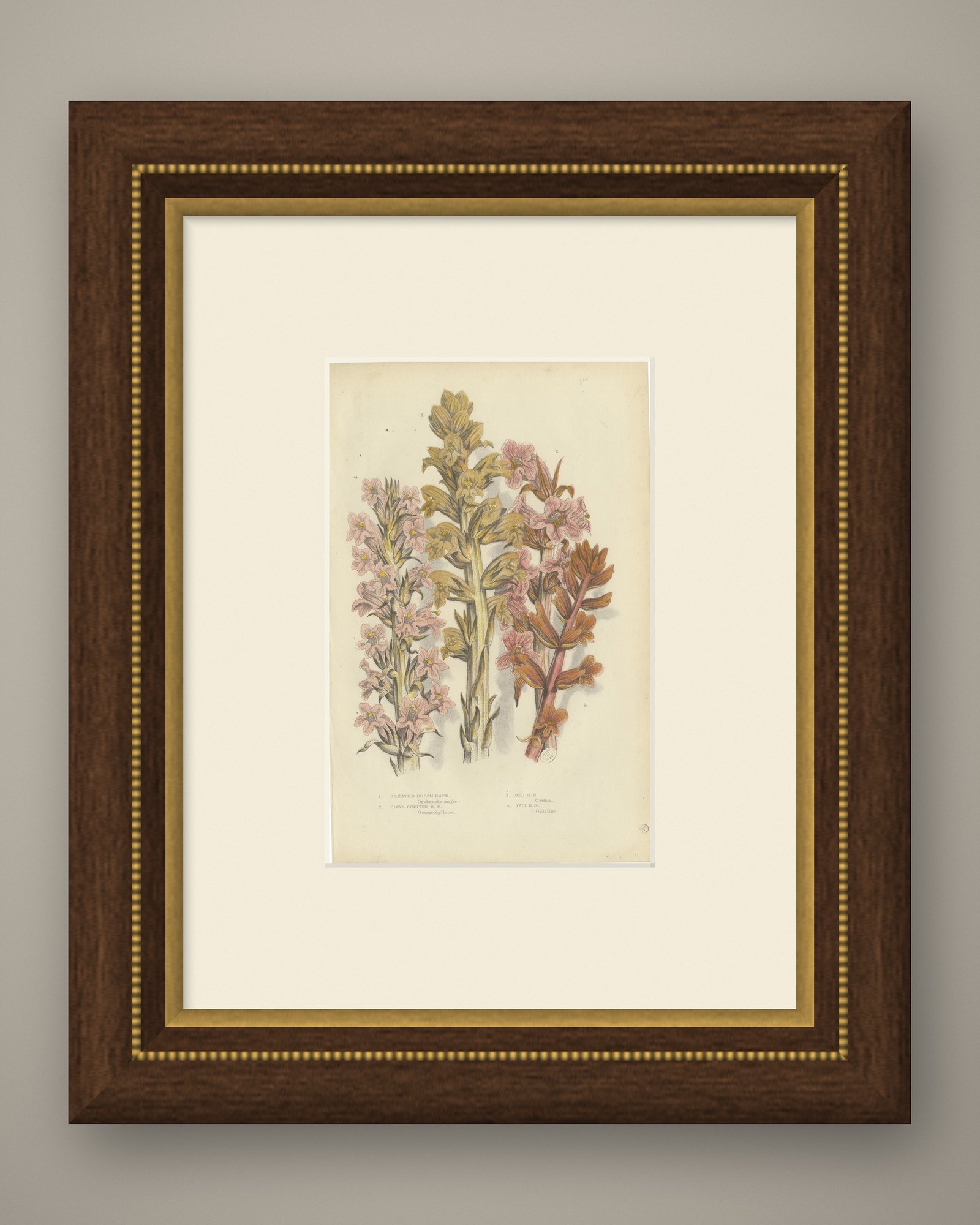
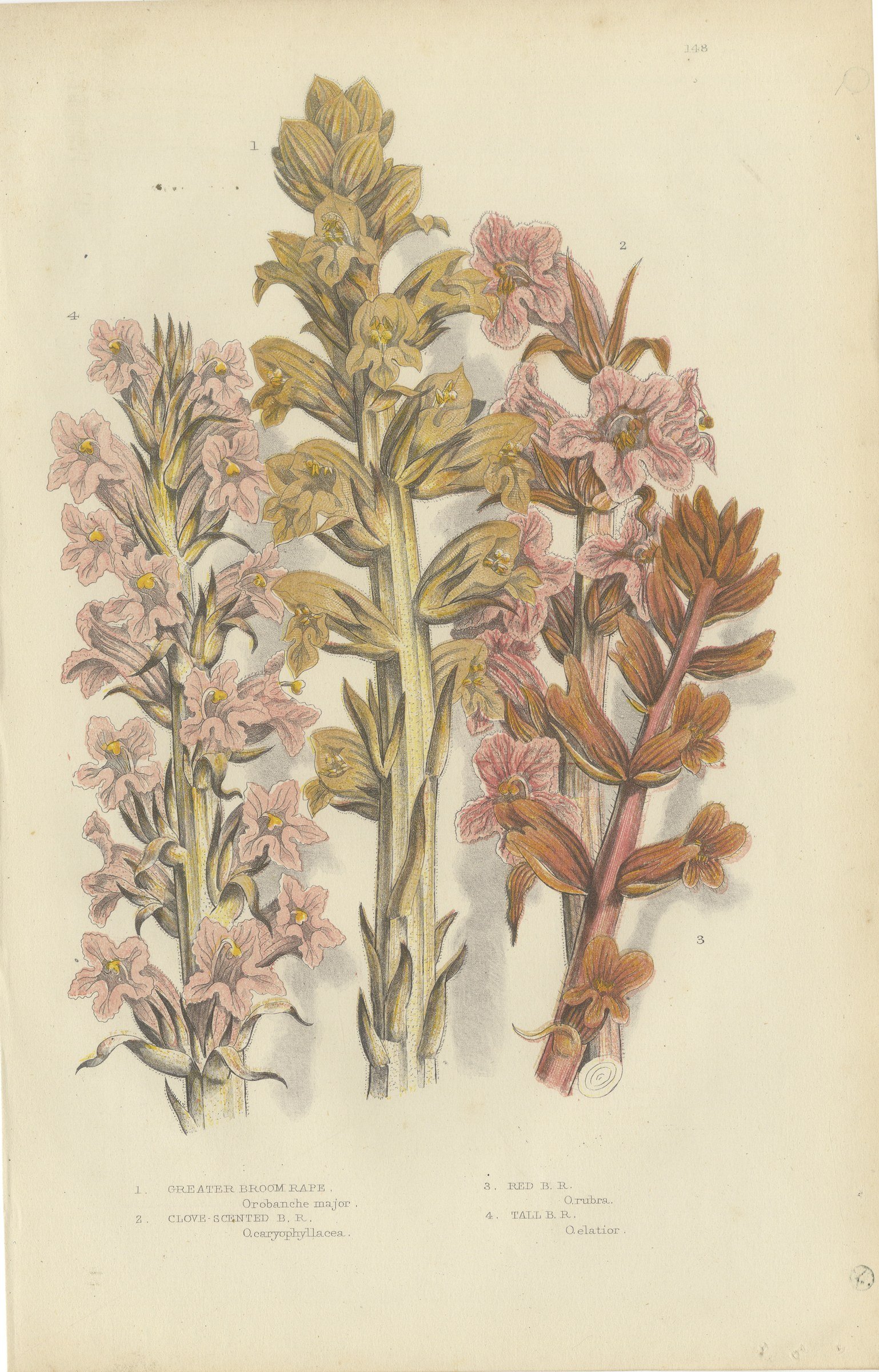
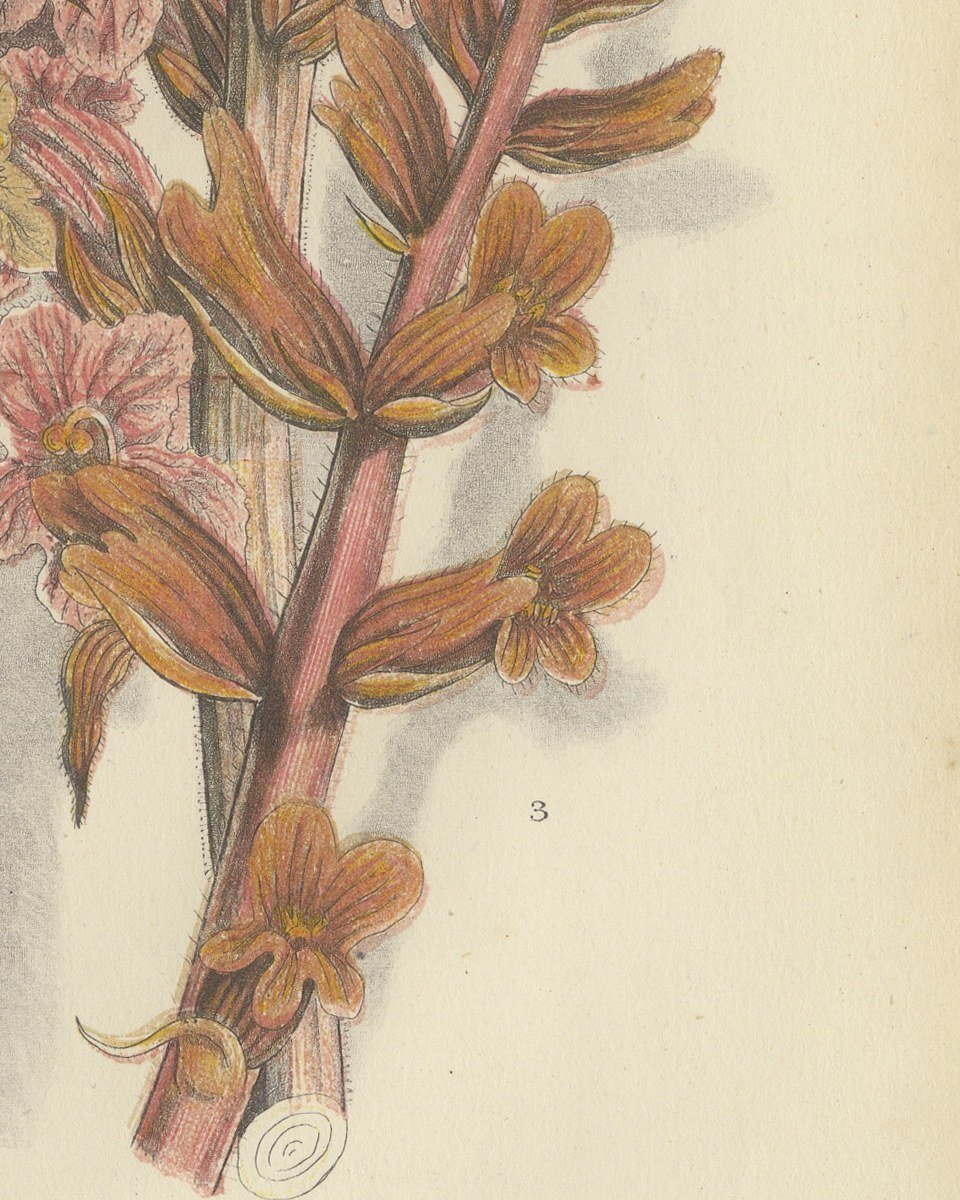
This antique botanical plate is Plate 148 of Anne Pratt's The Flowering Plants, Grasses, Sedges, and Ferns of Great Britain. It shows four British broom rapes, leafless plants that draw their living from the roots of others. Four stout flower spikes stand side by side across the sheet, with no green leaf on any of them. The greater broom rape at the center is a warm ochre and olive, the tall broom rape at the left a soft lilac pink, the clove scented species at the upper right a similar pink, and the red broom rape at the lower right a deep rust brown, and each is drawn with the swollen scaly base from which it rises.
The plate comes from The Flowering Plants, Grasses, Sedges, and Ferns of Great Britain, and their allies the Club Mosses, Pepperworts and Horsetails, written and drawn by Anne Pratt and published in London by Frederick Warne and Co. of Bedford Street, Covent Garden. The work runs to six volumes and was issued under the direction of the Committee of General Literature and Education appointed by the Society for Promoting Christian Knowledge. This sheet belongs to Volume IV, whose title page records 249 species printed in color.
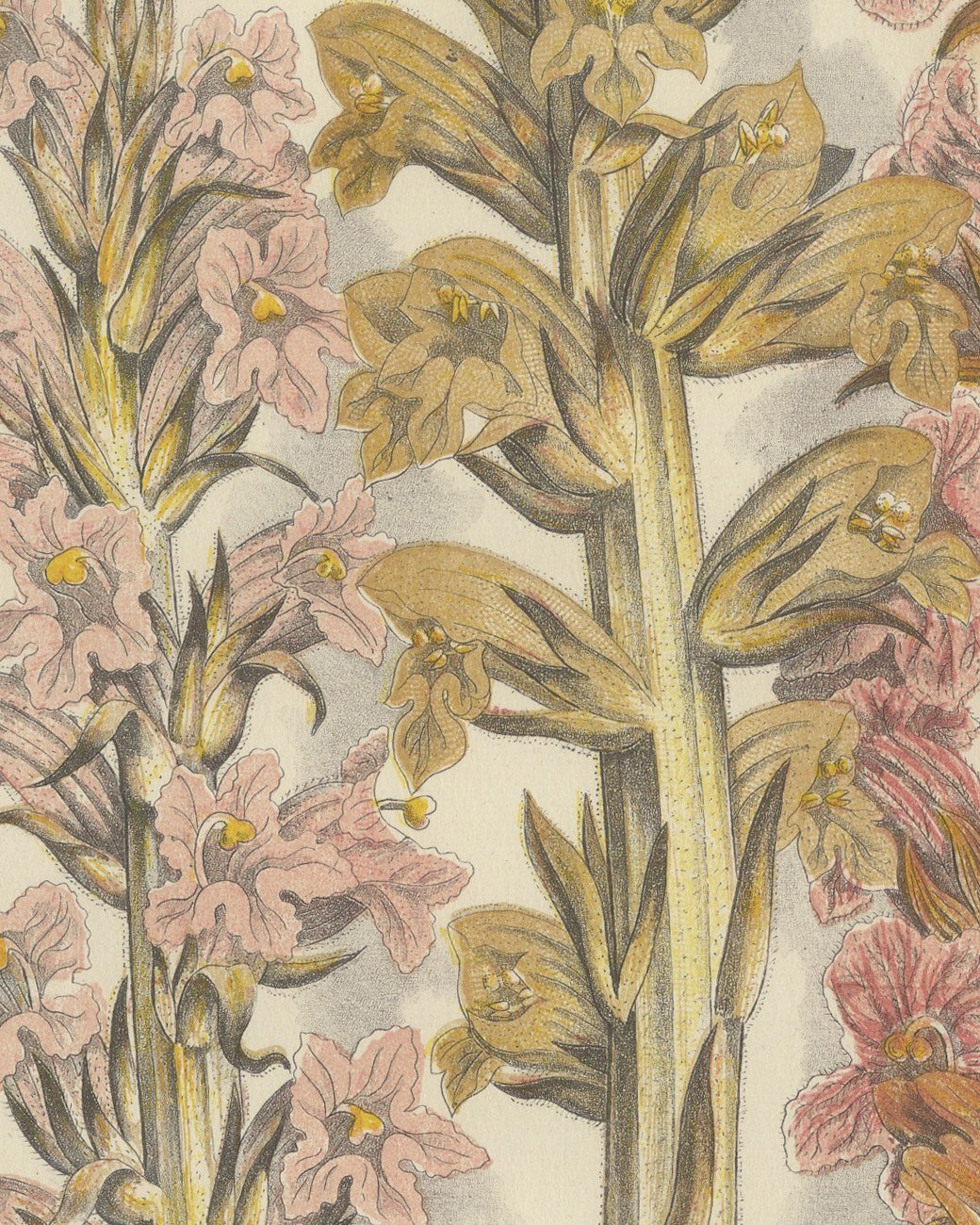
What makes Pratt's plates worth hanging is her method. Each species is given whole, with root, stem, leaf, flower and often the ripe fruit on the same sheet, and several related species are grouped together so that the differences between them can be read at a glance. The result is a composition rather than a specimen sheet, and it reads as a picture at a distance and as botany close up.
Even age toning. Handling soiling along the bottom and right edges. All four corners complete.
This is an original antique print, not a modern reproduction. This item is sold unframed.