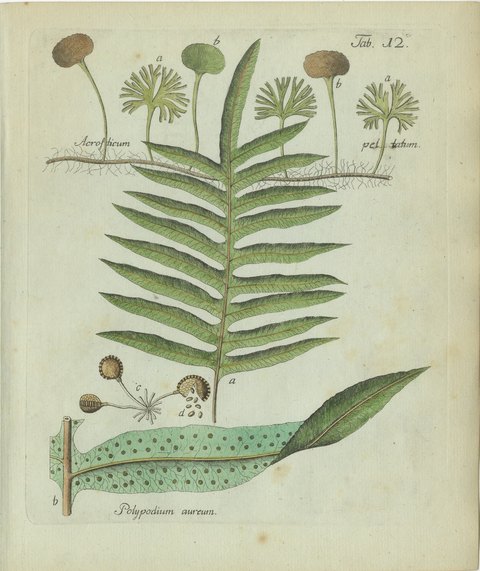
 The sheet, as you receive it
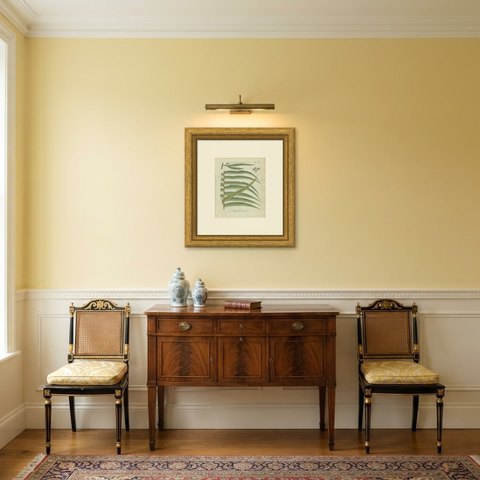
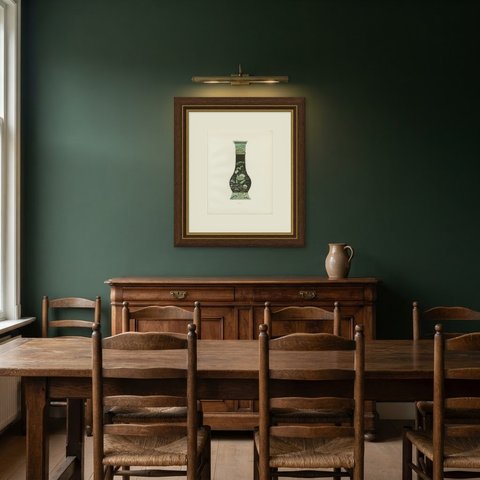
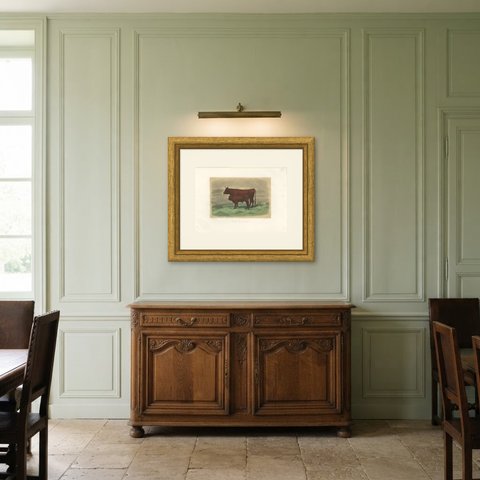
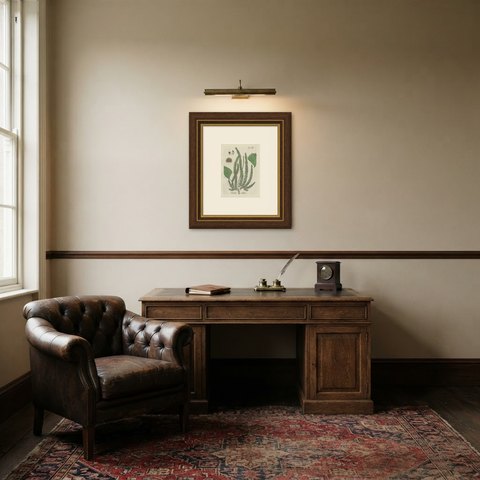
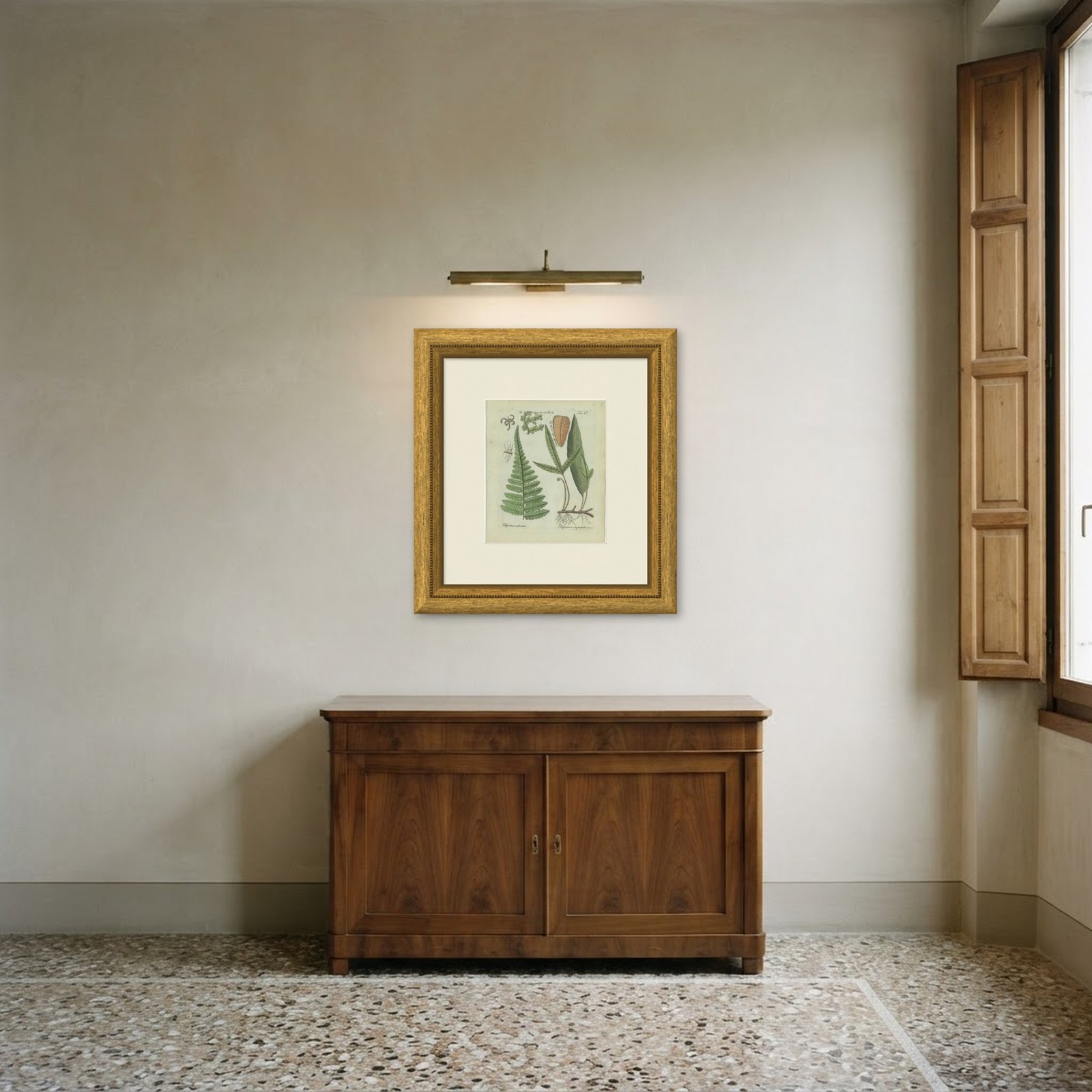 In the room
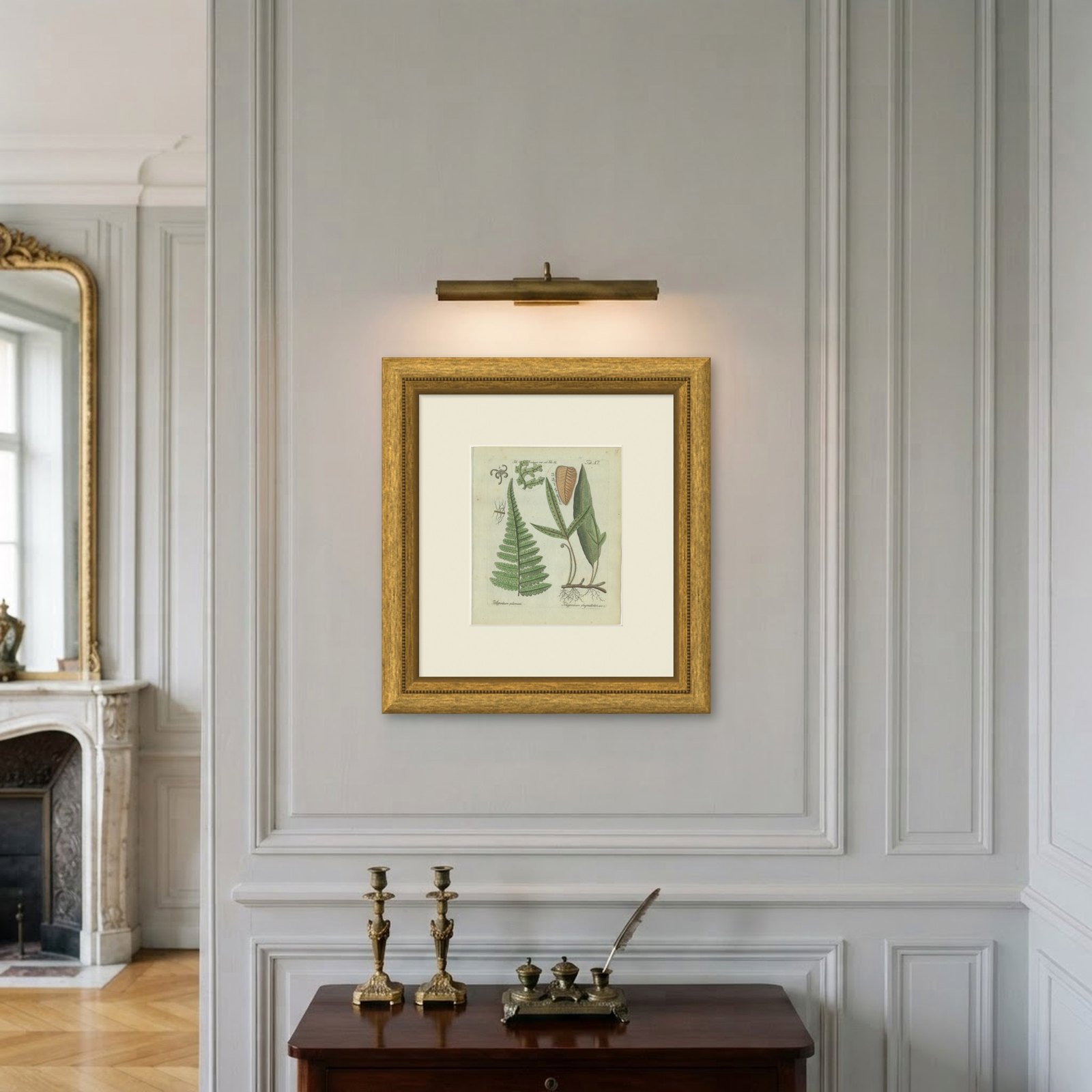
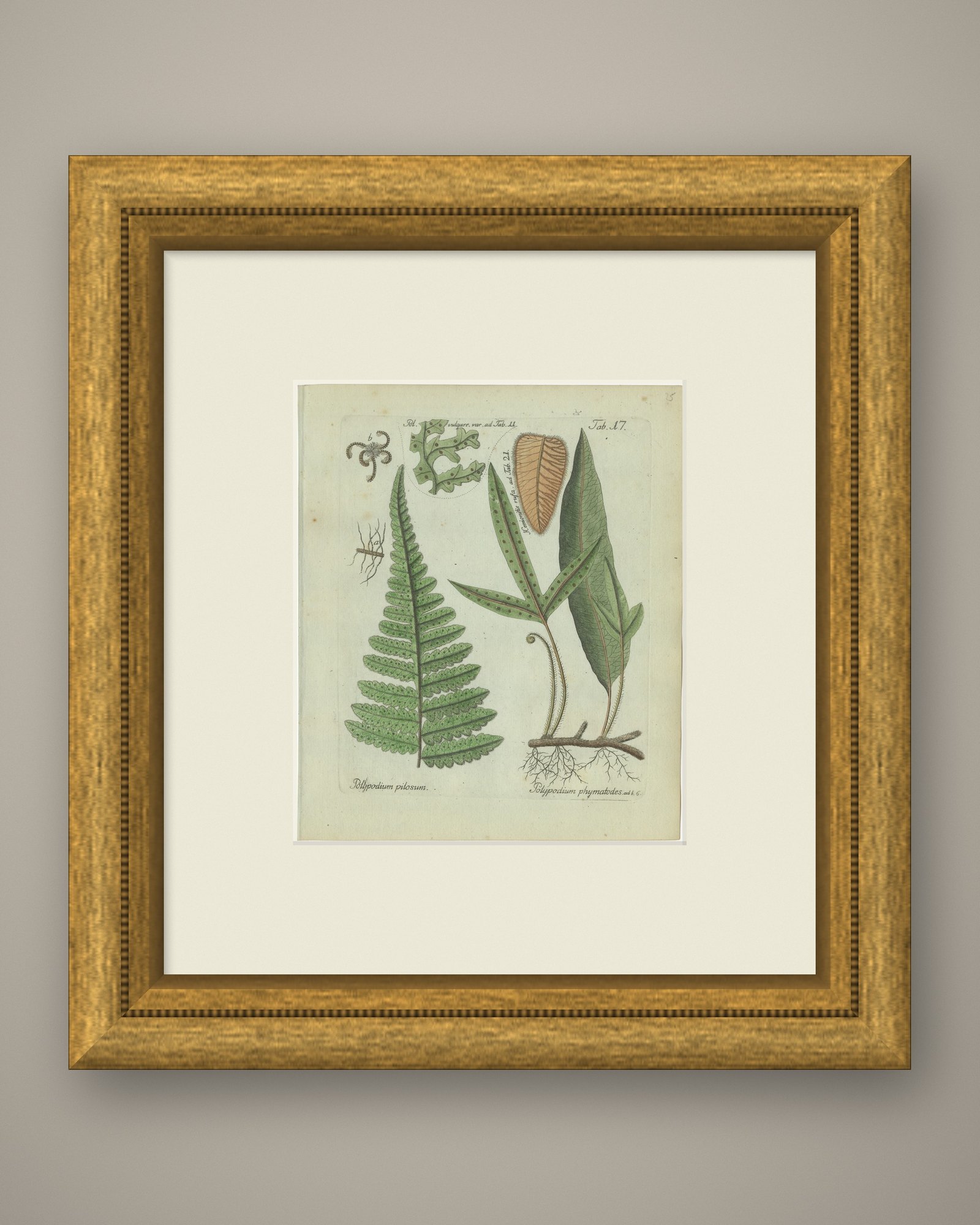
Interior designers: BarTrade members buy at their trade price. How it works
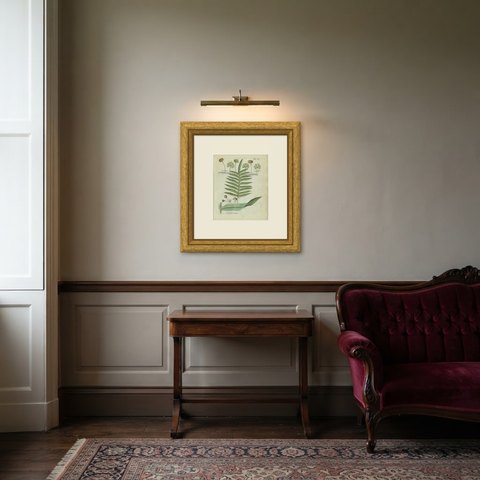
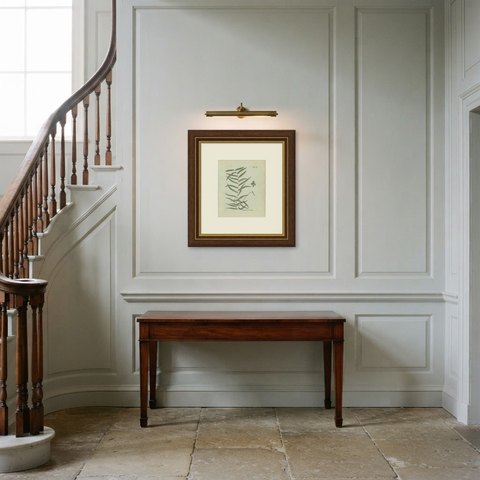
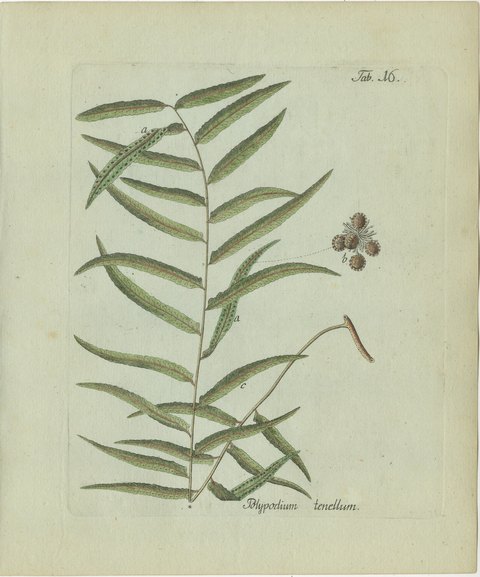
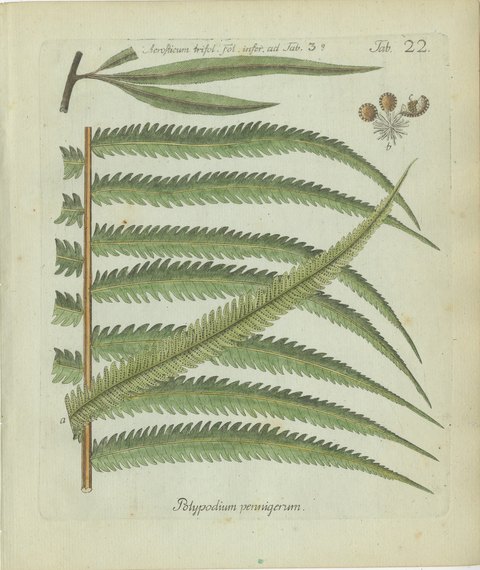
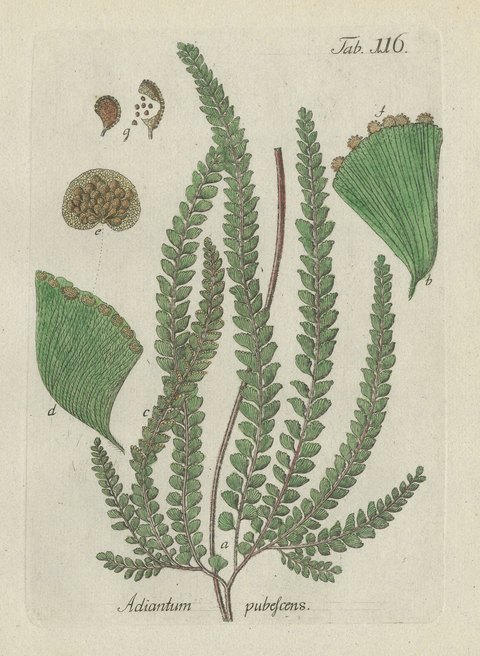
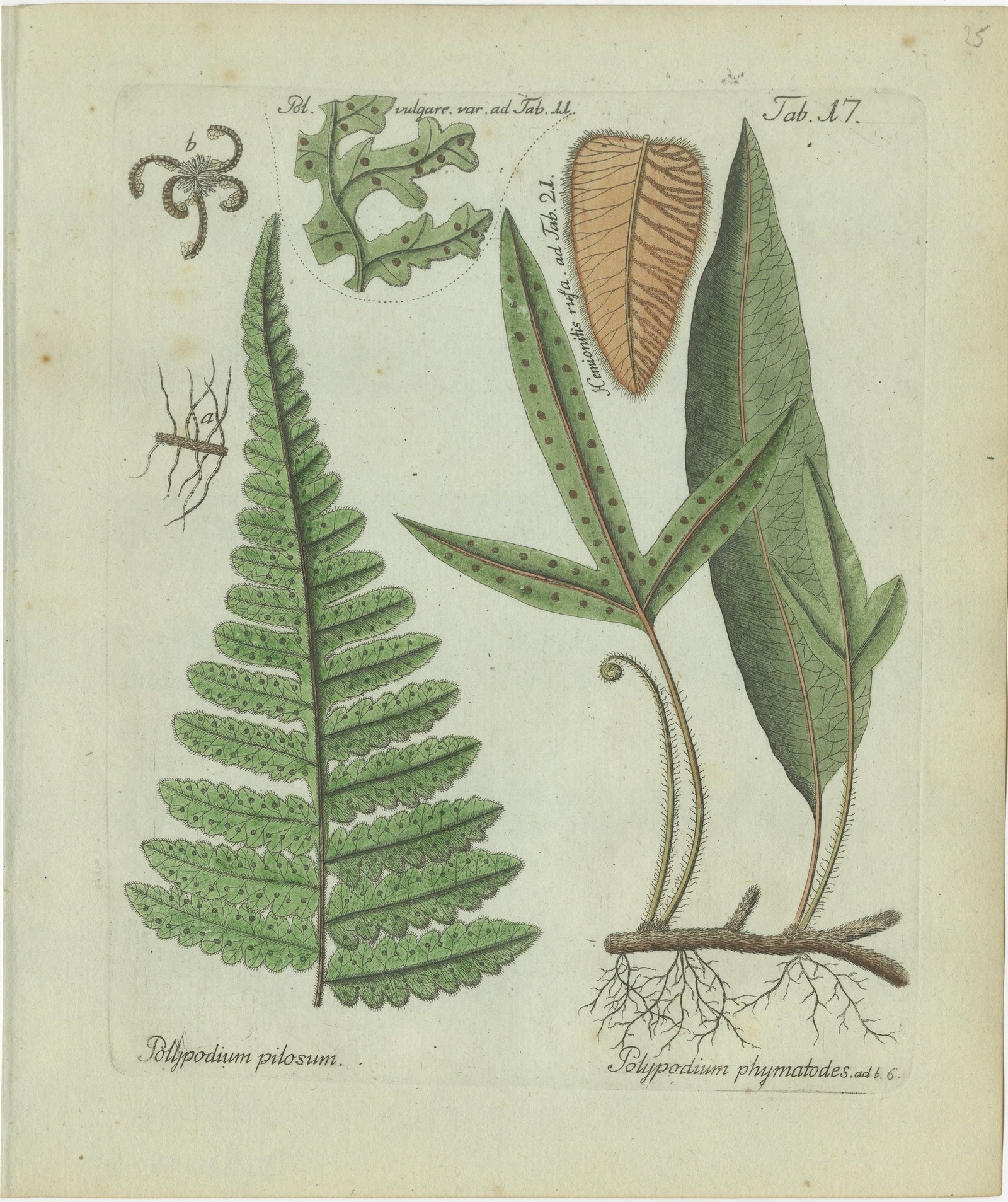
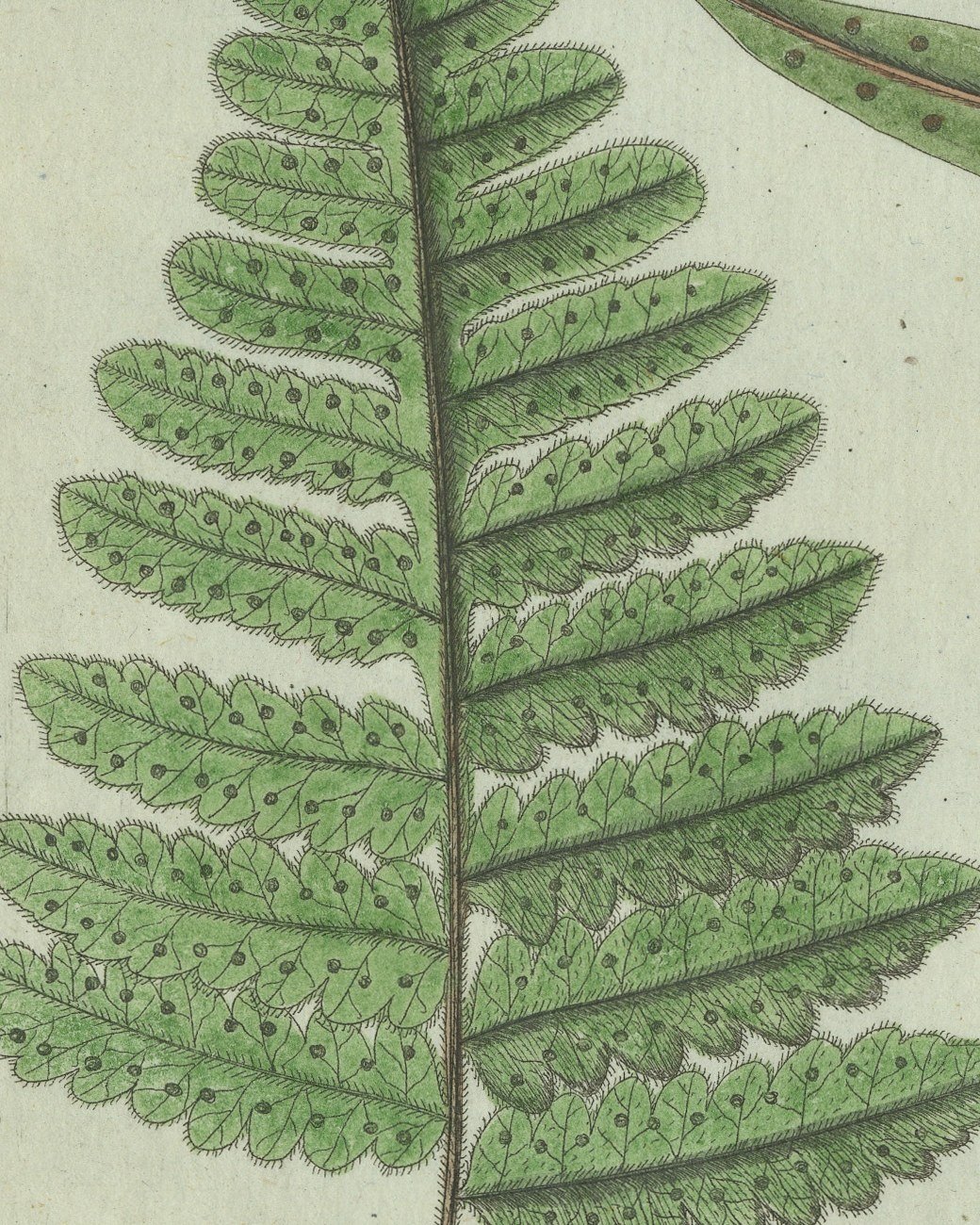
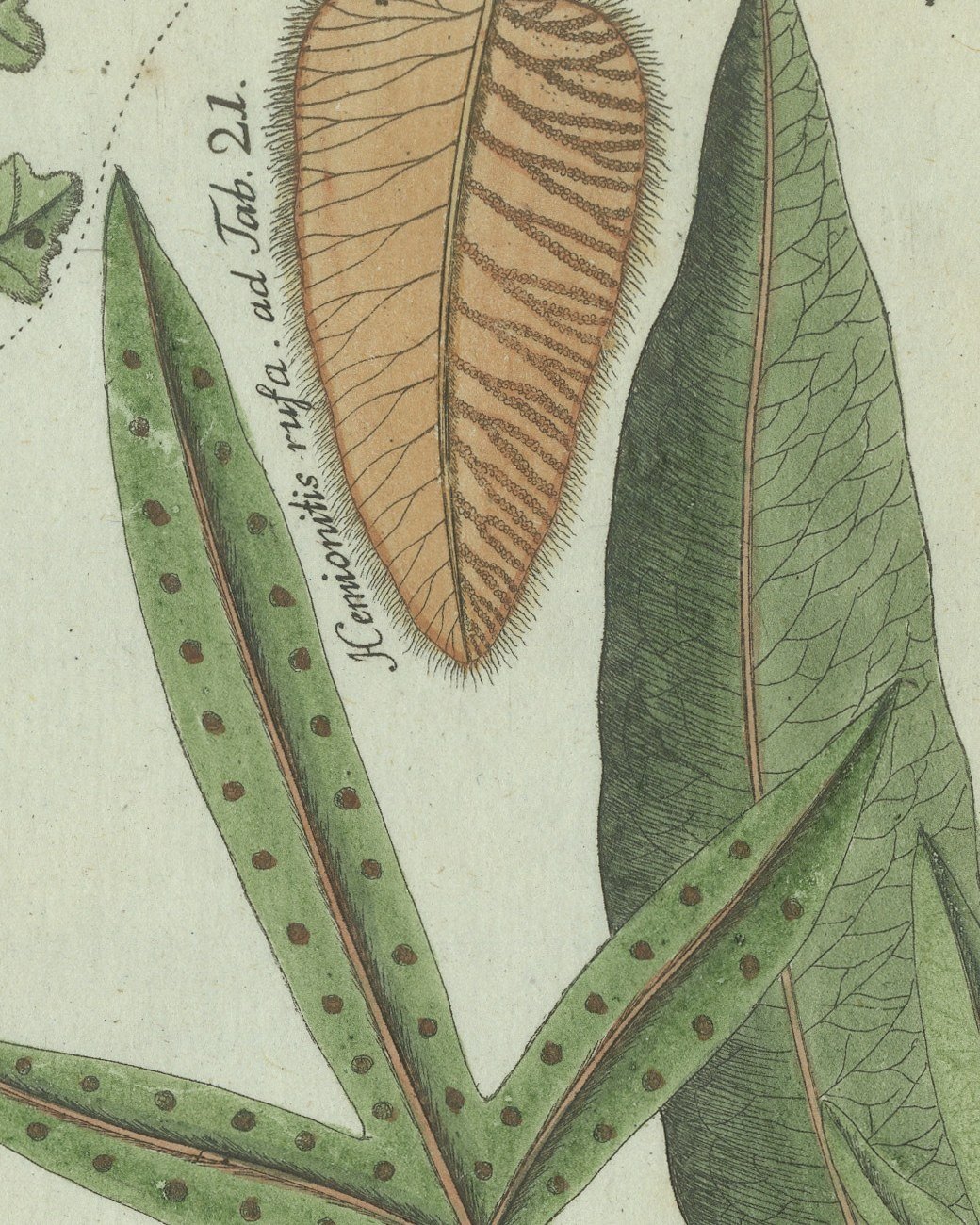
An original antique botanical engraving of Polypodium pilosum, hand-colored on bluish paper, plate 17 from Christian Schkuhr's study of the ferns and their allies, Wittenberg, 1806 to 1809. Polypody is the genus Schkuhr gives most room to, and it runs through the first third of the volume. The sheet carries 4 labeled figures: Polypodium pilosum, Polypodium phymatodes, Polypodium vulgare var. (to Tab. 11) and Hemionitis rufa (to Tab. 21), with the plate number engraved at the upper right. Beside the habit drawing Schkuhr adds the small lettered analyses he is known for, the spore cases, the scales and the sections that make the plate useful to a botanist as well as pleasant to look at.
The plate comes from Christian Schkuhr's account of the twenty-fourth Linnaean class, the cryptogams, the plants that reproduce by spores rather than by flowers. Schkuhr, who was born at Pegau in 1741 and died at Wittenberg in 1811, worked first as a gardener, studied at the University of Wittenberg, and taught himself drawing and engraving so completely that he drew, engraved and published his own plates. The fern volume appeared in nine instalments between 1806 and 1809 and carries 221 plates, numbered to 173 with lettered supplements added as new material reached him.
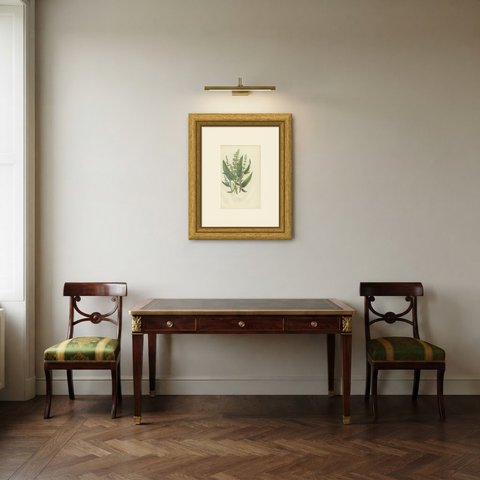
The sheet is a copper engraving finished in watercolor by hand, and the coloring is original to the period of publication. The wash sits over the engraved outline and varies from figure to figure in the way hand work does, with the greens laid in several strengths to separate the upper and lower surfaces of the frond. The paper carries the plate mark of the copper plate. Fern plates hang well because the subject is shape rather than incident, and a sheet like this reads clearly from across a room. It suits a study, a hallway, a bathroom or a kitchen, and it sits comfortably with other botanical work, with natural history prints and with plain modern interiors where a single green form on cream paper is enough.
Light uneven toning, browner towards the edges. Handling soiling along all four edges. A few small foxing spots in the margin. All four corners complete.
This is an original antique print, not a modern reproduction. This item is sold unframed.