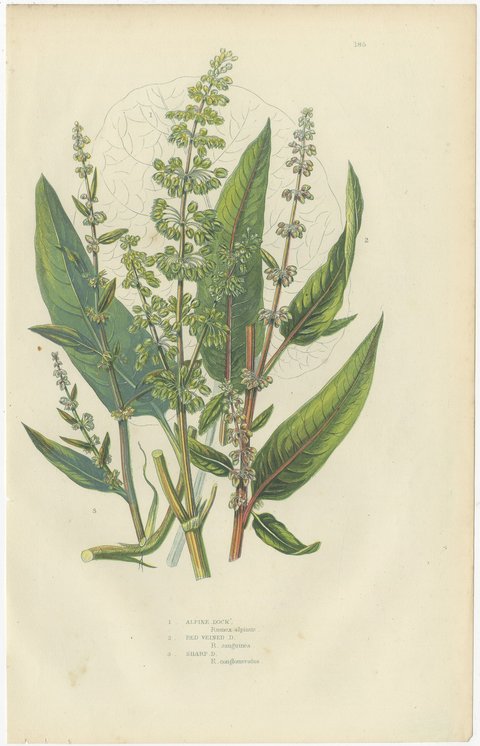
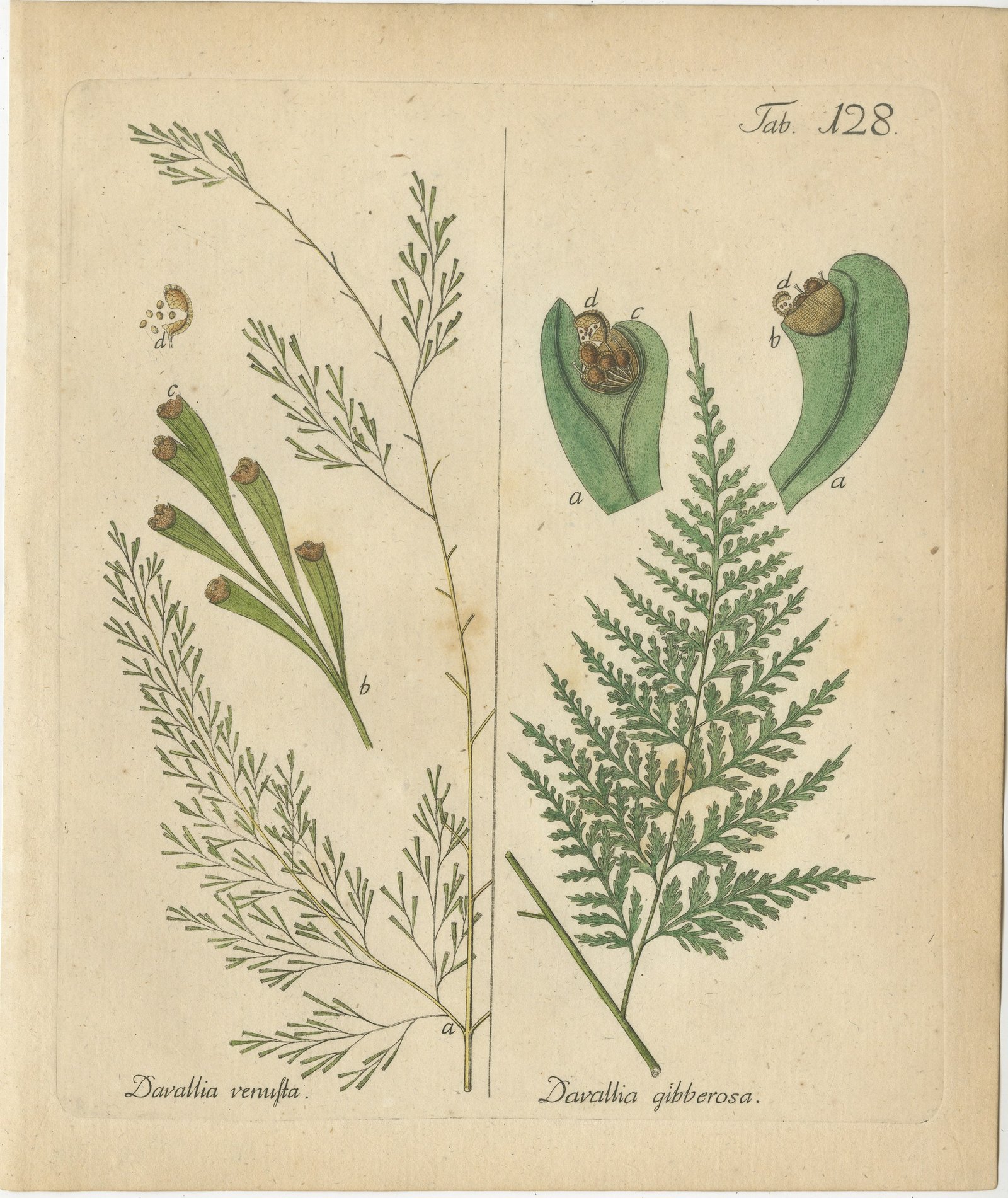
 The sheet, as you receive it
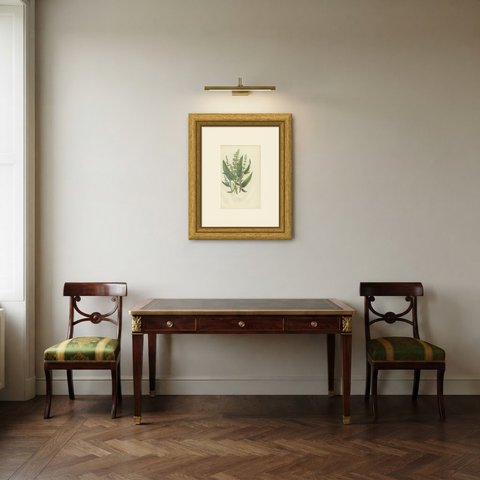
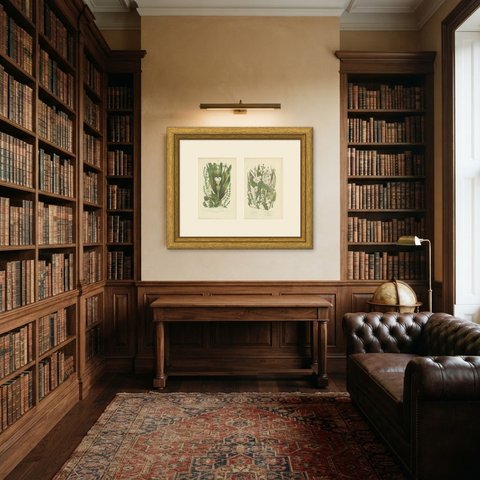
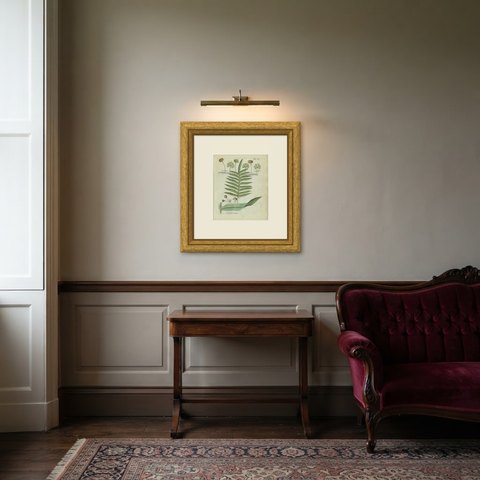
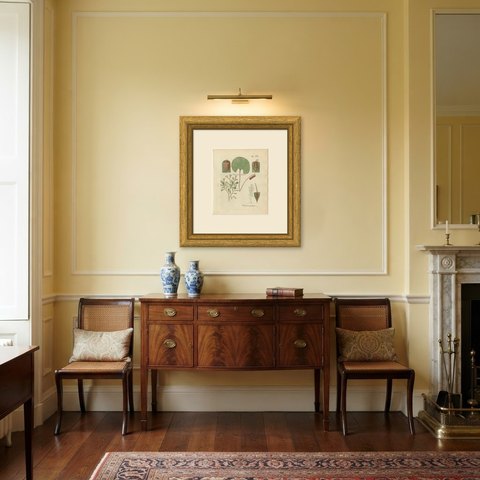
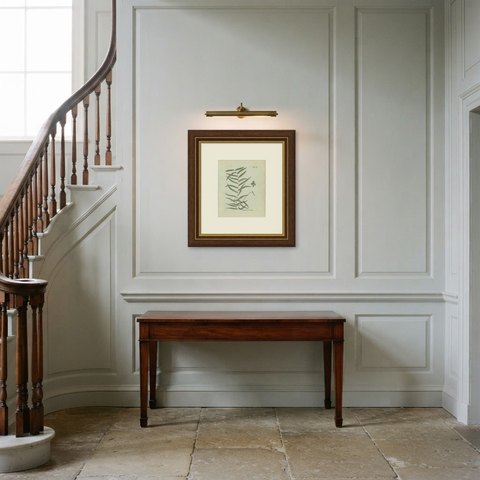
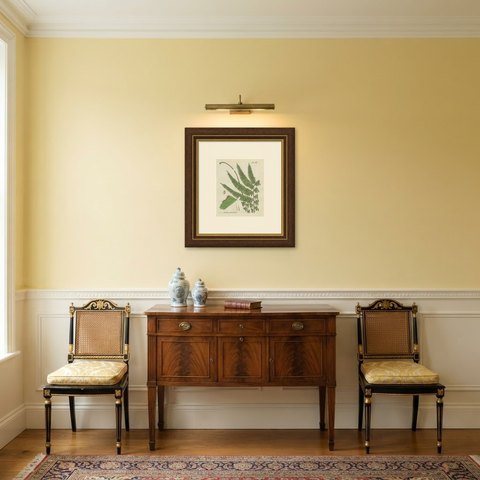
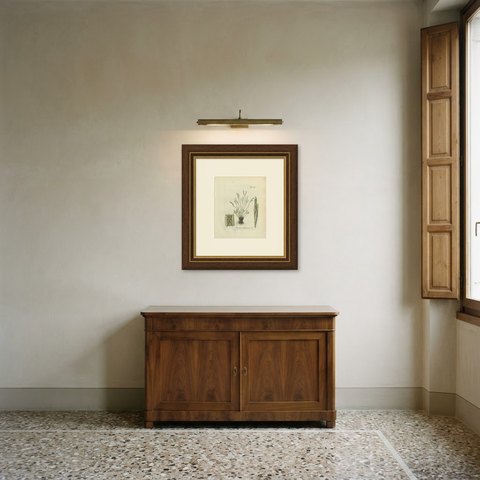
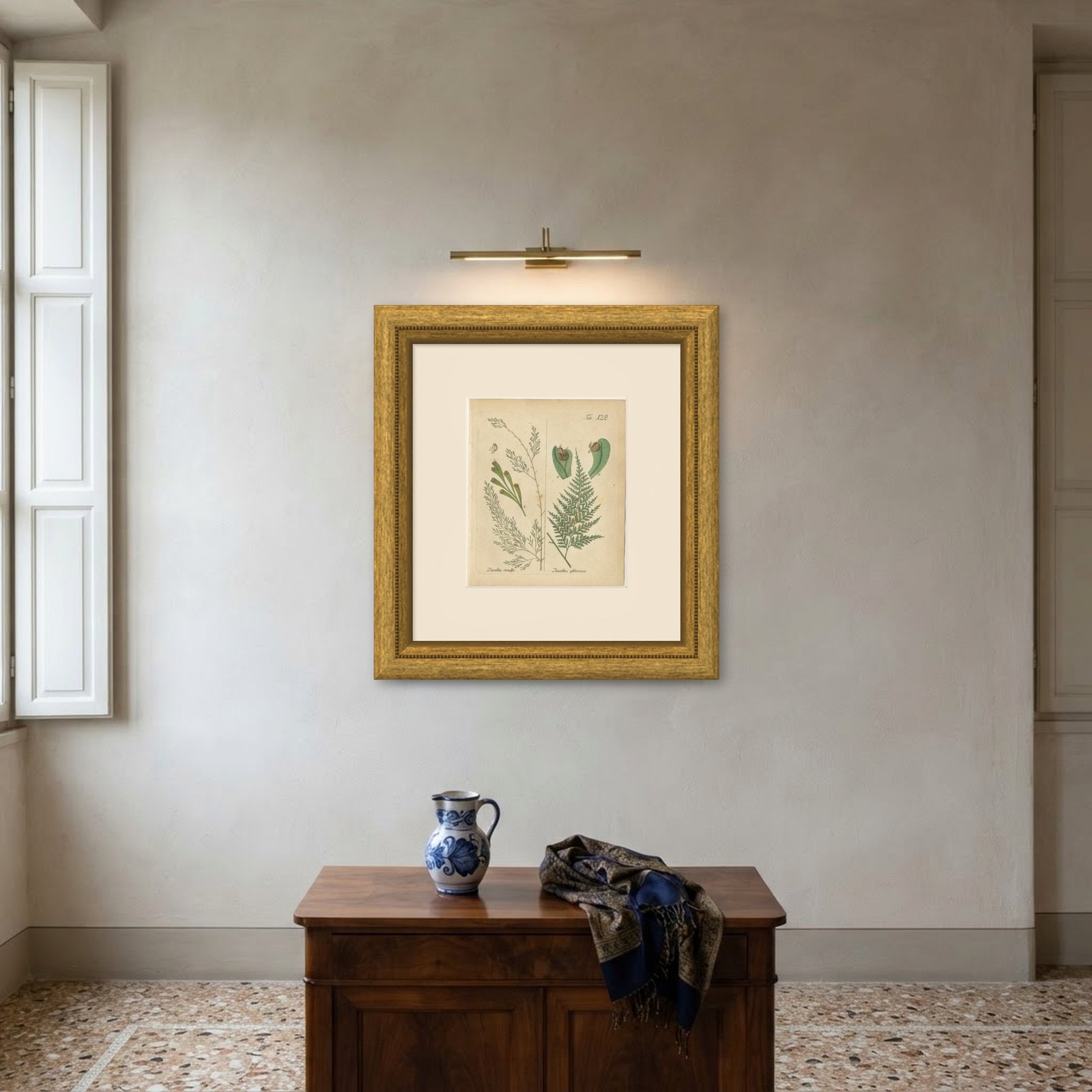
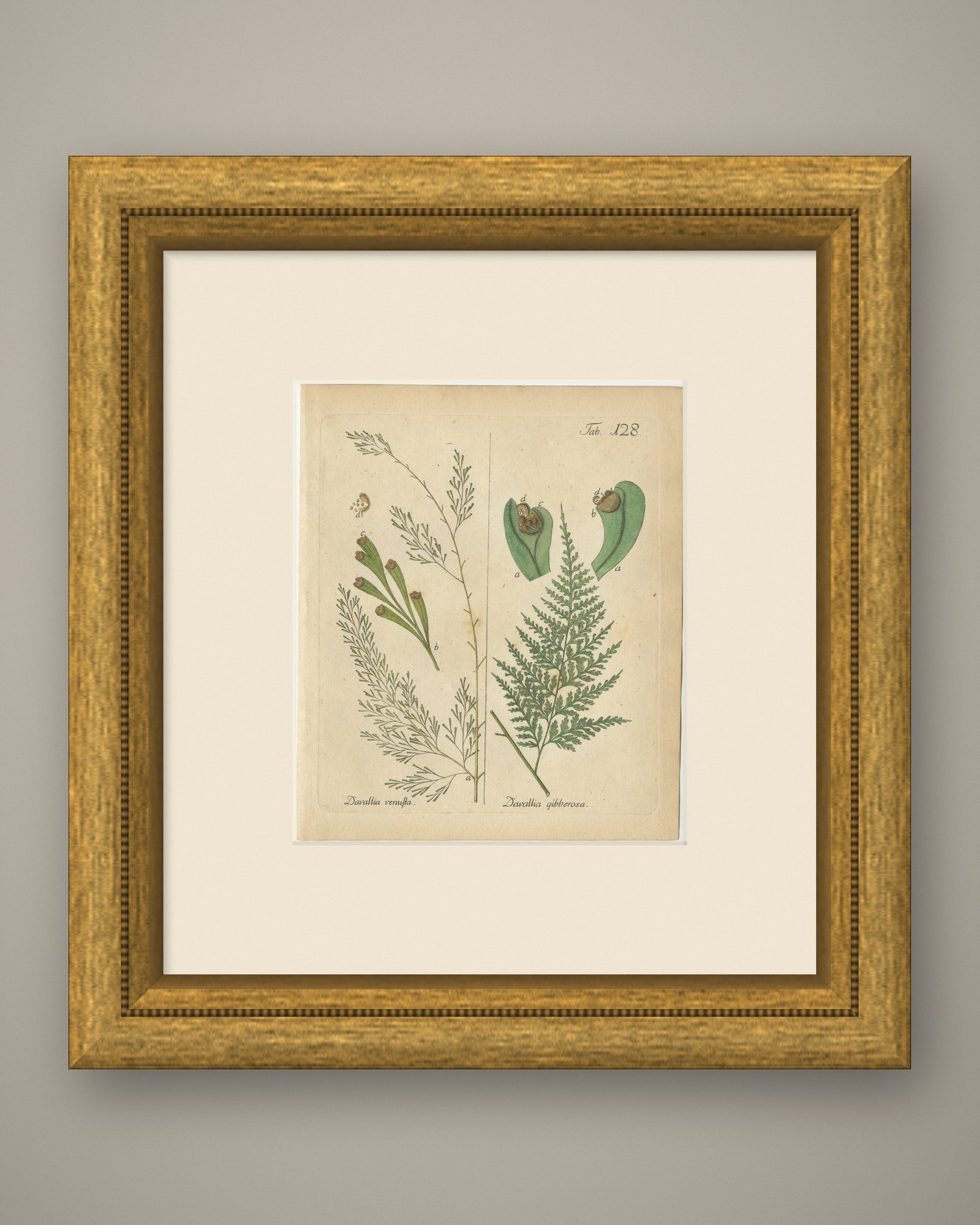
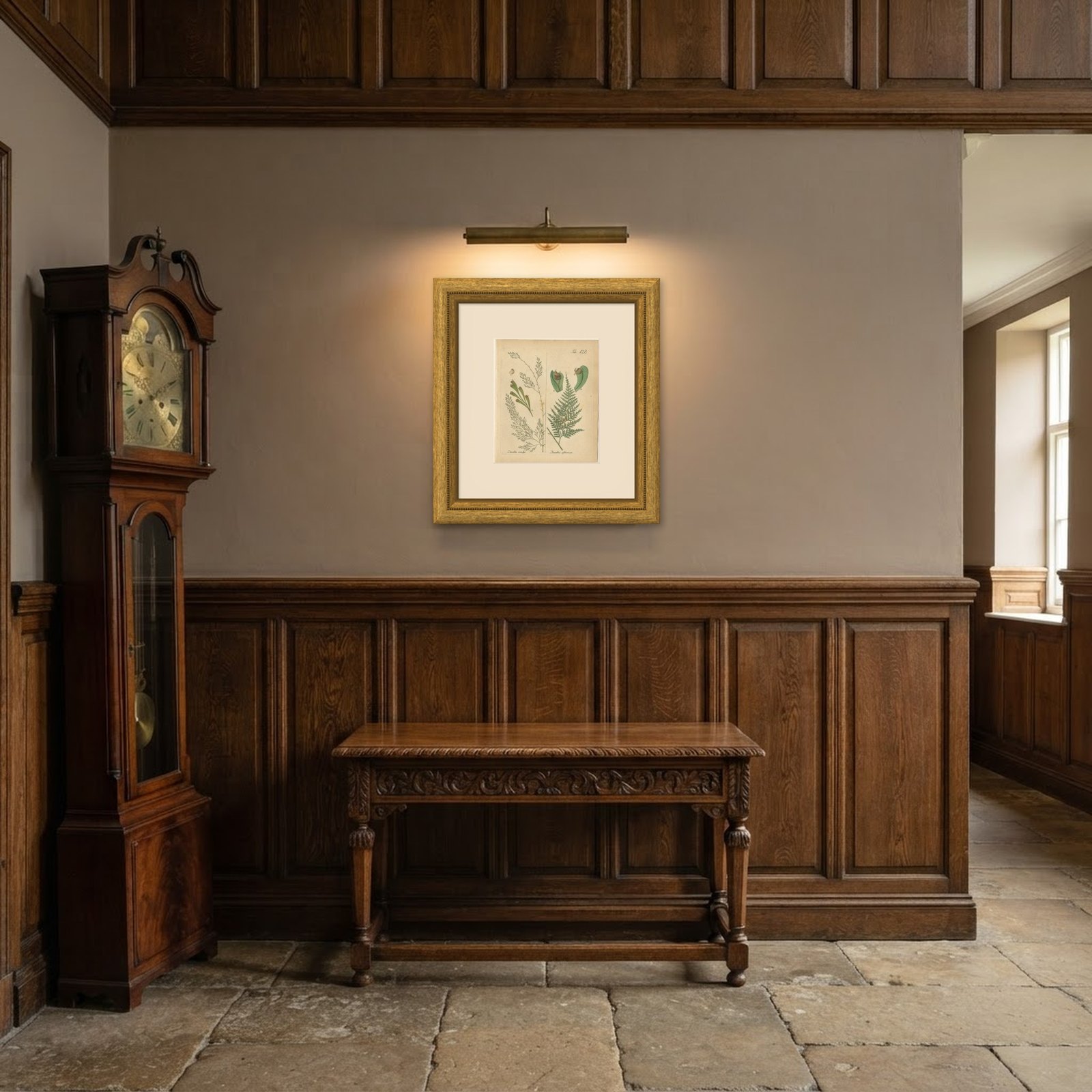 In the room
Interior designers: BarTrade members buy at their trade price. How it works
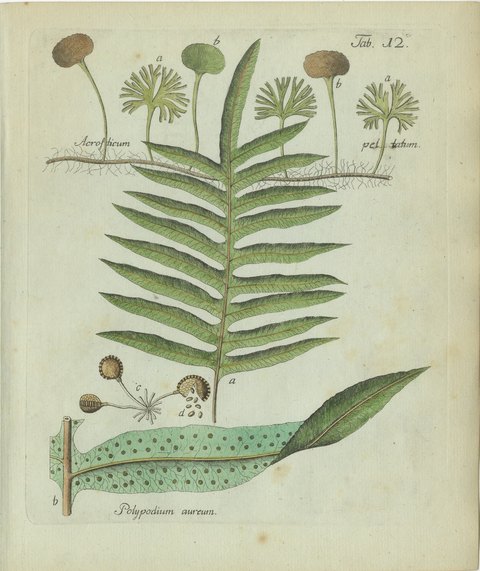
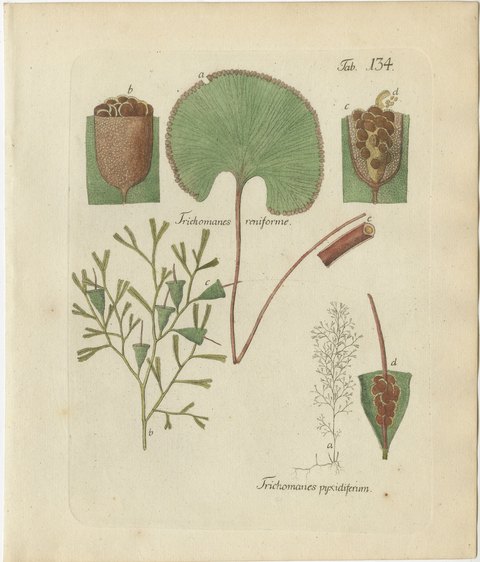
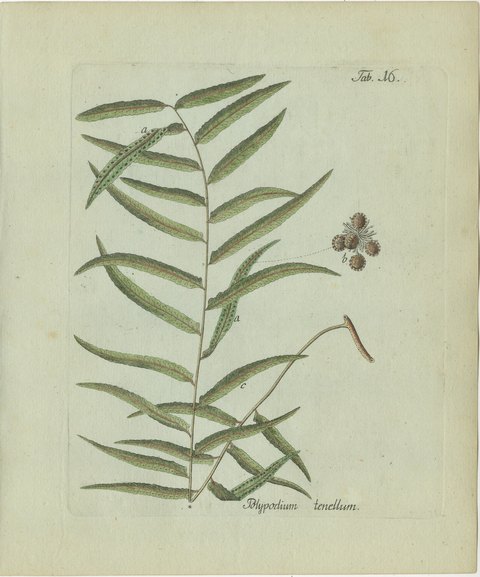
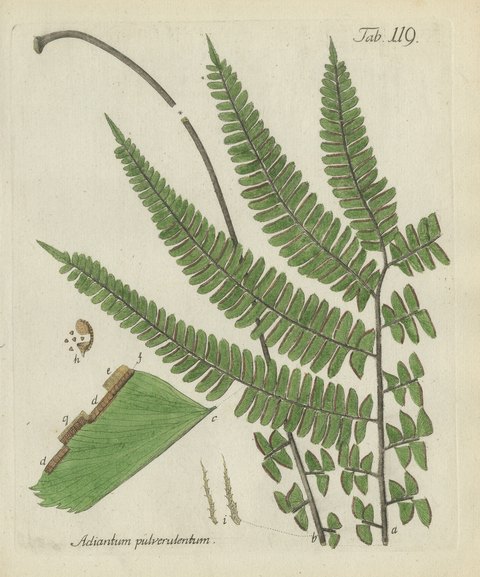
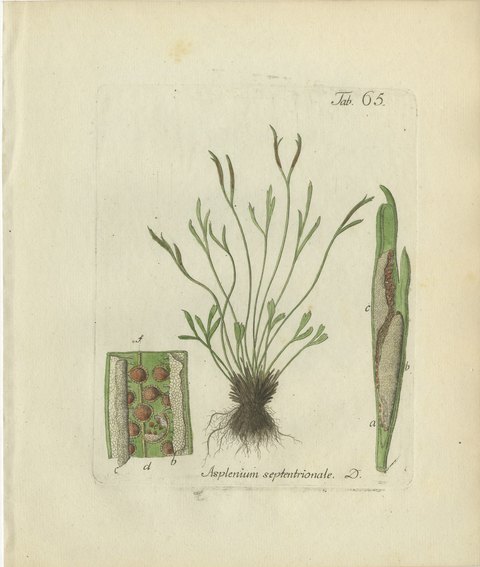
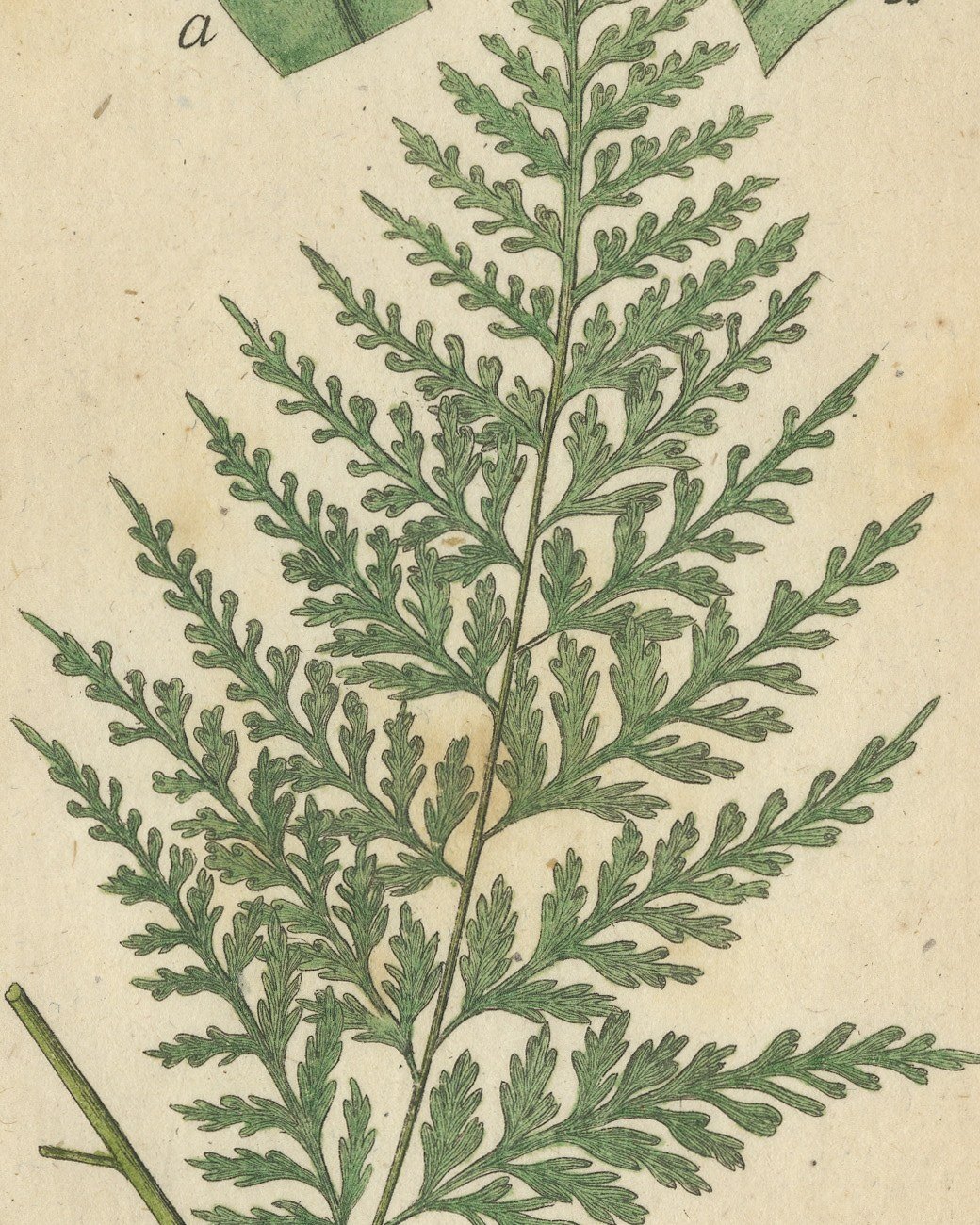
An original antique botanical engraving of Davallia venusta, hand-colored on bluish paper, plate 128 from Christian Schkuhr's study of the ferns and their allies, Wittenberg, 1806 to 1809. The hare's foot ferns grow from a creeping scaly rhizome that gives the group its common name. The sheet carries 2 species, lettered Davallia venusta and Davallia gibberosa beneath the figures, with the plate number engraved at the upper right. Beside the habit drawing Schkuhr adds the small lettered analyses he is known for, the spore cases, the scales and the sections that make the plate useful to a botanist as well as pleasant to look at.
Christian Schkuhr, 1741 to 1811, is one of the few botanical authors who was also his own artist, engraver and publisher. He came to botany from gardening, settled at Wittenberg, and devoted himself to the Linnaean system. This sheet belongs to his volume on the ferns and their allies, published at Wittenberg in nine instalments between 1806 and 1809, with 221 copper plates in all. The numbering runs to 173, with supplementary lettered plates inserted where he had more to show than one sheet would hold.
Printed from a copper plate and colored by hand when it was published, the sheet shows the qualities that separate original hand coloring from printed color: the wash crosses the engraved line in places, the strength of the green changes across the frond, and the fine work on the spore cases is picked out in a browner tone over the engraving. The plate mark is visible in the paper. A plate of this kind is easy to live with. The green against the warm paper is quiet, the drawing is precise, and the sheet works alone above a desk or in a run of three or four down a hallway. Collectors of botanical art, of early natural history illustration and of German copperplate work all look for Schkuhr's sheets.
Light uneven toning, browner towards the edges. Handling soiling along the right and top edges. Scattered light foxing in the margin. Slight wear at the bottom right and top left corners. Minor edge wear, shallow nicks along the right.
This is an original antique print, not a modern reproduction. This item is sold unframed.