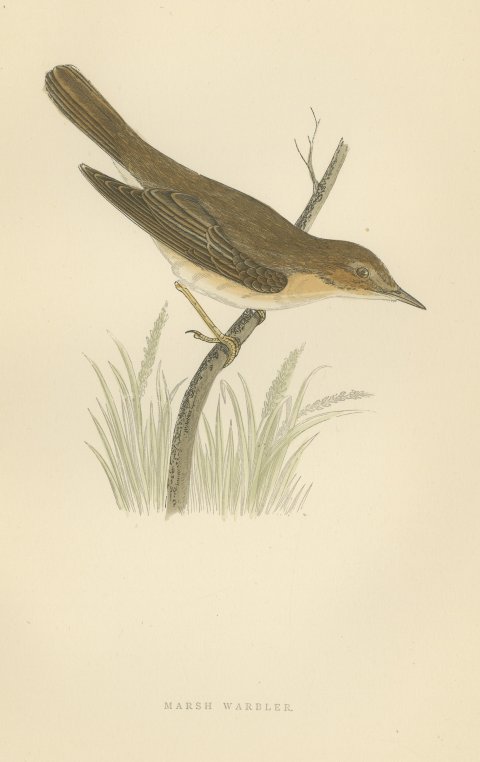
 The sheet, as you receive it
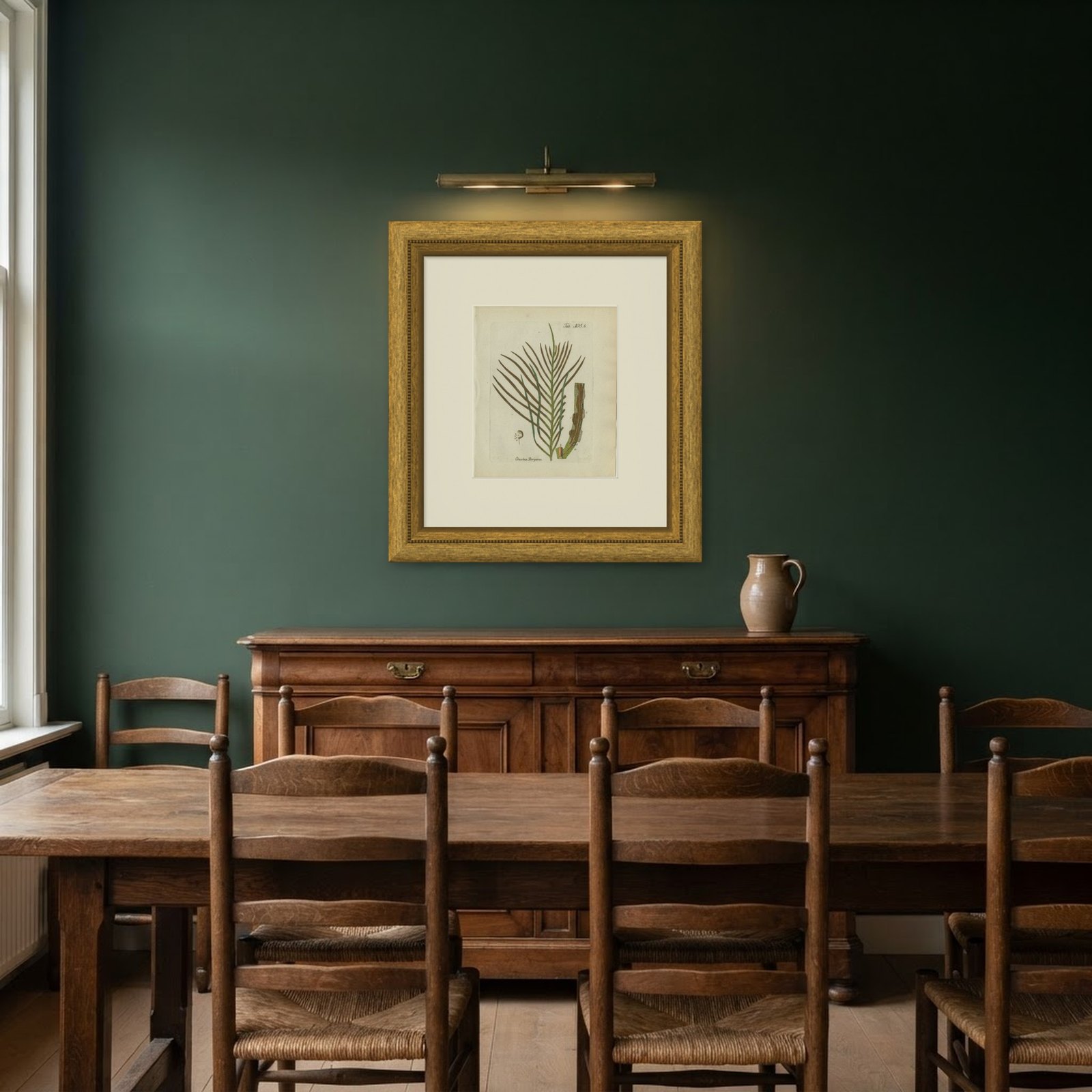 In the room
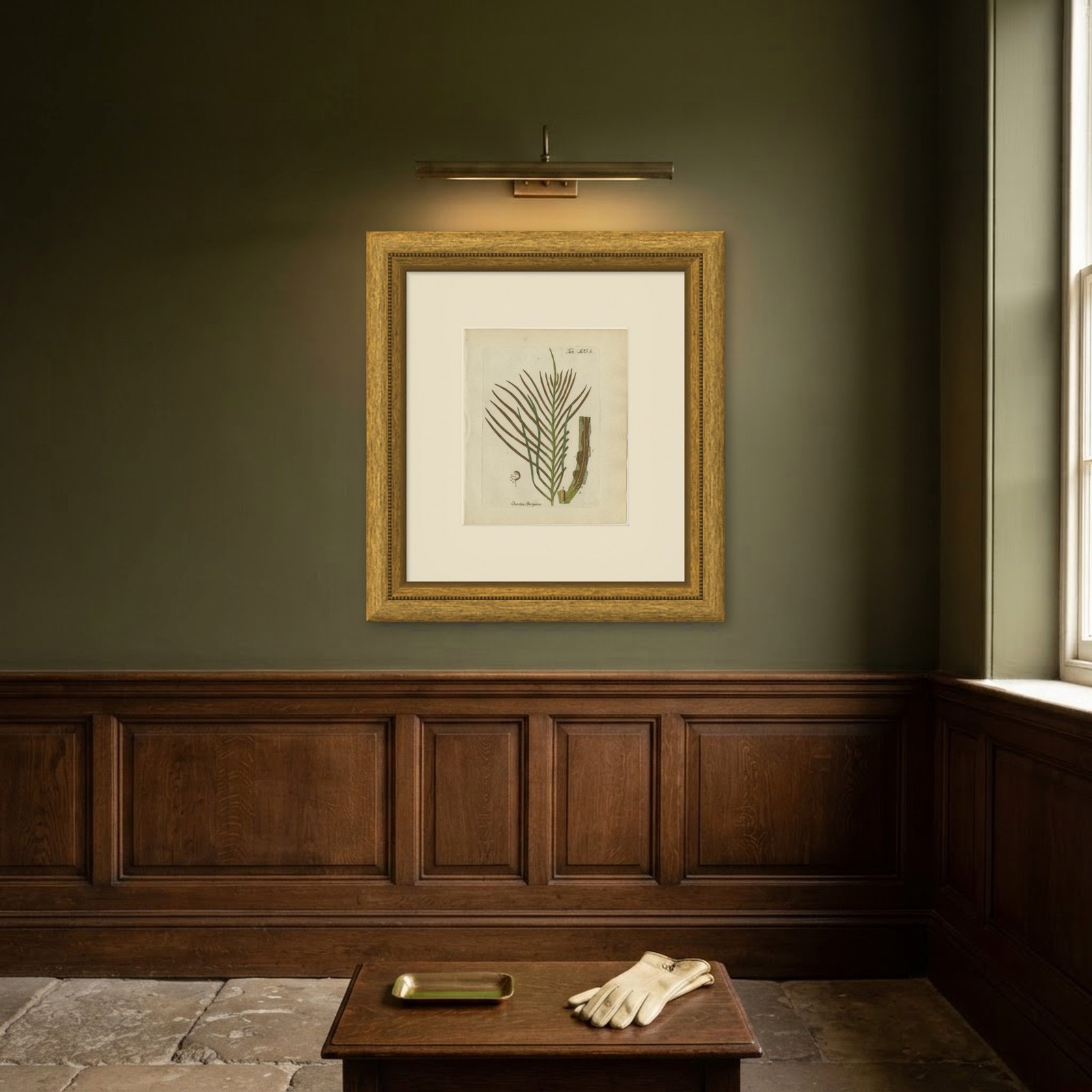
Interior designers: BarTrade members buy at their trade price. How it works
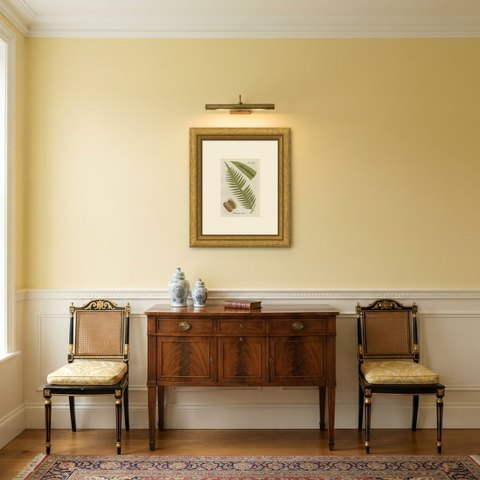
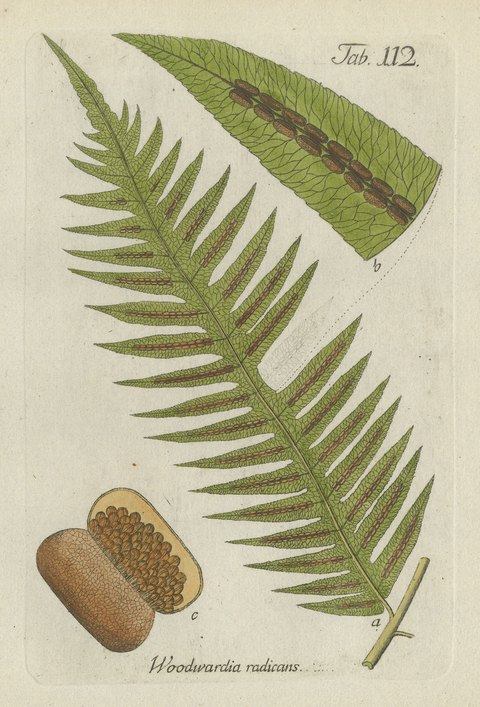
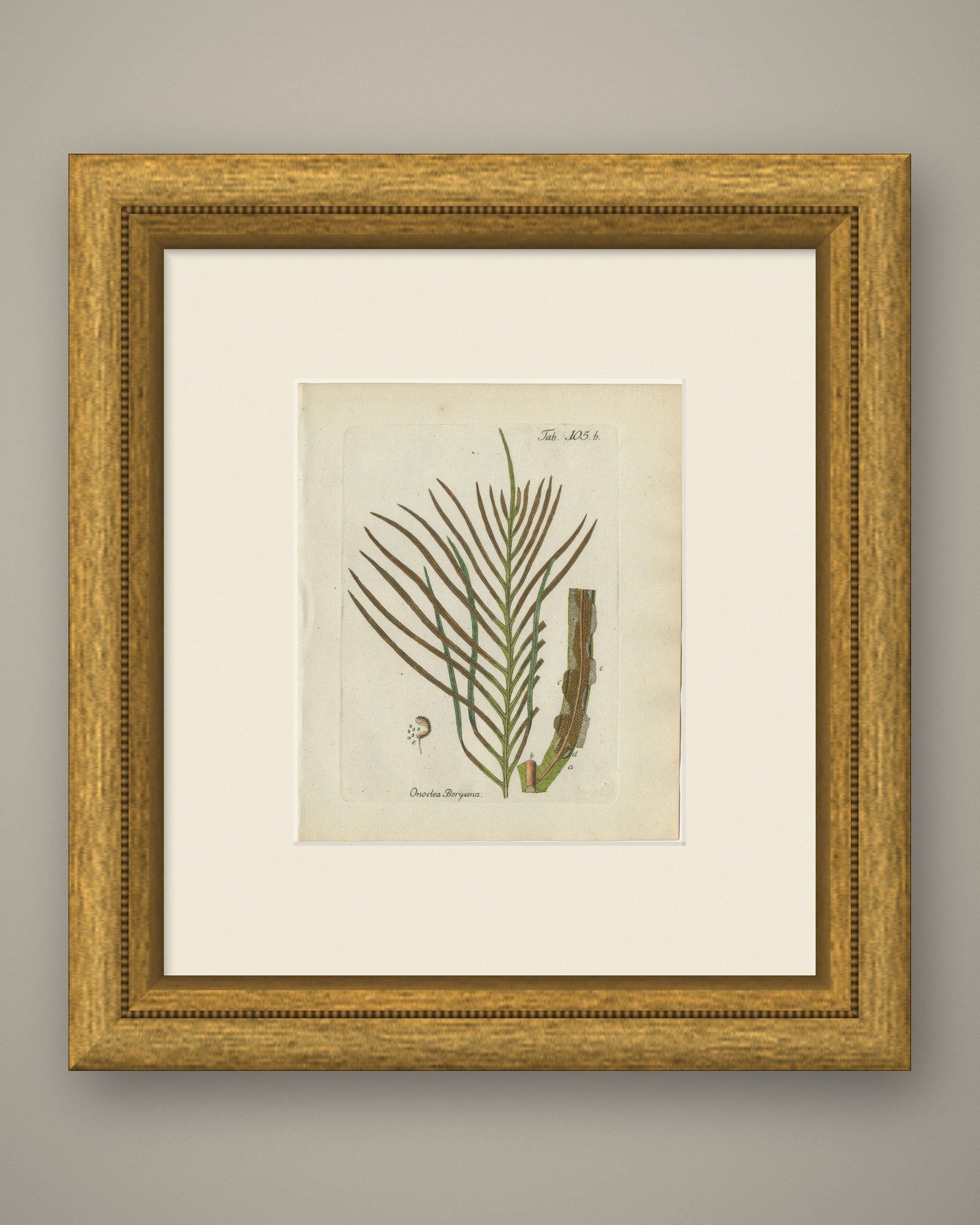
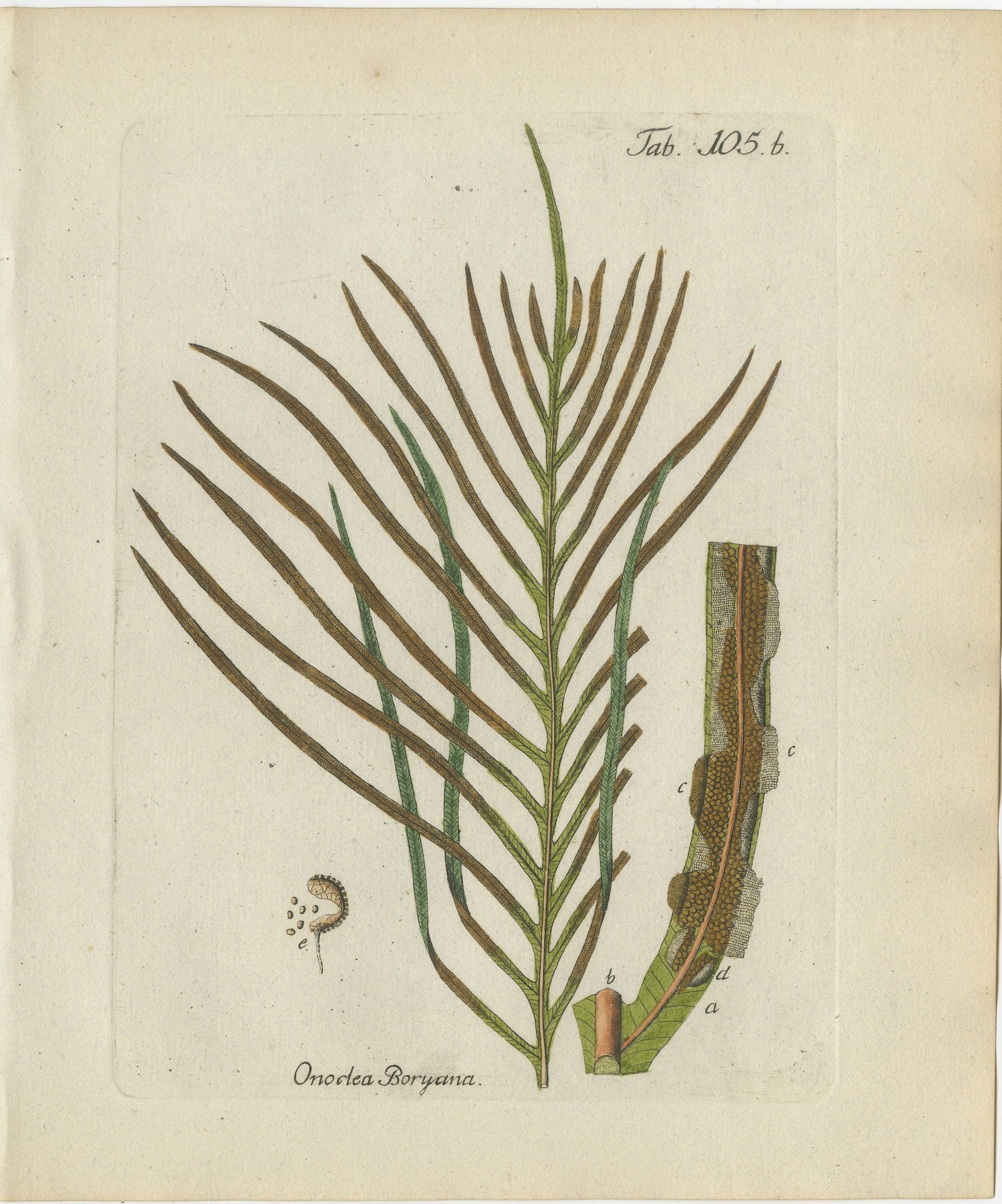
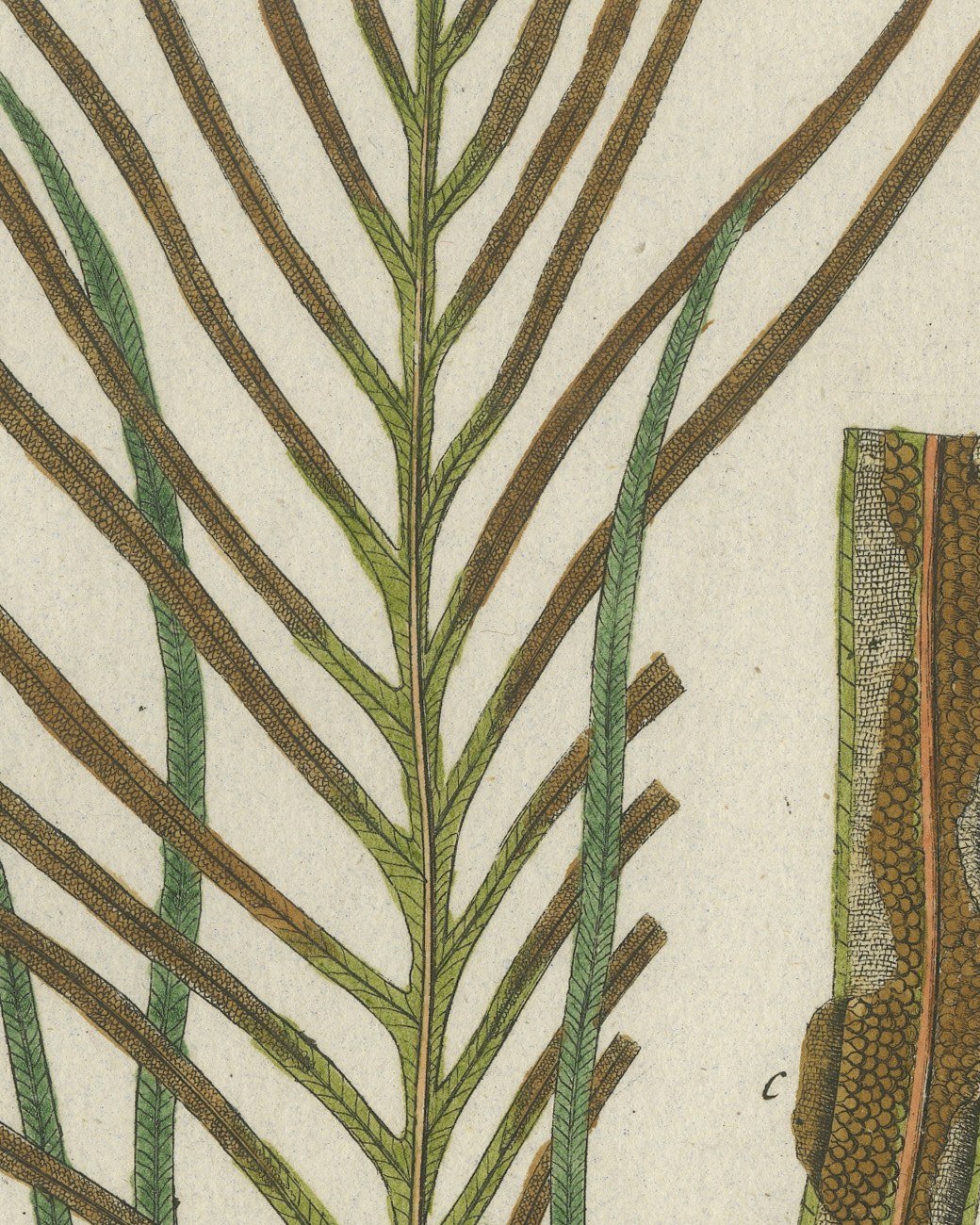
Onoclea Boryana is the subject of this original antique copper engraving, hand-colored, plate 105.b from Christian Schkuhr's account of the ferns, club mosses and horsetails published at Wittenberg from 1806 to 1809. Onoclea in Schkuhr's sense gathers the sensitive fern, the ostrich fern and the climbing ferns of the New World. The sheet is lettered Onoclea Boryana beneath the figure, in the engraved script Schkuhr used throughout the work, and the plate number is engraved at the upper right. Beside the habit drawing Schkuhr adds the small lettered analyses he is known for, the spore cases, the scales and the sections that make the plate useful to a botanist as well as pleasant to look at.
This is one of the 221 copper plates of Christian Schkuhr's volume on the cryptogamic plants, the ferns, club mosses, horsetails and water ferns that stand as the twenty-fourth class of the Linnaean system. Schkuhr drew the plants, cut the plates and published the work himself at Wittenberg, issuing it in nine parts between 1806 and 1809. The bibliography records it at Pritzel 8205, and the first impressions were printed on bluish paper, as this sheet is.
Printed from a copper plate and colored by hand when it was published, the sheet shows the qualities that separate original hand coloring from printed color: the wash crosses the engraved line in places, the strength of the green changes across the frond, and the fine work on the spore cases is picked out in a browner tone over the engraving. The plate mark is visible in the paper. Hung singly the plate makes a calm, graphic statement; grouped with others from the same volume it makes a wall. The uniform sheet size and the shared palette mean these plates frame and group easily, which is how most buyers use them, in a study, a bedroom, a garden room or a professional office.
Light uneven toning, browner towards the edges. Marked handling soiling along the bottom, right and top edges. Scattered light foxing in the margin. Slight wear at the bottom right corner.
This is an original antique print, not a modern reproduction. This item is sold unframed.