 The sheet, as you receive it
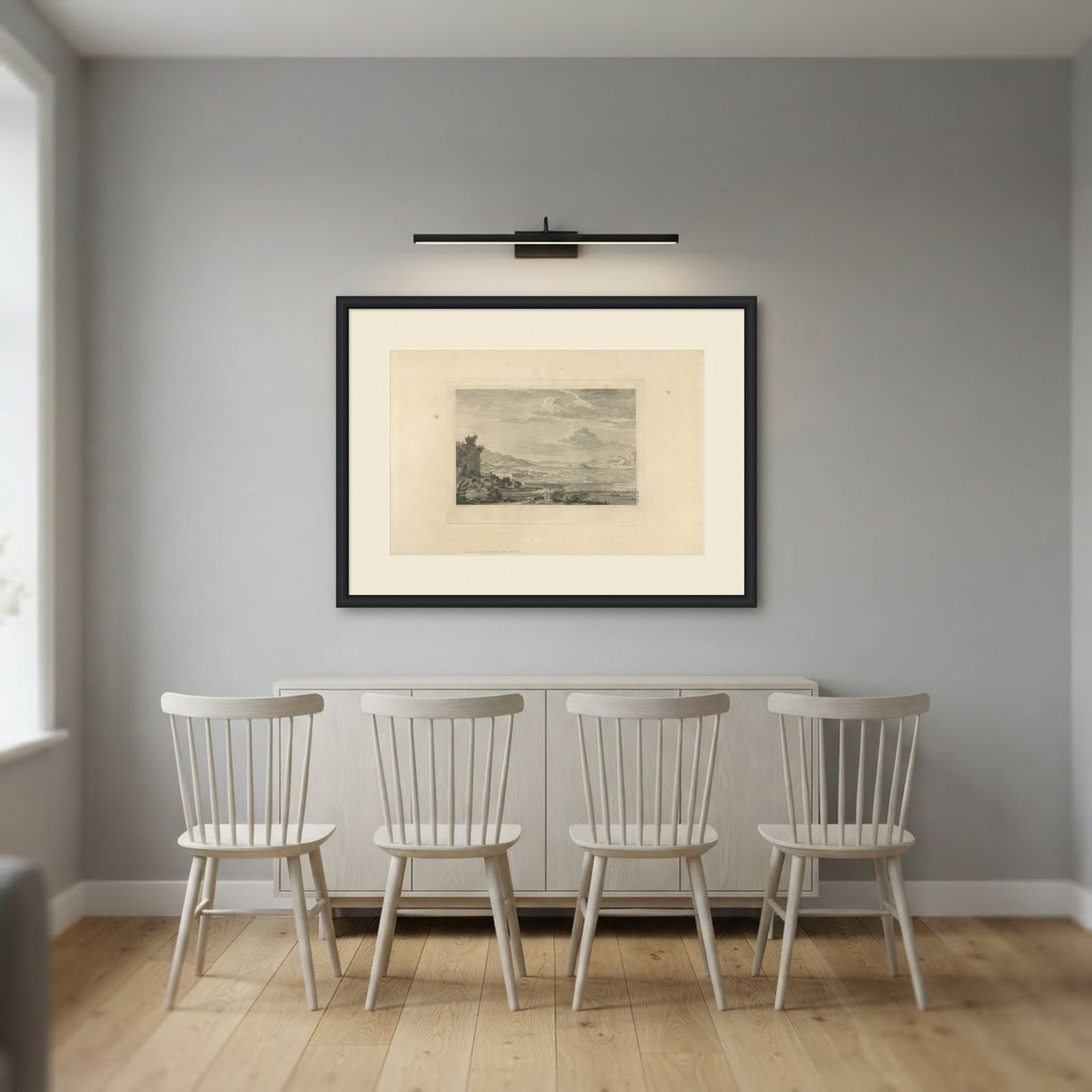 In the room
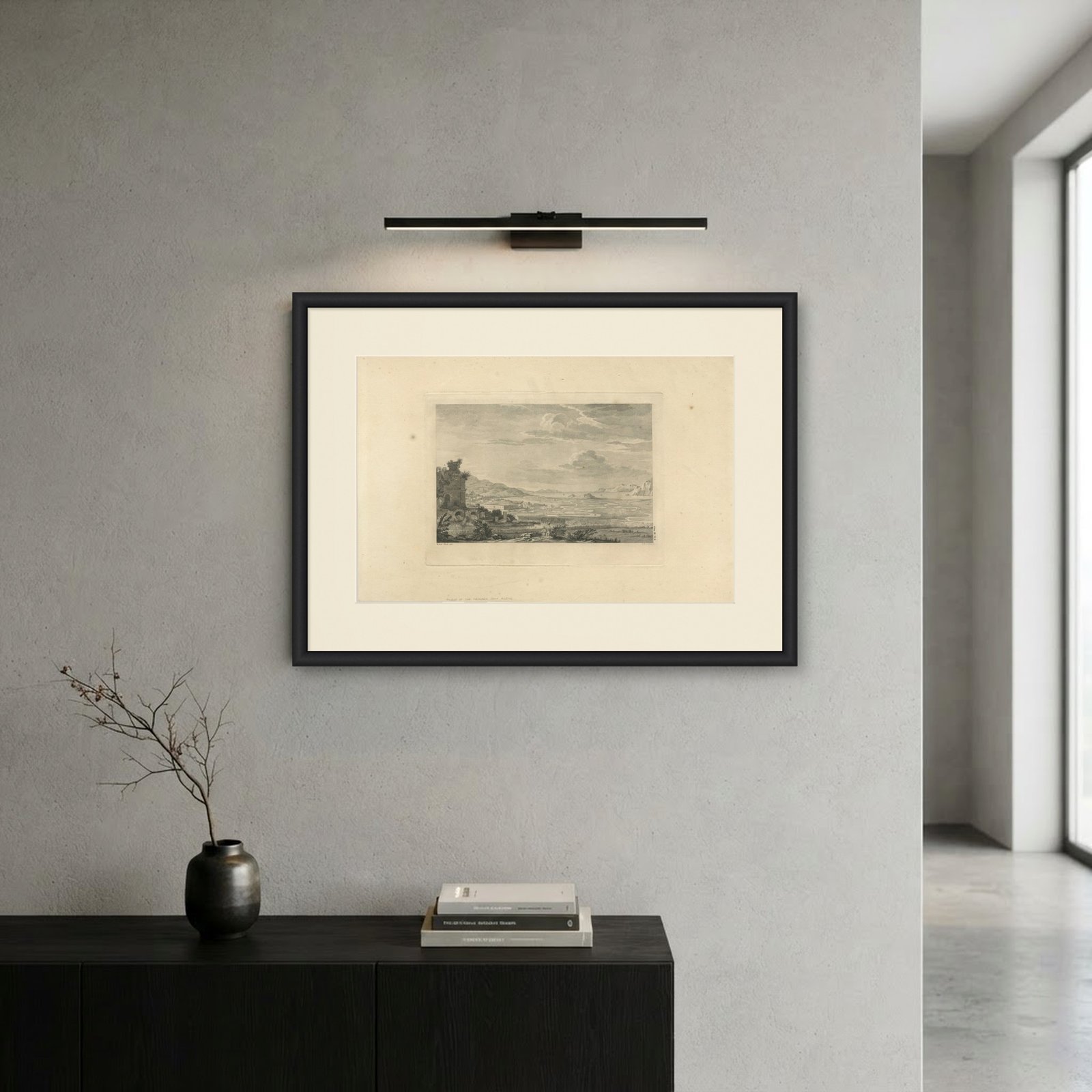
Interior designers: BarTrade members buy at their trade price. How it works
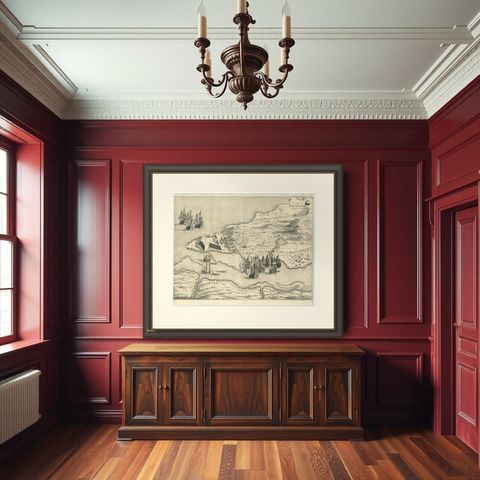
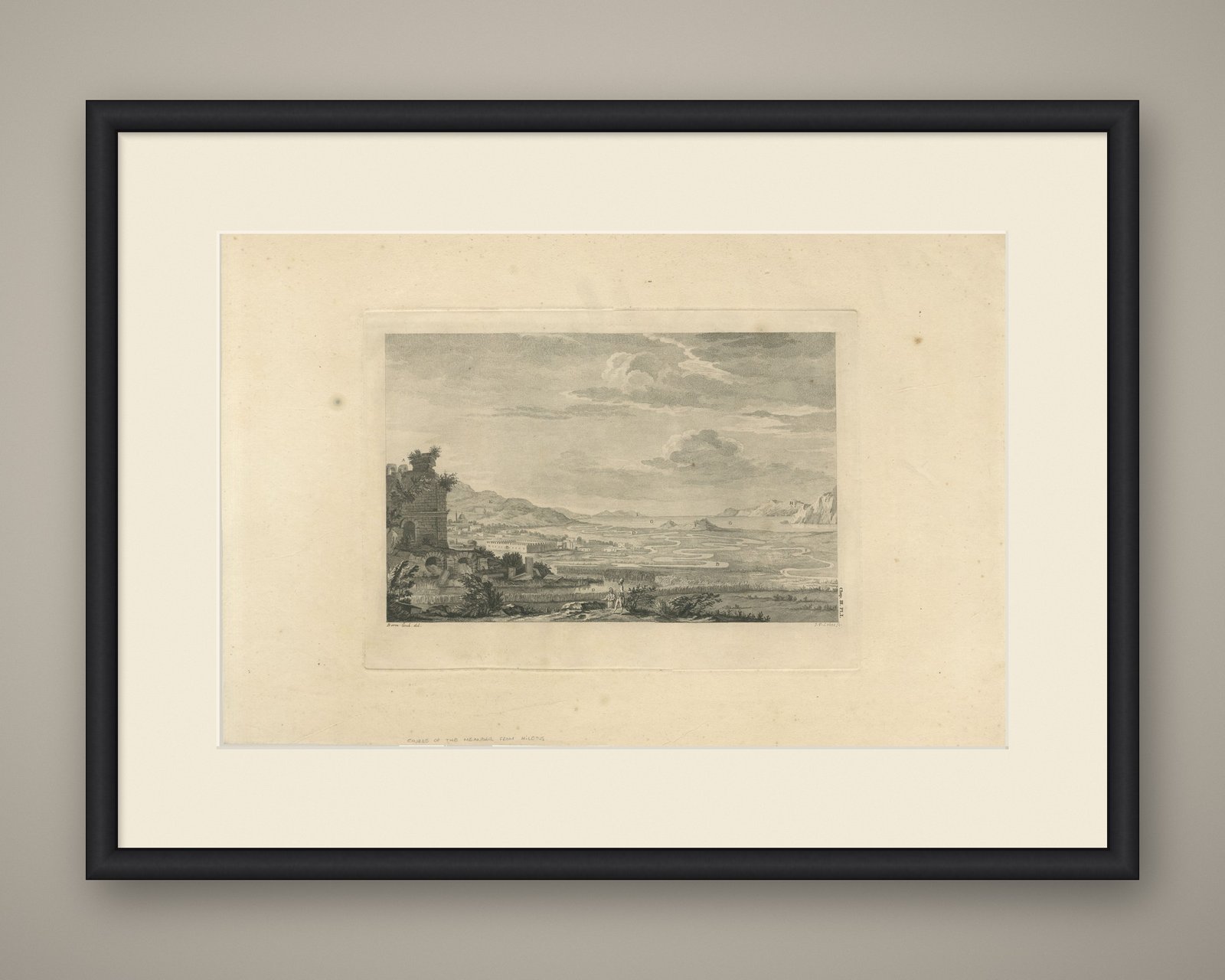
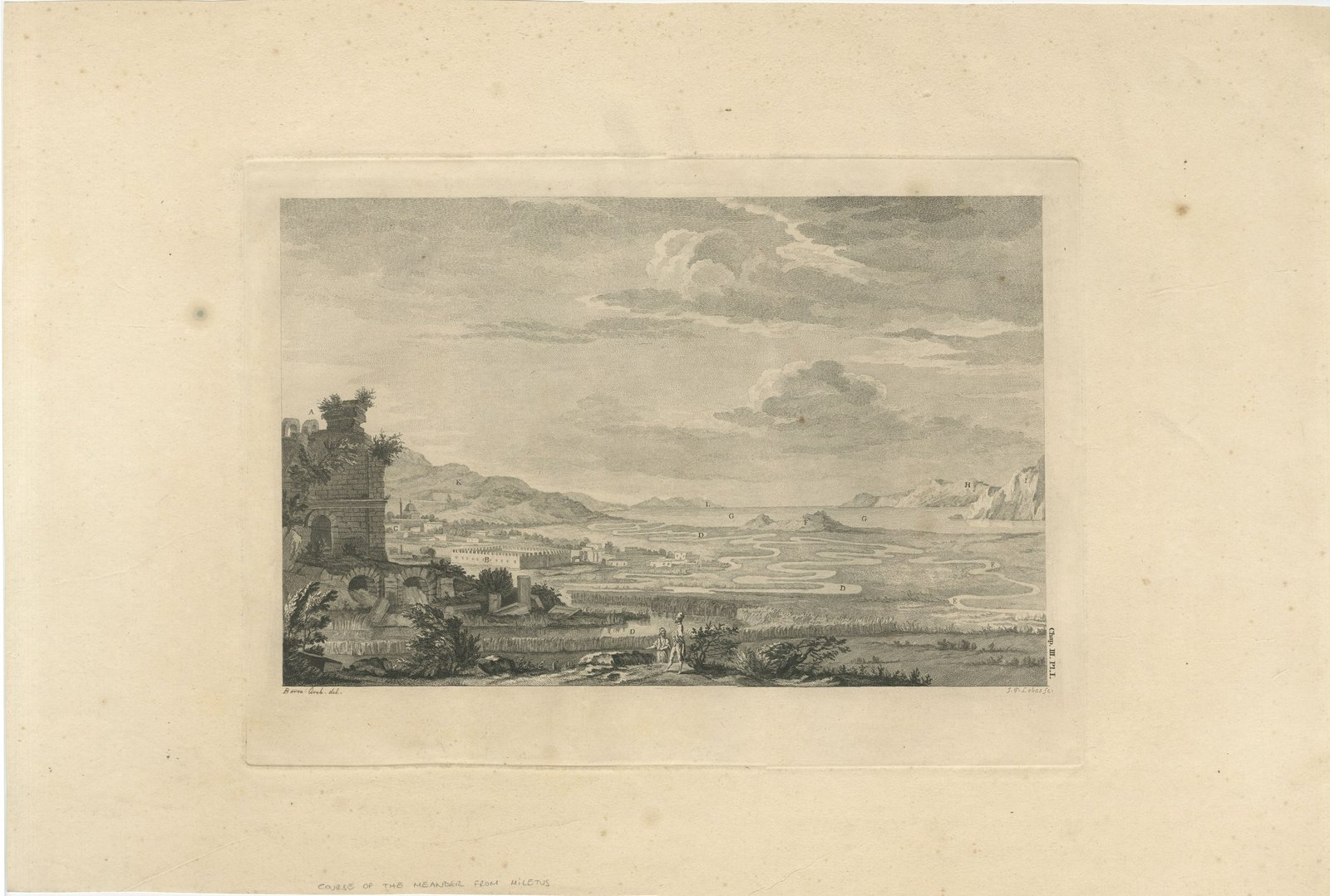
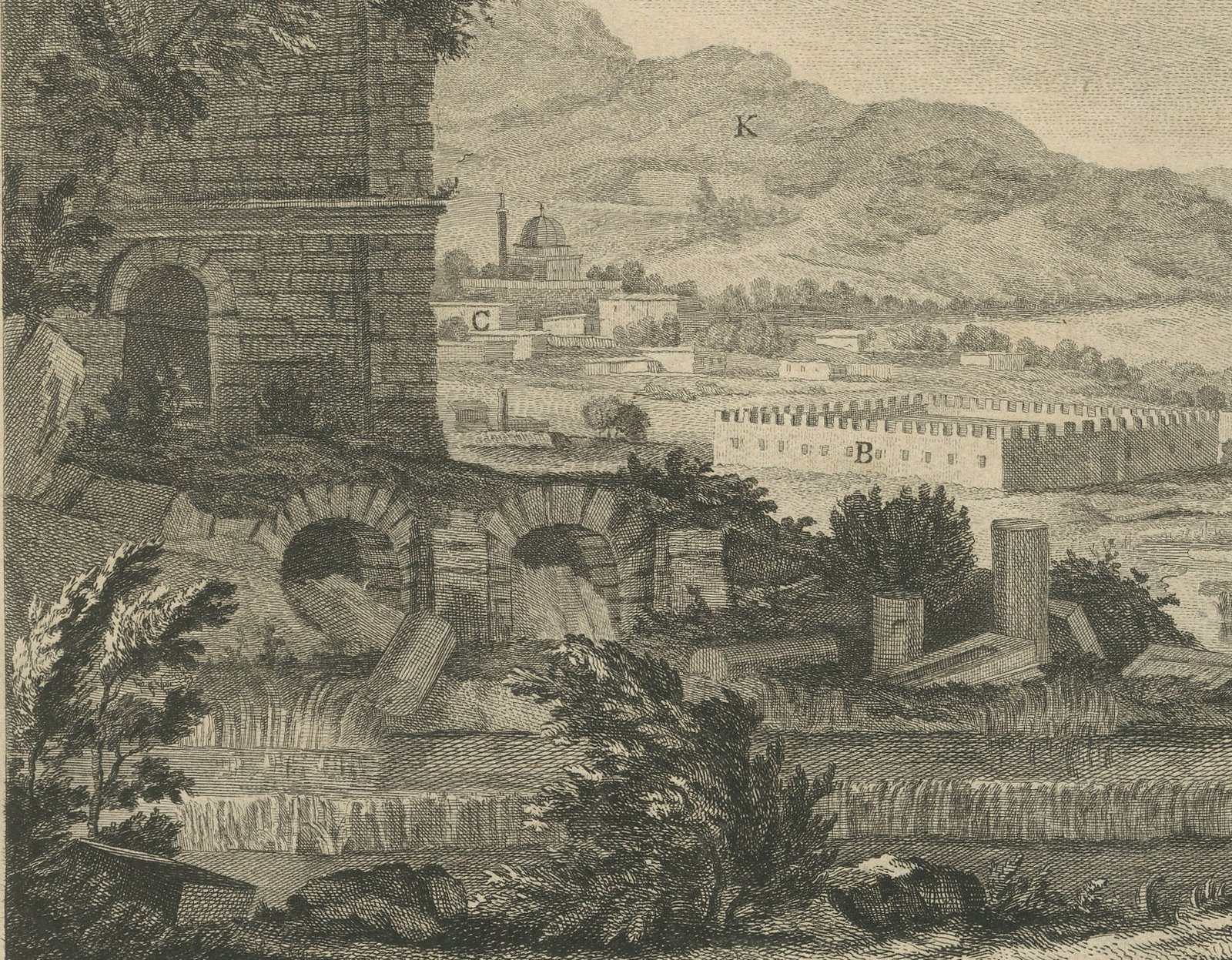
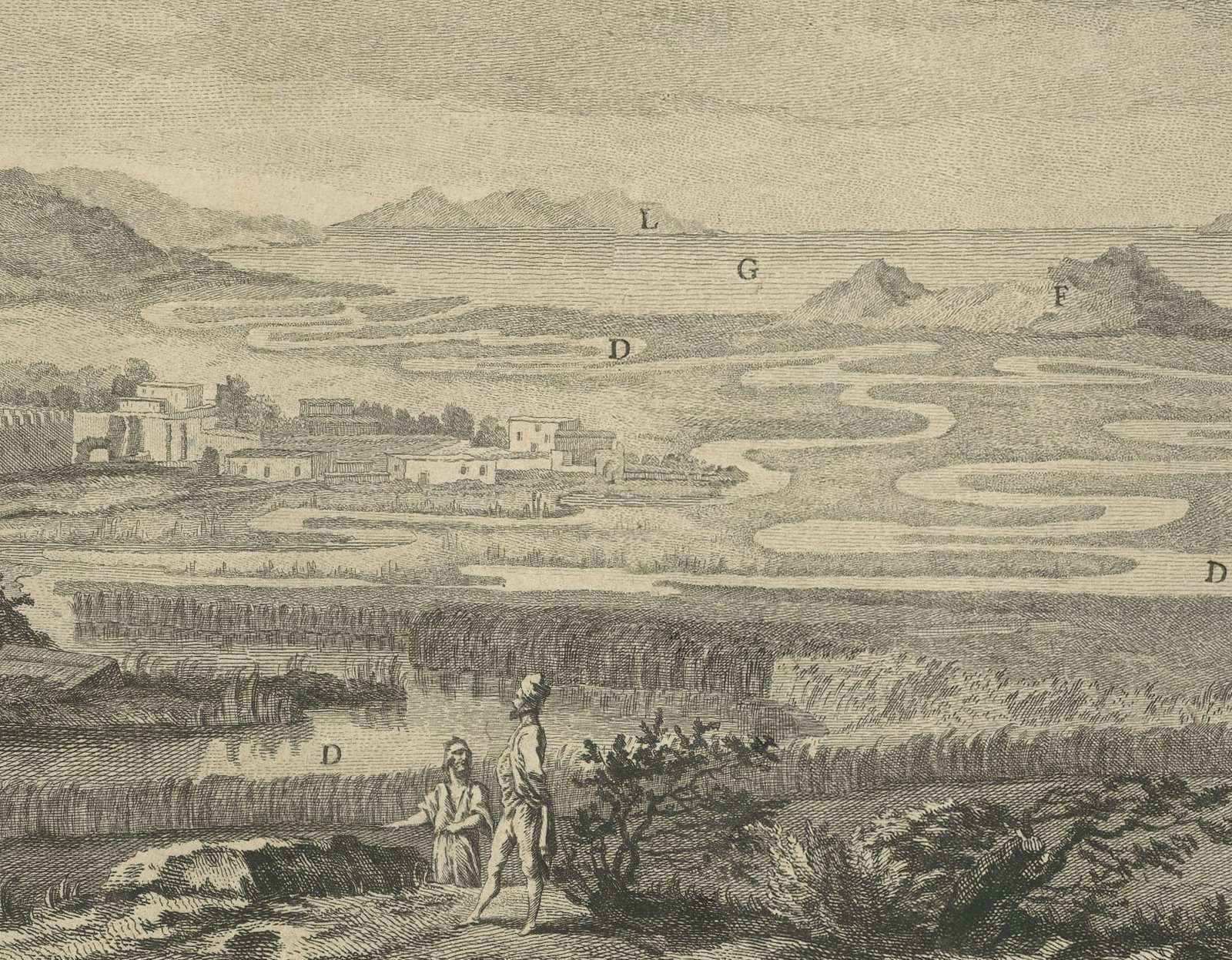
An original antique copper engraving, uncolored, published in 1769. The plate carries no engraved title; a later pencil note in the lower margin reads "COURSE OF THE MEANDER FROM MILETUS".
The view looks out over the plain of the Meander toward the sea. At the left stands a ruined building marked A, with arches at its base and shrubs on its top. Beyond it lie a village marked C with a domed building, a hill marked K, and a long walled building with an arcaded front marked B. Across the center the river winds in tight loops through marshy ground toward the coast, its stretches marked with the letters D and E. The sea beyond is marked G, a low rocky island in it F, the steep headland and cliffs at the right H and I, and distant land on the horizon L. Two figures stand in the foreground among reeds and bushes. The letters A to L key the features of the view.
The lower left is lettered "Borra Arch. del.", for the architect Borra as draftsman, and the lower right names the engraver J. P. Le Bas. Engraved vertically at the right edge is "Chap. III. Pl. I."
This is Chapter III, Plate I of Ionian Antiquities, published with the permission of the Society of Dilettanti by R. Chandler, N. Revett and W. Pars, London, 1769. The winding course of this river gave the English language the word "meander", and its silt has left the once coastal city of Miletus far inland.
A pencil note in the lower margin. Light uneven toning, browner towards the edges. Scattered light foxing in the margin. Slight wear at the bottom left corner. Minor edge wear, shallow nicks along the bottom. One larger brown mark.
This is an original antique print, not a modern reproduction. This item is sold unframed.