 The sheet, as you receive it
 In the room
Interior designers: BarTrade members buy at their trade price. How it works
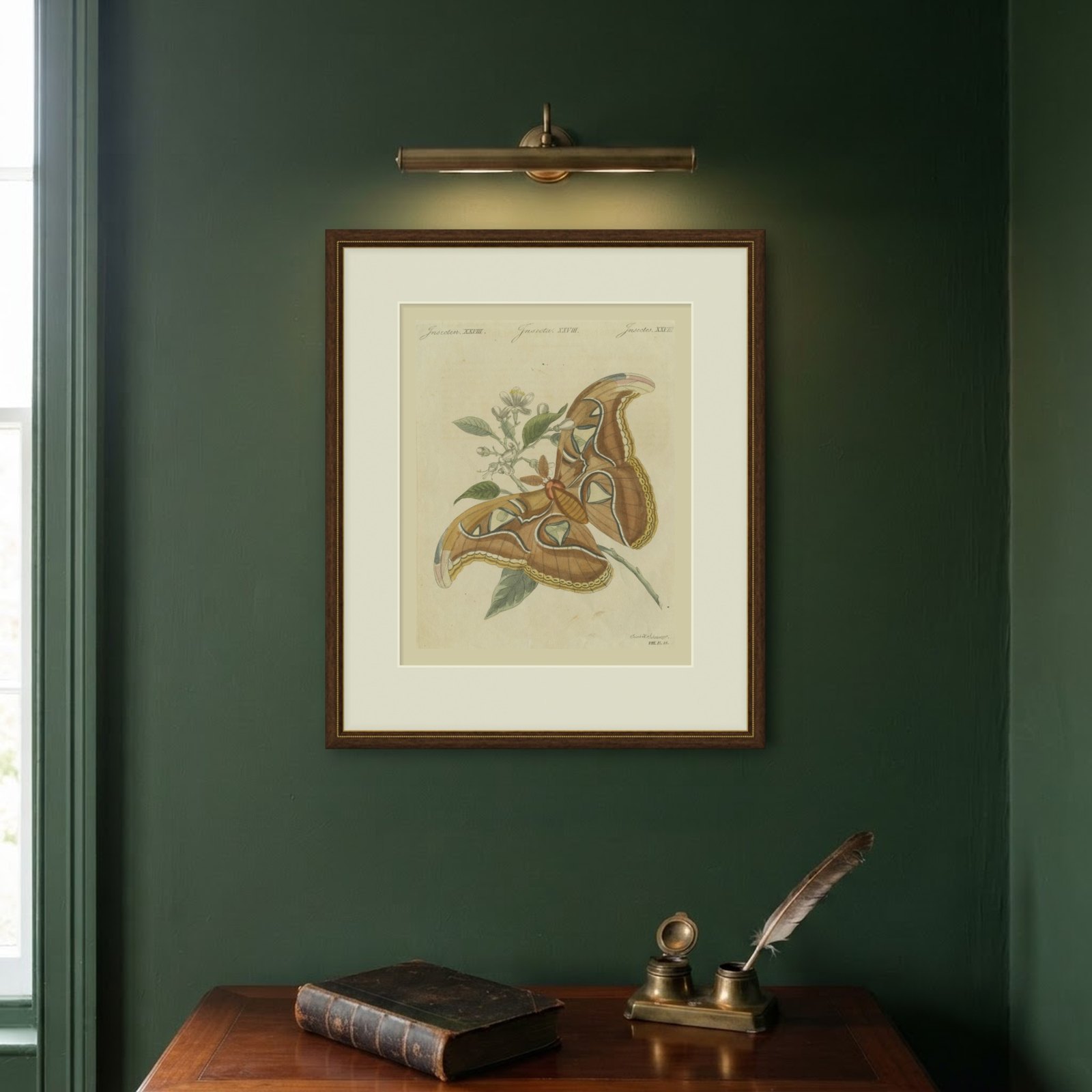
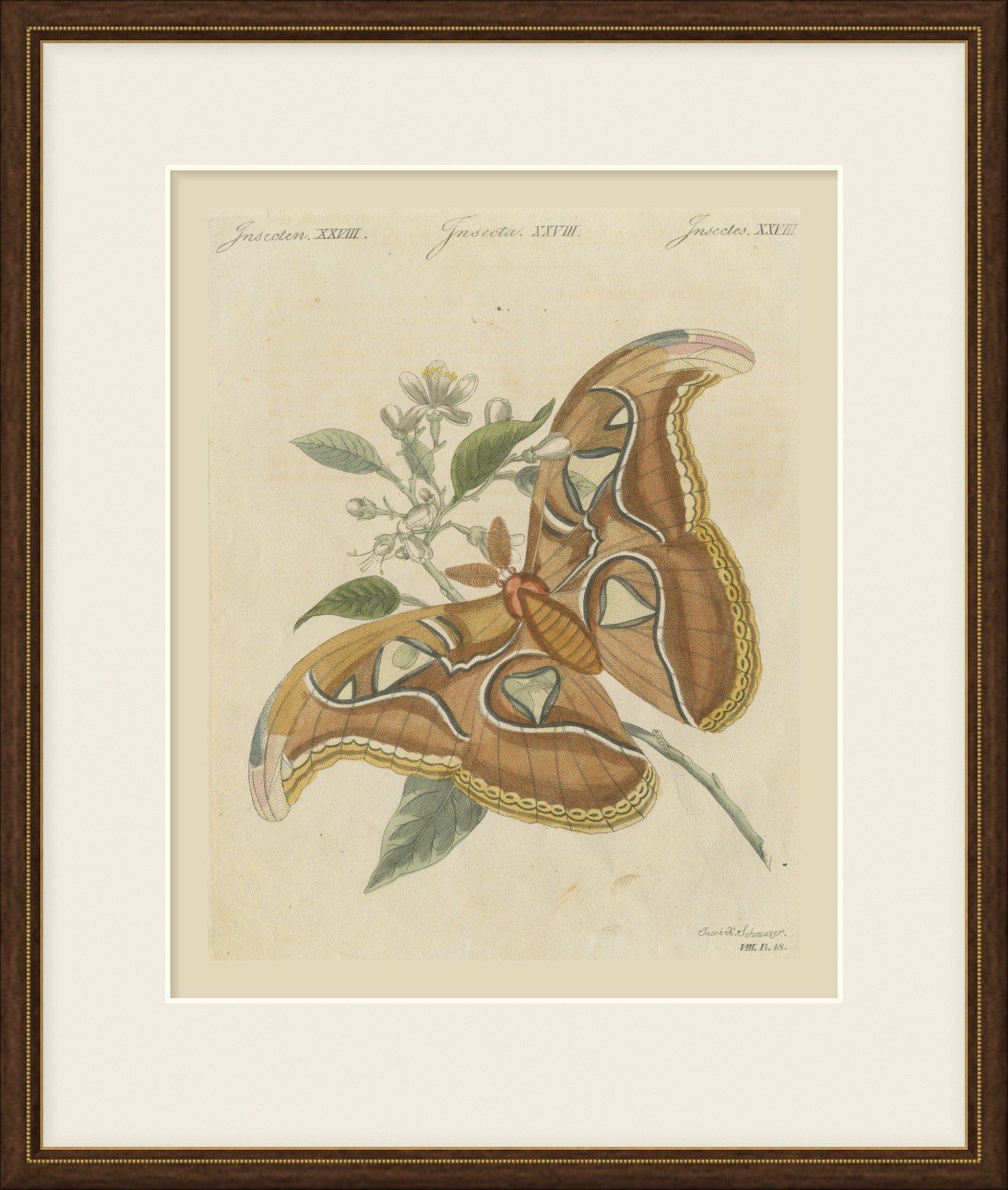
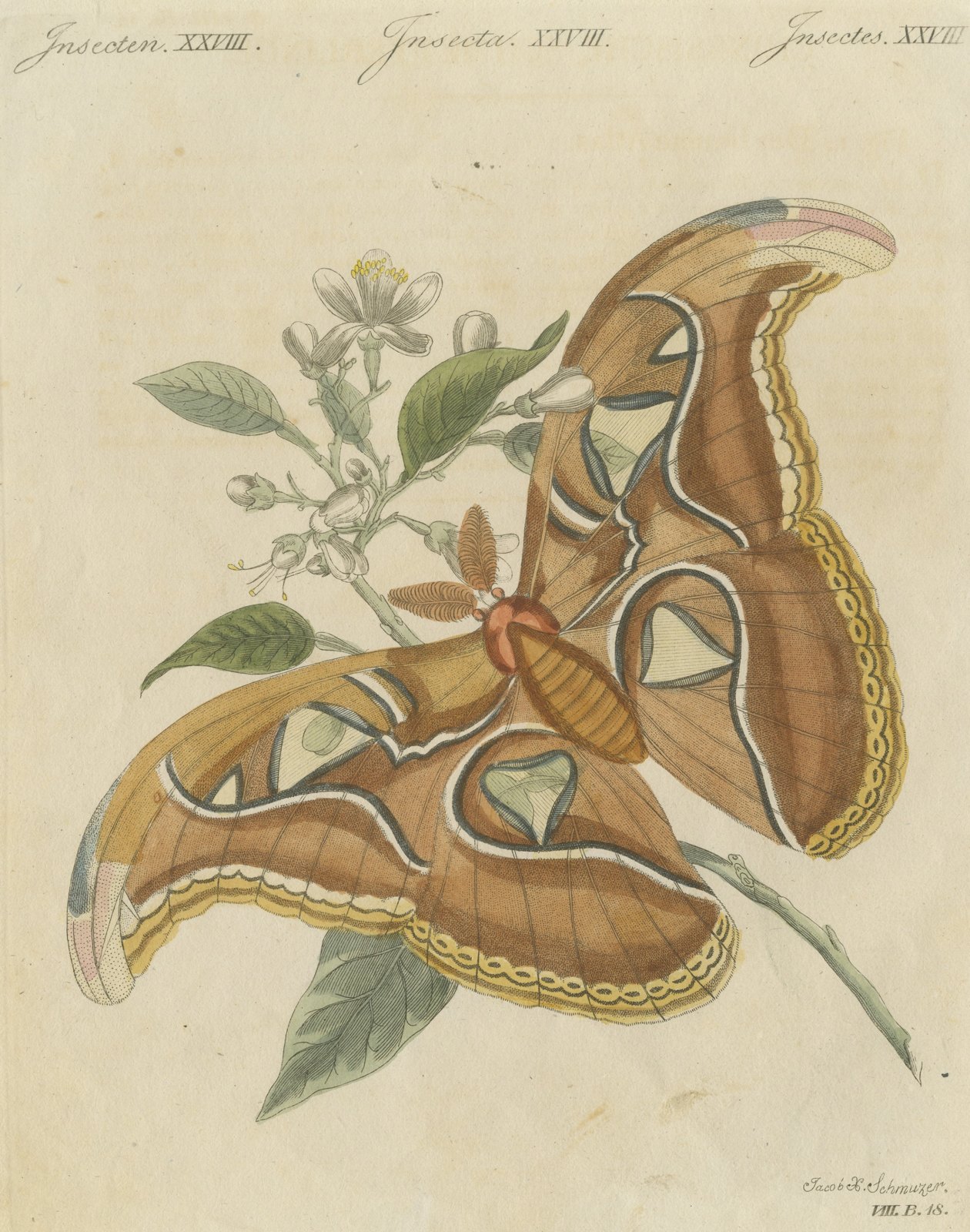
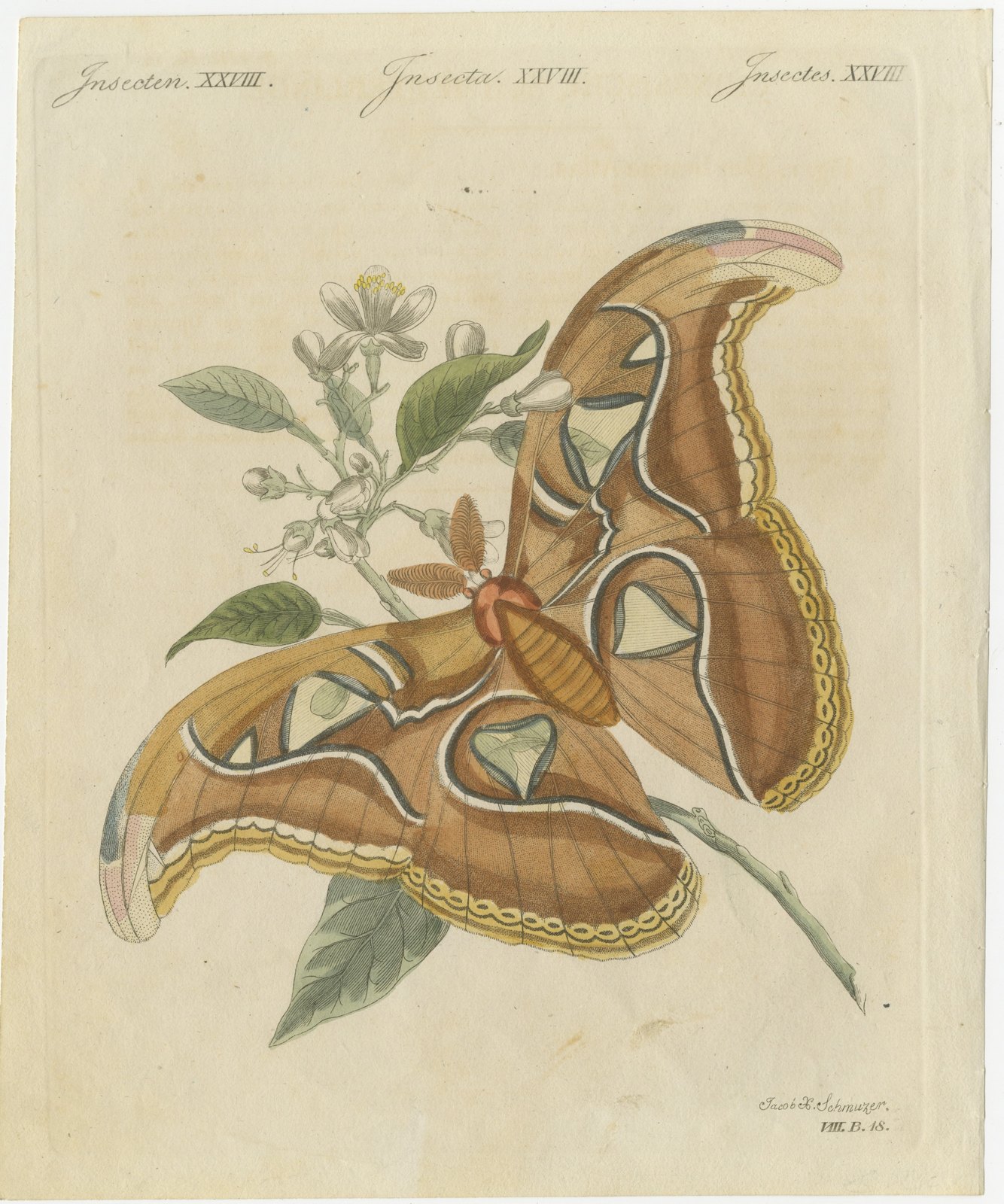
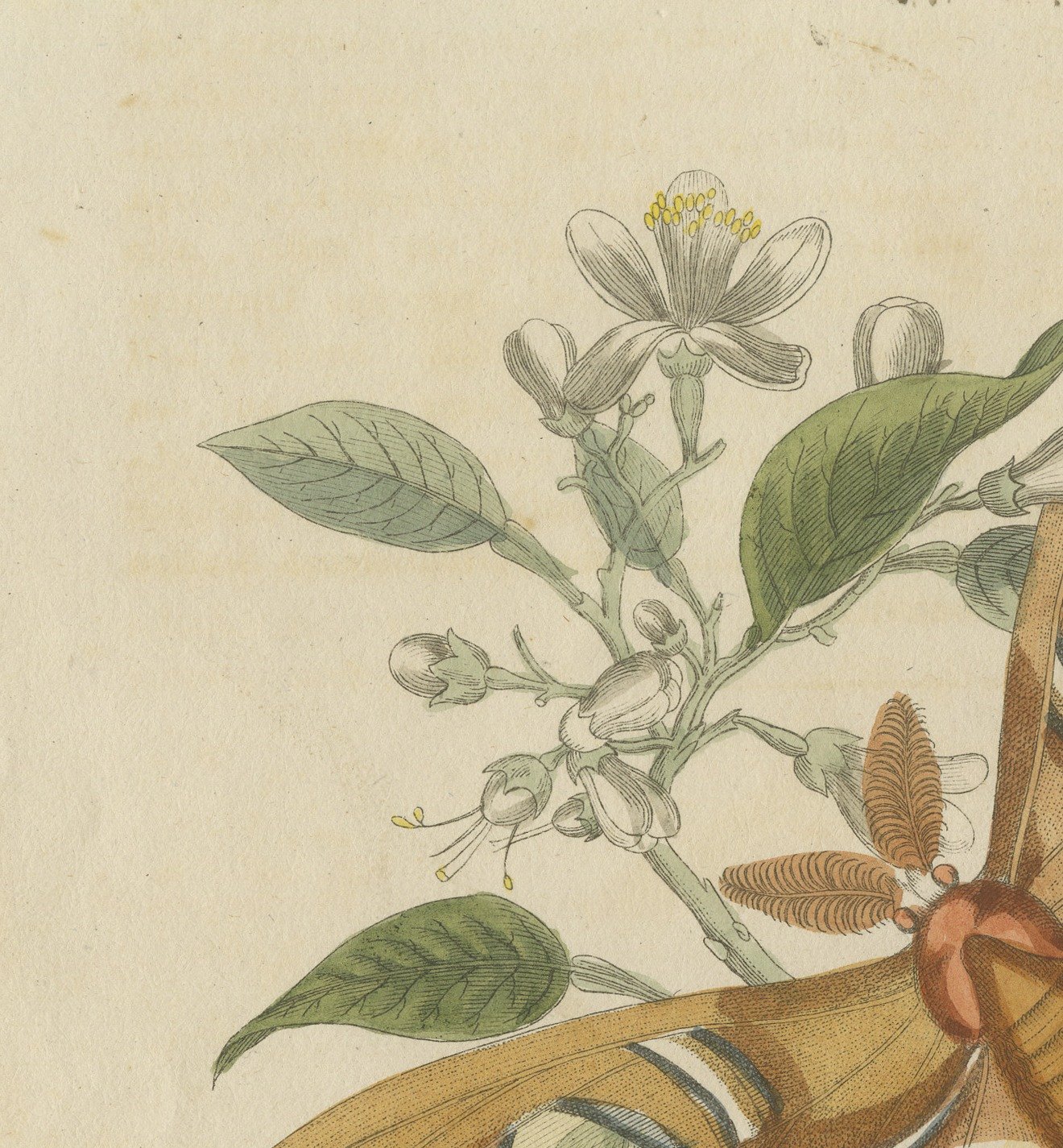
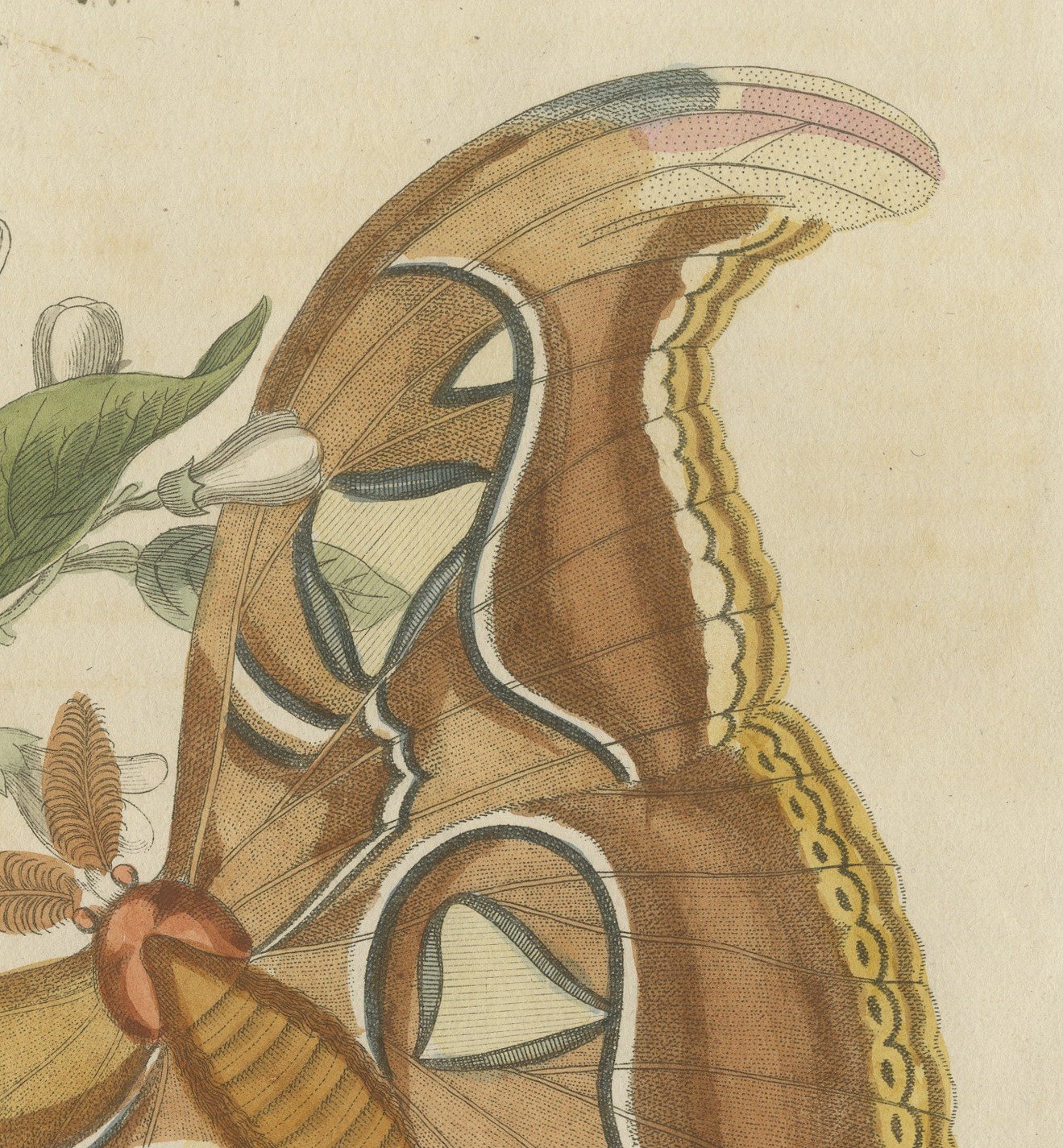
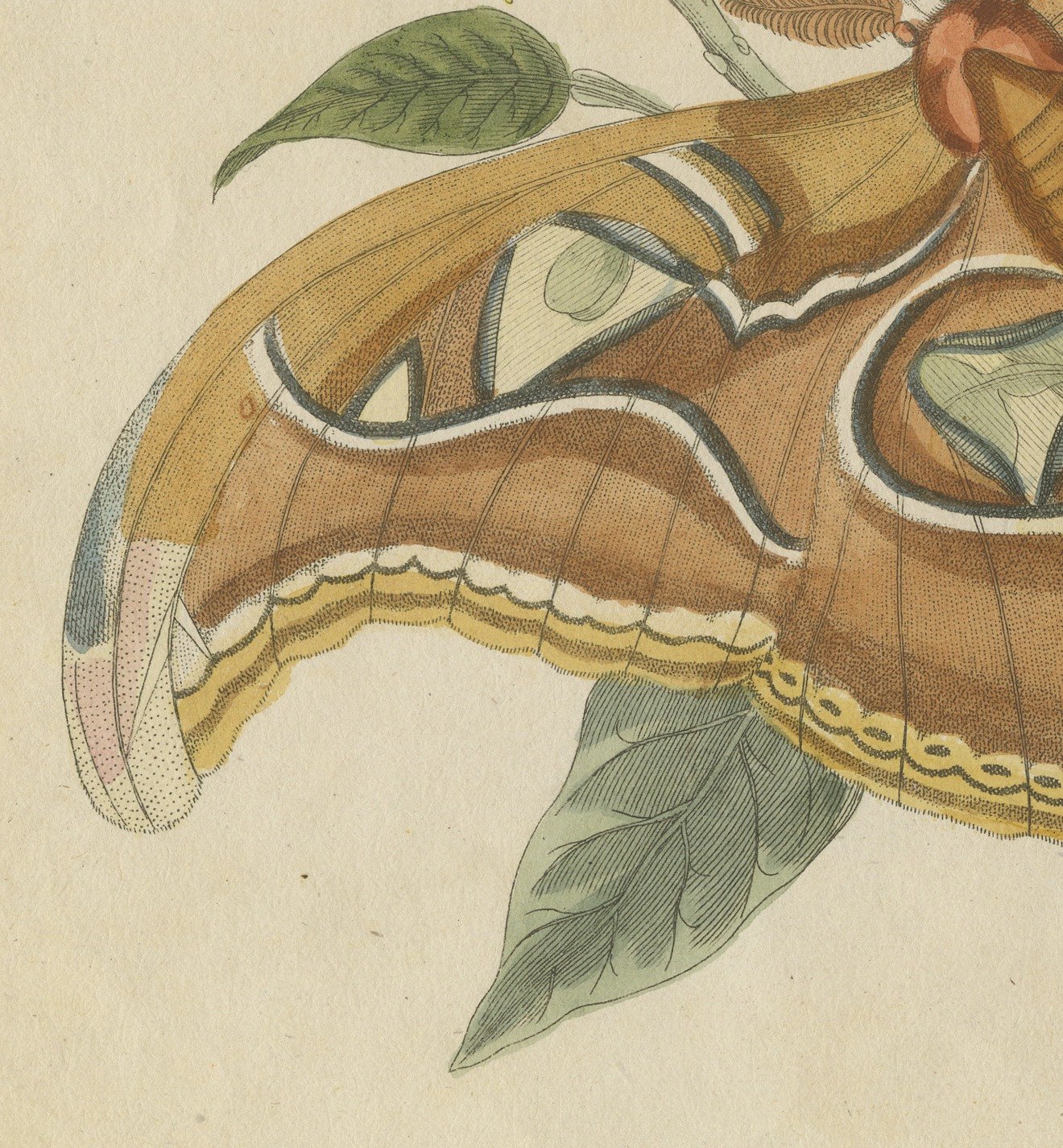
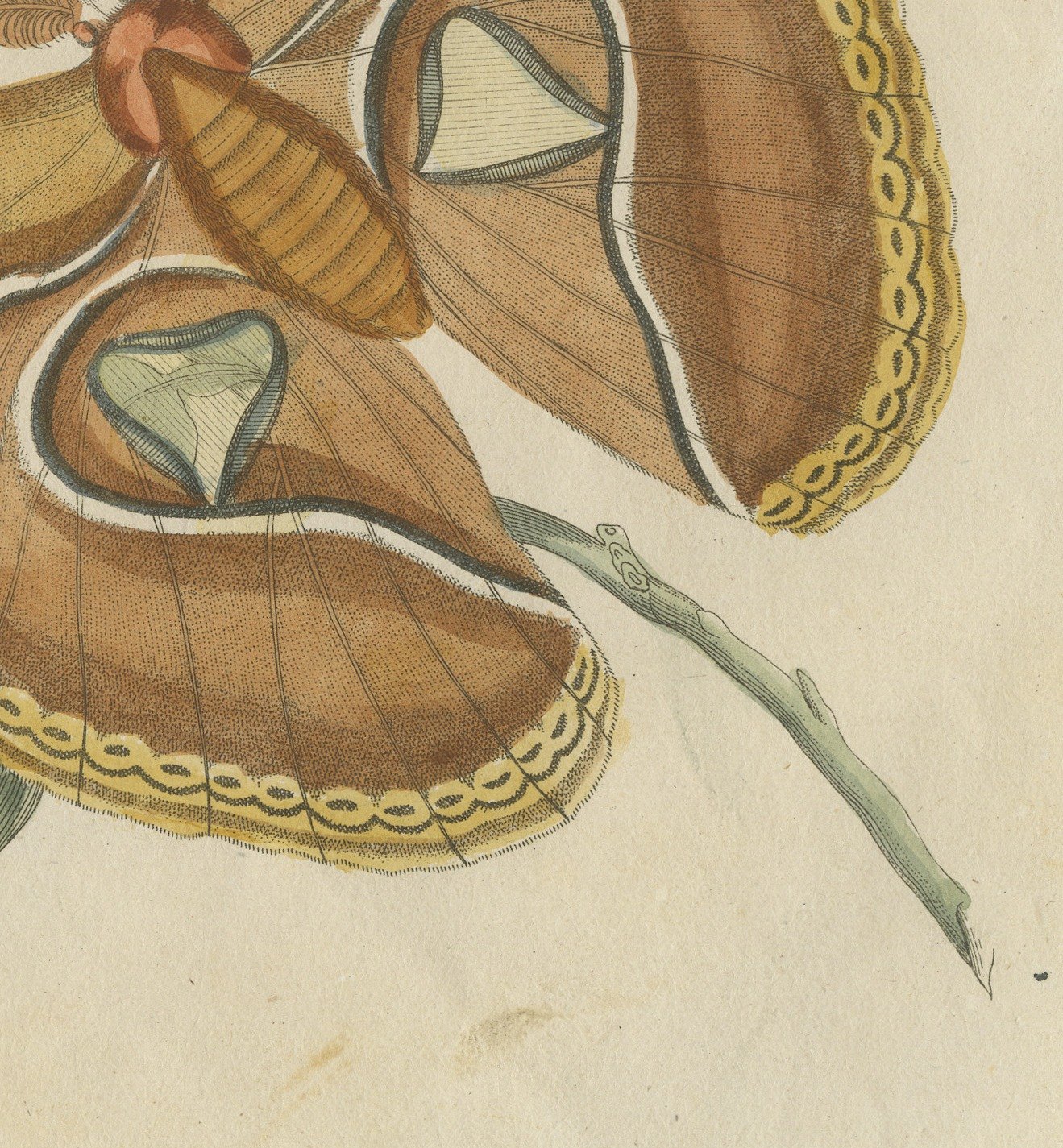
This antique moth print shows the giant atlas moth resting on a flowering branch, on an original hand colored plate from the Vienna edition of Bertuch's Bilderbuch headed Insecten XXVIII. The whole plate is given to this single spectacular insect.
The moth spreads its broad, hooked wings across the page in warm shades of brown, orange and yellow, with the characteristic triangular windows in each wing and a pale pink and gray tip to the forewings that resembles a snake's head. It sits on a leafy branch with clusters of white blossoms and buds. The atlas moth, one of the largest moths in the world, came from the East Indies and was a prized specimen in European collections.
The plate comes from the Vienna edition of Bertuch's Bilderbuch, published in Vienna under the title Bilderbuch zum Nutzen und Vergnuegen der Jugend. Its source is the celebrated Bilderbuch fuer Kinder, the picture book for children conceived and edited by Friedrich Justin Bertuch in Weimar, whose plates were engraved afresh by Viennese engravers for this edition. Most plates carry their subject class and number in German, Latin and French across the top, so that the work could teach languages as well as natural history. Here the heading belongs to the series of insects, a class that allowed the engravers to show exotic butterflies, moths and beetles in striking color. The small engraved mark VIII.B.18 places the sheet in volume 8 of the Vienna edition, one of the volumes issued in Vienna in the first years of the nineteenth century.
It is a copperplate engraving, colored by hand with watercolor in the manner of the Weimar original. The plate is signed by Jacob Xaver Schmuzer, one of the Viennese engravers who worked on this edition. Bertuch drew his images from the best natural history books of his time, and the result is a lively, accessible record of how the natural world was understood around 1800. Single plates from the Bilderbuch are popular with collectors of antique natural history prints, and a group of related plates makes a handsome display in a study, library or hallway.
The sheet is in good condition for its age, with light toning, a few small specks and faint show-through of text from the reverse; the coloring remains fresh.
This is an original antique print, not a modern reproduction. This item is sold unframed.