 The sheet, as you receive it
 In the room
Interior designers: BarTrade members buy at their trade price. How it works
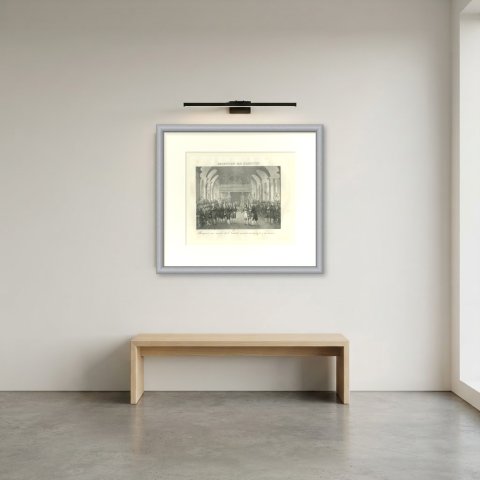
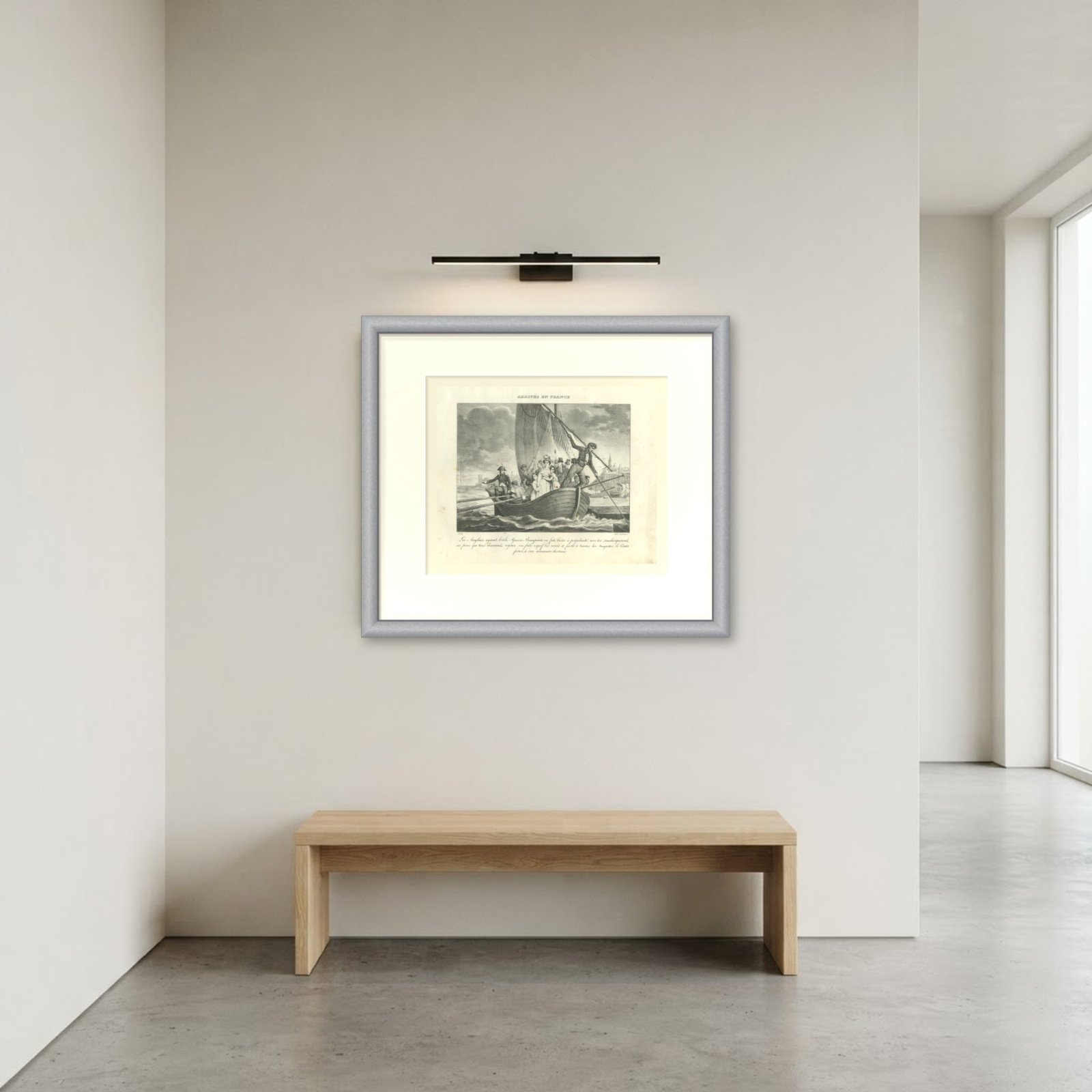
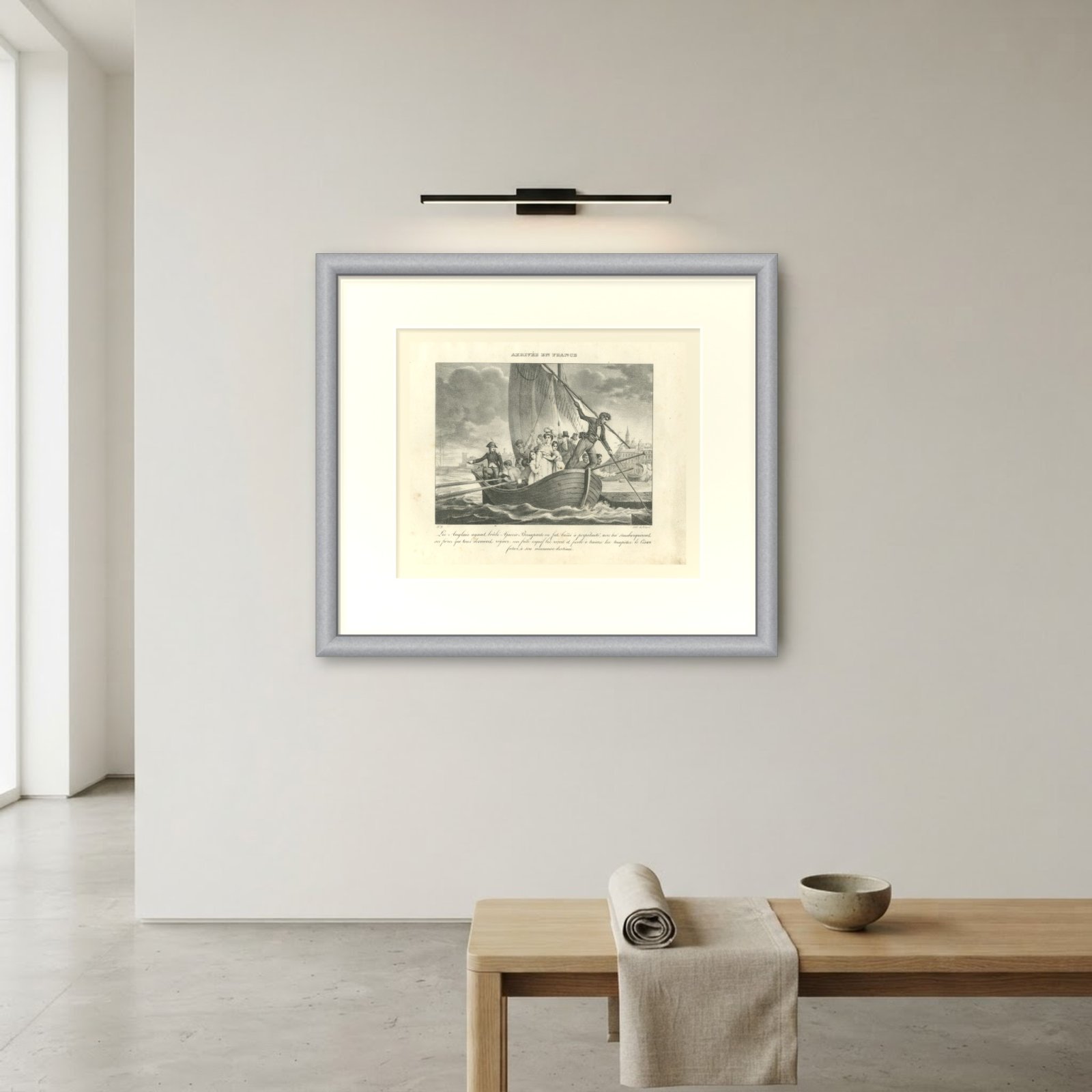
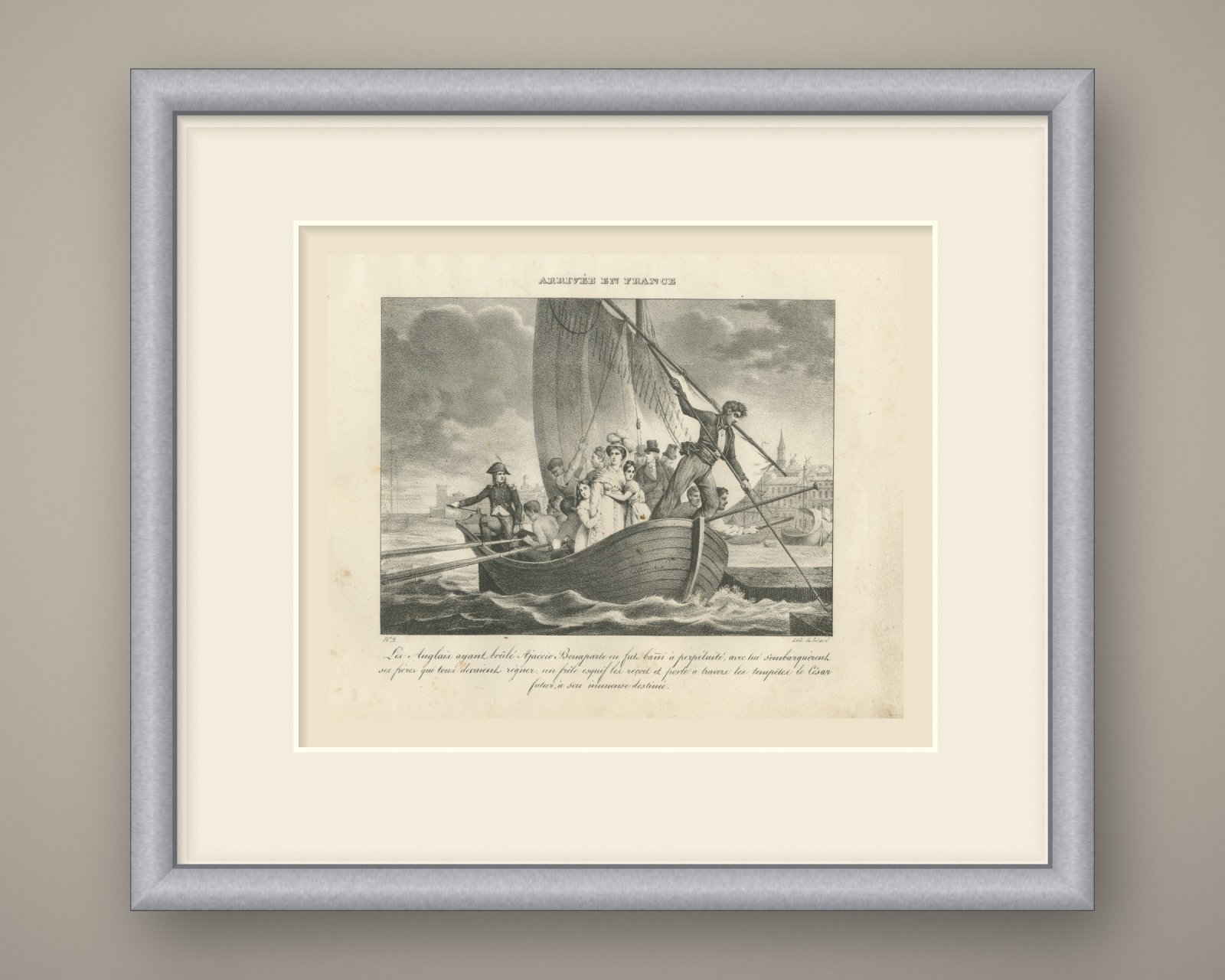
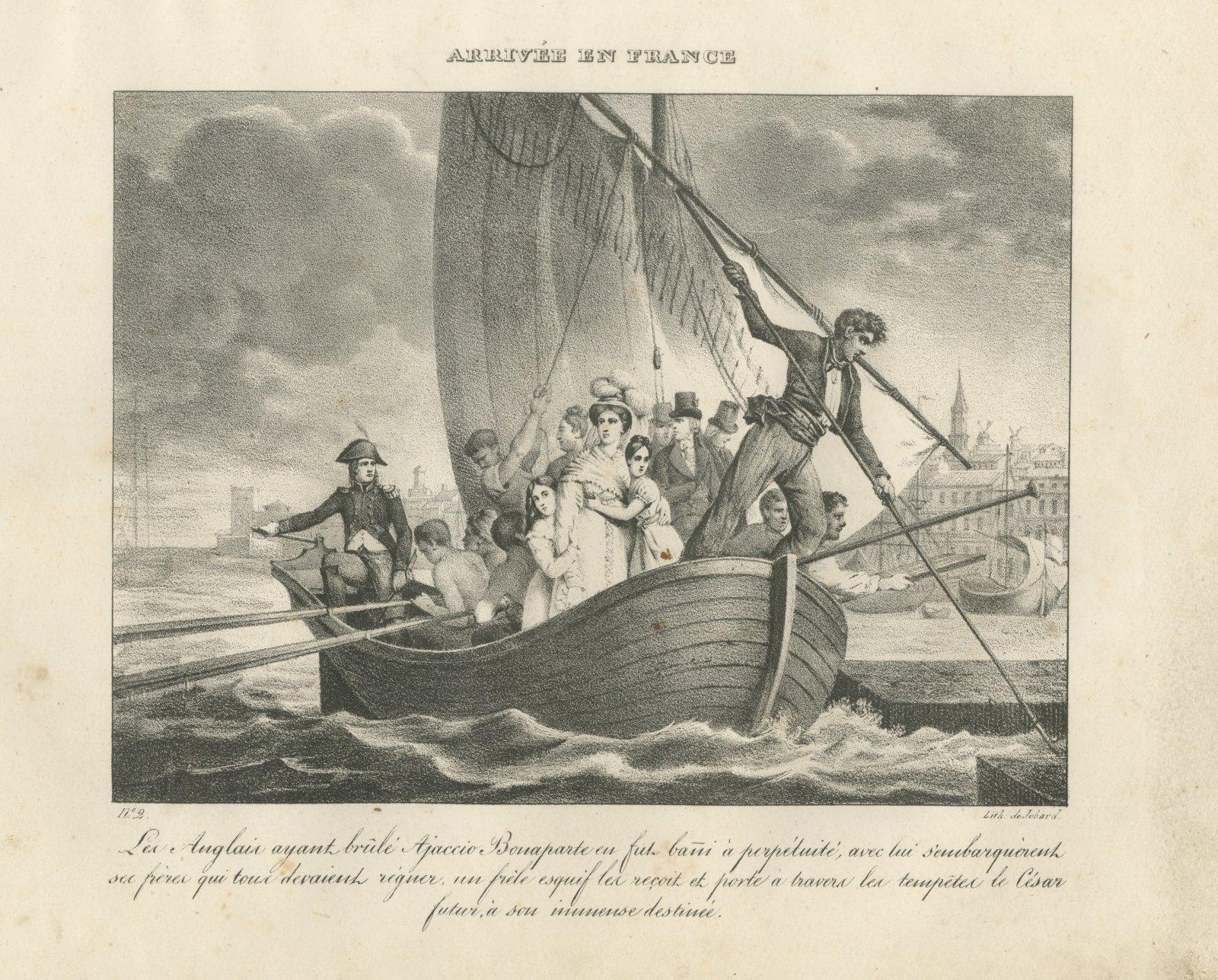
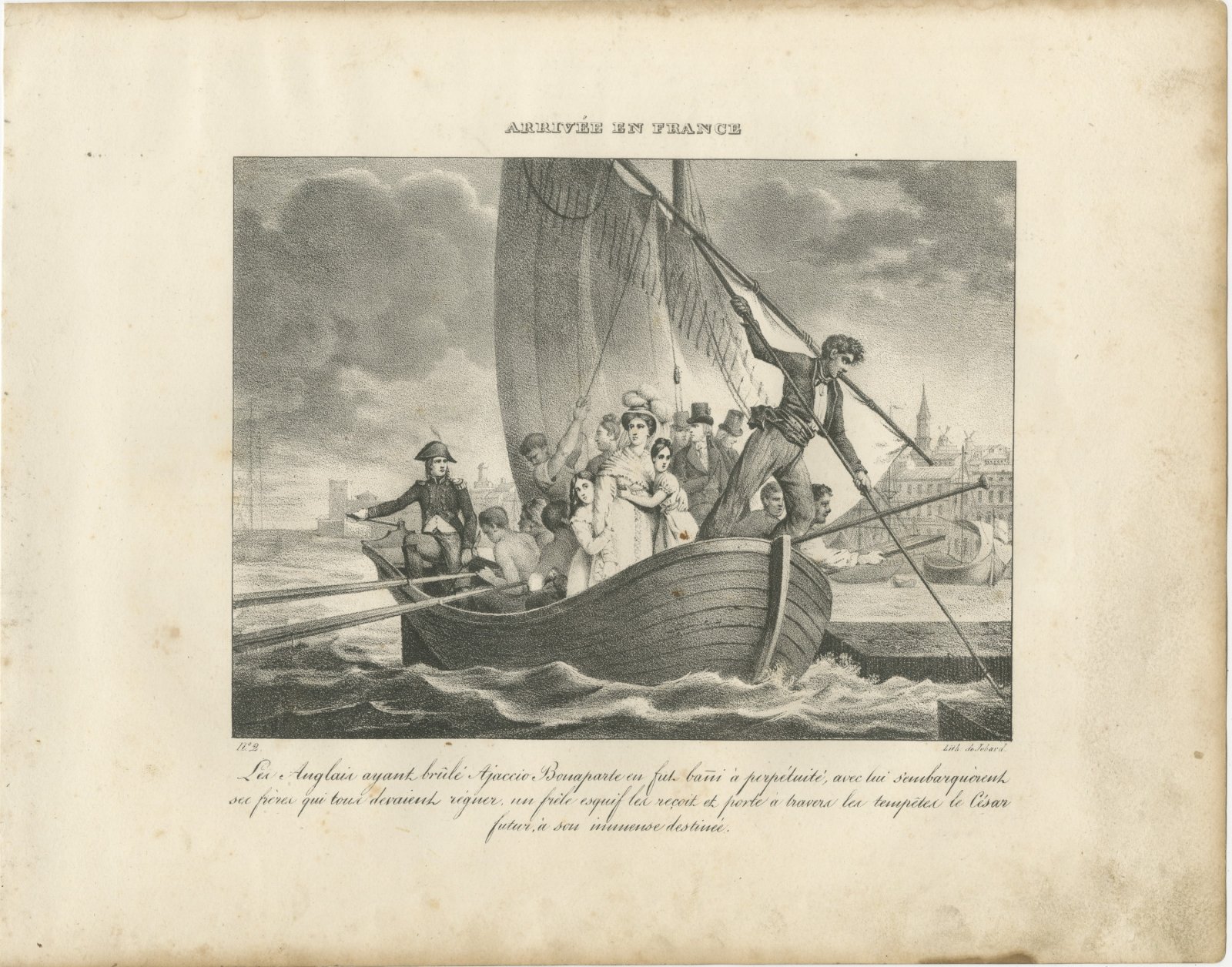
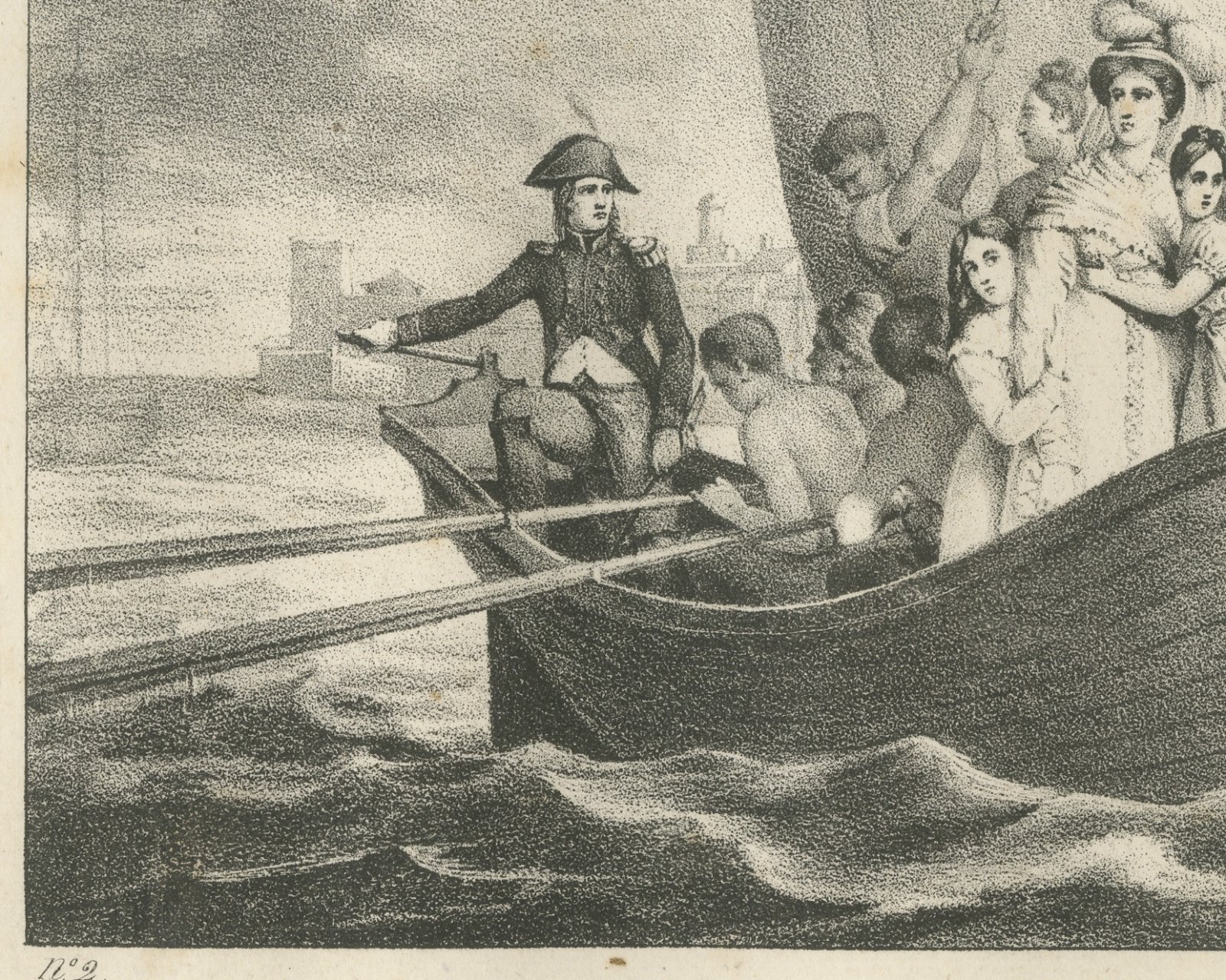
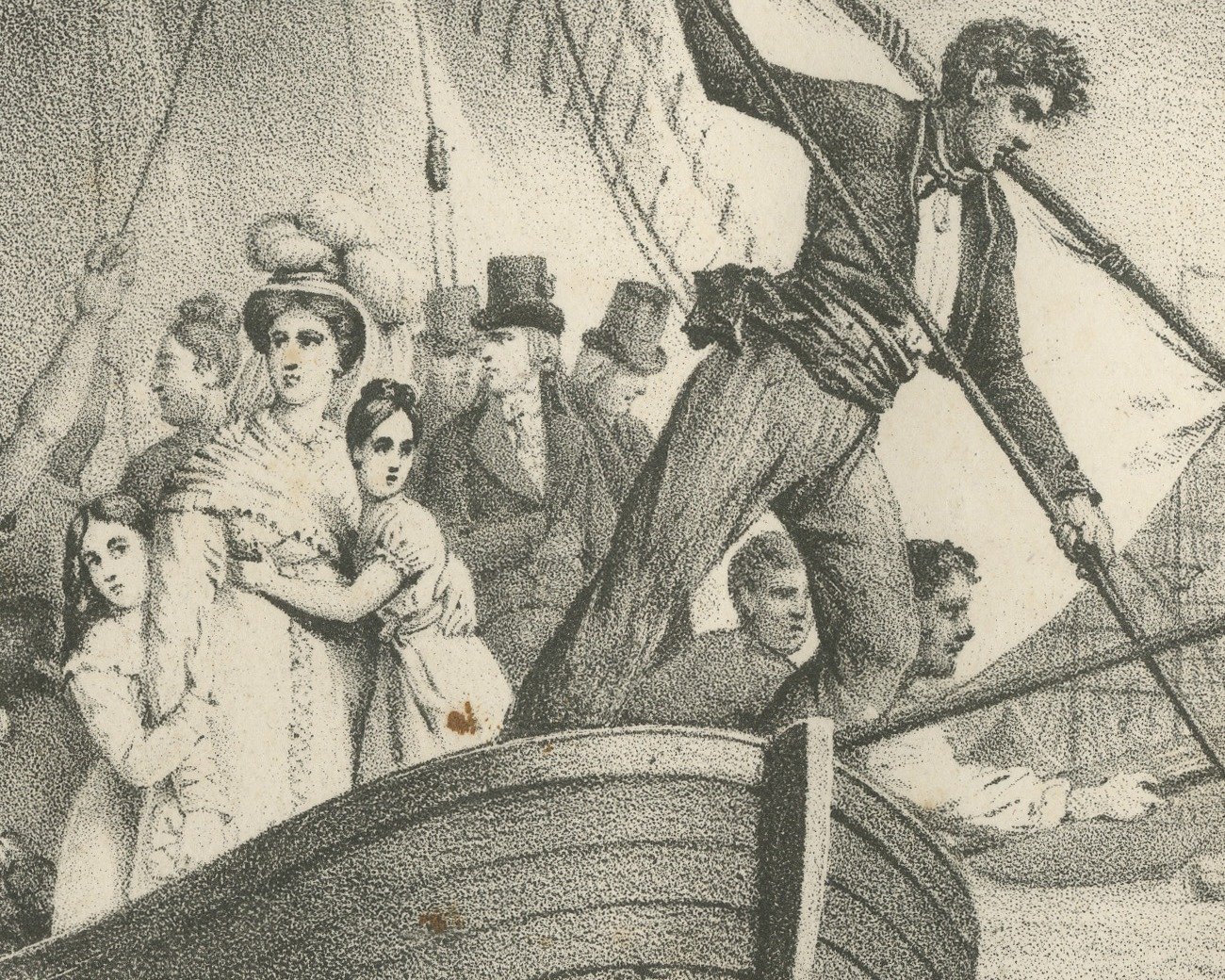
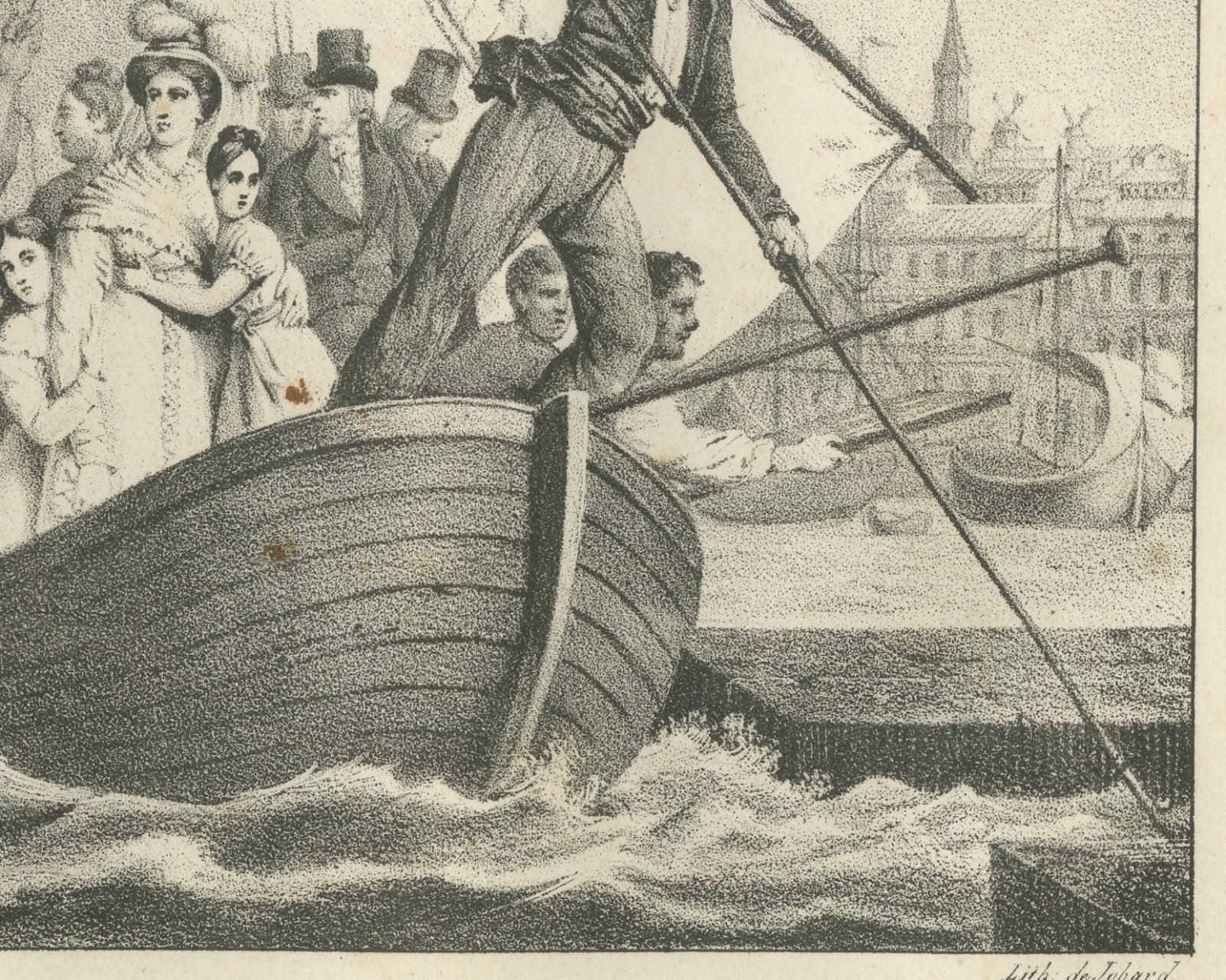
An original antique lithograph of the Bonaparte family arriving in France by boat, from Madou's Vie de Napoléon, published at Brussels in 1827. The title "ARRIVÉE EN FRANCE" is lettered in open capitals above the image. A heavy open boat under a large sail runs through a rough sea toward a stone quay at the right, where a harbor town with a church spire and windmills rises. A young sailor at the bow leans on a long pole. Women and girls of the family crowd together amidships, men in top hats stand behind them. At the stern on the left sits the young Bonaparte in a bicorne and uniform, his outstretched hand on the tiller.
The script caption reads: "Les Anglais ayant brûlé Ajaccio Bonaparte en fut bañi à perpétuité, avec lui s'embarquèrent ses frères qui tous devaient régner, un frêle esquif les reçoit et porte à travers les tempêtes le César futur, à son immense destinée." In English: The English having burned Ajaccio, Bonaparte was banished from it forever; with him embarked his brothers, who were all to reign; a frail skiff receives them and carries the future Caesar through the storms to his immense destiny. The sheet is numbered "N.° 2." at the lower left and lettered "Lith: de Jobard" at the lower right.
Vie de Napoléon was published at Brussels in 1827 by the Lithographie royale de Jobard, the press of Marcellin Jobard, as publisher and proprietor. Its title page describes a text written by a society of men of letters from documents dictated and corrected by Napoleon at Saint Helena, with plates lithographed by Jean-Baptiste Madou (1796 to 1877), the Belgian artist, after painters of the French school. This plate belongs to the first volume.
In the spring of 1793 the Bonapartes broke with Pasquale Paoli, the leader of Corsica, who was moving the island away from revolutionary France. Their house in Ajaccio was sacked by Paoli's partisans, and in June 1793 Letizia Bonaparte and her children left the island and landed on the French mainland at Toulon, settling soon afterward at Marseille.
This is an original antique print, not a modern reproduction. This item is sold unframed.