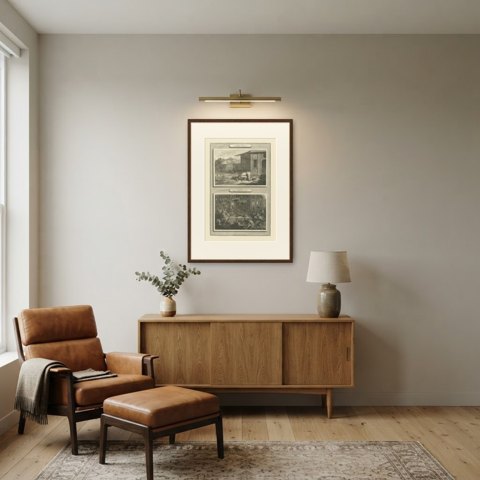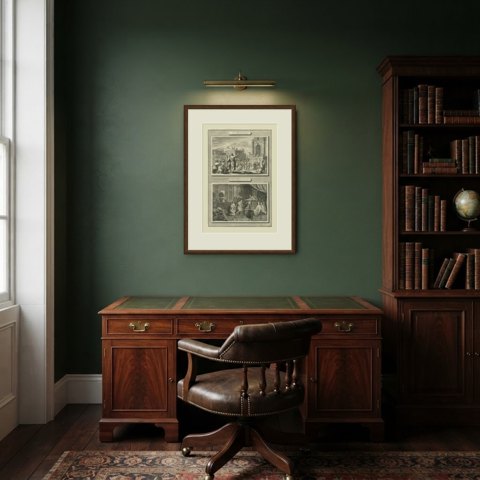
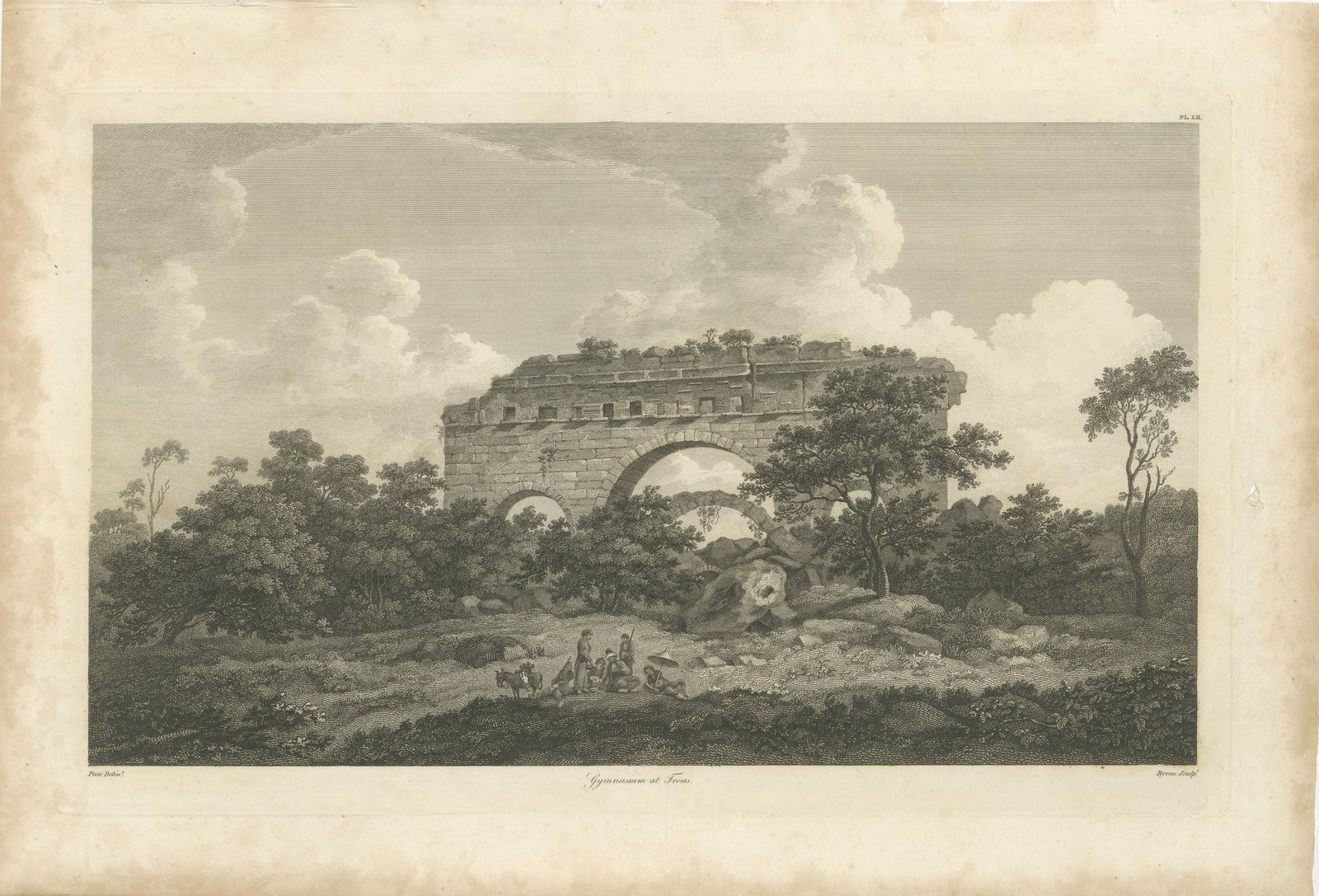
 The sheet, as you receive it
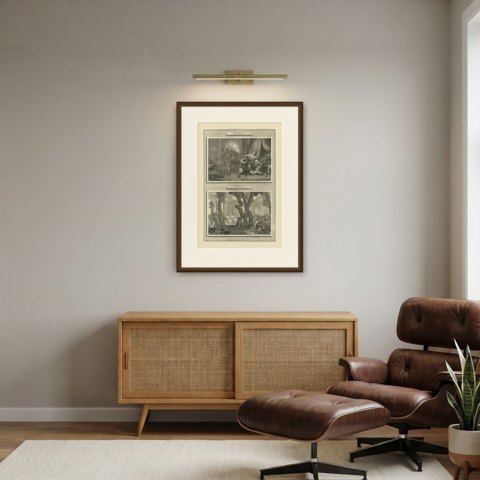
 In the room
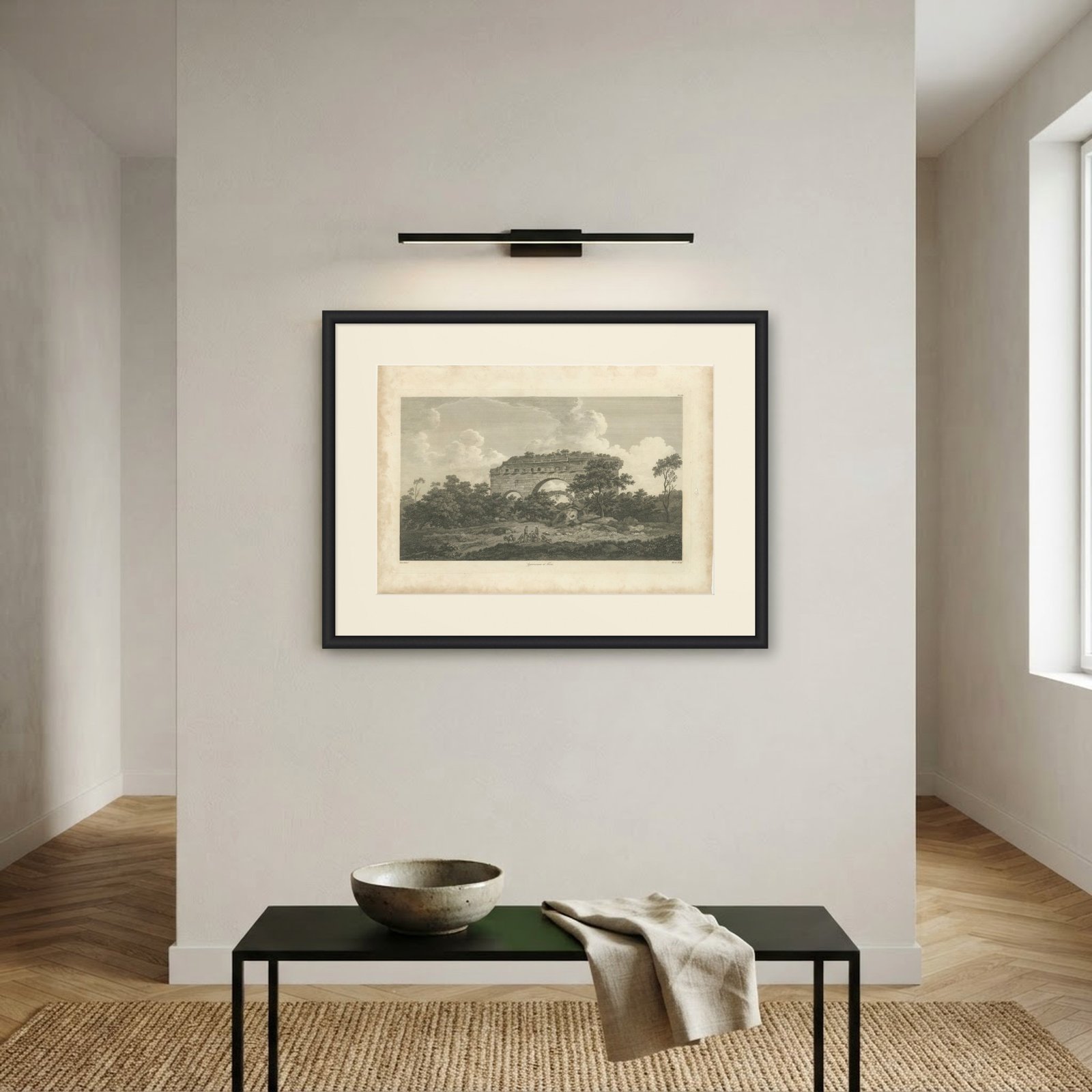
Interior designers: BarTrade members buy at their trade price. How it works
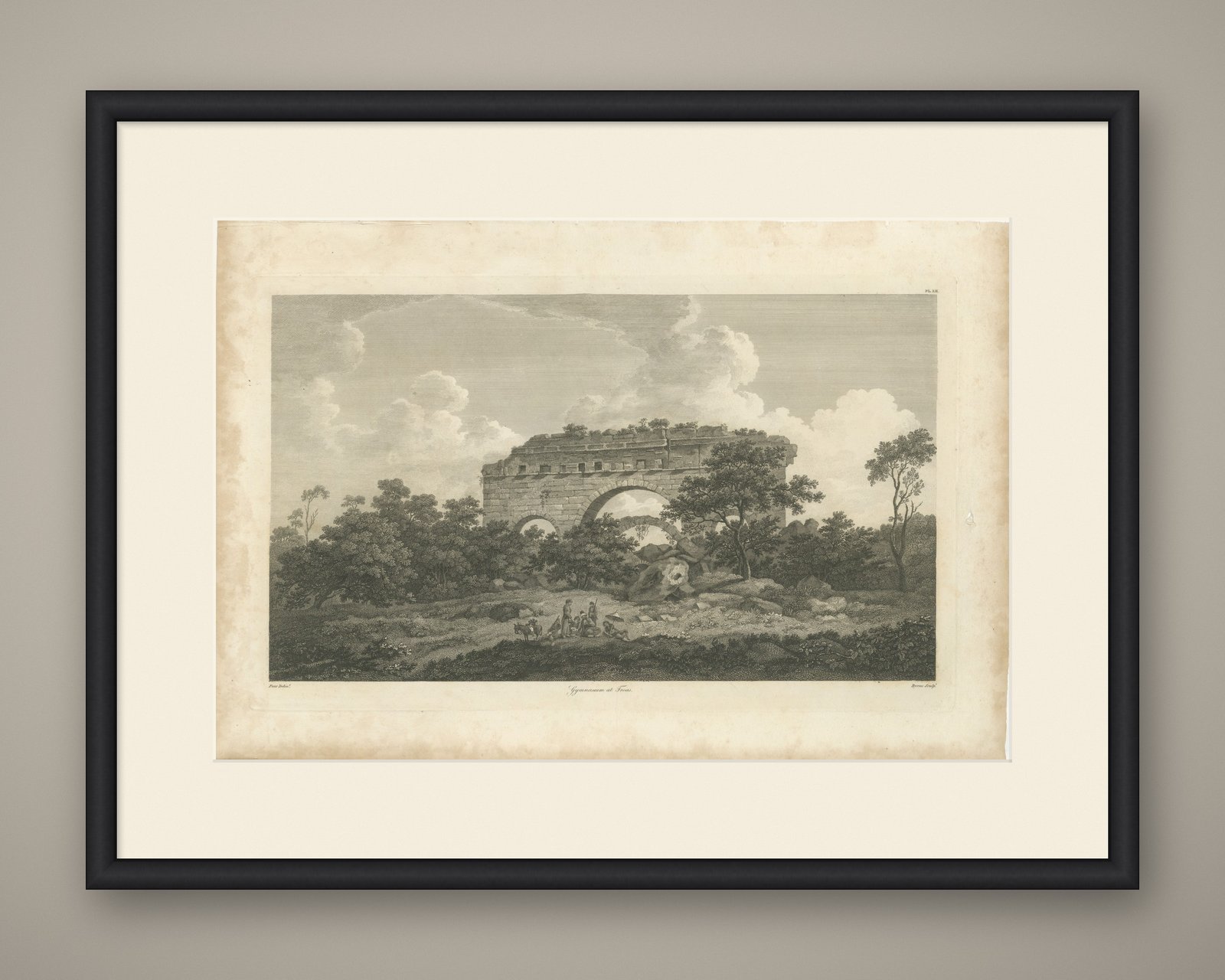
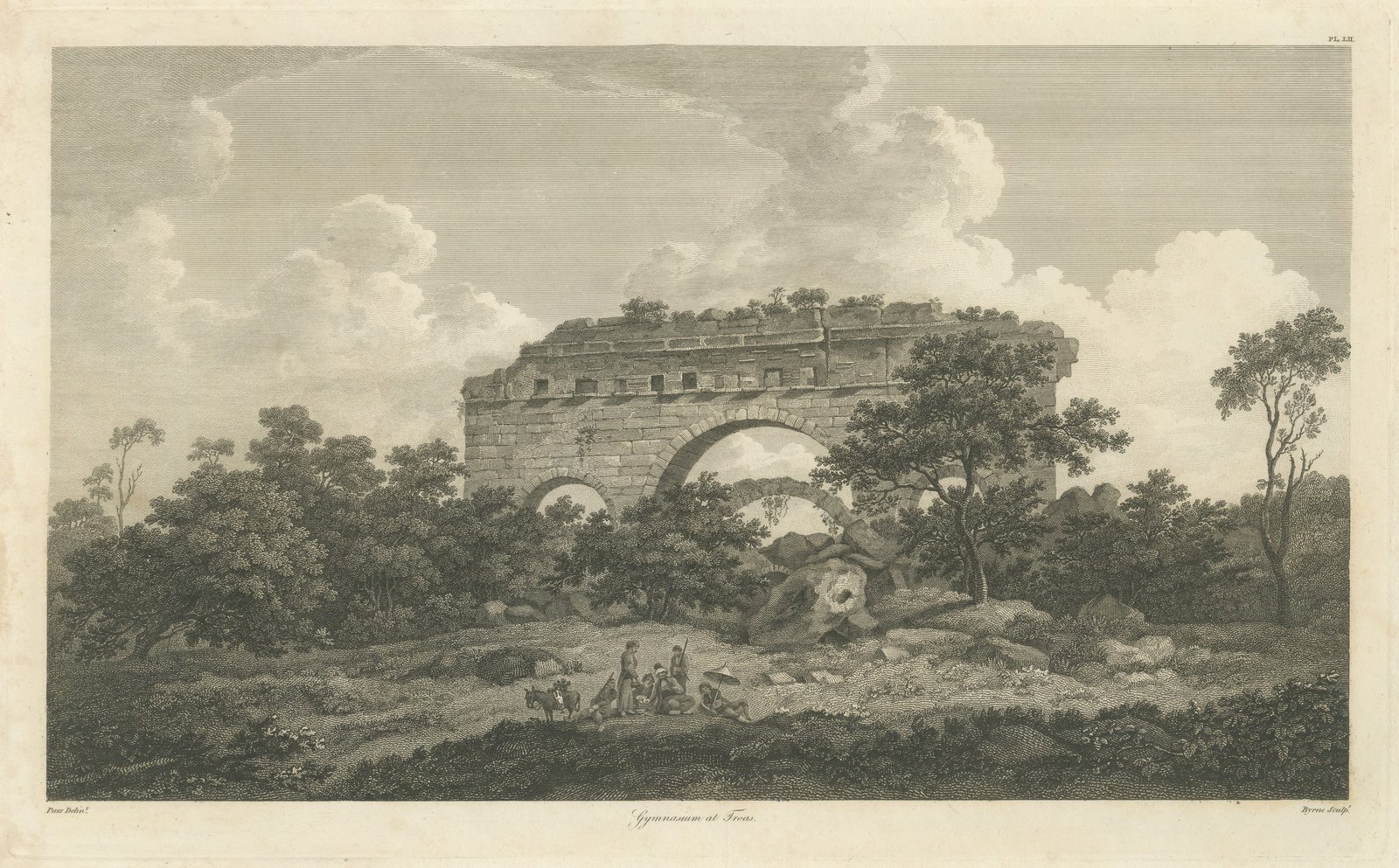
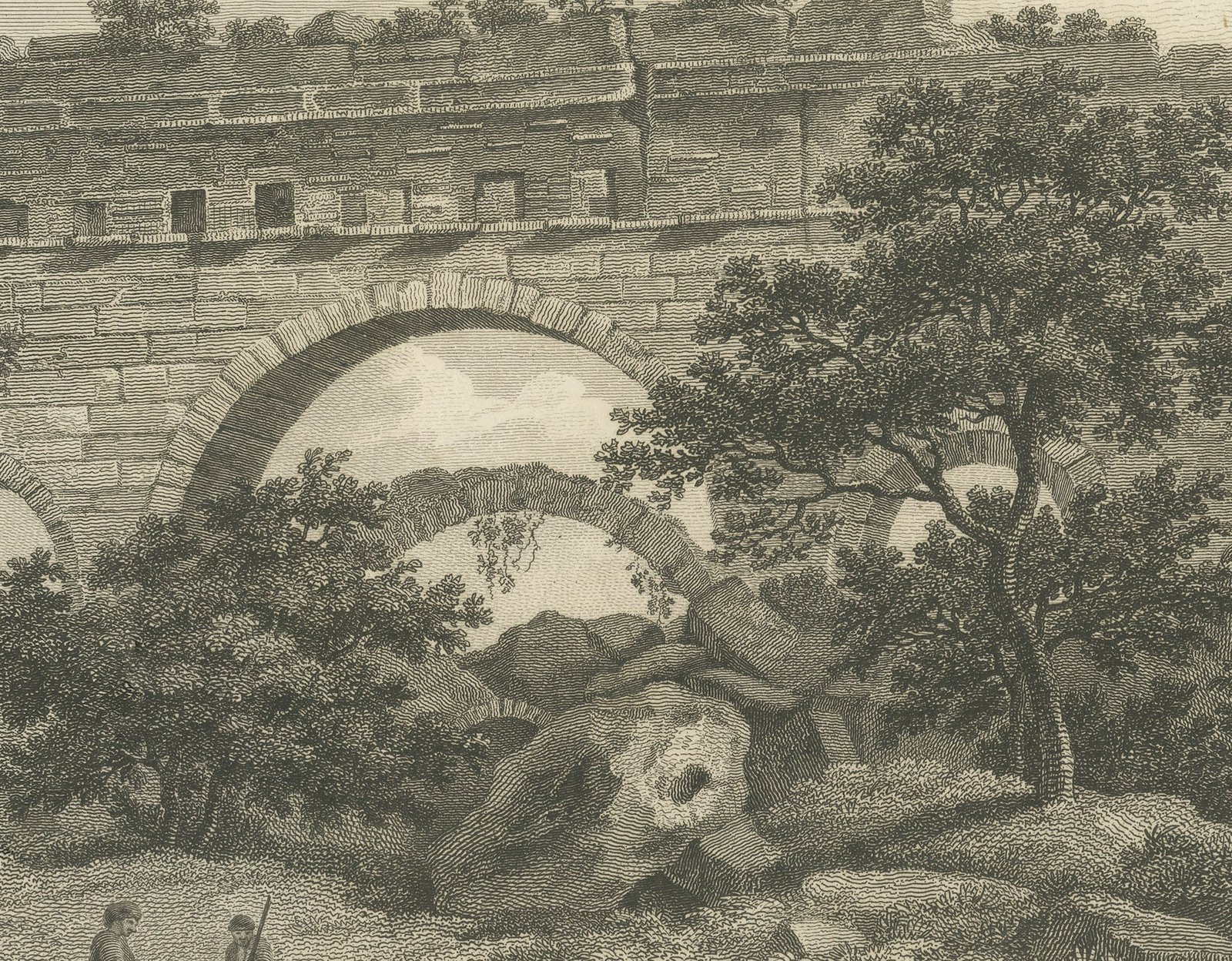
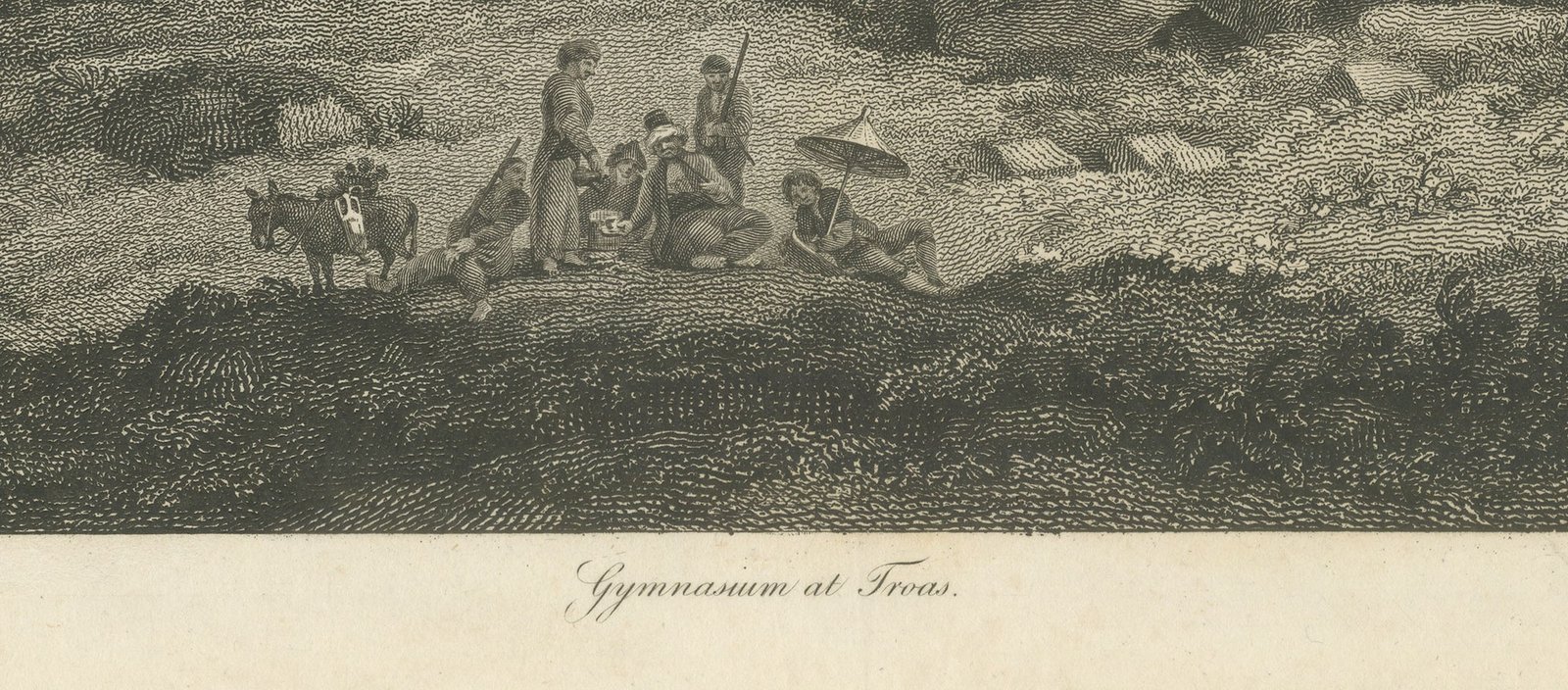
An original antique copper engraving, uncolored, published in 1797. The caption engraved below the image reads "Gymnasium at Troas."
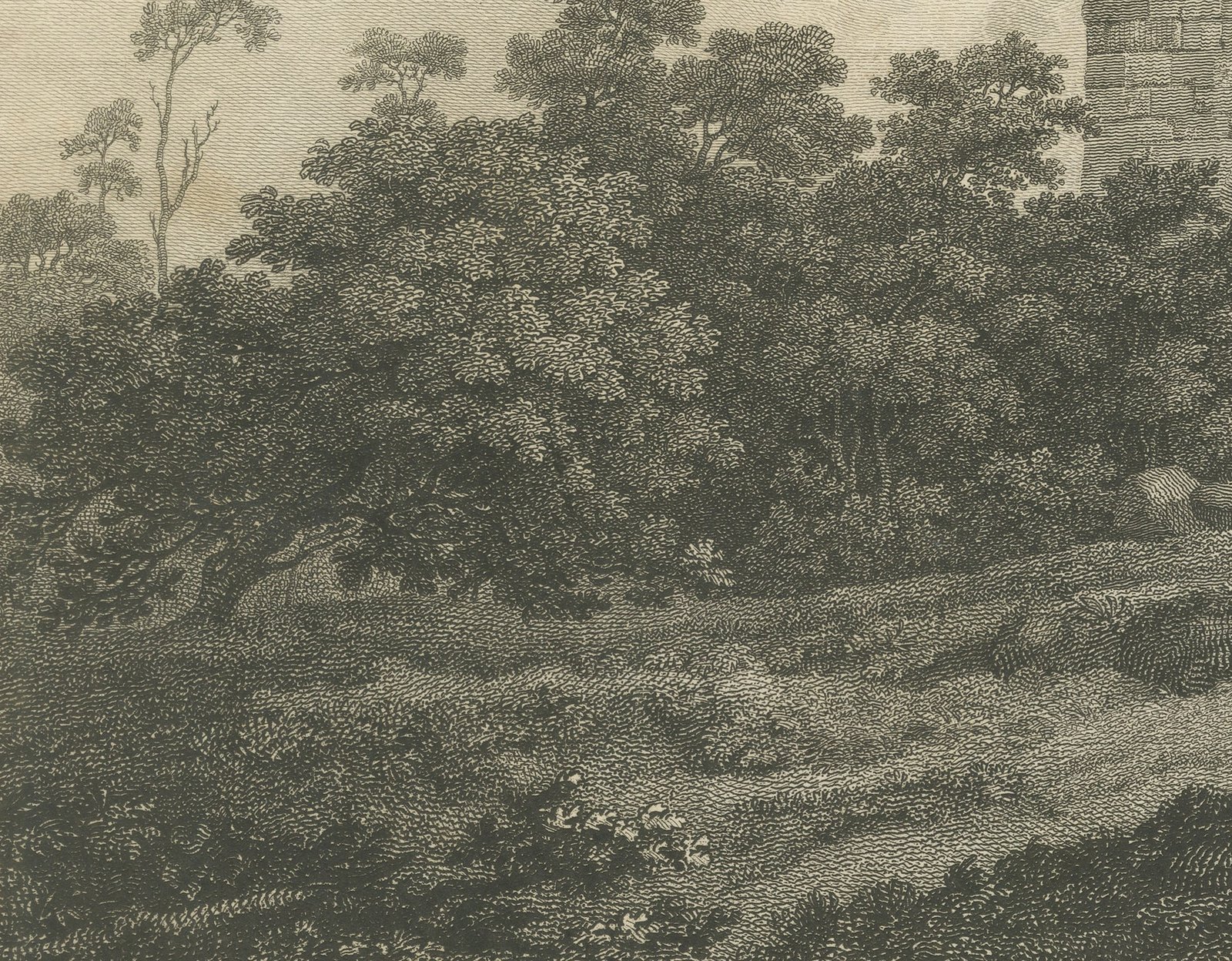
A single great ruined wall stands in the center of the view, with a large central arch flanked by smaller ones and a row of square openings below its broken top, where shrubs have taken root. Through the arches further masonry and fallen blocks can be seen. The ruin is half hidden by a wood of spreading trees, with a tall slender tree on the right and large boulders on the ground before the wall. In the foreground clearing a group of travelers rests on the grass beside a laden donkey; two stand, one of them with a gun, others sit or lie, and one holds a wide parasol. Towering clouds rise behind the ruin.
The lower left is lettered "Pars Delint." and the lower right "Byrne Sculpt.", naming the painter William Pars and the engraver William Byrne. The plate number "PL. LII." is engraved at the upper right.
This plate was issued in Antiquities of Ionia, Part the Second, published by the Society of Dilettanti in London in 1797. William Pars (1742 to 1782) was the English painter of the Society's expedition to Ionia. Alexandria Troas lies on the Aegean coast of northwest Turkey, south of the Dardanelles, and is named in the Acts of the Apostles as a port visited by Saint Paul.
Light uneven toning, browner towards the edges. Marked handling soiling along the bottom, left and right edges. Foxing over much of the margin. All four corners complete. Minor edge wear, shallow nicks along the right.
This is an original antique print, not a modern reproduction. This item is sold unframed.