 The sheet, as you receive it
 In the room
Interior designers: BarTrade members buy at their trade price. How it works
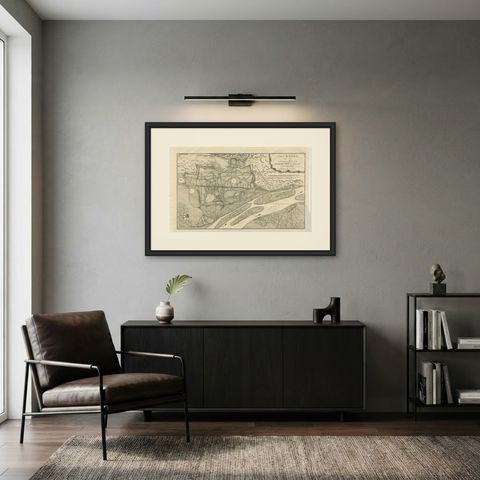
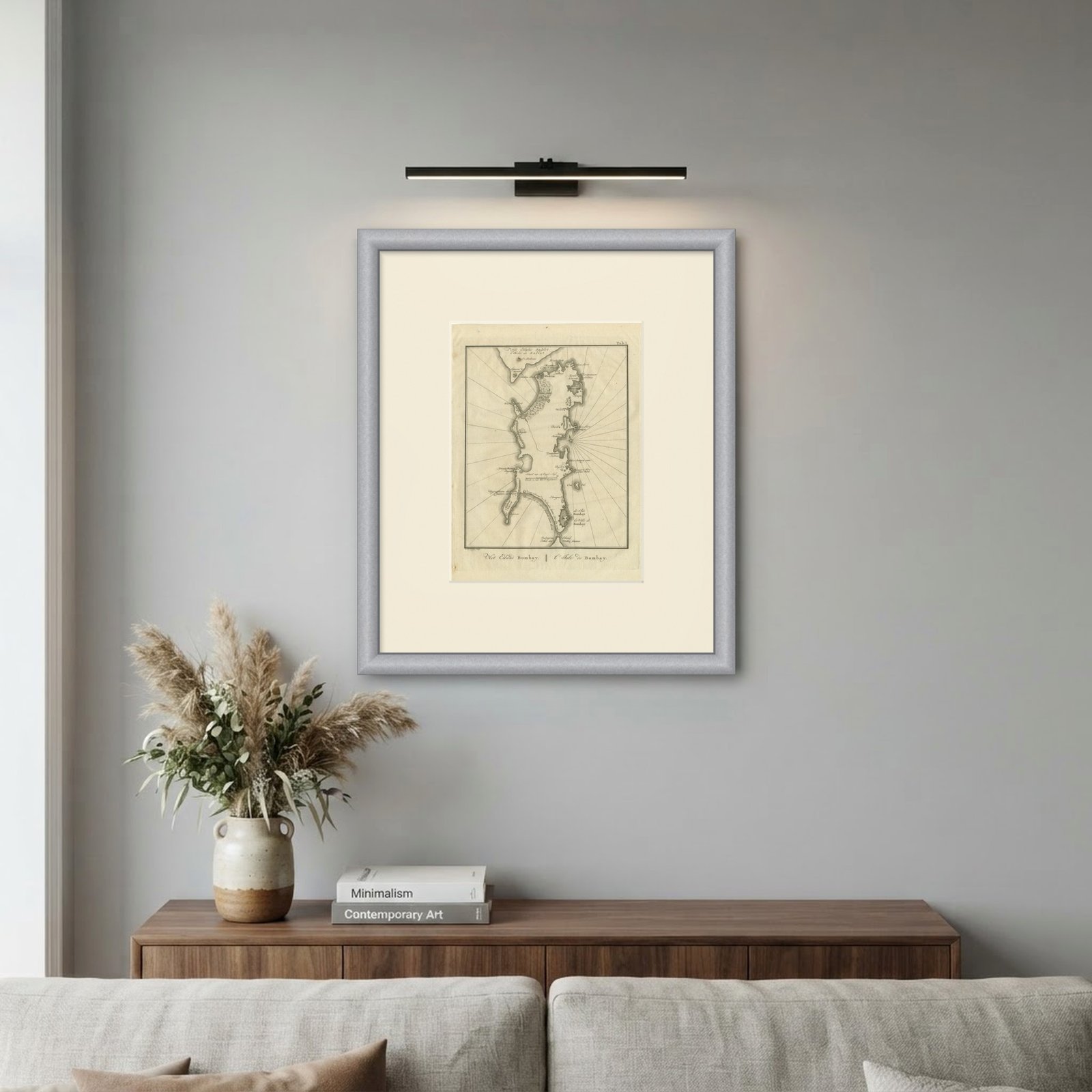
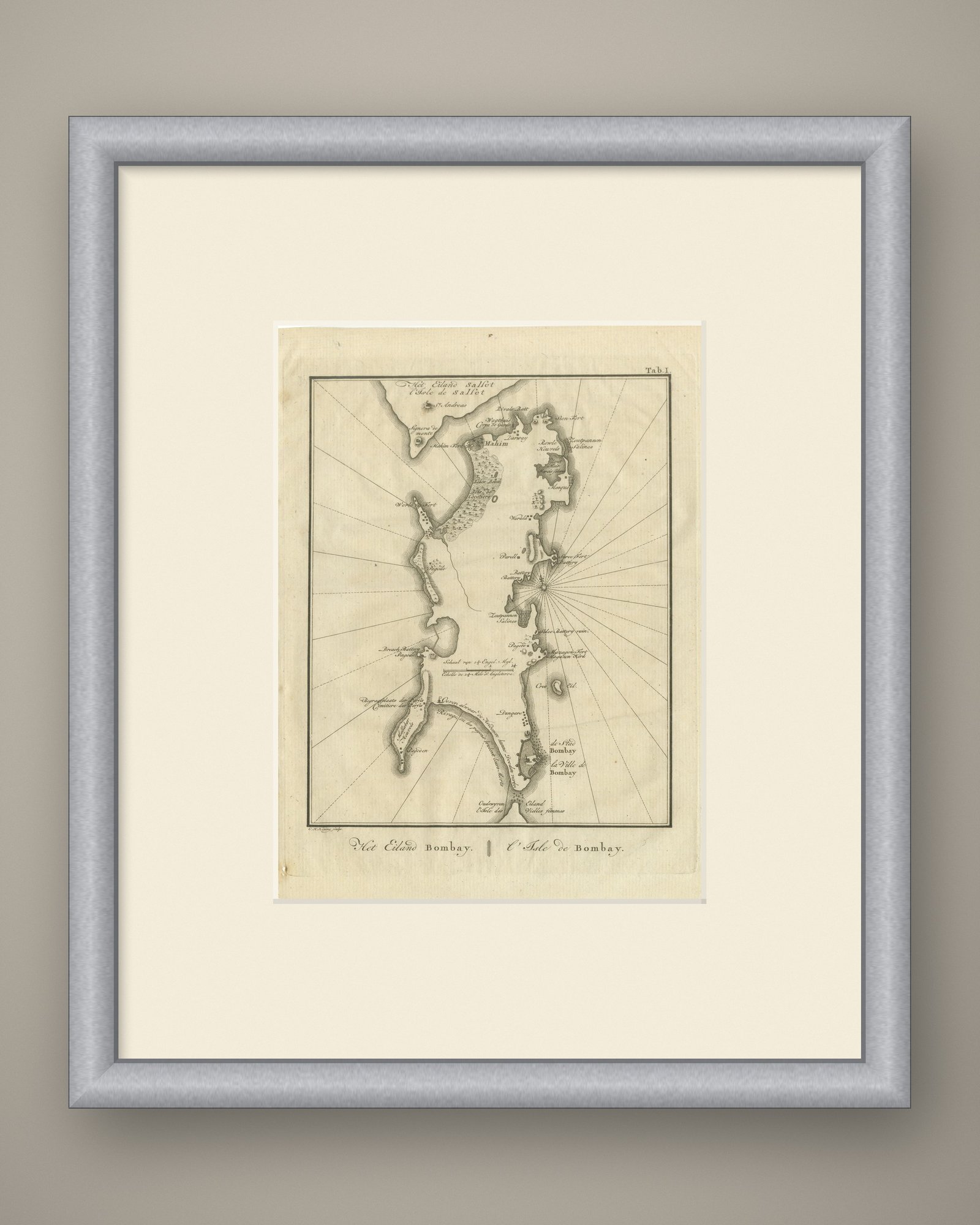
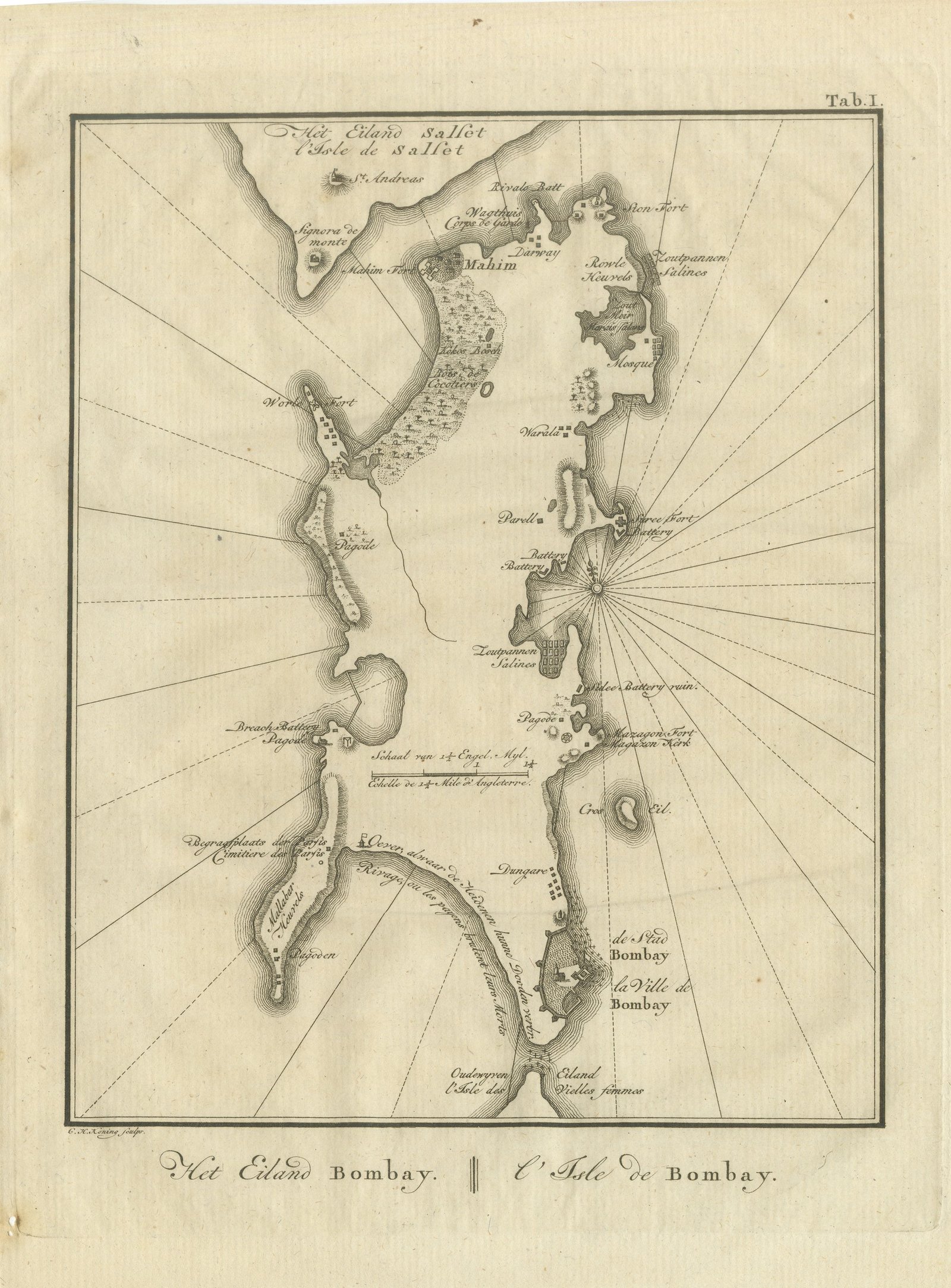
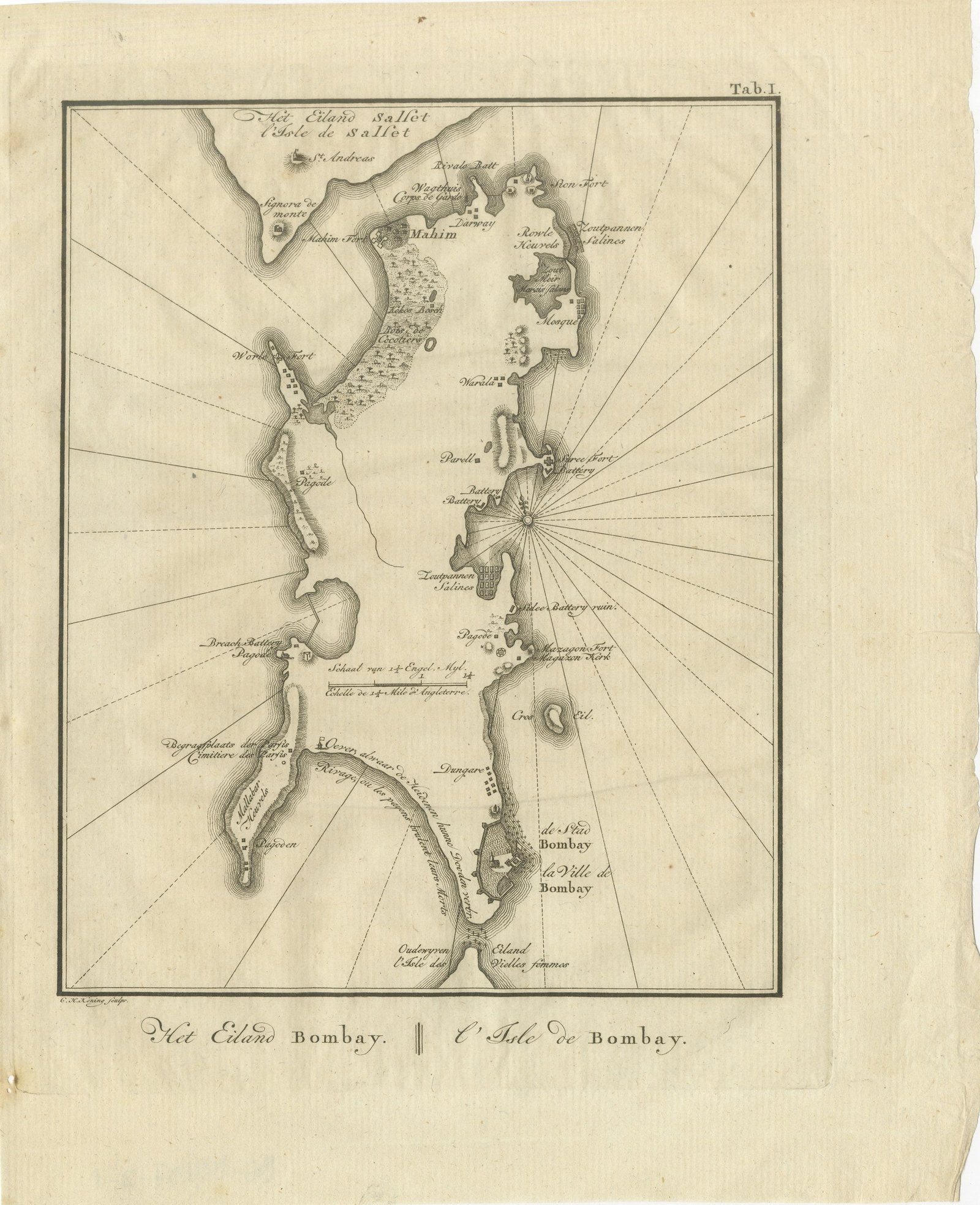
This is an original antique copper engraving from 1780, a map of the island of Bombay from the second volume of Carsten Niebuhr's travels. The caption in the lower margin reads Het Eiland Bombay. in Dutch and L'Isle de Bombay. in French, both meaning "The Island of Bombay".
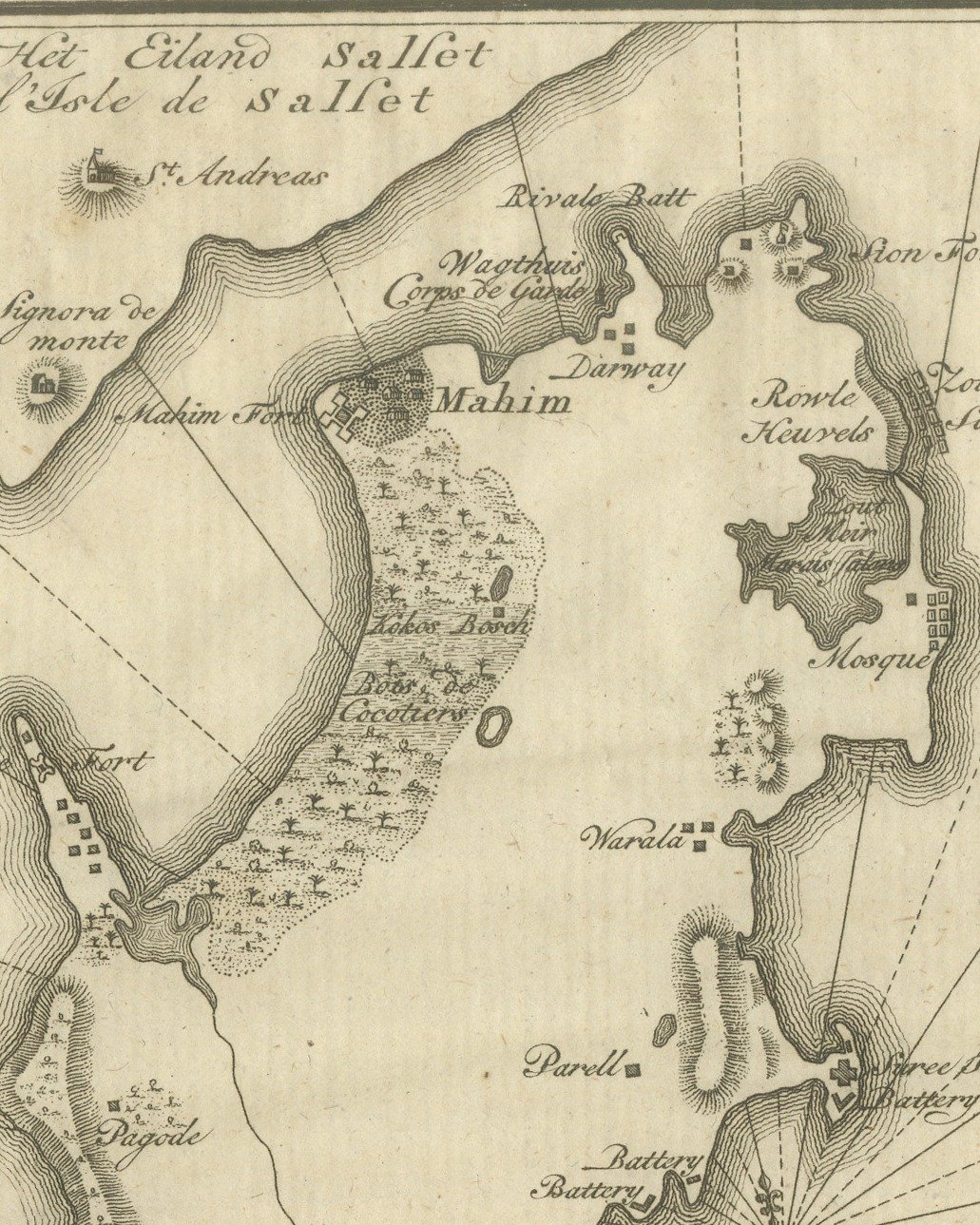
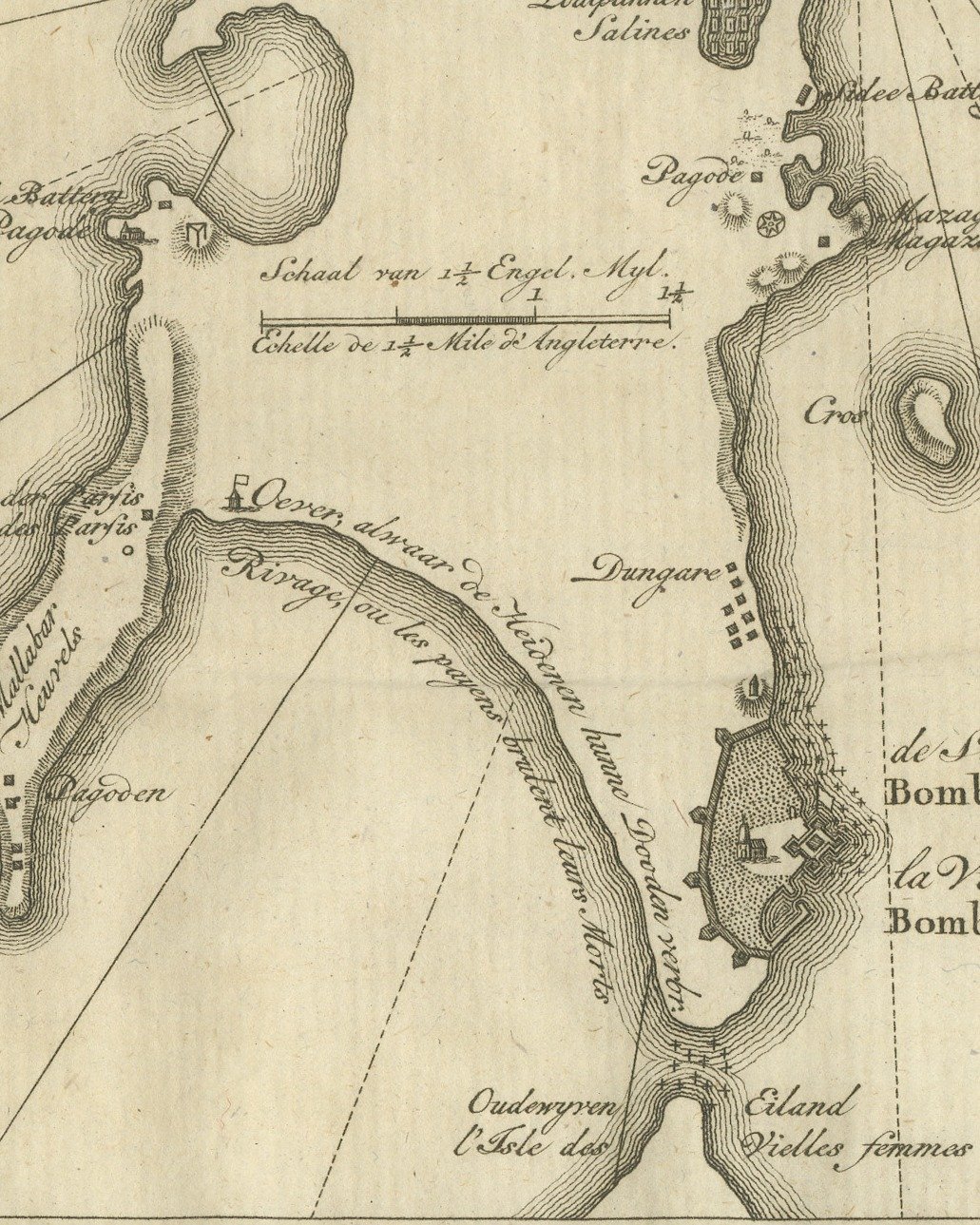
The island is drawn as a long, irregular ring of land around a broad inner bay, with rhumb lines radiating from a compass point on the right hand shore. The fortified town, lettered de Stad Bombay and la Ville de Bombay, sits on a point at the lower right, with Dungare just above it and at the bottom, across a narrow channel, land lettered l'Isle des Vielles femmes. At the top are Mahim with Mahim Fort, Sion Fort, Darway and Rivale Batt, and across the water at the upper left is Het Eiland Sallet (l'Isle de Sallet) with St. Andreas. Along the right hand shore are Mosque, Warala, Parell, salt pans lettered Zoutpannen and Salines, Mazagon Fort and the offshore Cros Eil.; on the left are Worle Fort, Breach Battery, a pagoda, the Mallabar Heuvels and a burial ground of the Parsis. A bar scale in the bay is lettered Schaal van 1 1/2 Engel. Myl. and Echelle de 1 1/2 Mile d'Angleterre. A long inscription along the inner shore at the lower left marks the bank where the heathens burn their dead (Rivage, ou les payens brulent leurs Morts).
The plate is lettered "C. H. Koning sculps." below the lower left corner of the border, and "Tab. I." at the upper right.
The plate comes from the second volume of Carsten Niebuhr's Voyage en Arabie & en d'autres Pays circonvoisins, the French translation printed for S. J. Baalde at Amsterdam and Barthelemy Wild at Utrecht; the title page of the volume reads TOME SECOND and is dated MDCCLXXX. The account was first published in German at Copenhagen, and this is the French translation printed in Amsterdam and Utrecht. Carsten Niebuhr (1733 to 1815) was a German born surveyor in Danish service and the only member of the Danish expedition to Arabia (1761 to 1767), sent by King Frederick V of Denmark, to return alive.
Light uneven toning, browner toward the edges. Handling soiling along the right and top edges. A few small foxing spots in the margin. Slight wear at the bottom right and top right corners. Minor edge wear, shallow nicks along the right.
This is an original antique print, not a modern reproduction. This item is sold unframed.