 The sheet, as you receive it
 In the room
Interior designers: BarTrade members buy at their trade price. How it works
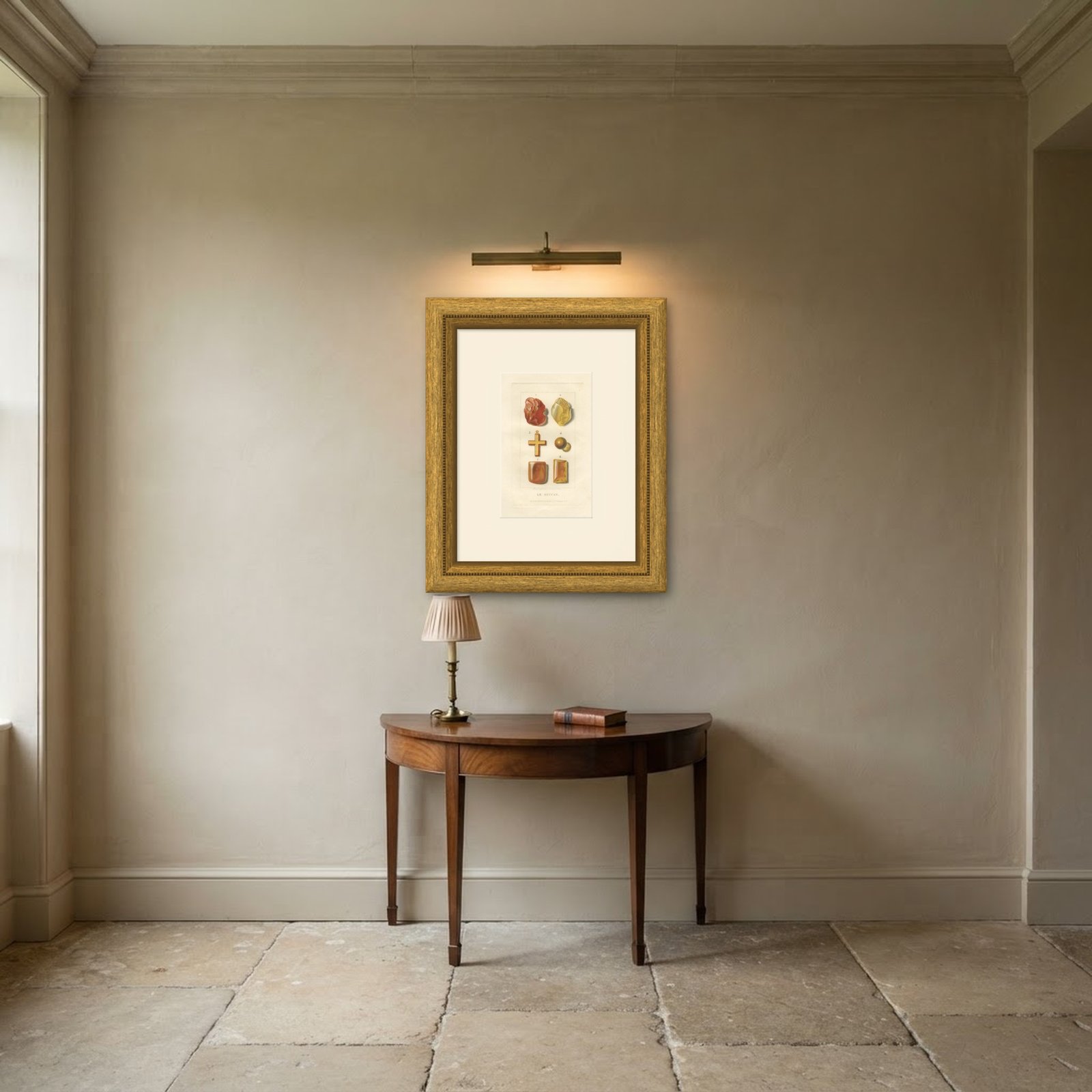
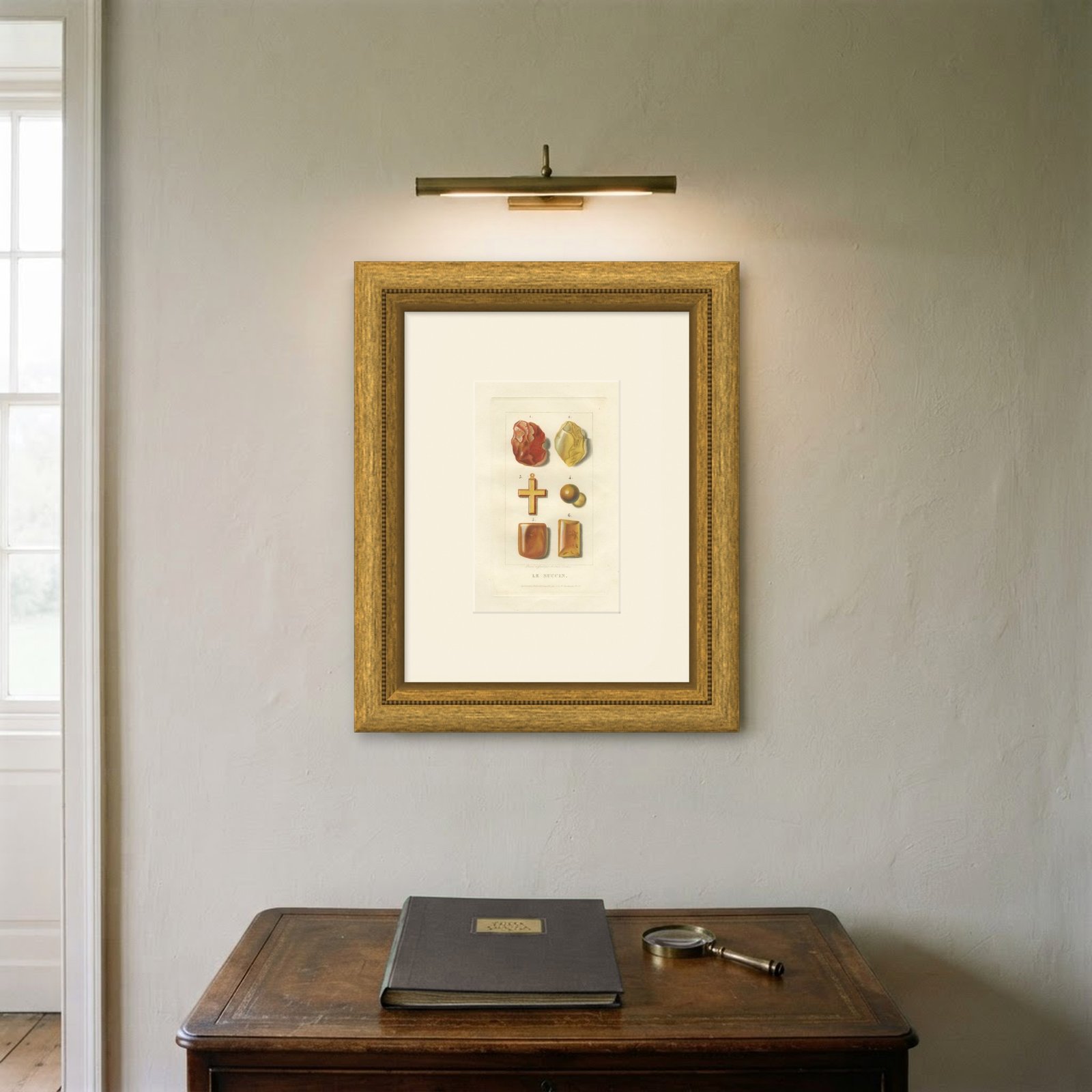
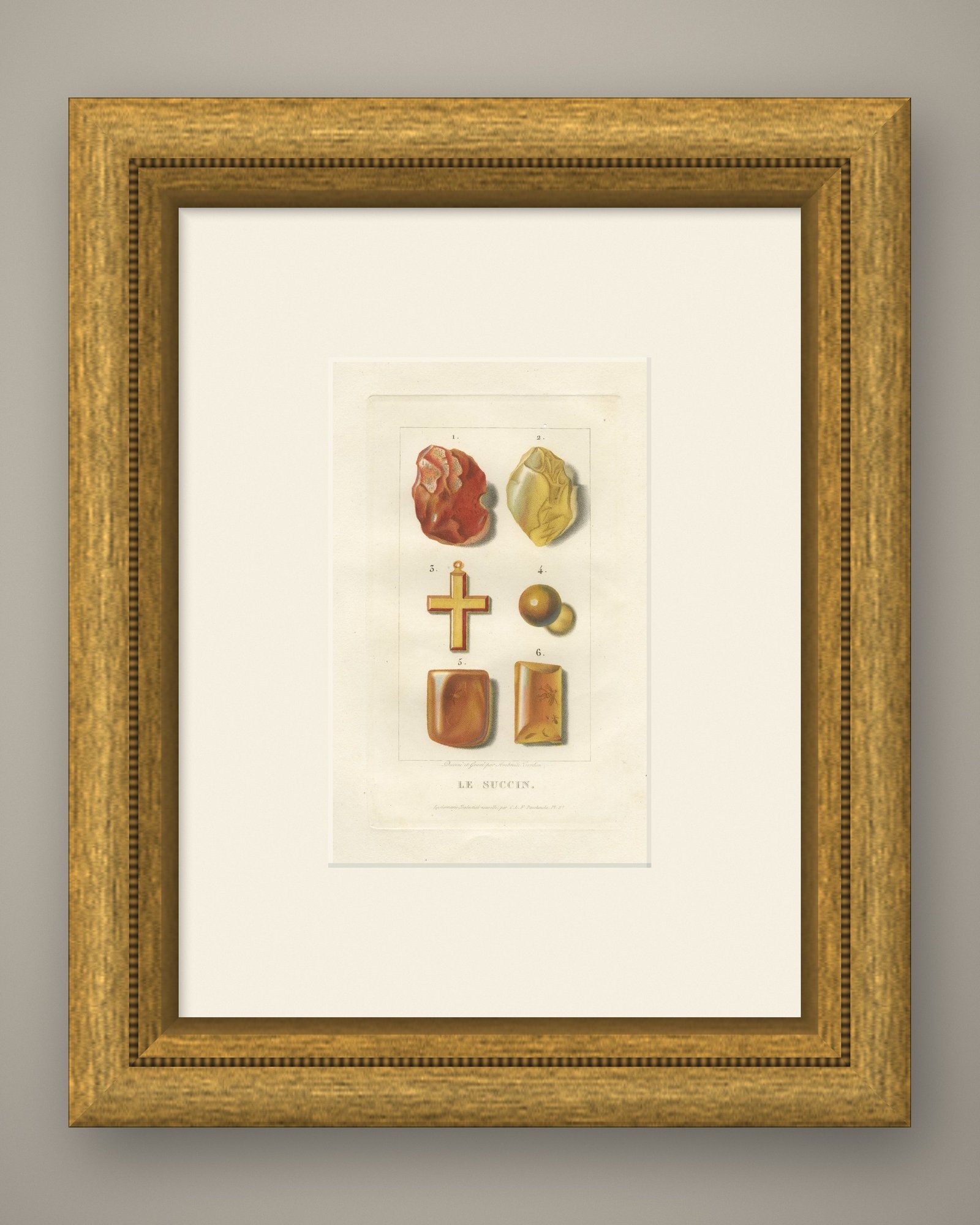
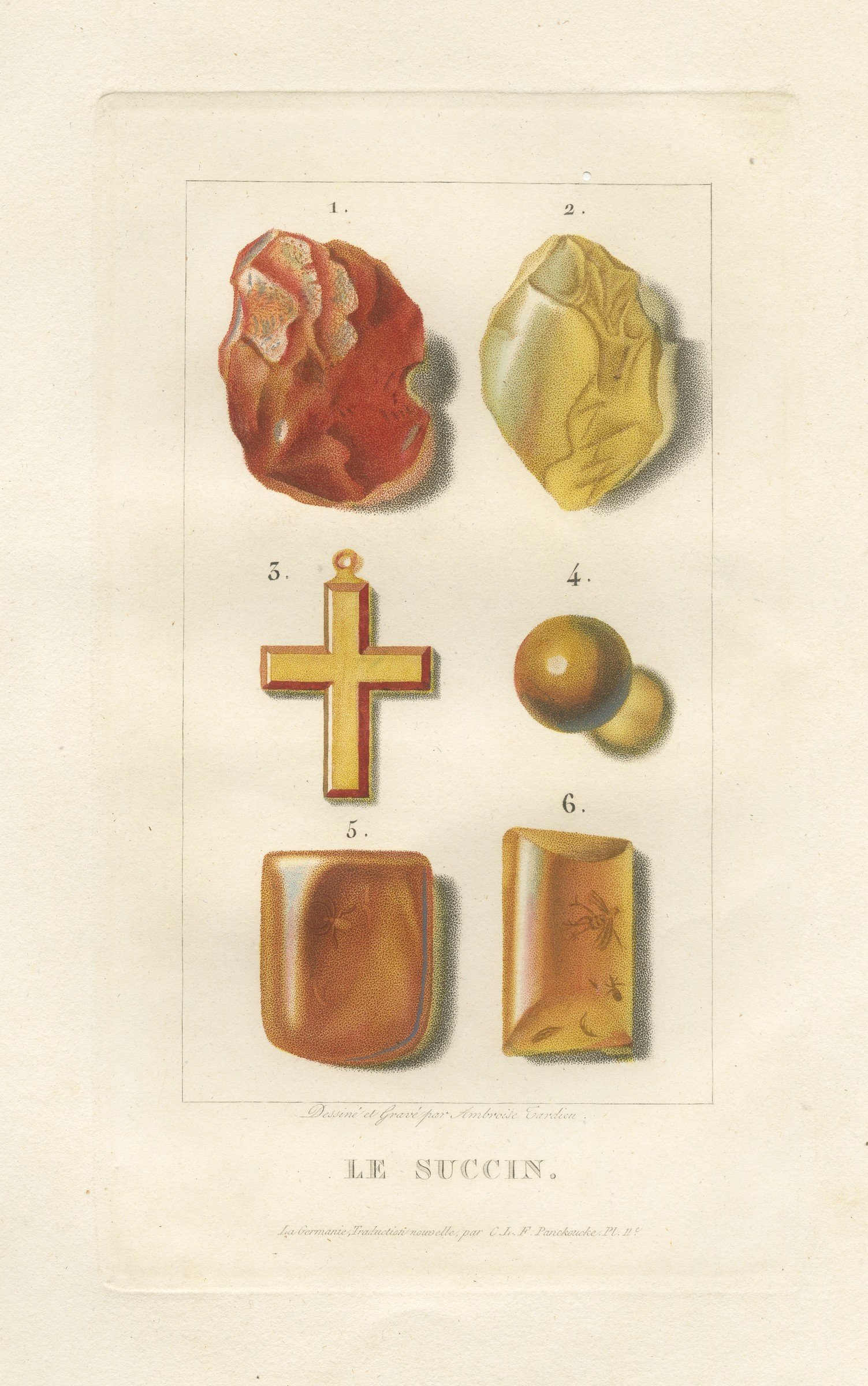
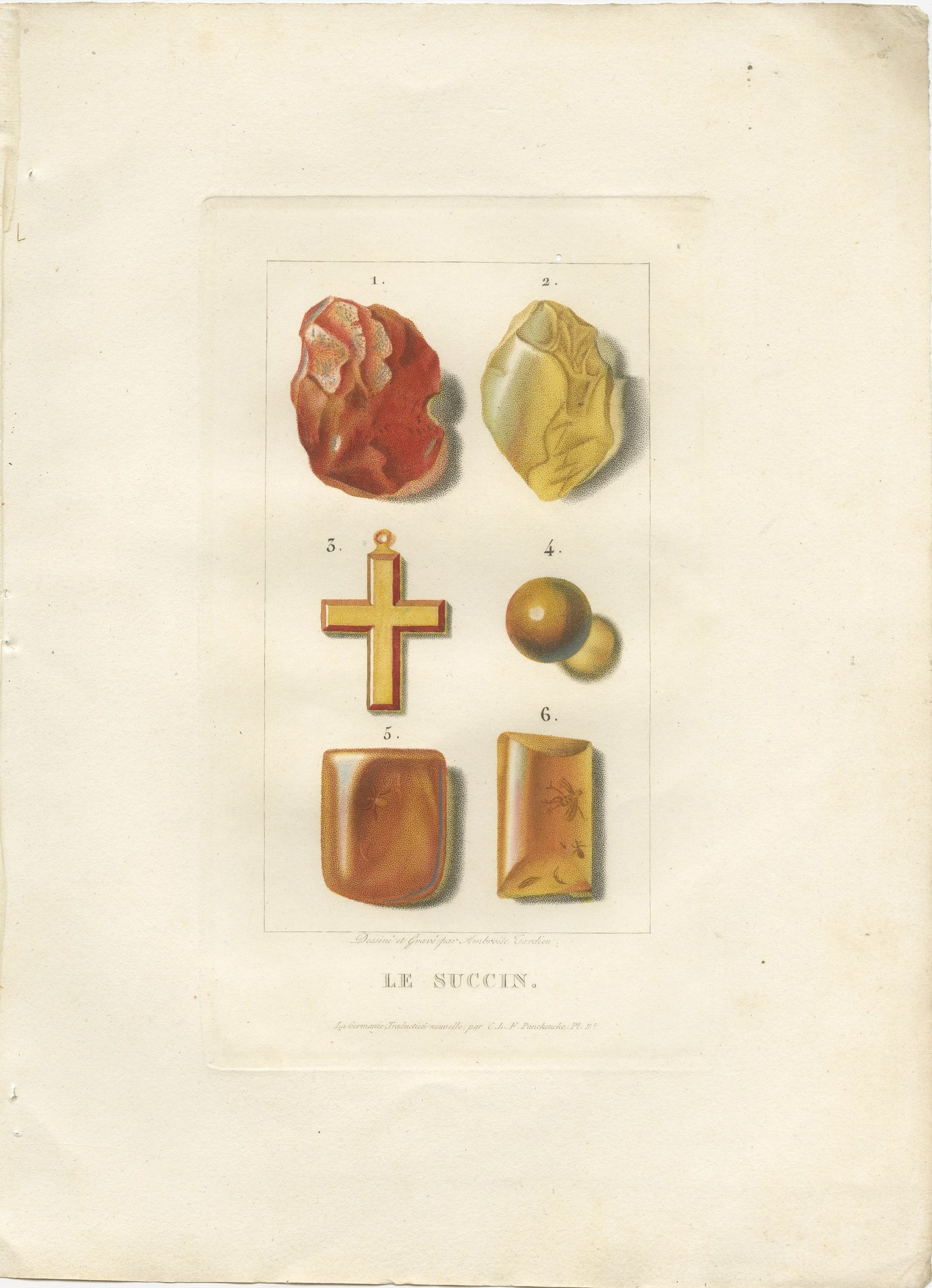
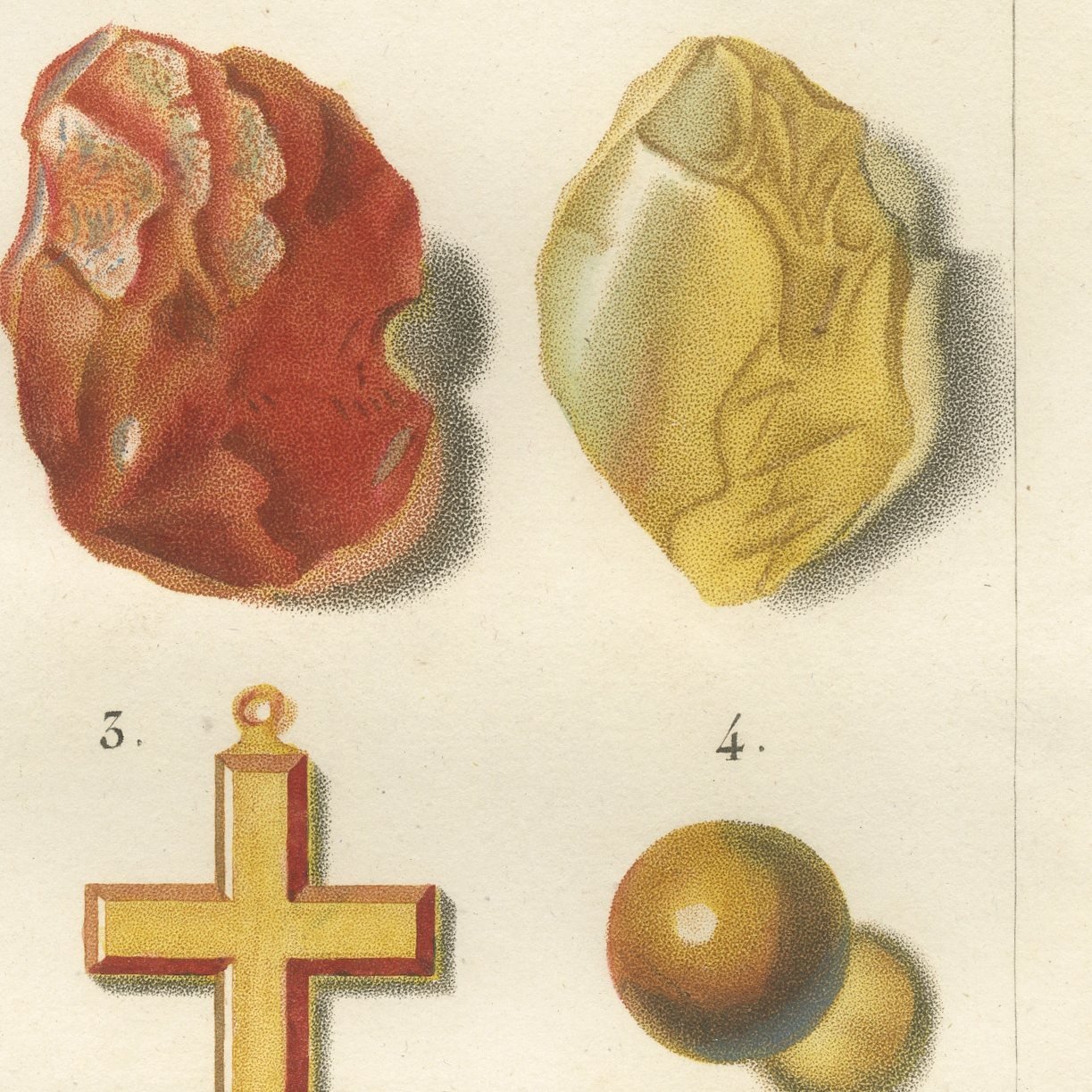
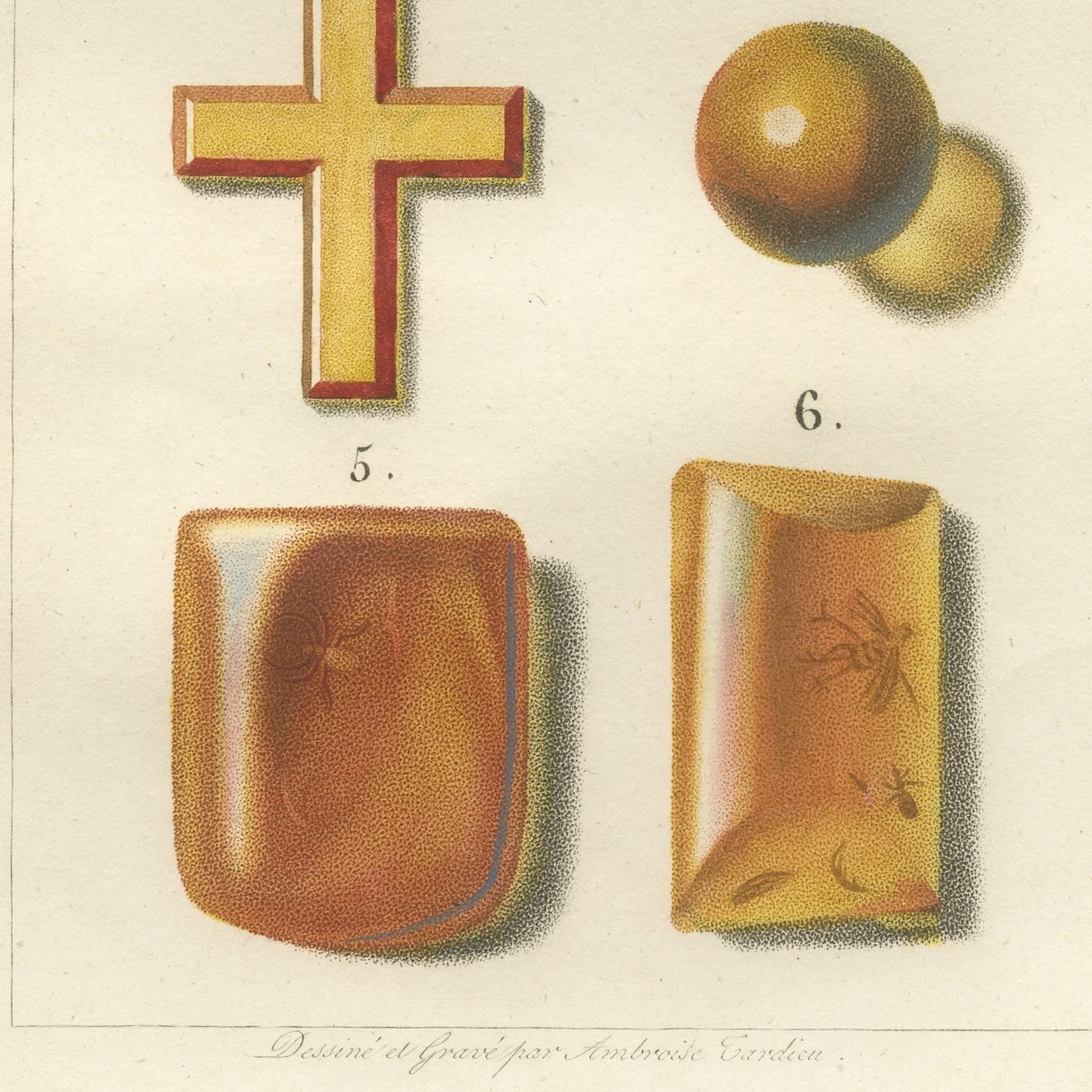
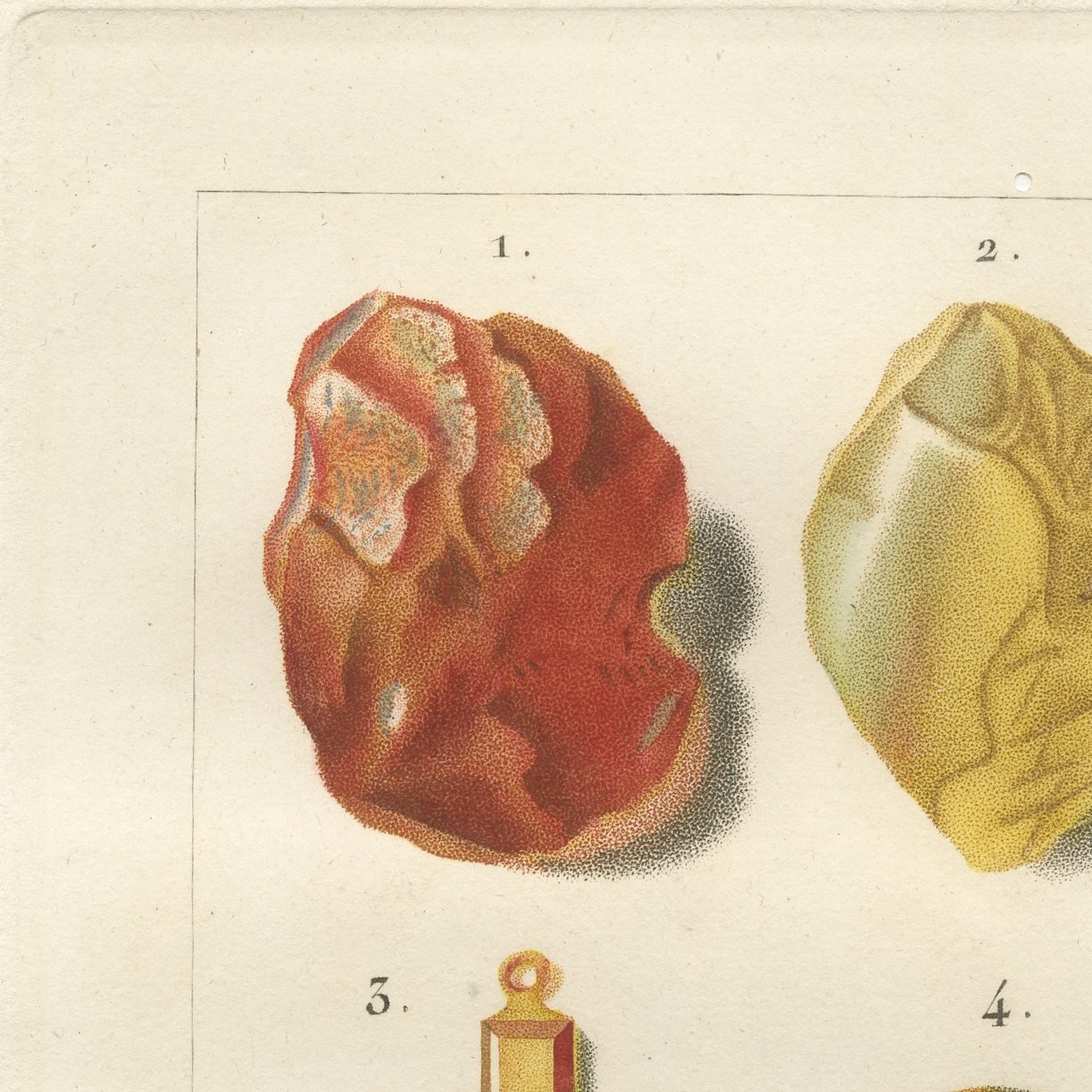
This is an original antique hand-colored engraving of amber, published in Paris in 1824 in the atlas to Panckoucke's translation of Tacitus. The plate shows six numbered specimens finished by hand in warm red, honey and golden tones: two rough pieces, a cross, a pair of round beads and two polished blocks, the last of them with small insects visible inside. The French title, Le Succin, is the old name for amber, and the plate illustrates the passage in which Tacitus describes amber gathered on the shores of the Suebian sea.
The sheet comes from the atlas volume of La Germanie, Charles Louis Fleury Panckoucke's French translation of the Germania of Tacitus, with a commentary drawn from Montesquieu and other writers, printed and published by Panckoucke in Paris in 1824. The atlas has twelve plates, four of them colored by hand, nearly all drawn or engraved by Ambroise Tardieu or engraved under his direction. Each sheet carries the footline La Germanie, Traduction nouvelle par C. L. F. Panckoucke, with its plate number.
This is plate 11, one of the four hand-colored plates of the atlas. In the forty fifth chapter of the Germania Tacitus describes the Aestii gathering amber on the shore and notes that it holds small creatures caught in it while it was still liquid, as the last specimens on this plate show.
Light age toning, with foxing through the margins, one or two spots larger than the rest, stains in the margins and handling wear to the top right and bottom left corners.
This is an original antique print, not a modern reproduction. This item is sold unframed.