 The sheet, as you receive it
 In the room 1
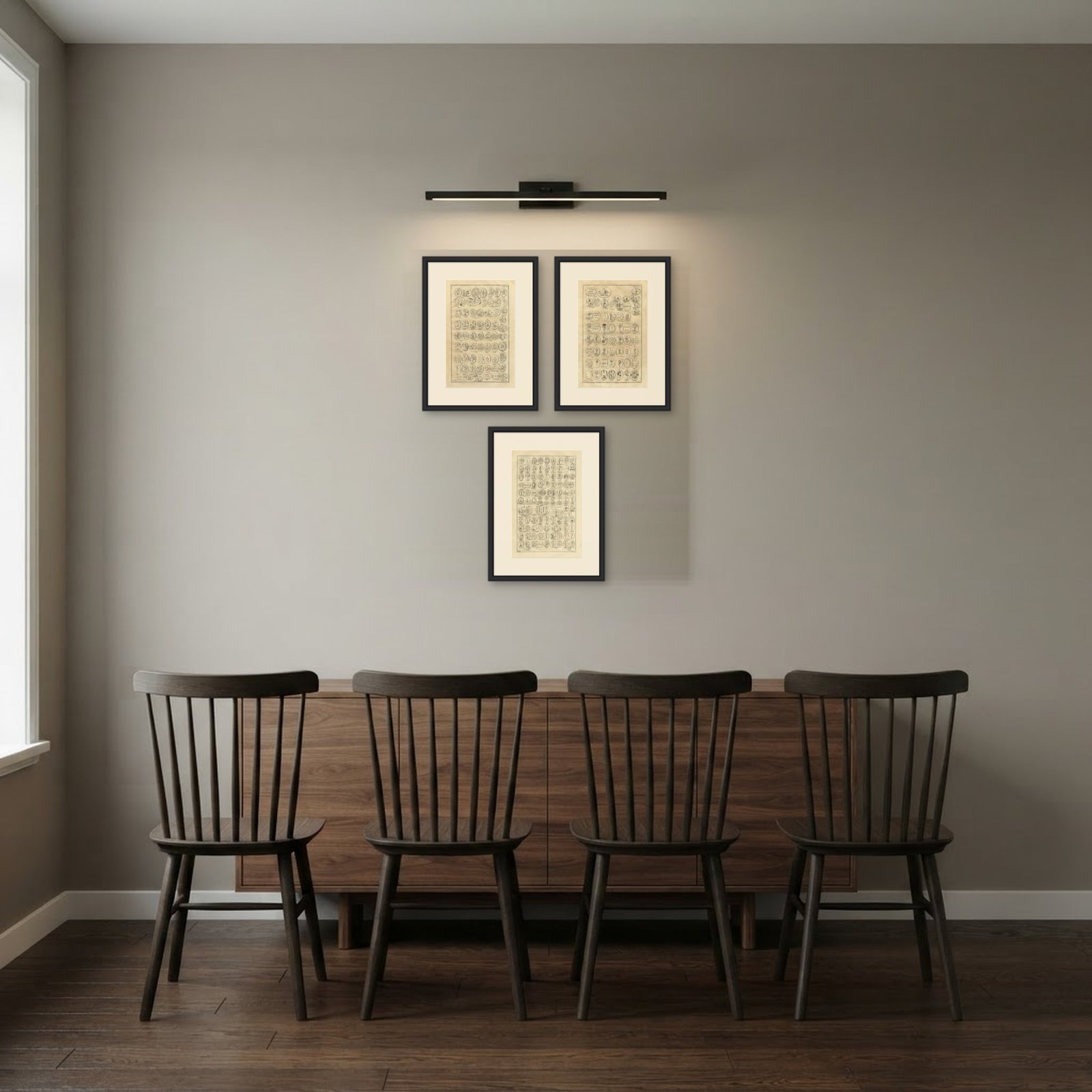
Interior designers: BarTrade members buy at their trade price. How it works
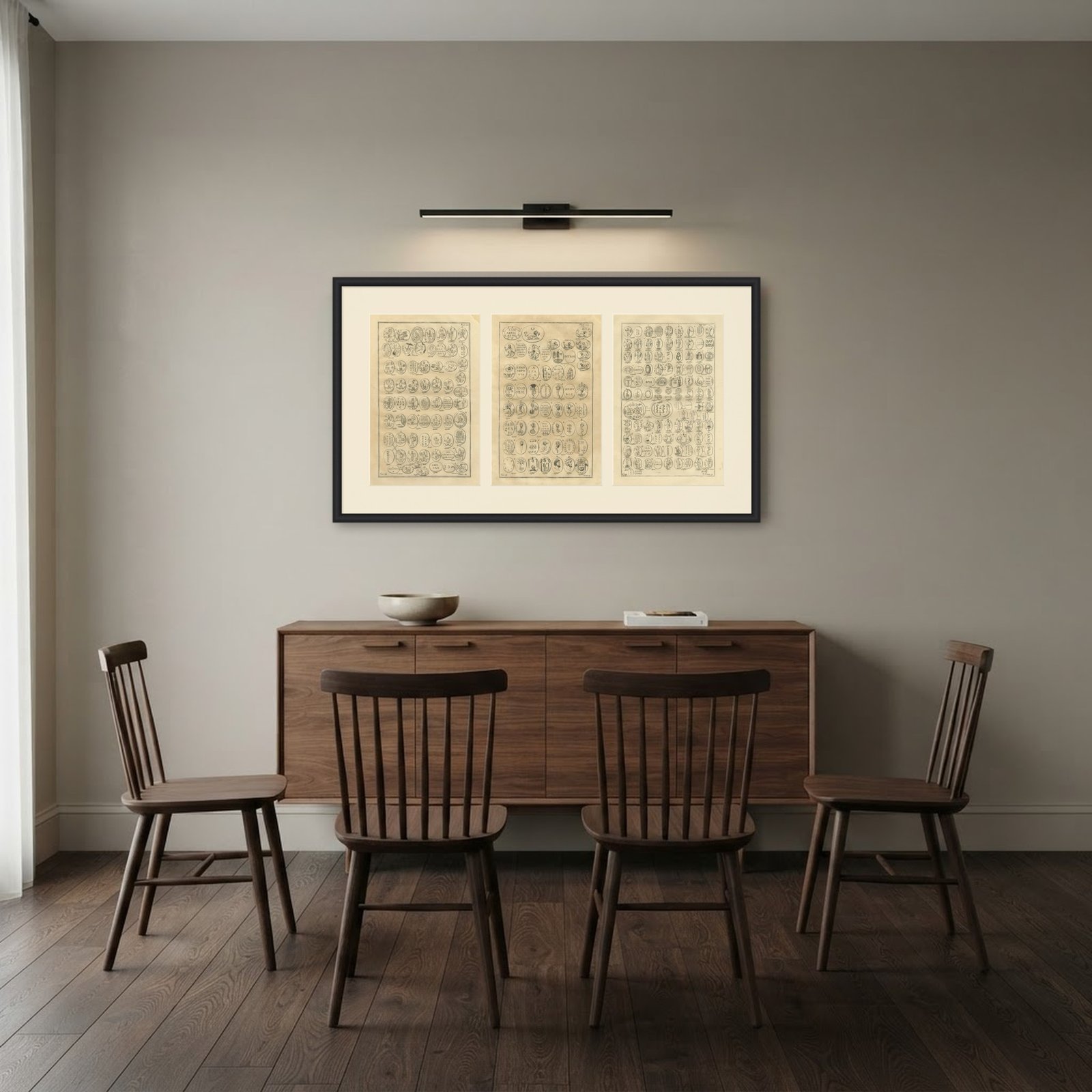
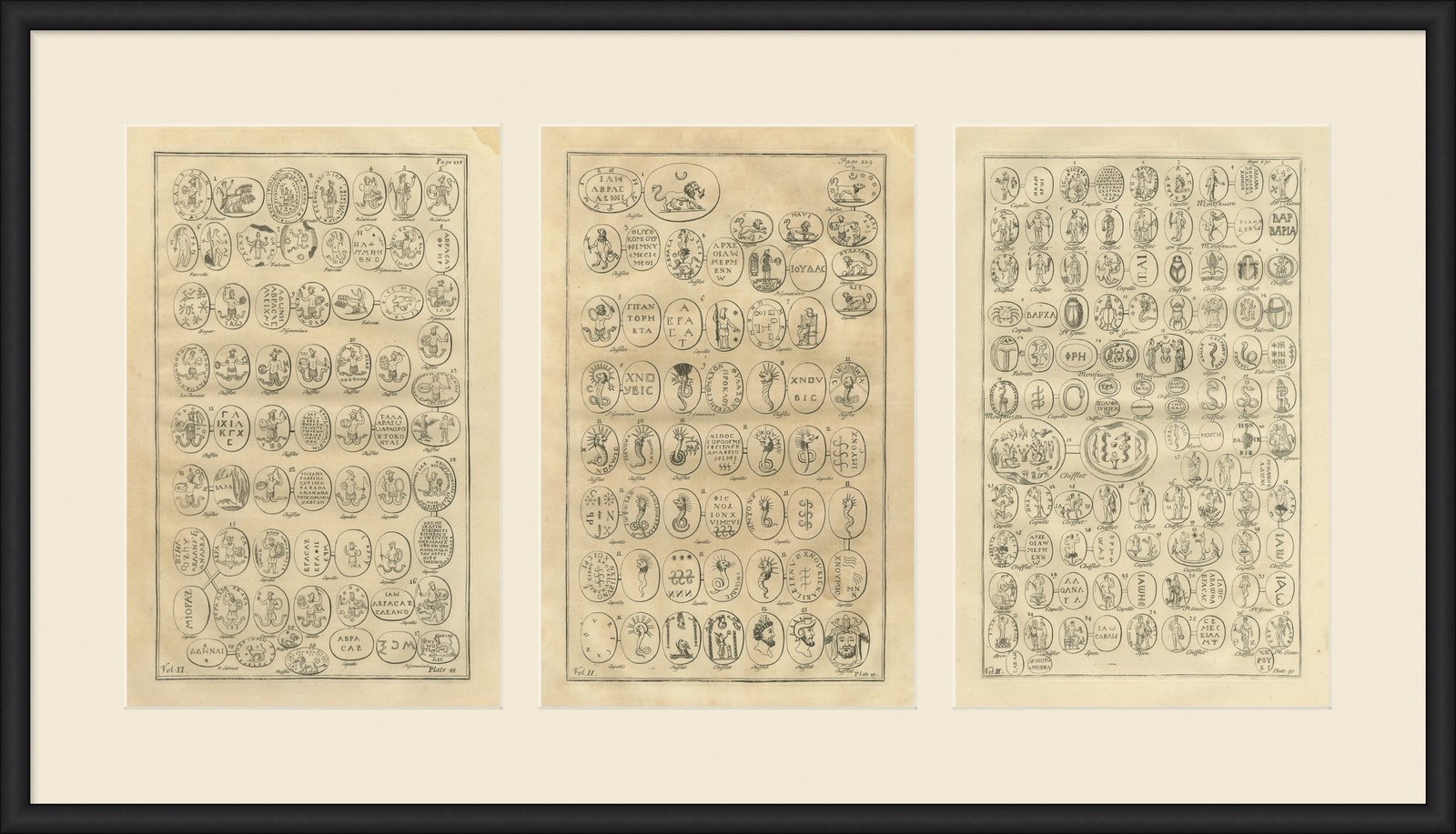
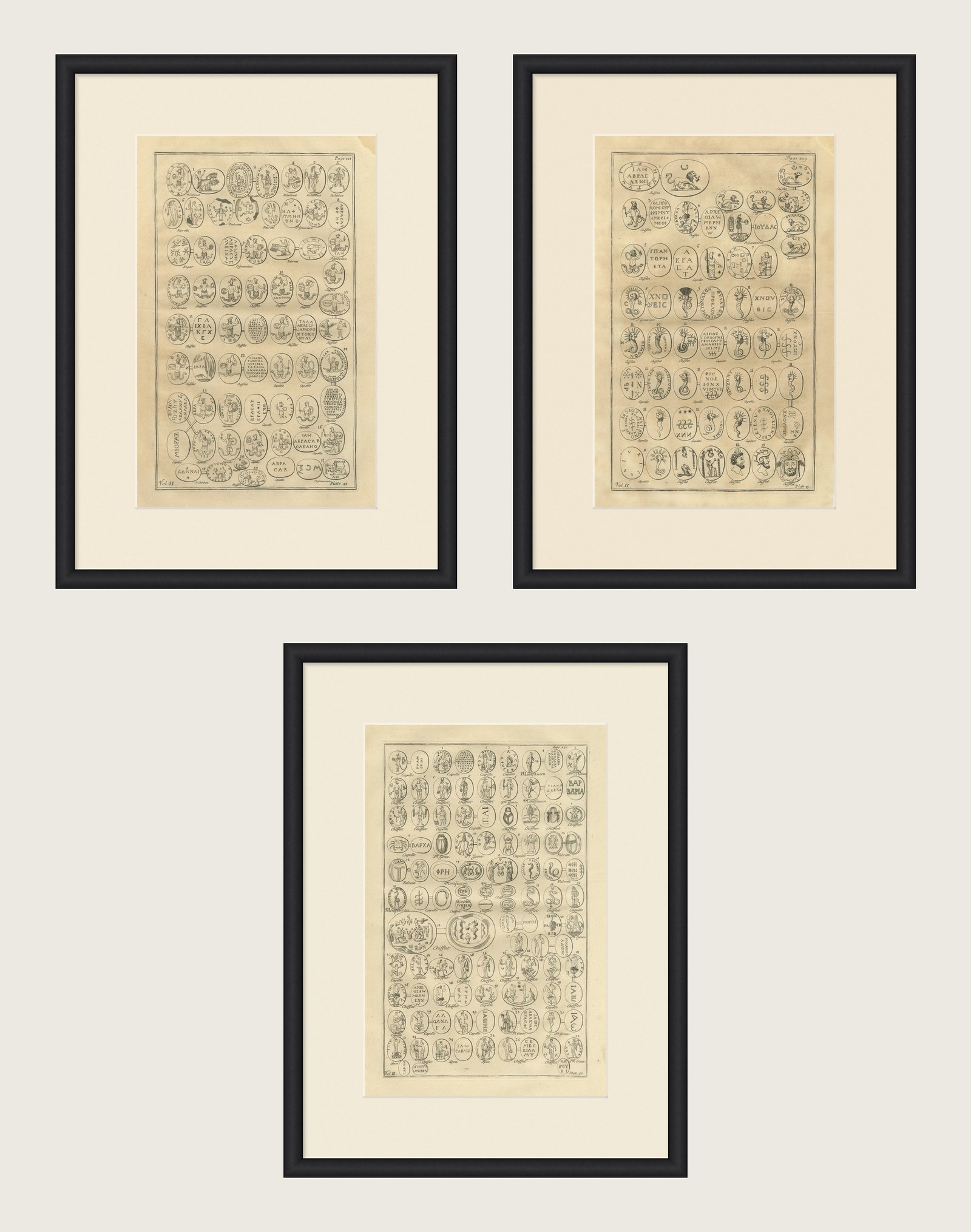
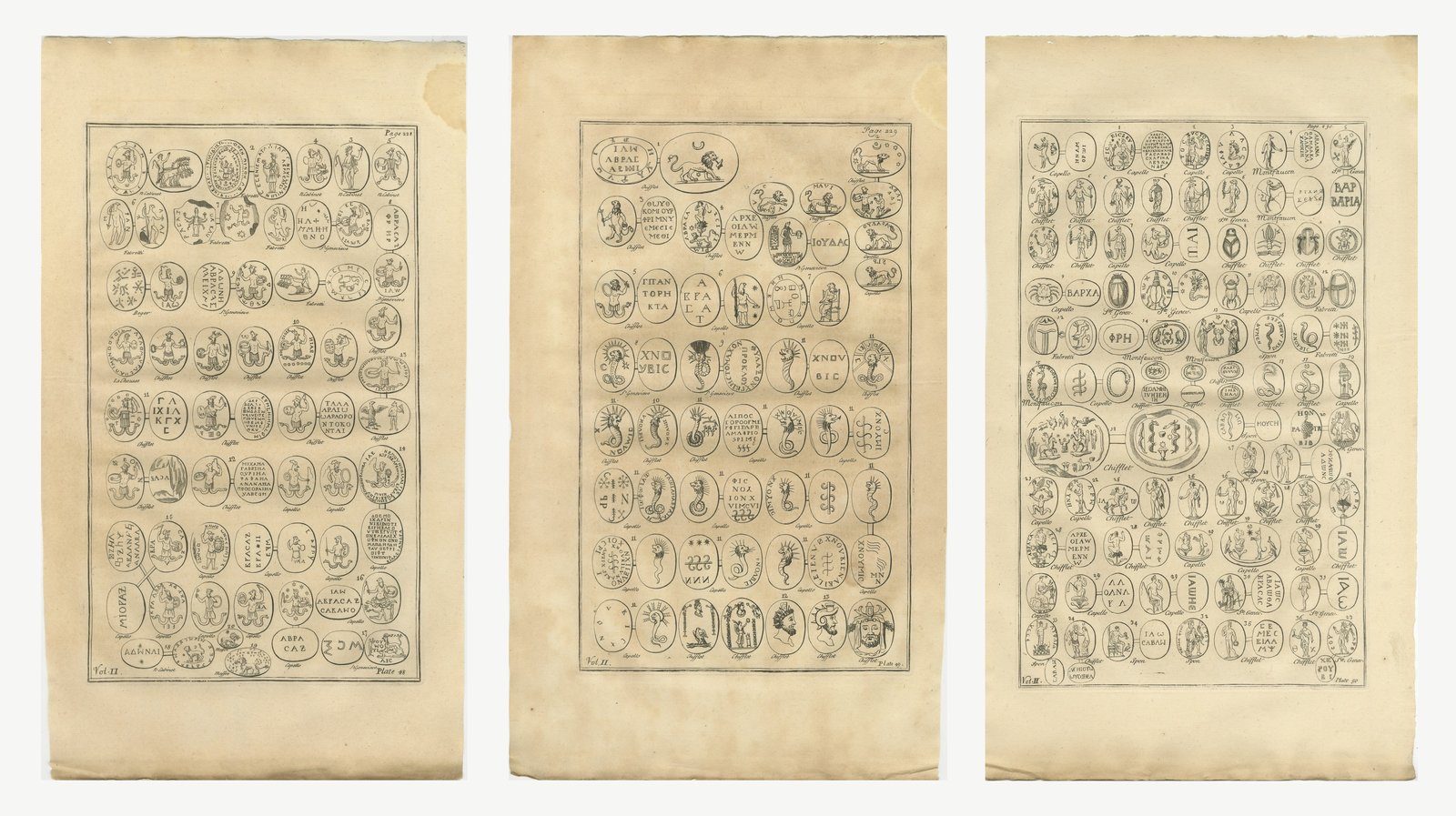
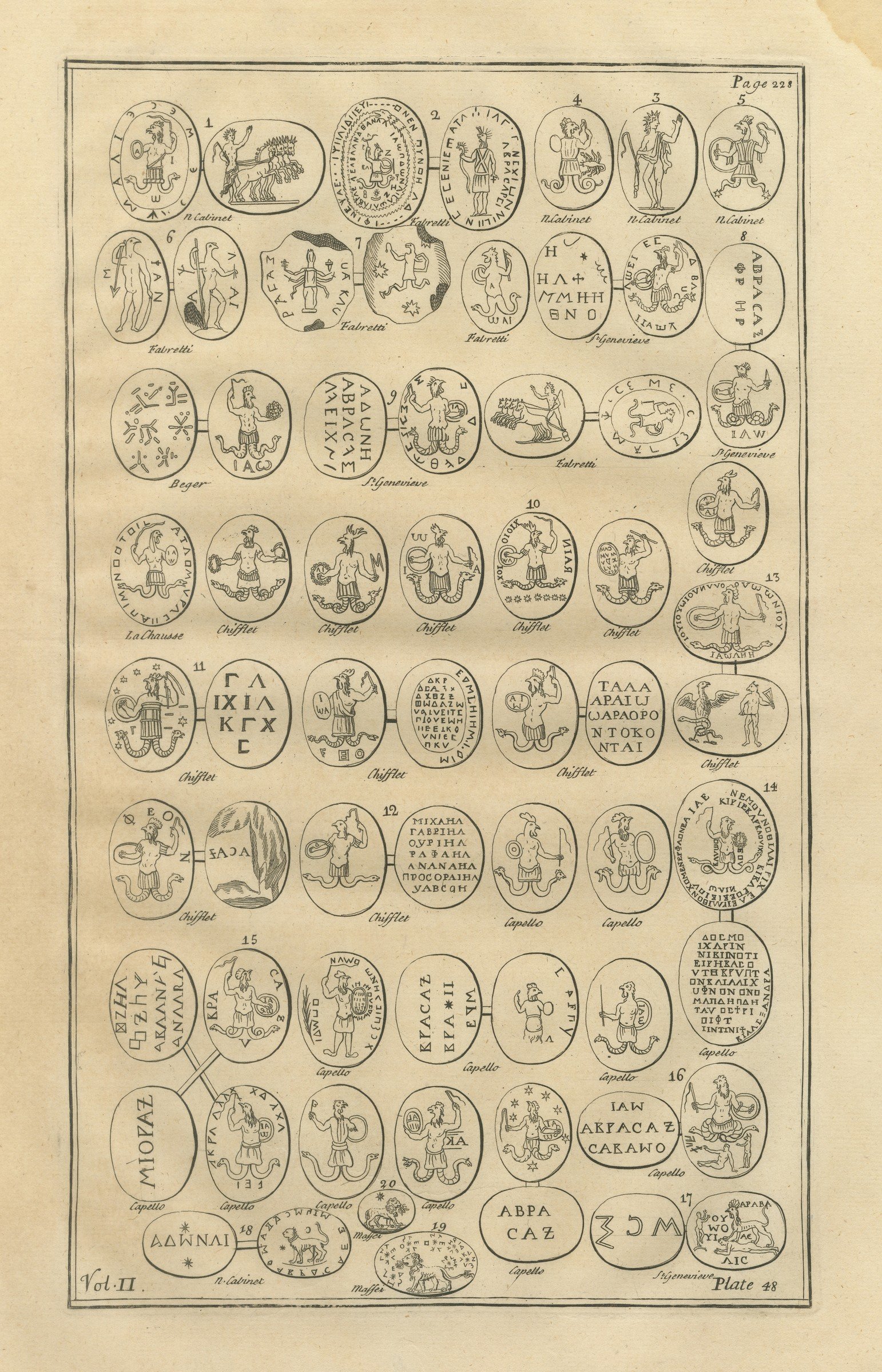
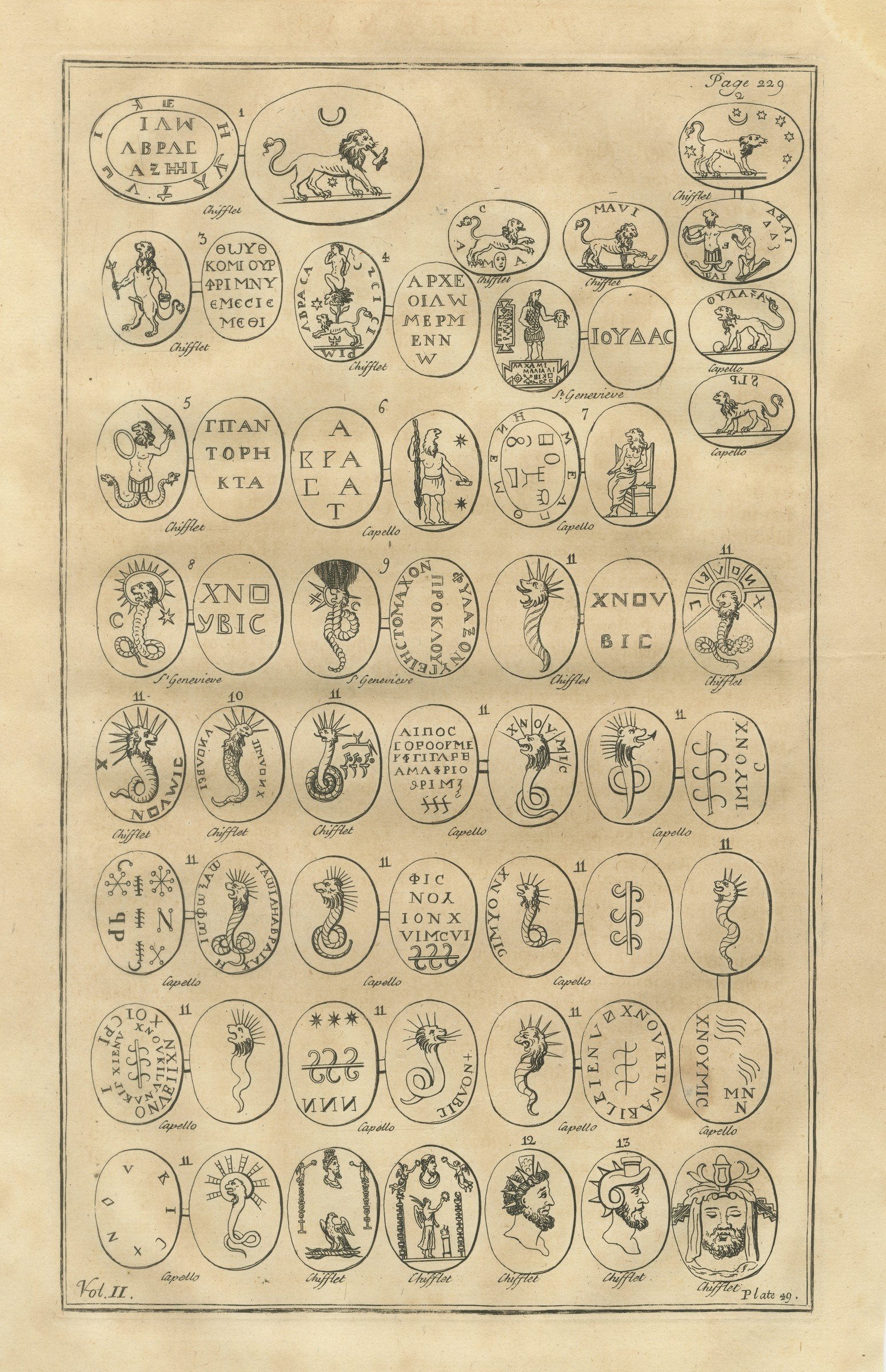
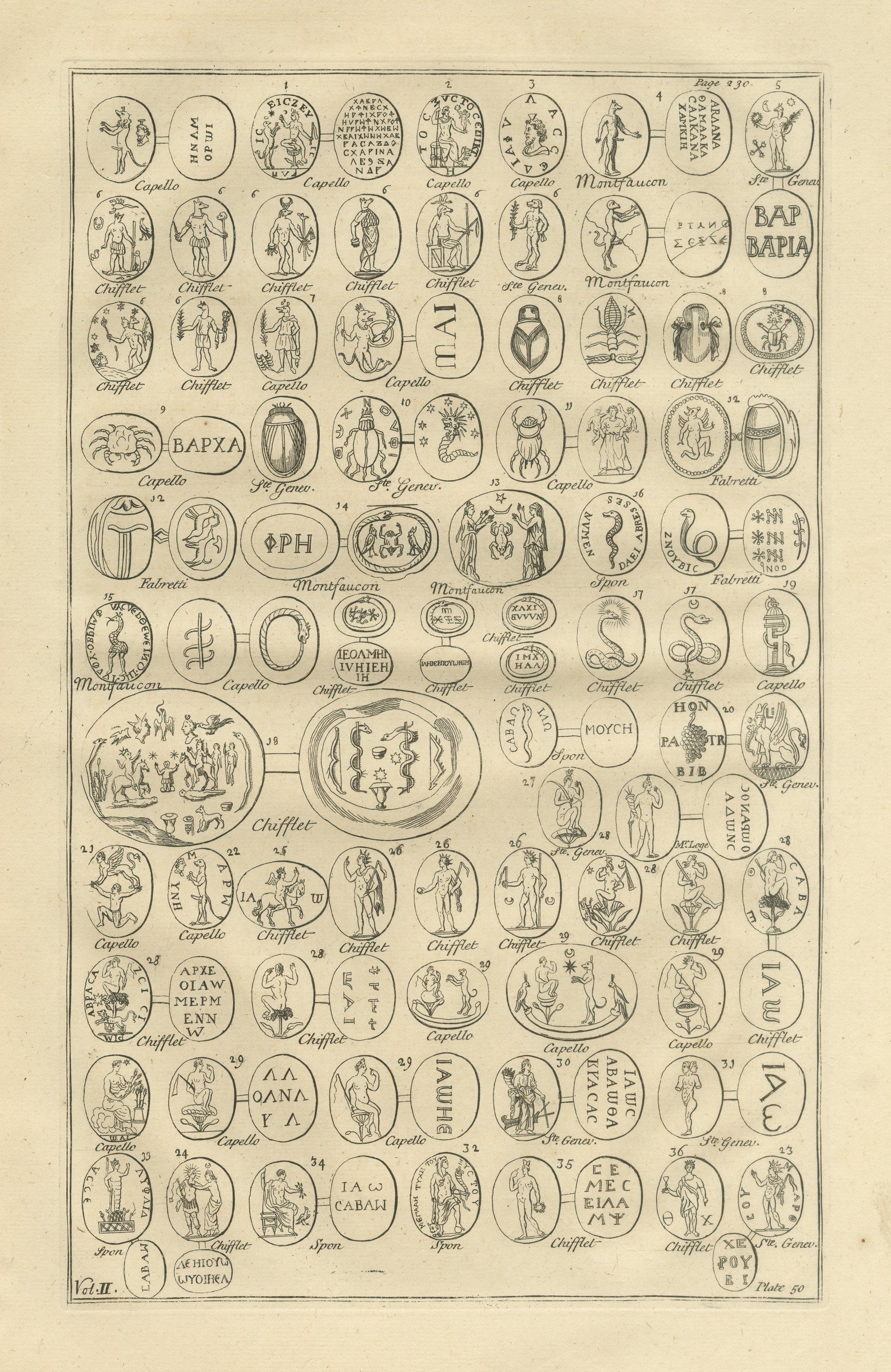
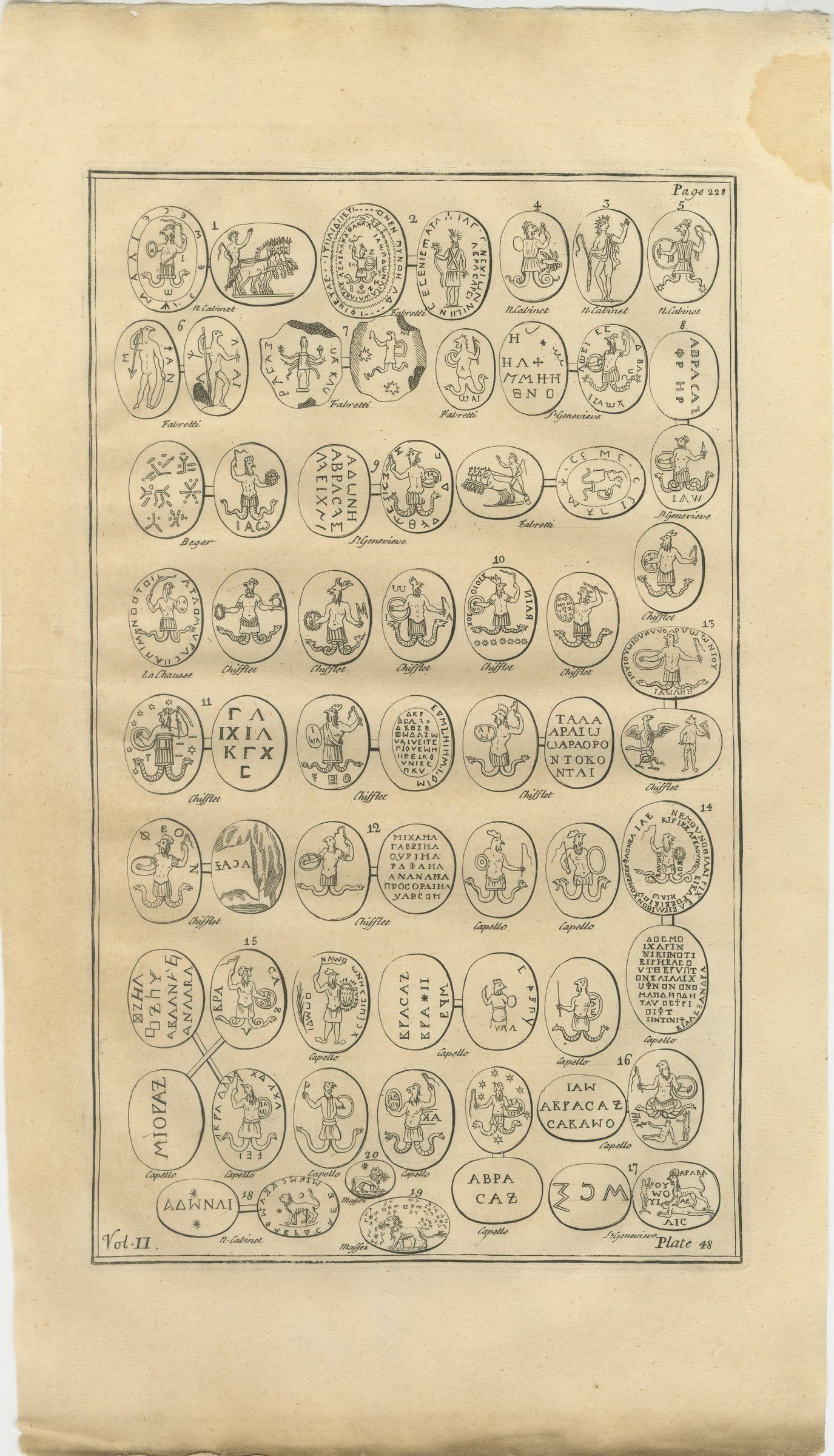
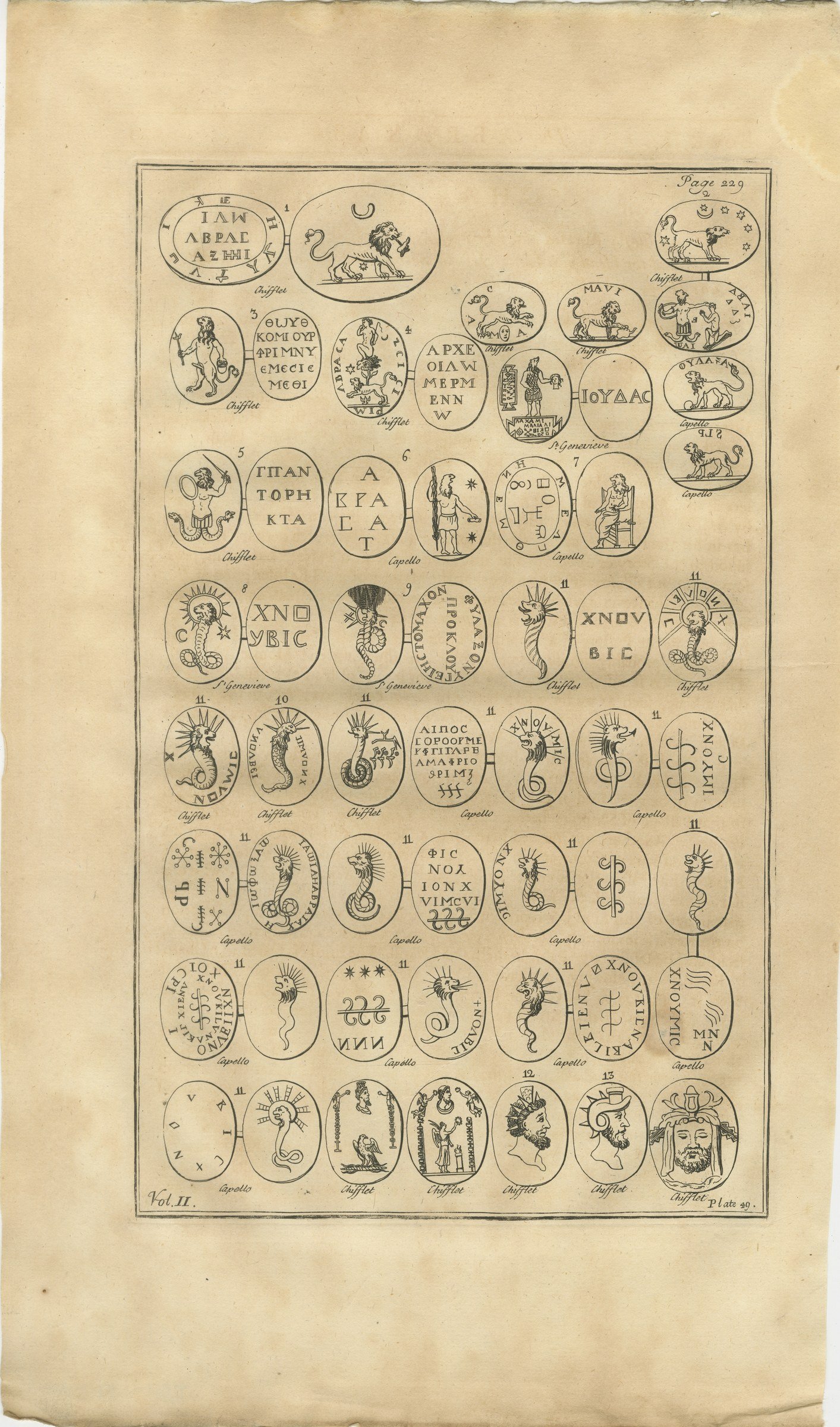
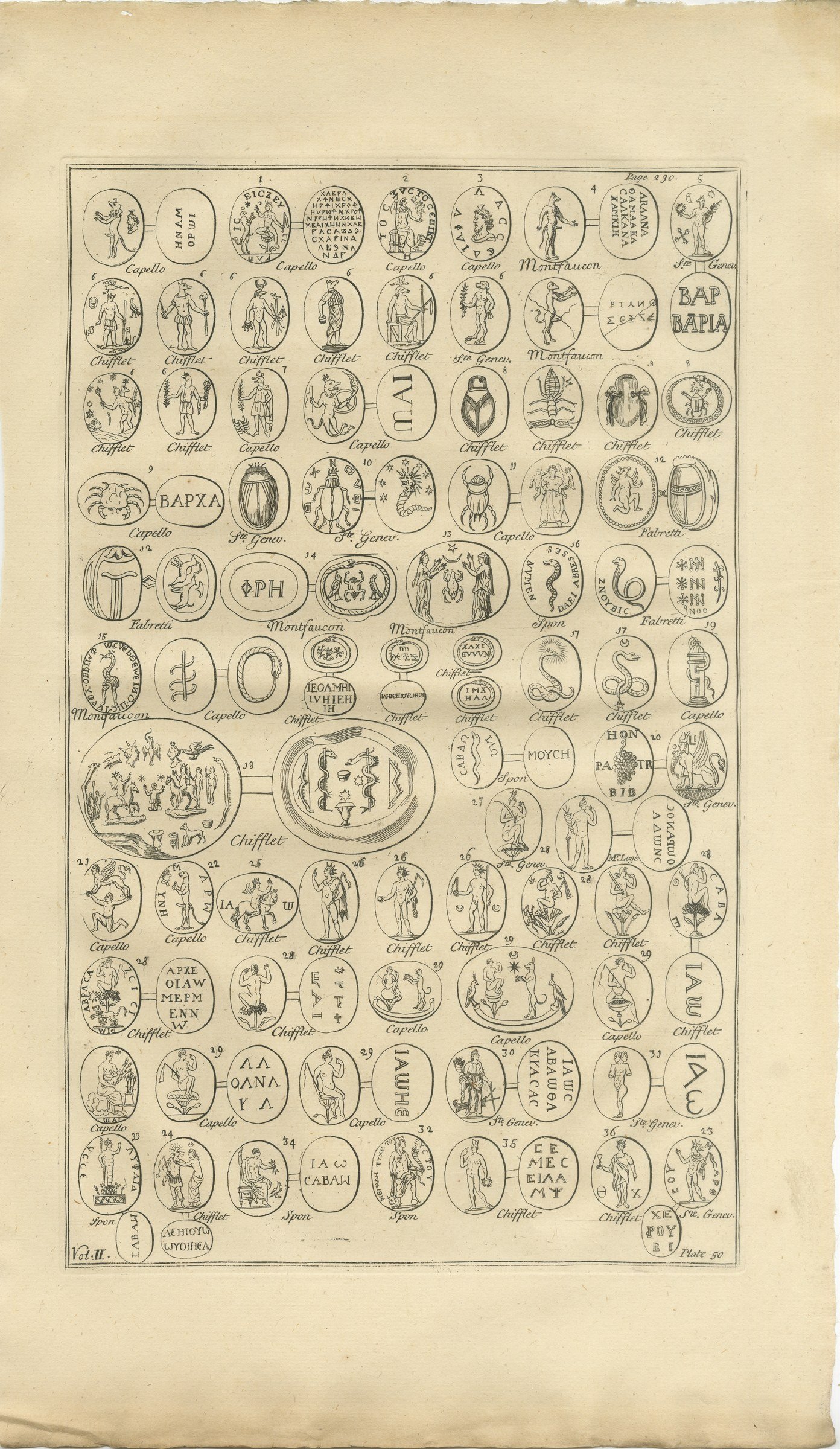
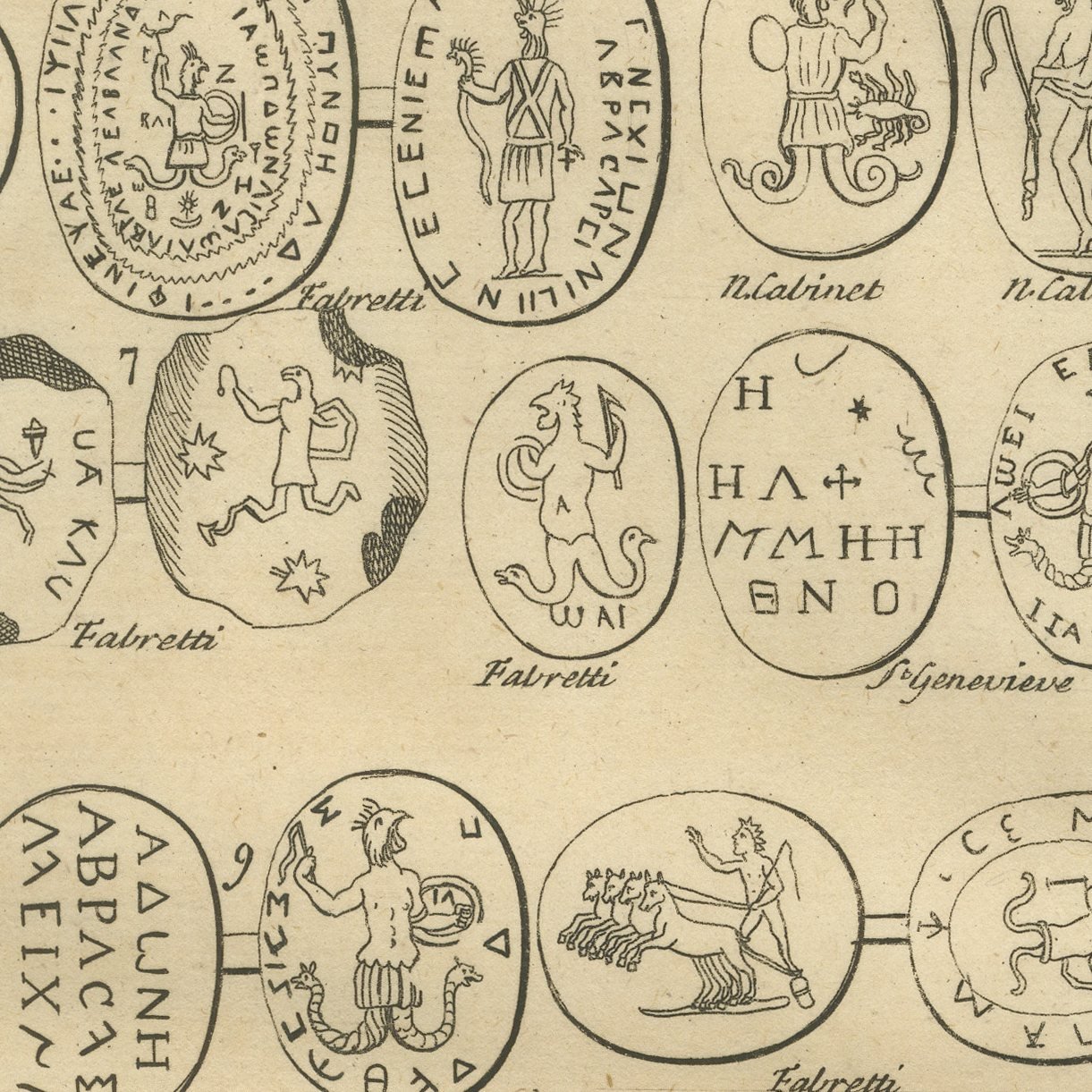
This is a set of three original antique engravings of 1721, sold together, carrying the magical amulets of the Gnostic sects of Roman Egypt as Bernard de Montfaucon assembled them from the cabinets of Chifflet and Capello. Each upright plate holds fifty or sixty stones, drawn inside the oval of the gem and most of them shown face and reverse. The first sheet belongs to the anguipede, a man's body in a military kilt with the head of a cock and two serpents for legs, holding a shield and a whip, and to the words cut around him, ABPACAZ, IAΩ, AΔΩNAI, the palindrome ΑΒΛΑΝΑΘΑΝΑΛΒΑ, and the four archangels Michael, Gabriel, Uriel and Raphael. The second is given almost entirely to Chnoubis, a serpent reared upright with the head of a lion ringed by a crown of rays, repeated more than twenty times with its name in several spellings and the three barred sign that always accompanies it. The third mixes scarab beetles drawn from above, standing deities in Egyptian and Greek dress, serpents, a crab and a winged sphinx with stones given over to nothing but words.
The plates come from Volume the Second of Antiquity Explained, and Represented in Sculptures, the English translation of L'Antiquité expliquée et représentée en figures, published in Paris in 1719 by Bernard de Montfaucon (1655 to 1741), a French Benedictine monk of the Congregation of Saint Maur. The translation is by David Humphreys, fellow of Trinity College, Cambridge, and was printed in London by J. Tonson and J. Watts in five folio volumes, the first two dated 1721 and the other three 1722. The second volume deals with the worship of the Greeks and Romans and with the religions of other peoples, among them the Egyptians, Syrians, Persians, Germans and Gauls. Montfaucon arranged the surviving images of ancient monuments by subject, so that each plate gathers figures copied from statues, reliefs, altars, gems, coins and other objects, numbered to his commentary. These plates carry no engraver's name and no printed title.
The set is made up of Plates 48, 49 and 50 of Volume the Second, each sheet lettered with its volume, plate and page number.
Three sheets, all age toned. Foxing through the margins of all of them. The paper darker along the edges of all of them. Handling wear to the corners of all of them.
The set is three original sheets sold together, never split. These are original antique prints, not modern reproductions. This item is sold unframed.